
As November draws closer, state legislatures look forward to new sessions, and several hot-button issues, next year.
Alaska is wrestling with childcare policy, Florida is trying to slap new terrorist designations on groups, Idaho voters will determine who has the final say over drug laws, a new comptroller in Illinois will attempt to right the state’s finances, New Mexico aims for ethics reforms, a sexual-assault case at Cornell has led to conversations about consent laws in New York, and West Virginia is debating who sets education policy.
Here’s what you need to know this week from outside the Beltway:
Alaska
Advocates in Alaska are calling on the Legislature to increase funding to childcare providers, reform the childcare assistance grant program, and expand workforce training. Legislation addressing the issue passed the body earlier this year, a $6.4 million package to help boost pay and retain childcare workers, but Gov. Mike Dunleavy vetoed the bill, citing budget constraints. He also vetoed budgeted money for education-related grants for Head Start programs and infant-learning programs for children with disabilities. The Legislature returns to session in January with Dunleavy out as governor. With a new chief executive and potential upsets in statewide races, this could end up back on the Republican-led Legislature's docket.
Florida
Gov. Ron DeSantis and his Cabinet voted to designate more than 90 groups as terrorist organizations. A legal challenge is in the works from the Council on American-Islamic Relations, one of the groups singled out by the state. Other organizations listed are already known terrorist groups, like the Venezuelan crime syndicate Tren de Aragua, but groups like CAIR and the Muslim Brotherhood, are new, highly contested designations. The ACLU is involved, representing and advocating for CAIR in what could be a First and Fourteenth Amendment argument. The designations take effect Nov. 5.
Idaho
After a citizen-led attempt to put medical cannabis on the ballot failed earlier this year, legislators questioned whether voters should be making such decisions at all. Lawmakers placed an initiative on the November ballot that asks voters to cede all power over legalizing or decriminalizing drugs to the Legislature. It’s unclear if this will pass, but history suggests that voters don’t like it when their ability to vote on ballot measures is threatened. Earlier this year, Missouri rejected a measure that would have required citizen initiatives to prevail in all eight congressional districts in order to become law.
Illinois
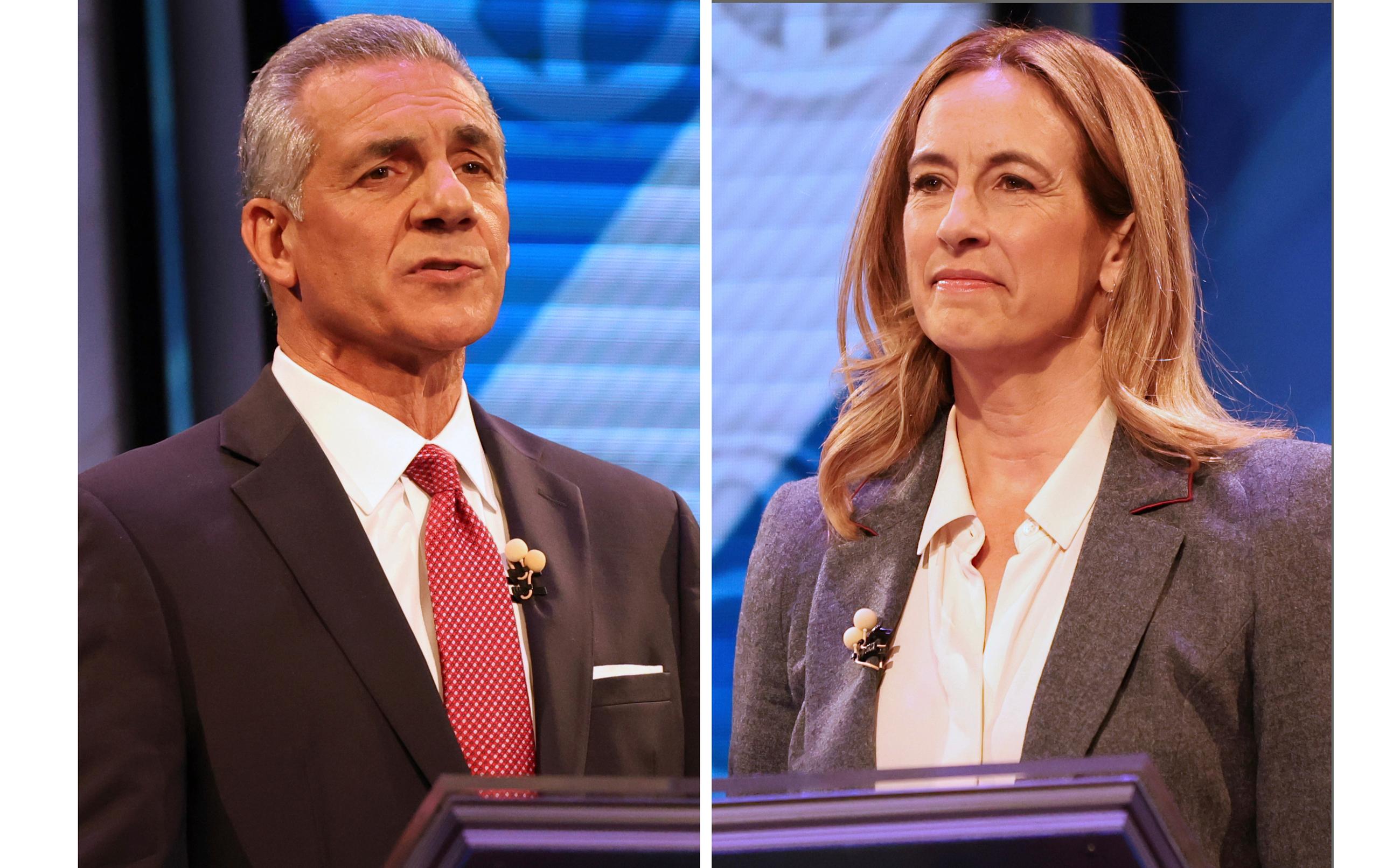
For the first time in a decade, Illinois voters will vote for a new state comptroller in November. Susana Mendoza, who has held the office since 2016, is moving on for a potential 2027 run for Chicago mayor. Democratic state Rep. Margaret Croke and Republican attorney Bryan Drew are competing to succeed her. A new comptroller could bring good news for the state’s struggling finances—Mendoza had to deal with a bill backlog of $17 billion and a two-year budget impasse that tanked the state’s credit rating. Both candidates are claiming to be independent from the governor’s office, with Croke promising to push back on her own party and Drew leaning on his party affiliation to check the Democratic legislature and governor.
New Mexico
A poll from BSP Research commissioned by a think tank, Think New Mexico, found that only 43 percent of New Mexicans trust state lawmakers to do what’s right all or most of the time, and 81 percent support a higher ethical standard for lawmakers. The respondents support Think New Mexico’s reform proposals, which would require legislators to disclose financial conflicts of interest, make conflict-of-interest forms more detailed, and create a two-year waiting period before legislators can become lobbyists after leaving their jobs. The group also proposes ethics reforms for lobbyists and advocacy groups.
While the poll should be taken with a grain of salt for its small sample size of 800 registered voters and the potential lean of the questions, such discussions surrounding corruption and lawmaker ethics are spreading nationwide. More legislation and advocacy efforts on ethics reform are likely to pop up across the country.
New York
In light of the recent reopening of an investigation into alleged sexual assault at Cornell University, some state lawmakers are proposing legislative changes to the state’s consent laws. The reforms would make it easier to prosecute even in cases where a victim willingly became intoxicated. Another proposal would increase funding for victim services. The Cornell case has garnered national attention because of the nature of the allegations and the focus on broader university governance. The anonymous alleged victim is suing not only the accused perpetrators but also the university and the fraternity involved, claiming a lack of oversight and protection. Legislative action will have to wait until lawmakers reconvene in January.
West Virginia
The state Board of Education has been at the center of both political and legal controversy for the past year. In 2025, the Legislature passed a law giving itself power over the Board’s regulations, despite the fact that, two separate times, once in 1989 and another in 2022, voters agreed that the Legislature shouldn’t be allowed to regulate how students are taught. A lawsuit over the dispute reached the West Virginia Supreme Court on Tuesday. This case gets into the weeds on the state’s Constitution, the timeline of West Virginia education standards, and differing opinions between the secretary of state and the Legislature. But at the core, this fight is about who gets to set education standards—a subject of heated debate in many red states in the past five years.
What’s to come:
It’s full-speed ahead to November. While races for Congress can lead to changes in policies impacting states, the groups with the most power within the states are legislators and governors. Keep an eye on Hotline’s list of legislative chambers most likely to flip this November, and which gubernatorial seats are on the line.