
Jan. 14, 2026, 6:58 p.m.
Some Republican leaders are calling for another party-line megabill. But the party is already fractured on how—and whether—they should go forward on another laborious venture that already seems unlikely to pass.
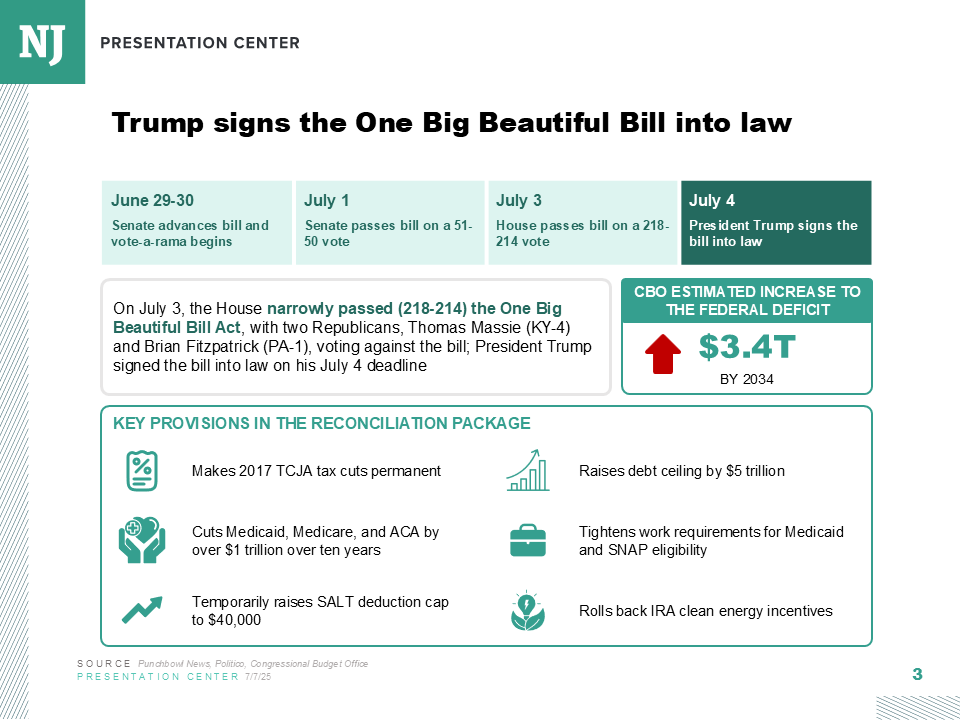
Republicans are in the middle of marketing their first reconciliation bill—passed last summer—ahead of a tough election year, as they maintain they can keep both chambers of Congress. Now lawmakers are shopping around the idea of another hefty legislative package whose prospects look bleak given narrow majorities and election-year politics.
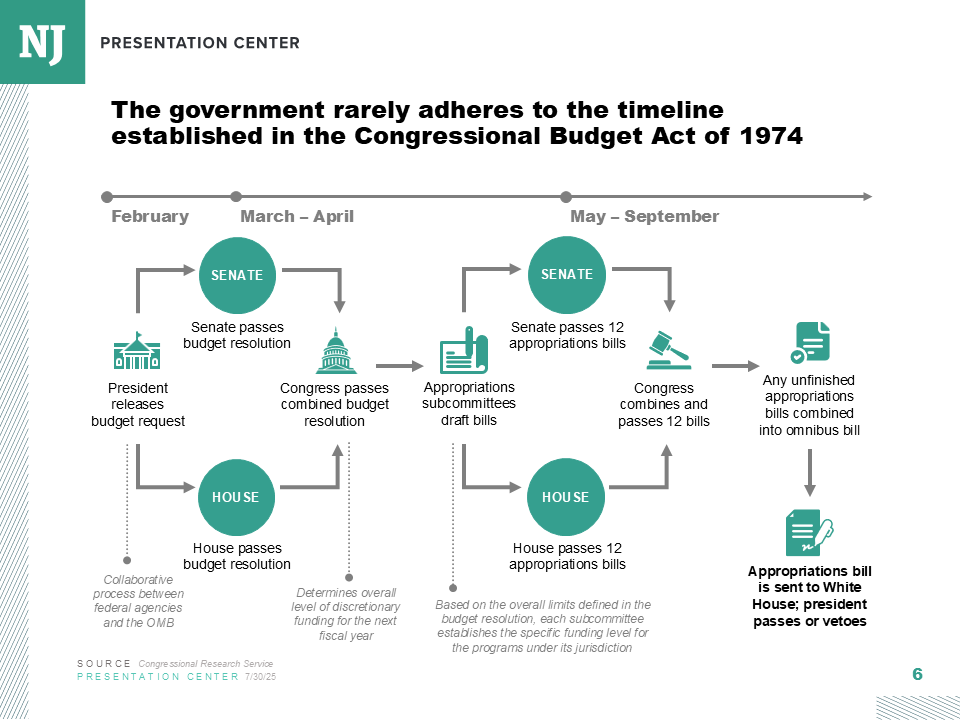
The House appears to be further along on the contours of a plan, while senators continue to internally debate whether or not a second bill should be done at all. Campaign season and the appropriations process will take up a large portion of the calendar, limiting time for any sweeping initiative akin to the One Big Beautiful Bill Congress passed last year.
“Let me say it would be political malpractice if we did not pursue a path of reconciliation,” Rep. August Pfluger, the chair of the Republican Study Committee, said Tuesday.
Congressional Republican leadership has yet to release a framework. When asked about the prospects for a reconciliation bill Tuesday, Senate Majority Leader John Thune was noncommittal, noting that it depends on “the votes there, the votes here, and what the White House wants to do."
"But we’re keeping the options open,” Thune added.
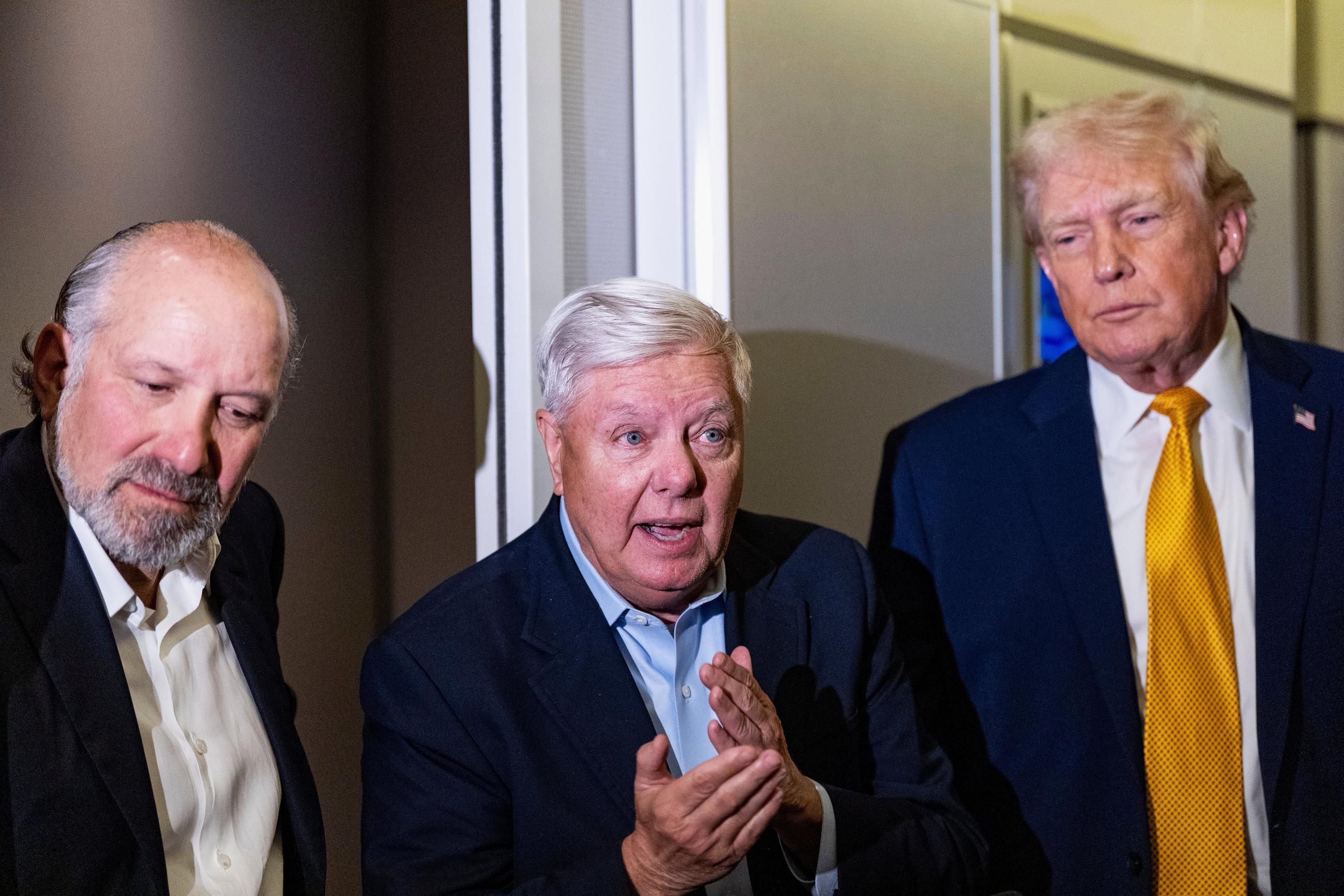
When asked about a timeline, Senate Budget Committee Chair Lindsey Graham didn’t offer specifics but stated that he had a “good talk” with the White House and Thune last week about the prospects of moving forward with another bill.
“The Budget Committee is working to find out with the White House and Senator Thune what kind of things in reconciliation we could do to deal with systematic fraud, and we're in the initial inquiry phases, but I'm hopeful, sooner rather than later, we can find some ideas,” Graham said. “I think [Trump’s] ready to move at the appropriate time to combat fraud.”
House, Senate disagree on scope, process
In a December interview with Semafor, Graham outlined plans to kick off the reconciliation process with a budget resolution early this year focused on military funding, health care, and immigration funding. According to a Senate GOP health aide, the Budget chair had asked different members on his panel for ideas which could be tackled in the wonky process.
But in the lower chamber, there seems to be a difference in focus on what reconciliation 2.0 should tackle. Graham wants a bill that roots out fraud, a continuation of efforts passed in last year’s party-line bill. But the House seems to be taking a different turn, with the RSC—the largest conservative caucus in the GOP conference—looking to tackle the issue of affordability.
The RSC framework, dubbed “Making the American Dream Affordable Again,” is centered around Republicans’ midterm message, zooming in on policies around homeownership, health care, and energy. The framework also would look to cut federal spending by more than $1.6 trillion, codify the president’s executive orders, and implement conservative culture-war aligned policies.
The framework has the backing of one the most prominent players when it comes to reconciliation—House Budget Committee Chair Jodey Arrington, who is in charge of the beginning stages of the process.
“I commend them for their work to develop this policy framework that would address affordability in health care to housing, to electricity and gas prices,” the Texas Republican said during the RSC’s press conference on Tuesday. “I'm just talking about the affordability issue. I do think it's the most important issue for November. I think it's the most important issue for the American people.”
And while the group’s plan has not yet earned the endorsement of Speaker Mike Johnson, Pfluger noted that the speaker has “endorsed a reconciliation plan.”
It sets up a competitive dynamic between the House and Senate, with both chambers on different pages as it relates to process and scope. During the first reconciliation bill, the two chambers were racing each other to move the process forward, as the House and Senate debated over whether a one-bill or two-bill approach was better. Ultimately, the House won on that front.
“I think the House is going to drive this like it did before, and so it's getting our members in this conference to agree that we have to continue the good work we've done and build on the good work we've done in … the ‘One Big Beautiful Bill,’” Arrington said.
Whether or not there’s enough appetite among rank-and-file members to coalesce around any party-line proposal remains a large, looming question—with little room for error for Johnson, who cannot afford to lose more than two GOP members on party-line votes.
One House Republican who requested anonymity, when asked what are the chances of passing another reconciliation bill this year, said, "I think zero."
“We have tighter margins, and there’s no policy like [the Tax Cuts and Jobs Act] in the middle of it to hold it together.”
What might a reconciliation bill include?
The RSC framework released Tuesday includes a long wish list from House members wanting to ease the path to homeownership, cut health care costs, and lower energy costs. Nearly 70 percent of the framework includes bills that have already been introduced or have been passed by the lower chamber and await Senate approval. But the framework also includes a number of new proposals.
One idea—an effort to flatter Trump—is to create “The Don” Down Payment program, which would create a zero-to-low-down-payment option through the Federal Housing Administration for creditworthy borrowers. Another proposal would allow for homeowners to keep their existing mortgage rate when purchasing a new home, or enable new homeowners to assume the previous owner’s mortgage terms.
A second reconciliation bill could also take a stab at lowering energy costs, with a focus on permitting reform to speed up the building of energy projects. One proposal would codify the president’s executive orders focused on deregulation and affordability, and modify the language to adhere to the Byrd Rule—which prevents non-budgetary matters from being included in reconciliation bills.
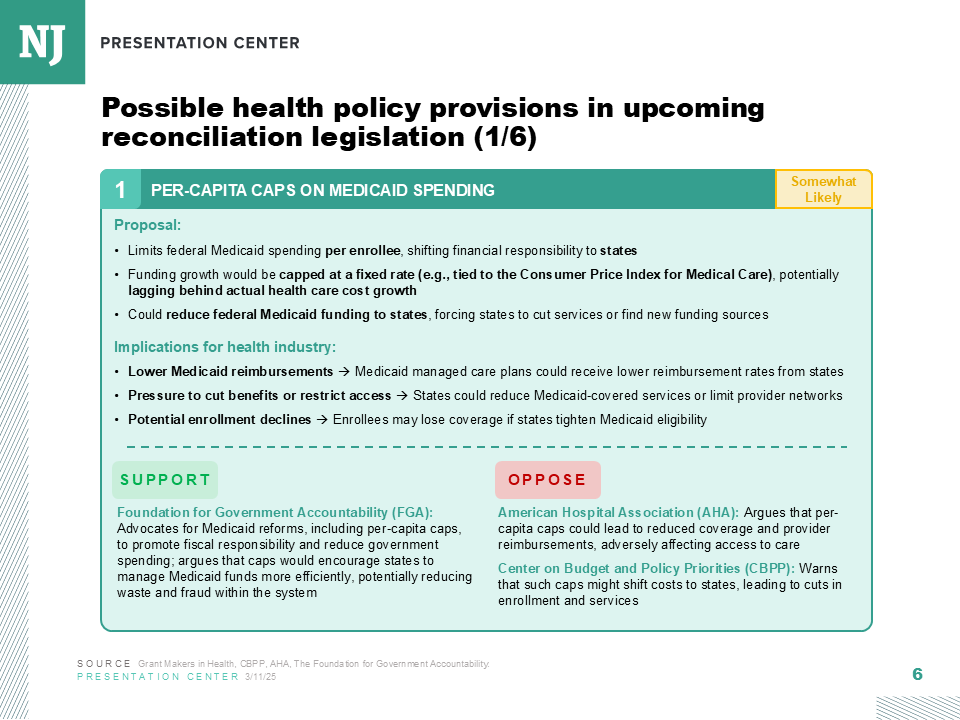
And after the first reconciliation bill took a heavy axe to health care programs, Republicans are looking to tackle the issue yet again. While the issue of “waste, fraud, and abuse” was the main theme of the last party-line bill, any second bite at the apple may tackle lowering costs.
One notable proposal would create a new, separate health-insurance marketplace that would parallel the Affordable Care Act’s. Possible language would be consistent with provisions within Rep. Gary Palmer’s “New Health Options Act” and a yet-to-be-unveiled “MAHA Act.”
Newer proposals would look to “enact iron-clad program integrity reforms for federal childcare programs” amid fraud allegations in childcare centers in Minnesota.
A few other health care proposals listed in the framework are holdovers that got dropped out of the first reconciliation bill. One includes funding for cost-sharing reductions, which would help provide discounts on out-of-pocket health care costs for certain enrollees on the ACA marketplace.
Trump ‘likes what we’re doing’
Even as House members are putting together ideas for another legislative package, a number of senators have similar ideas on affordability.
“We've got to make things less expensive,” said Senate Health, Education, Labor, and Pensions Committee Chairman Bill Cassidy. “People can't afford their insurance, and we’ve got to figure out a way to help them afford it.”
Sen. Roger Marshall, who sits on both the HELP and Budget committees, said he wants to redirect funds that go to insurance companies to set up an “affordability account,” along with a state-directed “health care stabilization fund.”
Sen. Rick Scott, another member of the Budget Committee, is pushing for passage of his More Affordable Care Act, which would establish HSA-style “Trump Freedom Accounts” that would redirect funds that would usually go to insurance companies directly to consumers. The bill would also allow enrollees to shop across state lines for health-insurance plans. In a pen-and-pad with reporters last week, Scott said he had spoken with the president at length about the proposal.
“He said he likes what we’re doing,” Scott said.
But a large hurdle that many bills will face is the Byrd Rule. In response to that, the RSC has created an AI tool trained on thousands of Byrd Rule documents to generate compliant legislative text and preempt challenges from Democrats.
“We have to do the best job at identifying where the challenges would be, anticipating those, and then equipping our Republican colleagues in the Senate with the language and with the head's-up on the inside so they can go in and litigate more successfully and effectively with the parliamentarian,” Arrington said.