Jan. 13, 2026, 2:02 p.m.
ANAHEIM, Calif.—The American Farm Bureau Federation brought together an unprecedented gathering of the most powerful people in agriculture at its convention here this week: Agriculture Secretary Brooke Rollins, Deputy Secretary Stephen Vaden, other USDA officials, and the top Republicans and Democrats on the House and Senate agriculture committees.
You’d think their speeches would have given some clarity to the policies that Congress and the Trump administration will pursue this year. But that didn’t happen. Farmers troubled by low commodity prices and high input costs instead face continued uncertainty about whether Congress can finish the farm bill and provide them the additional aid they seek.
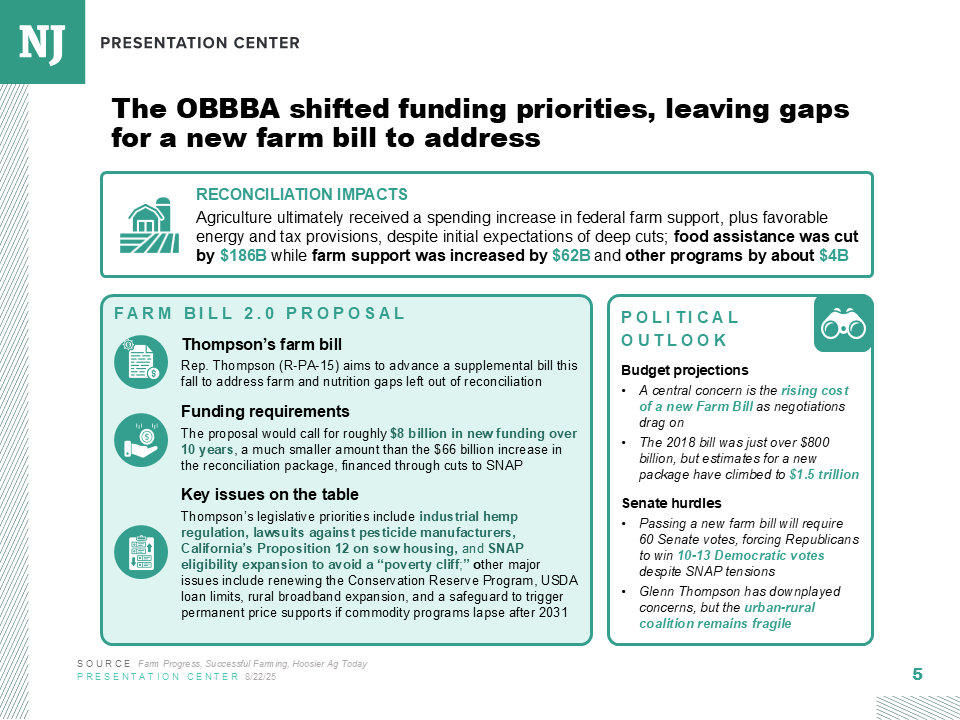
On Sunday, Senate Agriculture Committee Chairman John Boozman, ranking member Amy Klobuchar, House Agriculture Committee Chairman Glenn Thompson, and ranking member Angie Craig all agreed that Congress needs to finish writing a new farm bill this year and address the foreign-labor problem, but they offered no fresh guidance on how they might achieve either. Congress last wrote a farm bill in 2018. It expired in 2023 but has been extended through 2026.
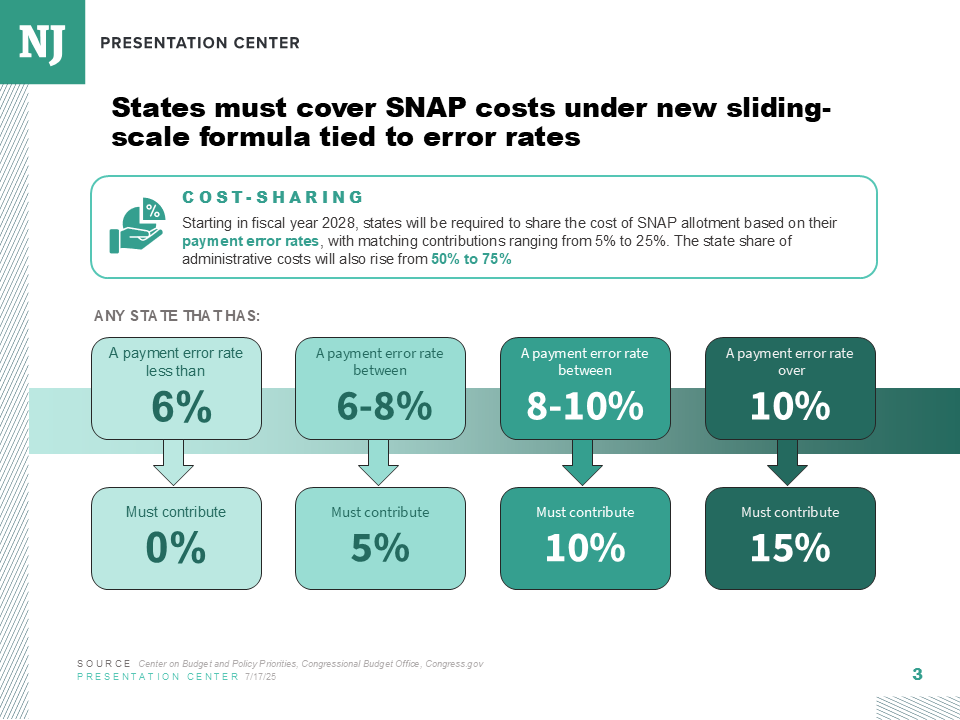
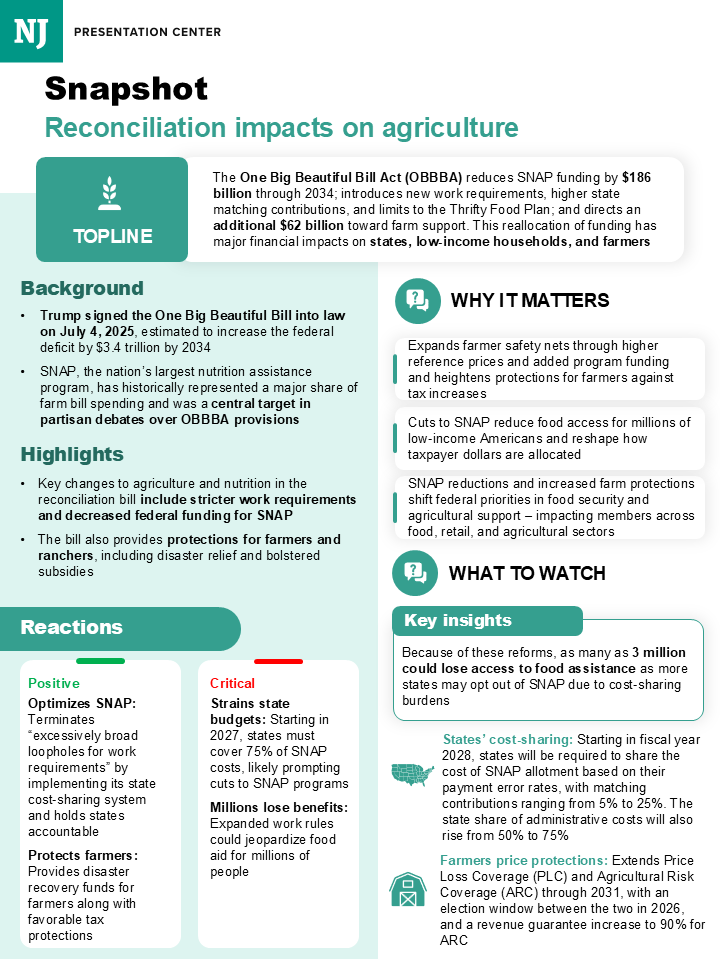
The One Big Beautiful Bill Act provided a potential $66 billion in subsidies to farmers over 10 years by raising the reference prices that trigger farm-crop subsidy payments and adding more money to crop insurance, trade promotion, and other programs. To pay for those increases, the bill also tightened up eligibility for the Supplemental Nutrition Assistance Program, a decision to which Democrats objected vigorously.
But the new reference prices won’t kick in until the fiscal year begins on Oct. 1. Farmers said they needed immediate aid to stay in business. The Trump administration used the Commodity Credit Corporation, USDA’s line of credit at the Treasury, to develop a $12 billion bailout package—$11 billion for producers of corn, soybeans, wheat, cotton, and other row crops and $1 billion for sugar and specialty crops (fruits, vegetables, and tree nuts). The $11 billion is to be distributed by the end of February while USDA continues to work on the formula for sugar and specialty crops. Farmers, particularly fruit and vegetable producers, say they need more aid now as well as the clarity that a new farm bill would provide.
As the Congressional Research Service noted in a recent report, the OBBBA passed under reconciliation rules and could not update policy to keep up with changing times. Agriculture leaders would like to amend the maximum loan amounts that individuals can borrow from USDA or receive through loan guarantees, update USDA’s broadband and other rural-development programs, designate certain research programs as high priority, modernize forestry programs for private landowners, and address organic agriculture and urban food systems.
All that could be achieved in a new farm bill, but it would cost some money. Boozman and Thompson both told reporters they can come up with the money but offered no specifics on how. Thompson said he also wants the bill to curb California’s Proposition 12, which requires that all pork sold in the state come from animals raised under certain conditions even if those animals live in Iowa, but Boozman said he wants no “poison pills” in the bill.
Rollins used much of her keynote speech on Monday to blame the Biden and even Obama administrations for farmers’ current problems, a line that is beginning to sound like ancient history now that the Trump administration has been in power almost a year. Rollins touted the administration’s accomplishments, such as getting rid of diversity, equity, and inclusion initiatives and reducing the agricultural trade deficit.
The same day Rollins spoke, USDA boosted its estimate of the corn crop to 17 billion bushels, causing prices to plunge. Rollins called on Congress to pass a law allowing the year-round sale of E15 gasoline, a higher ethanol blend, which would stimulate demand for corn.
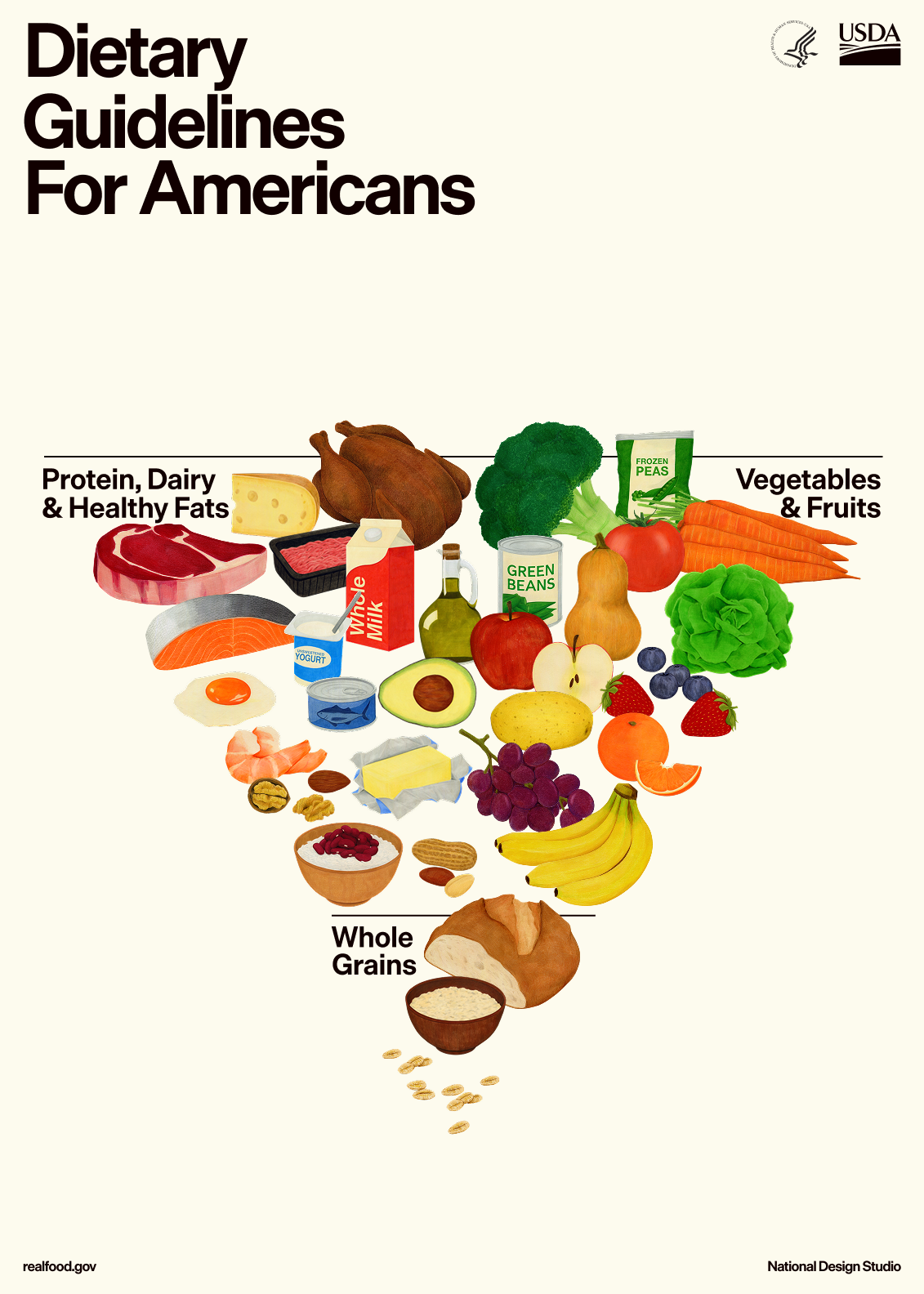
Rollins barely mentioned the rewrite of the Dietary Guidelines for Americans that she announced last week with Health and Human Services Secretary Robert F. Kennedy Jr. That new food pyramid is controversial in agricultural circles because it urges people to eat more meat and dairy products but cut sugar and the ultraprocessed foods for which many farmers grow wheat, corn, soybeans, oats, rye, and sorghum.
Kyle Diamantis, the Food and Drug Administration deputy commissioner for foods, said last week that Rollins would begin a “Dietary Guidelines for Americans Roadshow” this week. Rollins will travel to the Pennsylvania Farm Show on Thursday. Perhaps that stop will reveal where farm and food policy is actually headed in 2026.