
Dec. 10, 2025, 6:33 p.m.
Senate Democrats shut down the government over renewing enhanced Obamacare subsidies earlier this year. But as the premium tax credits are set to expire at the end of the year, the question becomes: Are they willing to do it again?
The Senate is barreling towards votes on two health care proposals, introduced by each party, but both are partisan messaging exercises that are expected to fail Thursday. And a number of lawmakers are skeptical of the prospects of any bipartisan deal coming together by the end of the year, when higher premiums kick in for millions of Americans.
But a number of Senate Democrats told National Journal that there are no conversations now happening within the caucus about another shutdown showdown centering on health care—nor is there an appetite to do so.
“I think the government-funding negotiations should be about government funding,” said Sen. Brian Schatz, a member of Democratic leadership who sits on the Appropriations Committee.
A senior Democratic aide, granted anonymity to speak candidly, told National Journal that by Jan. 31, when funding is set to expire, the open-enrollment period would have already ended—leaving the issue of the subsidies “too late to act [on] at that point.”
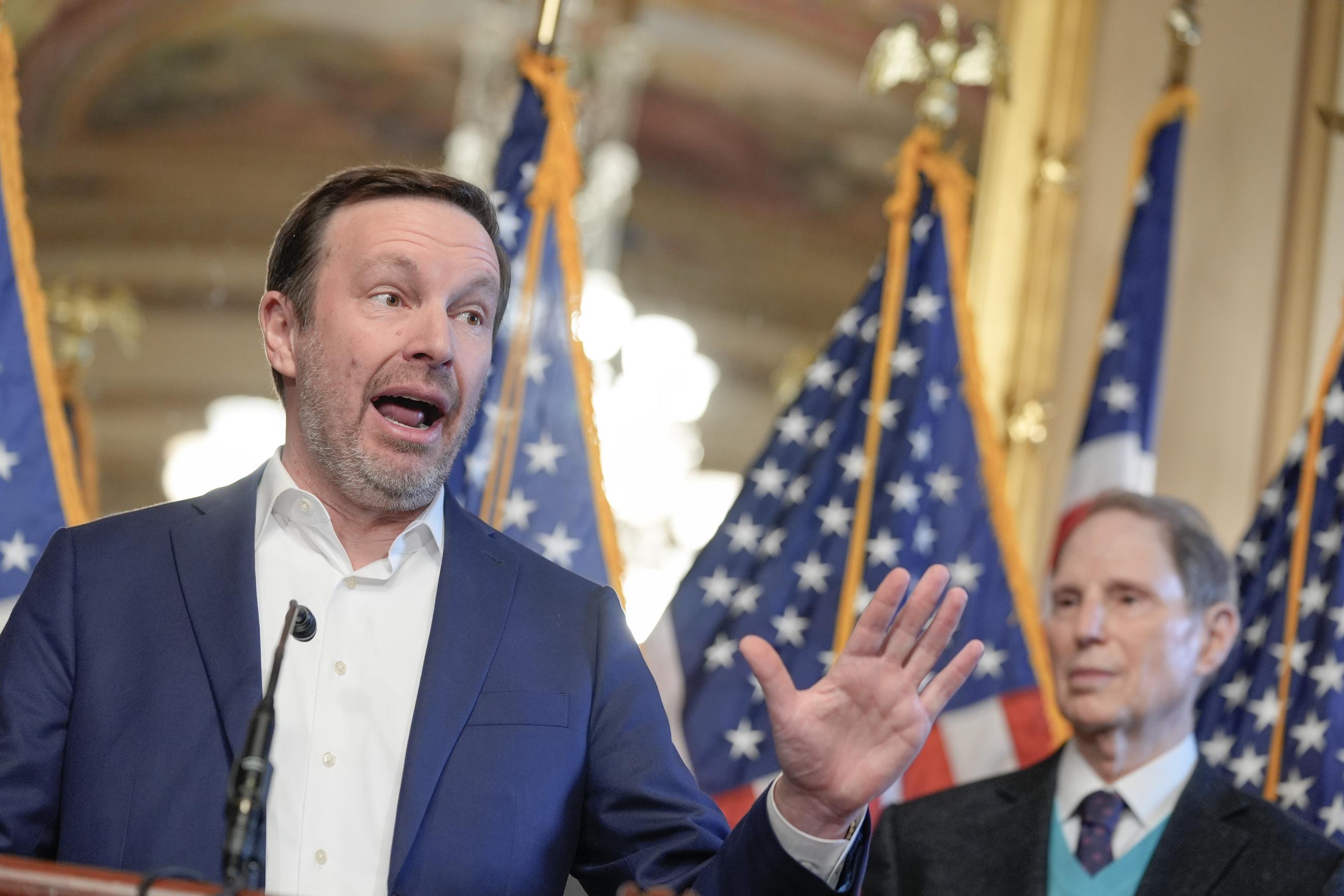
“It’s all we have,” Sen. Chris Murphy said of the Democratic proposal. “We can't get Republicans to work with us.”
‘Democrats in the driver’s seat’
From the party’s perspective, the group has set the grounds for a viable midterm message. While an extension of the subsidies would have notched a legislative win for a party currently in the minority, the lack of an extension gives Democrats ammunition to argue that Republicans aren’t doing enough to lower health care costs—amid constituent concerns on affordability.
A KFF analysis estimated that the premium payments in 2026 will more than double—from an average of $888 a year to $1,904—if ACA tax credits expire.

“That just automatically puts Democrats in the driver’s seat, because they’re willing to work to bring down costs but Republicans have to own this because they’re in charge and they’re refusing to do anything to address it,” said Josh Marcus-Blank, a Democratic consultant.
At least one Democrat, though, will be voting against any government-funding mechanism come the end of January. Murphy, who had previously criticized Senate Democrats for reopening the government without a deal etching the subsidies extension into law, told reporters this week he will vote against any measure funding the government unless it has provisions that would rein in President Trump and his administration.
“I'm not going to vote to fund democracy's destruction,” Murphy said. “I'm not so Pollyanna-ish to think that it's all going to get solved in a budget, but there's got to be something in there that helps protect against the growing corruption in the White House.”
The last shutdown—the longest in history—was also politically painful for both parties. Millions of people were left without food aid, thousands were furloughed from their federal government positions, and flights were delayed as air-traffic controllers and other government employees were working without pay. Seven Senate Democrats, along with an independent who caucuses with the party, voted to reopen the government, pointing to the pain constituents were feeling and the possibility of a bipartisan solution between then and Jan. 31.
Since then, however, negotiations on any deal floundered—ending with the two parties scheduling votes on partisan measures that won’t pass the legislative filibuster.
The Senate Democrats who voted to reopen the government were heavily criticized internally by members of their own party, who argued that it was foolish to accept a hollow deal that does not contain the key ask of their party. Some Senate Democrats who had pushed to keep the government closed until Republicans folded felt vindicated ahead of Thursday’s vote.

“The Republicans weren't telling the truth when they said they'll negotiate in good faith once the government opens,” Murphy said. “They haven’t.”
Others who voted to reopen the government, on the other hand, stand by their votes.
“Why wouldn’t I stand with that? I was proud of that,” said Sen. John Fetterman. “Forty-two million Americans had food insecurity, and all of these people weren’t getting paid around here.”
Expected failures
The Democratic measure that lawmakers are expected to vote on Thursday—which Senate Democrats have been largely united on—would offer a three-year extension without any reforms to the larger health care marketplace and the subsidies.
The GOP proposal, authored by committee chairs Bill Cassidy and Mike Crapo, does not offer an extension of the subsidies—but rather directs the Health and Human Services Department to pre-fund health savings accounts paired with certain health-insurance plans on the exchanges. The amount in the HSAs would depend on income and age, ranging from $1,000 to $1,500. The measure would bar funds from being used for abortions or gender-transitioning services, revive cost-share-reduction payments, and expand eligibility for copper plans to all individuals starting in January 2027. Copper plans have lower premiums, but fewer coverage options and higher out-of-pocket costs.
While it’s possible that a handful of lawmakers could cross the aisle and vote for the other party’s proposals, it’s unlikely that there will be a large enough coalition to overcome the filibuster. A number of Democrats, and at least one Republican—Sen. Lisa Murkowski—said the Crapo-Cassidy proposal was too complicated to garner consensus in the short time lawmakers had before adjourning for the holidays.
“I kind of look at the Crapo and Cassidy plan as long-term,” Murkowski said.
Republicans, on the other hand, have been staunchly against the Democratic proposal for its lack of Hyde-amendment protections and ACA reforms.
As the Senate remains in gridlock over the two proposals, all eyes are on the House as Republican leadership presents a menu of options for members to coalesce around as their formal health care plan, according to Politico's reporting. The options do not include an extension, likely disincentivizing Democrats from voting for whatever comes to the floor.
According to House Majority Leader Steve Scalise, Republican leadership plans on having “a very detailed conversation with our members” before deciding what to put on the floor, in a vote that could come as soon as next week.
Some moderate lawmakers introduced a discharge petition on Wednesday to force a vote on a bipartisan bill that would extend the subsidies for two years, attached to measures that would aim to bring health care costs down. The measure currently has eight signatures from members of both parties, but it would need nearly all Democrats to sign on in order to move forward.
House Republican leadership has been keeping the door open to working on health care in the first half of next year—either through reconciliation or regular order—ahead of the midterms.
But there is skepticism in the GOP conference over whether another reconciliation bill could pass, considering the arduous nature of the “One Big Beautiful Bill." In the absence of reconciliation, there will need to be buy-in from Democrats at a time when a bipartisan compromise seems wholly out of reach.
“My hope is that we're not having this discussion in January, because there are so many things that we do need to accomplish,” Democratic Sen. Lisa Blunt Rochester said.