Nov. 25, 2026, 5:09 p.m.
While nearly every president since World War II suffered significant defeats in midterm elections, President Trump stands almost solely responsible for his party’s thrashing in this year’s midterms.
Most of the other presidents whose parties lost seats could plausibly blame external events—pent-up postwar economic pressures on Harry Truman in 1946, recession and right-to-work battles for Dwight Eisenhower in 1958, white backlash to civil rights and Vietnam for Lyndon B. Johnson in 1966, inflation for Jimmy Carter in 1978, health care battles for Bill Clinton in 1994 and Barack Obama in 2010.
Ronald Reagan and George W. Bush arguably exacerbated their problems. In Reagan’s case, he had Republicans wincing at his unfortunate “Stay the Course” slogan. Voters were already angry with Bush for his conduct of the Iraq war, but he added fuel to the fire with his response to Hurricane Katrina and his attempt to overhaul Social Security.
But neither committed political malpractice like Trump, who spent the months before the election plotting a course to take his party off the cliff. “This was truly historically unique,” said Republican pollster Whit Ayres. Almost without exception, every step Trump made in 2026, particularly announcing “major combat operations” in Iran in an almost-casual Truth Social post on Feb. 28, and then his July 24 imposition of double-digit tariffs on 60 U.S. trading partners, made big Republican losses more likely.
Trump made several tactical mistakes, including refusing to sign a housing bill that might have shown his party working on costs, and unexpectedly cozying up to the socialist mayor of New York City just as Republicans were hoping to make him a target in their campaigns. But there were bigger strategic mistakes as well.
Since the election, the president has stoutly shunned any blame for the debacle and insisted he had nothing to do with the losses, instead blaming “candidate quality,” Fox News, and the fact that he “wasn’t on the ticket,” which meant “we couldn’t get enough people out to vote.”
For Democratic strategists, dealing with the Trump administration’s strategy was like taking candy from a baby. ”
— Republican pollster Whit Ayres
Almost no other Republican agrees with this assessment. Instead, they ruefully acknowledge the big mistakes he made. “For Democratic strategists, dealing with the Trump administration’s strategy was like taking candy from a baby,” Ayres said.
Here are 10 of Trump’s biggest missteps:
Pushing candidates who were not competitive. Outgoing Rep. Don Bacon of Nebraska put it best: “He pushed bad people forward.” On Election Night, Trump told Fox News that voters simply “didn’t like the candidates.” He didn’t mention that, in state after state, he had forced his favored candidates on reluctant state parties.
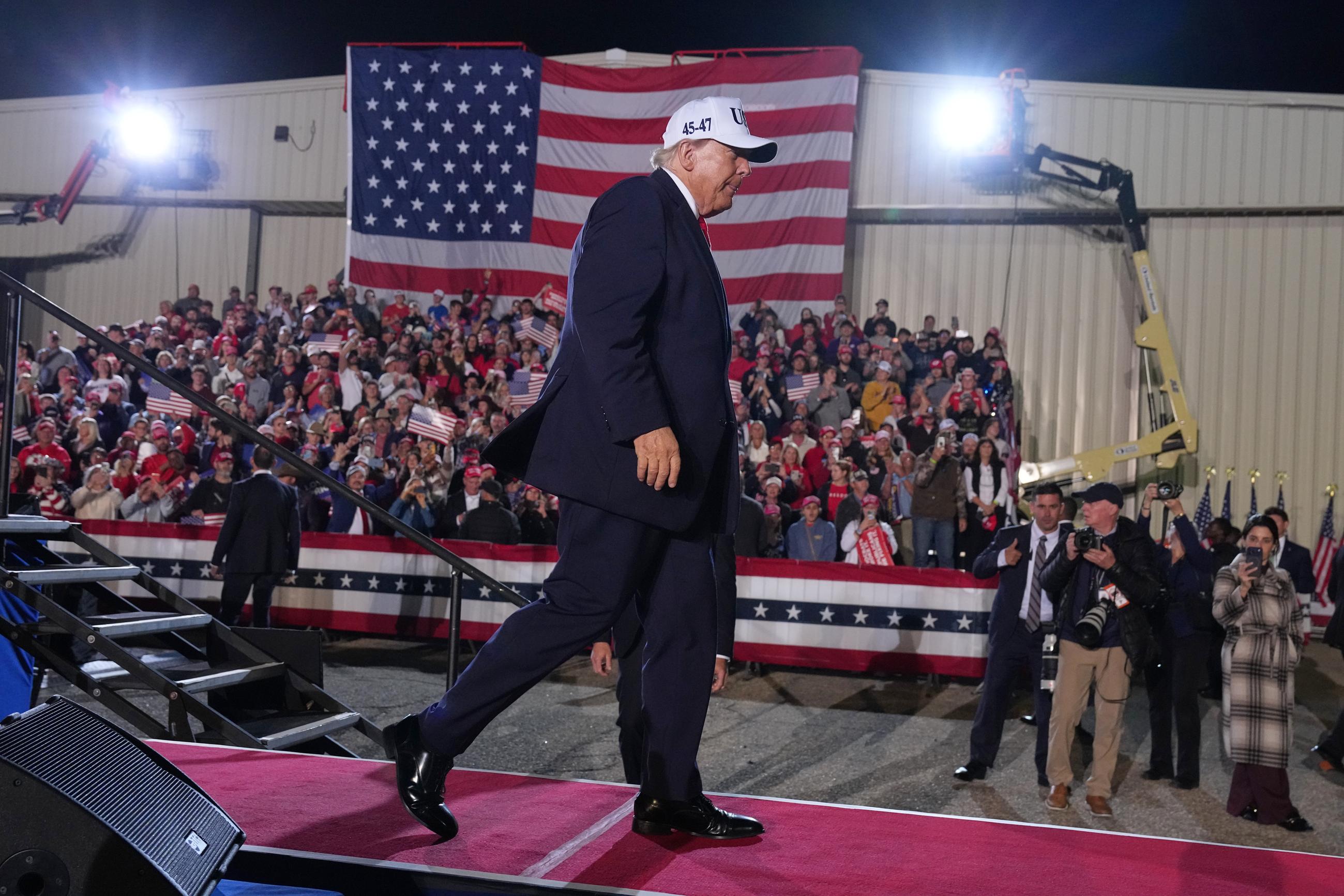
Demanding the party hold a midterm convention. There is a reason why it has been decades since either party staged a midterm convention: They cost too much money and divert attention from the real campaign. But Trump insisted on a two-day affair with himself at the center. With limited television exposure and little messaging aimed at swing voters, the gambit backfired spectacularly.
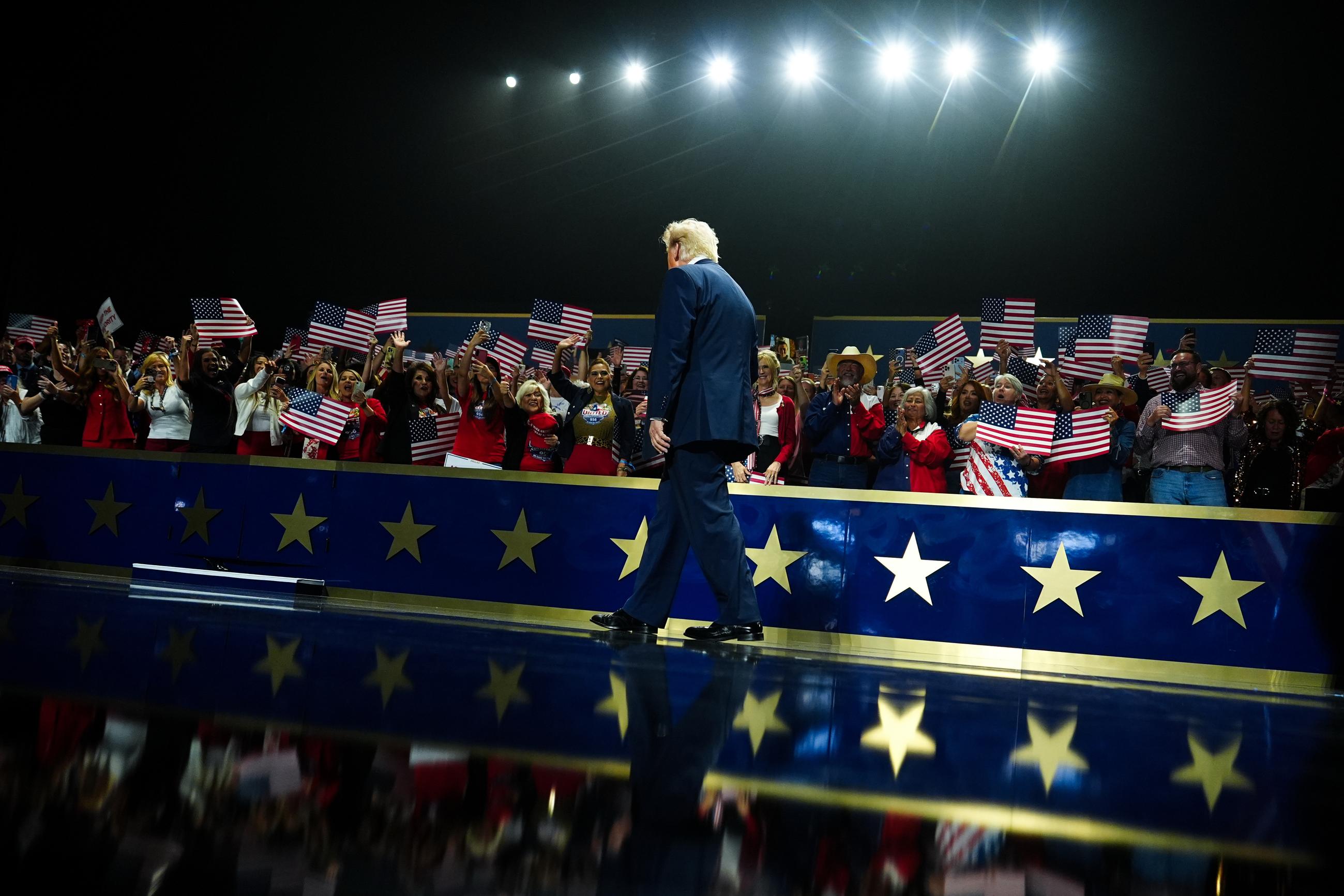
Trump arrives to speak at the Republican convention in Dallas on Sept. 10. (AP Photo/Julia Demaree Nikhinson)
AP Photo/Julia Demaree Nikhinson
Announcing tariffs that targeted Kansas. It was obvious that declaring economic war on Canada was not going to help Republican candidates in Maine, Ohio, Michigan, and Wisconsin. But as Ayres noted, it was a bad idea even in Wichita, Kansas, 800 miles south of the Canadian border. “When Trump announced we were not going to take any more or buy any more Bombardier aircraft, I don't even know if he knew that Bombardier Aircraft employs 1,200 highly skilled workers in Wichita, Kansas, the site of an intense reelection campaign for a Republican senator,” Ayres said. Both Republican senators from the state protested, but Trump held firm and one of them, Sen. Roger Marshall, lost his reelection.
Telling voters to pretend he was on the ballot. Democrats were elated when Trump first urged voters to “pretend I’m on the ballot.” Among those celebrating was veteran Ohio Democratic strategist Jerry Austin. “He asked people to make believe he’s on the ballot,” Austin said. “OK, we could do that.” He added, “If he could be indicted for whatever kind of malfeasance you want to talk about in politics, they’d give him 400 years in prison for that.”
“Your approval rating is in the mid-30s and you tell people to pretend you’re on the ballot when 65 percent of the people disapprove of the job you’re doing.”
Thinking the issues of 2024 would play as well in 2026, while mocking affordability. The president was stuck in a Groundhog Day reality, waking up every day trapped in 2024. He continued to harp on issues that had worked for him then—transgender surgeries, DEI, socialism. No matter how many times his pollsters and aides told him to talk about affordability, he could not hide his scorn for the issue that most concerned voters in 2026. In his Sept. 9 address to the midterm convention, he gave his answer: “They used the word 'affordability,' right? It's fake. They, they are so fake, because it was them that caused the affordability, to use their word, crisis. … And I'm bringing the prices way down, way, way down.” He reached his low point at a rally in Texas a week before the election when he joked that the $5,000 he was offering U.S. adults would buy no more than “a hamburger and maybe a small dessert” at his posh Mar-a-Lago club.
Championing data centers. In no state was opposition to data centers more heated than in Ohio. So, of course, Trump went to Ohio a month before the election to declare, “We want them,” adding: “Look, there’s so much money to be made for Ohio, you can’t just turn them off. They’ll go to China.” It was a knife to the heart of Sen. Jon Husted’s campaign. On Election Day, Ohio voters faced 20 ballot measures to block data centers, more than any other state. All 20 passed easily while Husted went down to defeat.
Downplaying gas prices and boasting of oil-company profits. If there was a contest for the most damaging single statement Trump made during the campaign, it may have been his boast at a rally in Perry, Georgia, two weeks before the election, about the profits being generated for oil companies by high gas prices. “We're making more money than this company has ever made before,” he said, acknowledging some might criticize the statement but adding, “I don't give a damn. We're making a freaking fortune.” Mary Anne Marsh, a prominent Democratic political analyst, said every time Trump called affordability a hoax, “everybody got that, and it was a direct insult to everybody in this country who’s having a hard time making ends meet, which is pretty much 85 percent of the country.”
Incoherence on the war. Forget the many, many times during the campaign when he predicted an imminent end to the Iran war or total victory. The president even had trouble articulating the reason he had started the war. He hit an incoherent bottom at a rally in Nebraska when he seemed to suggest he would sacrifice San Diego or Los Angeles in a war. CNN rightly concluded Trump was being “incoherent, not malicious,” but that didn’t make the statement any less damaging.
Loudly defending the Ramaswamy ad. Little needs to be said about the abhorrent ad run by Ohio Republican gubernatorial candidate Vivek Ramaswamy against Democrat Amy Acton that featured her long-estranged mother, who had refused to protect her 12-year-old daughter from sexual abuse. Every Ohio Republican of any standing condemned the ad. But not Trump. He praised it even as it dragged down the state GOP ticket.
Unfocused rallies and a downright weird closing message. Some of Trump’s rallies approached the two-hour mark. All topped 90 minutes. But finding a coherent, cohesive message in all that verbiage was more than most voters could handle. Not surprisingly, they were less concerned about his preferred dosage of aspirin, his high IQ, or his admiration for the physique of Sen. Husted than they were with the issues they faced in their daily lives. And it really got weird when he chose to conclude the campaign at the Reflecting Pool talking about pipes, caulking, and algae. Democratic strategist Austin said it was as if Trump had asked himself, “What could he do to be worse than what he’s done?” The answer was, “Go to the Reflecting Pool."
"If you did a top 10 list of all the things not to do to close down an election, he did every one of them," Austin said. "He made it all about himself. All I can say is, ‘Thank you.'”