
Democrats won huge majorities in both chambers of Congress a few weeks ago, but you’d never know it by the fierce arguments among analysts and strategists over which type of candidates performed best. The debate generally breaks down into factional warfare over whether progressive and farther-left candidates underperformed moderates, vice versa, or neither.
The anti-Trump blowout means that candidates of every ideological and factional stripe won, from moderates to democratic socialists. Because of this, the warring factions can all point to election results and somewhat credibly say “this is what people voted for” to justify pushing their favorite policies.
But November’s votes don’t say “I support Medicare for all over a public option,” or “I support Chris Van Hollen over Chuck Schumer for Senate majority leader.” While voters indeed voted for change, it was only a change away from President Trump and Republicans. They didn’t decide between warring Democratic factions.
Voters did tell us that health care was a factor in their vote, but that doesn’t point to any one policy. The situation is so bleak that any improvement is popular. Exactly how to improve health care is less of a question for voters and more a question of feasibility, especially for the next two years with the veto pen in Trump’s hand.
It’s a stretch to think voters even remotely considered Senate leadership in casting a ballot. Most voters have trouble naming any of their congressional representatives; in my polling, 43 percent of likely voters and 39 percent of all registered voters correctly named one. Yes, Schumer is unpopular. Van Hollen will be, too, if he is the leader. Leadership means making hard decisions that inevitably make people mad.
A more formal way to figure out whose ideas might have performed best when everyone won is the “wins-above-replacement” (WAR) model, borrowed from baseball, which shows how well each candidate did compared to a “generic” Republican or Democratic candidate. In short, since Democrats won by 14 points nationally, a generic Democrat would have been expected to win by 14 points.
The model can account for numerous factors in the circumstances candidates faced. For example, going up against longtime incumbent Sen. Susan Collins in Maine is a tougher task than going up against scandal-ridden Texas Attorney General Ken Paxton. At the same time, Texas is harder to turn blue than already-blue Maine.
These models generate tremendous debate over what is included and how useful they are. The models can provide a guide that informs candidate recruitment, but some questions about them are fair. The dynamics of one election may not replicate in the next.
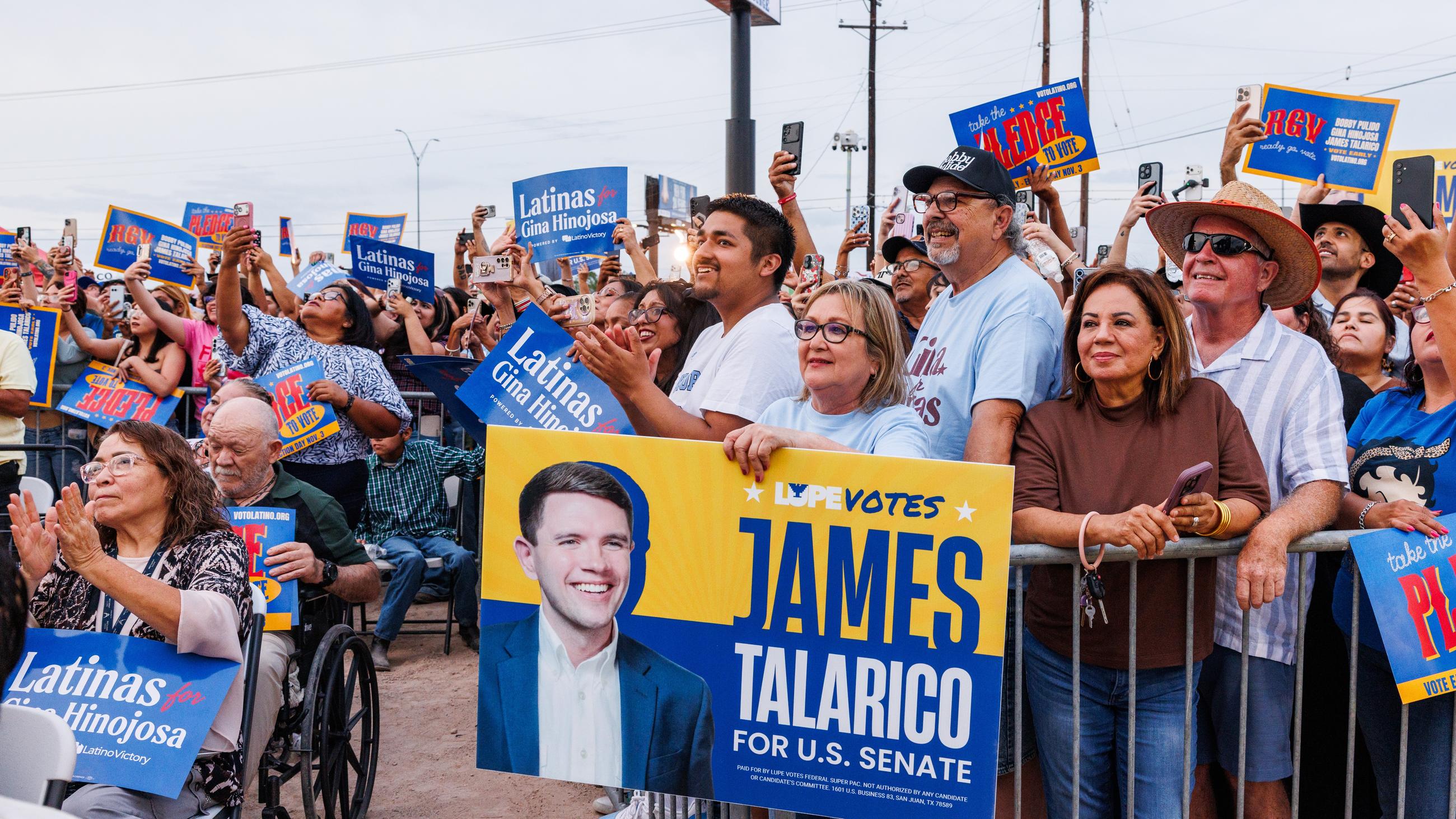
It’s an open question whether they fully account for specific situations, like potential voter hesitancy to vote for a Muslim, in the case of Sen.-elect Abdul El-Sayed of Michigan, or the fact that Sen.-elect Troy Jackson of Maine was a replacement candidate who entered the race in July.
When thinking about how WAR might be used to scrutinize presidential candidates in 2028, questions to consider might include whether people will vote for a Jewish person or a young Latina. We’ve been here before: "Will people vote for a Black man for president?" "Will people vote for a woman for president?" We’re unlikely to get these answers from a WAR model.
In these cases, we’re better off returning to voters through polls, rather than trying to wring meaning out of an election when Democrats of every stripe won. We can’t just ask people if they would refuse to vote for a Jewish person or a Latina; some small proportion might admit they wouldn’t, but it will almost certainly be an undercount because most people know they aren’t supposed to say that.
In the 2008 Democratic primary between Barack Obama and Hillary Clinton, survey researchers adapted experimental techniques to test how much penalty a presidential candidate might face in the general election for being Black or a woman. Research found a small—but important—proportion of voters would refuse to vote for a candidate based on demographics. Would a white candidate have performed better? Probably. Obama still served two terms as president.
Elections and the circumstances around them are consistently inconsistent, and we can’t change that—not by replacing or keeping Schumer as majority leader, and not by one particular policy outcome. Plus, policies have consequences: Obama pushed through the last major health care reform, and it spurred a hard-line Republican movement that successfully took over Congress.
Trying to game the system is probably worthwhile to maximize the odds of winning, but there will always be surprises. Nothing will ever make elections predictable, and we should accept that.