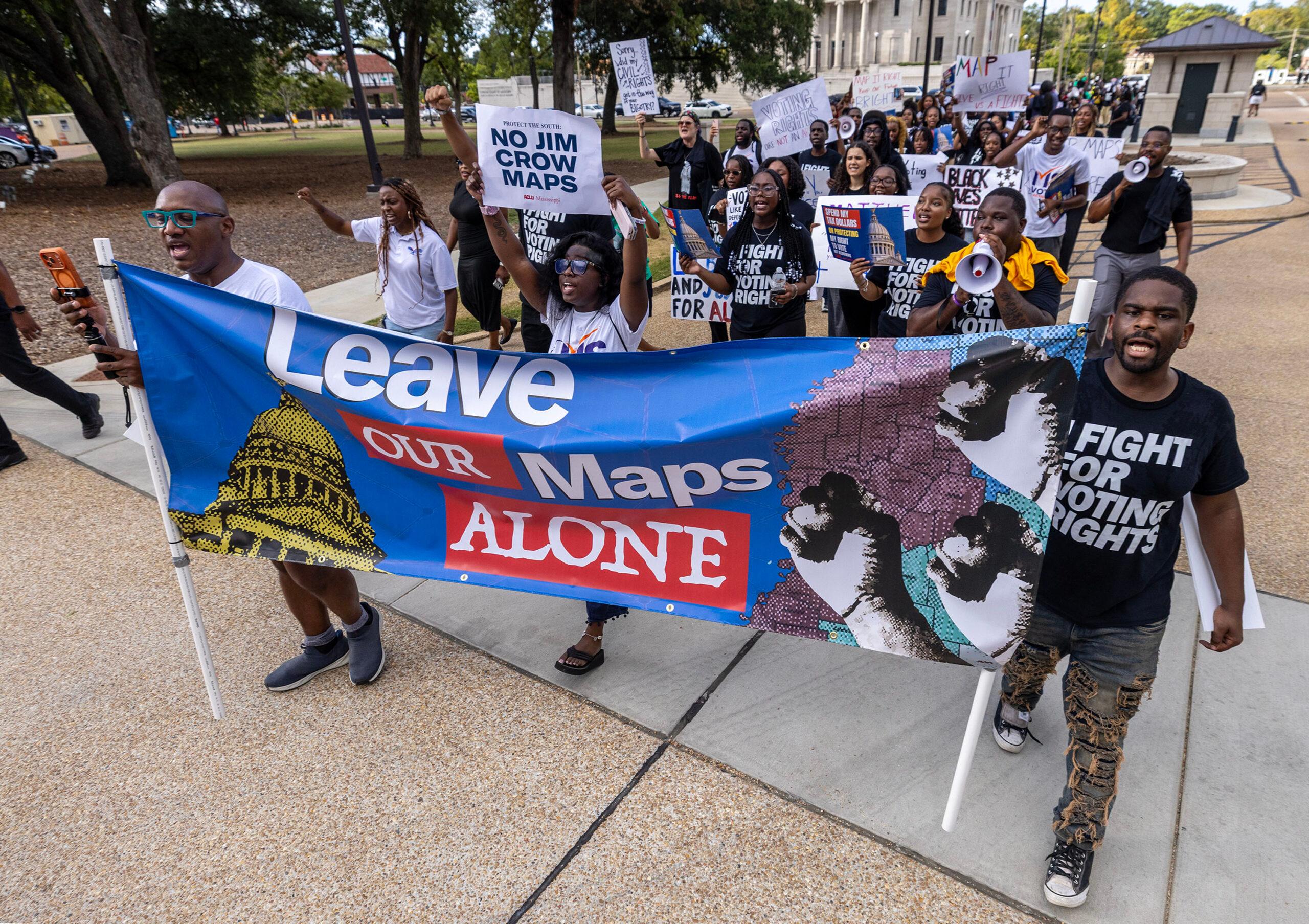
Nov. 20, 2026, 5 a.m.
Maryland, Missouri, and Colorado held redistricting-related referenda; New York has cleared the first step to put its own ballot question up in 2027; New Jersey Democrats quietly discussed what new maps might look like; and Republican legislators in Mississippi, Georgia, Indiana, and Kansas prepared for potential redraws.
But then voters delivered Republicans a generational defeat, leaving the GOP stunned and Democrats uncertain whether their future plans to fire back are worth it.
“I think you'd have to be an idiot to think that that would be resurrected in the next session,” Indiana Gov. Mike Braun told the Indianapolis Star.
Braun isn’t the only Republican leader ditching further redistricting efforts, and Democrats are taking a step back to assess a new playing field. After playing defense for so long, Democrats have to decide whether to be proactive in drawing new maps. For now, they mostly want to sit and wait.
The GOP’s gerrymandering effort successfully shifted the battlefield to the right. According to The Cook Political Report with Amy Walter Partisan Voting Index, the median House district moved from R+1 to R+3 after this cycle’s redistricting was all said and done, meaning Democrats could expect to win the House if they outperformed President Trump’s 2024 performance by about 3 points.
House Democrats ultimately outperformed Trump’s 2024 numbers by about 15 points, winning at least 257 seats and rendering moot any advantage Republicans had hoped to obtain.
Questions linger for Democrats weighing next steps: Could Republican redistricting end up a difference-maker in 2028, and should further action be taken to reverse the maps? Democrats are in no hurry to answer those questions.
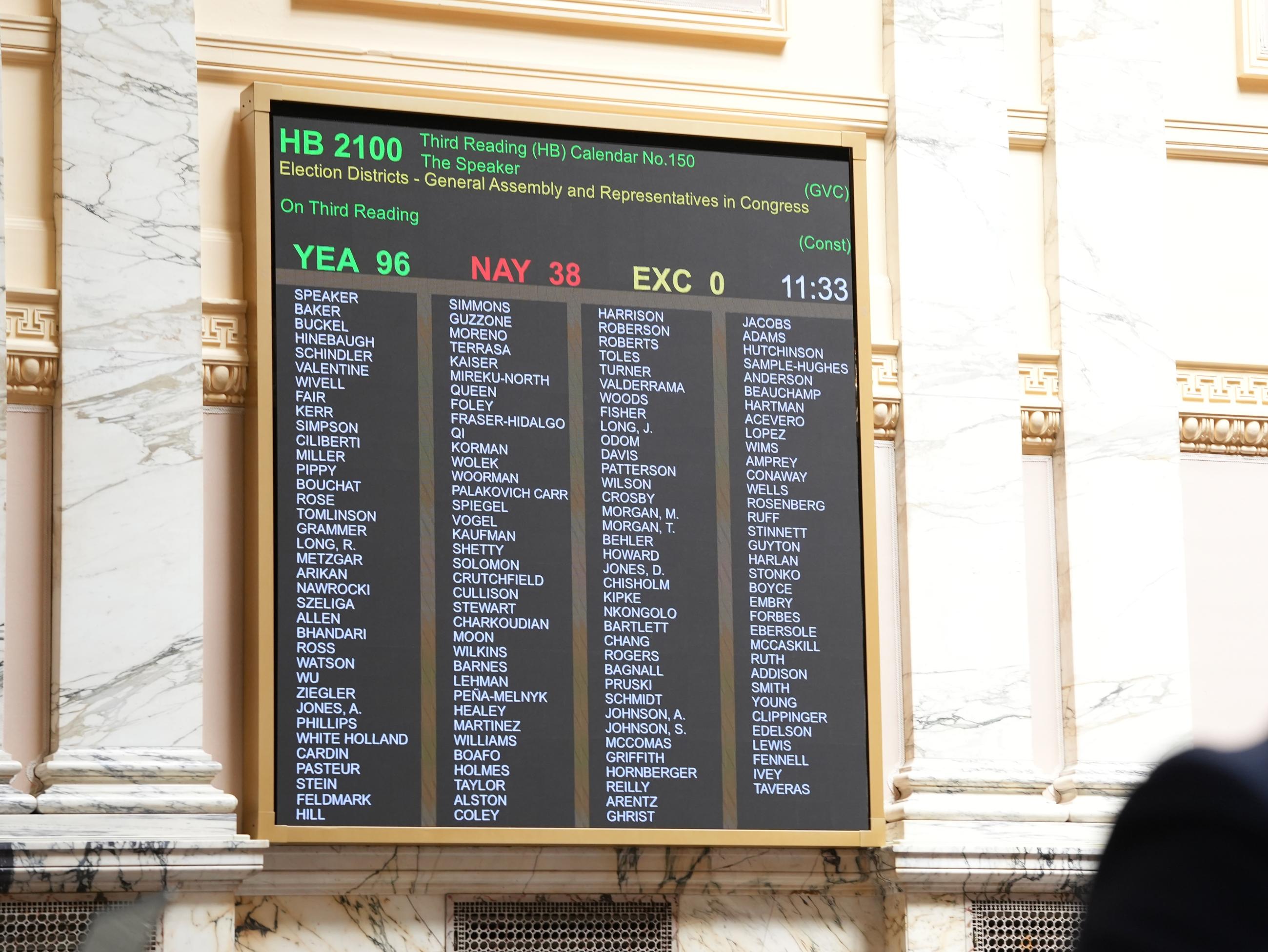
A screen in the Maryland House Chamber in Annapolis on Aug. 4 displays votes during the third reading of a proposed constitutional amendment that would have allowed a redrawn congressional map. (AP Photo/Mingson Lau)
AP Photo/Mingson Lau
In Maryland, voters approved a ballot question removing barriers to mid-cycle redistricting, and while Gov. Wes Moore suggested he’d like to see new maps, the state’s legislative leaders remained noncommittal. Virginia’s Democrats watched courts strike down a preferential map earlier this year, and though they’re keeping the door open to another try, it’s not their top priority.
John Bisognano, the president of the National Democratic Redistricting Committee, said there’s no need for Democrats to rush back into a redistricting fight. The NDRC, created in 2016 to address Republican advantages in legislative mapmaking, gained sudden importance after Trump demanded Texas redraw its lines and sparked an interstate map battle. Bisognano said neither the NDRC nor the states have enough information to make decisions.
“We don't have a deep sense of the votes and what that looks like yet,” Bisognano told National Journal. “But even more so, I don't know that we fully understand what 2028 is going to look like.”
And so most Democrats are sitting, waiting, and watching. Bisognano is keeping his eyes on the South, suggesting that Mississippi, South Carolina, Florida (again), and other Southern states might revive the redistricting fight.
Some Republicans have waved the white flag. Georgia Gov. Brian Kemp said he won’t call legislators in for a special redistricting session before he hands the office to Democrat Keisha Lance Bottoms. Braun’s “idiot” comments came after a GOP redistricting effort failed last year. It was a blessing in disguise: Had the proposed GOP map gone through for 2026, Democrats would have likely won eight of the state’s nine congressional seats.
But Republicans might still try in Mississippi, where Gov. Tate Reeves has said he has “every intention” of calling a special session for new legislative and congressional maps before the 2027 election.
“Their sessions all begin in January,” Bisognano said. “So we’ll soon start to better understand how they process the future and what they think is a good idea and a bad idea.”
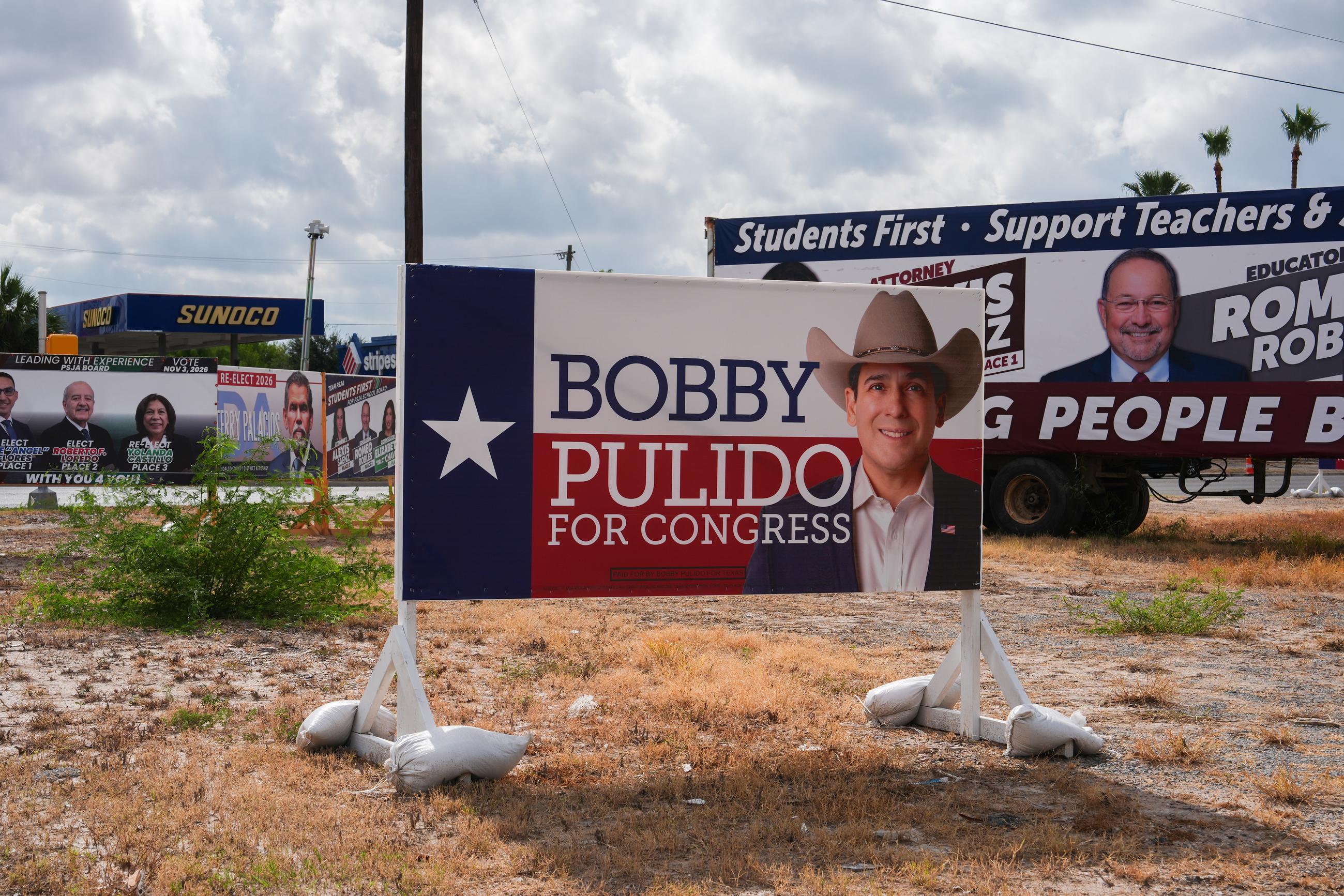
Campaign signs are seen roadside in Alamo, Texas, in September. (AP Photo/Julia Demaree Nikhinson)
AP Photo/Julia Demaree Nikhinson
A New York Times analysis found that mid-cycle redistricting wasn’t an unadulterated failure for Republicans. The report estimated that if maps had been kept the same between 2024 and 2026, Republicans would have won four to seven fewer seats. In Texas, for example, Democrats won 14 seats but would have won 15 on the old map.
Republicans could have a hard time gaining further ground on the Texas map in 2028, even if the environment improves for the GOP. The Texas GOP drew the new map under the assumption that Trump’s gains with Latino voters in 2024 would persist—they didn’t, and Republicans lost several target seats by double digits.
“I do imagine we will be watching the South with very keen eyes on if they decide to pick up the pen and continue this crazy bloodlust of a war, or if they recognize the damage that they've done to themselves,” Bisognano said.
Some Democrats have already made clear they’d like to steer away from redistricting talks. In New Jersey, where Democrats unseated a pair of House Republicans, Gov. Mikie Sherrill told the New Jersey Globe that she didn’t see a path forward for pre-2028 redistricting to shore up those seats. New Jersey’s voters would have to approve mid-cycle redistricting via referendum, a time-consuming process.
“It might be a wait-and-see in many places, but it's not going to be a wait-and-see in states that require a long run-up to redrawing maps,” said Micah Rasmussen, the director of the Rebovich Institute for New Jersey Politics at Rider University.
Sherrill said she had seen redistricting as a potential response to further Trump-backed gerrymanders, but that she now considers it unnecessary after two Democratic flips. A Sherrill spokesperson declined an interview and referred to the governor's prior statements.
Rasmussen said Democrats shouldn’t count on a repeat of 2026 in two years, especially with presidential turnout. He pointed to New Jersey’s 2nd District, where Cape May Mayor Zack Mullock pulled off a surprise victory against GOP Rep. Jeff Van Drew, to argue that increased turnout in deep-red Ocean County could be enough to sweep the seat back toward Republicans.
“As much as blue turnout was a part of this story, so was red turnout, or lack thereof, and that's not something that you can count on,” Rasmussen said. “That's not something that anybody should count on being the same in a presidential year.”

New York Gov. Kathy Hochul (AP Photo/Julia Demaree Nikhinson, File)
ASSOCIATED PRESS
New York appears more likely to bring in new congressional maps. State legislators approved a constitutional amendment last year to allow redistricting; they must do it again in a new legislative session before sending it to voters for approval.
Assemblyman Charles Lavine, a Democrat tasked with handling his chamber’s debate over redistricting, said he doesn’t yet know whether his assembly-mates will have the appetite for it.
“It remains to be seen in New York what the general feeling of the Democratic conference in the Assembly … will be, but that is certainly something that will be taken up, and will be taken up with great seriousness,” Lavine told National Journal.
New York Gov. Kathy Hochul has remained noncommittal, saying she needs to talk with House Minority Leader Hakeem Jeffries and New York’s legislators.
Beyond New York, Bisognano argues Democrats are better prepared for a redistricting fight this time around. He said Democrats could redraw maps in Maryland, Pennsylvania, and Wisconsin—Democrats will soon hold trifectas in the latter two states. Democrats in the Badger State have long criticized the GOP-drawn maps, and Gov.-elect David Crowley said he’d sign a bill to redraw them.
Wisconsin state Sen. Dianne Hesselbein, the incoming majority leader, said legislators are just beginning discussions about redistricting.
“If we have to do something, we will do something,” Hesselbein told National Journal. “We're starting to have those conversations now.”
It remains to be seen what exactly might spur Democrats like Hesselbein to pull the trigger, but their victories in states like Wisconsin give them more options than they had in 2025 and 2026.
“Democrats at this point are prepared, fortified, and we have more tools at our disposal than we had before Election Day,” Bisognano said.
But with hopes that a blue tsunami could continue into 2028, Democrats might leave the tools on the table.
“I think it makes them feel like squeezing all the juice out of the orange might not be as necessary as they thought it was going to be,” Rasmussen said.
Kirk A. Bado contributed