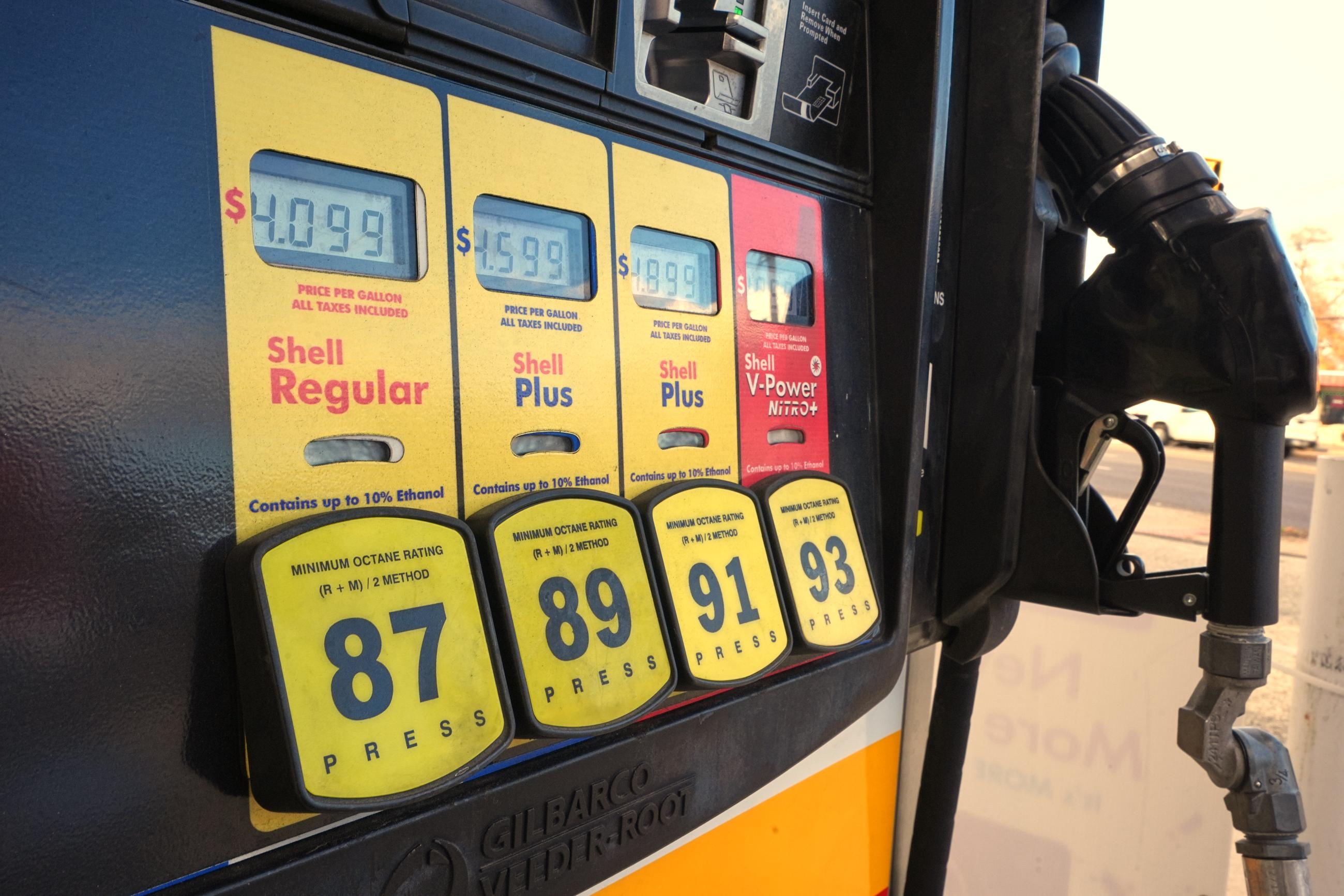

At long last, gasoline prices have been falling, and it looks as though that trend will continue as motorists hit the highways for the Thanksgiving holiday.
AAA reported Wednesday that a gallon of regular gasoline cost an average of $3.75, down 19 cents from a week ago and 54 cents from a month earlier.
That figure should drop to between $3.59 and $3.69 nationally by Thanksgiving Day, said Patrick De Haan, head of petroleum analysis for GasBuddy, which tracks prices at the pump.
If that happens, prices would still be just above the all-time record for Thanksgiving Day. According to AAA, that came in 2022, when motorists paid an average of $3.58 a gallon.
But, AAA notes: “For most holiday travelers, driving remains the cheapest and easiest way to get around.” About 90 percent of travelers during the holiday are expected to go by car.
They’ll find that numbers at the pump in all 50 states fell on average over the past week, and 12 states had drops of more than 25 cents a gallon, according to GasBuddy.
Big weekly declines
The largest week-to-week declines were in Montana, at 38.8 cents a gallon; Ohio, at 33.3 cents; Michigan, at 32.1 cents; Colorado, at 29.2 cents; and New Mexico, at 28.4 cents.
De Haan found that 39 states now average $4 or less. Idaho, Illinois, New York, and Vermont should soon go below that level, bringing the overall number to 43 states.
Hawaii had the highest gasoline prices Wednesday, at $5.60 a gallon for regular, followed by California at $5.52. The lowest price was in North Carolina, $3.08 per gallon.
Oil prices have plunged by about $20 per gallon in the last month. “Markets bet on a de-escalation between the U.S. and Iran following the midterm elections,” said Grace Zwemmer, an economist at Oxford Economics. Each dollar in a barrel of oil is estimated to mean about 2.5 cents at the retail level.
There are several reasons for the sudden drop. Before the U.S.-Iran war began in February, about 20 percent of the world’s oil passed through the Strait of Hormuz, a narrow passageway between Oman and Iran. That oil is largely proceeding through the Strait again, though flare-ups persist.
Too much oil
Also impacting the prices: oversupply.
“Expectations of a coming supply surplus outweighed fresh security incidents around the Strait of Hormuz,” De Haan said.
“The oil market is showing tentative signs of rebalancing, with global oil supplies surpassing demand for the first time since the outbreak of the war in Iran,” said the November report from the International Energy Agency.
The report found that the global oil market could return to a surplus in this quarter, “with a more substantial build in 2027.”
The Energy Information Administration predicts that per-barrel oil prices will average $84 next year, with retail gasoline prices averaging $3.56 a gallon “as oil flows recover and inventories rebuild.”
Goldman Sachs issued a similar prediction Wednesday: “Oil is forecast to ease gradually in 2027 as suppliers in the Middle East adapt to disruption from the war in Iran.”
In the U.S., the cooling of demand is reflected in AAA's projection that while 72.9 million people will drive somewhere during the holiday, that’s down 200,000 from last year’s Thanksgiving season.
An asterisk to all this cautious optimism: Oil prices are always hard to predict. A year ago, no one foresaw the price spike that gripped the country this year.
That’s why the IEA added this note in its analysis this month: “As always, downside risks to the forecast persist, as attacks on shipping undermine maritime security, which is pivotal to a sustained recovery."