Nov. 17, 2026, 6:48 a.m.
Democrats are winning their largest Senate majority since 2015, and they might not be done winning yet.
A potential ninth flip in Alaska, where former Democratic Rep. Mary Peltola currently leads GOP Sen. Dan Sullivan, could bring Democrats closer to a filibuster-proof 60-seat majority—a well-known goal for Minority Leader Chuck Schumer and Democratic Senatorial Campaign Committee Chair Kirsten Gillibrand.
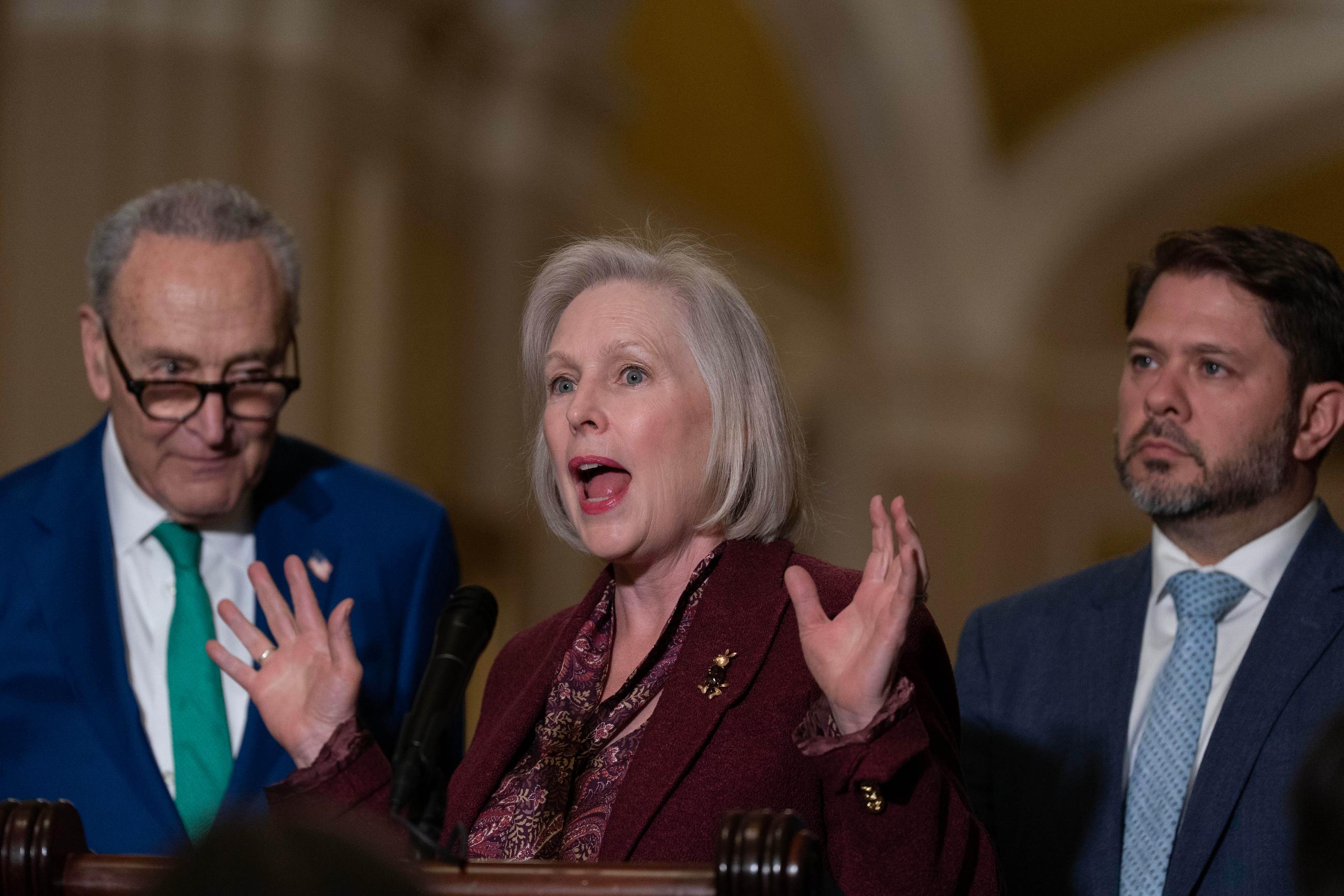
“We are about to win nine Senate seats,” Gillibrand said at a Nov. 10 press conference with Senate Democrats. “That has never happened in my political history—nine. This wave is bigger than the last blue wave, which was in 2006.”
The wave might not be done cresting. Democrats’ midterm success will inform the soon-to-be majority party’s offensive strategy in two years. The party is aiming to create unified Democratic Senate delegations in Alaska, Iowa, Kansas, North Carolina, South Carolina, and Wisconsin. Democrats could also take another look at Florida and Louisiana after their nominees came within 3 points of flipping GOP-held seats in those states. Indiana Democrats winning offices, as well as a House popular-vote advantage, could put the Hoosier State’s Senate seat on notice.
Carlos Algara, a political science professor who studies Senate elections at Claremont Graduate University, told National Journal that the 2026 and 2028 elections could mirror the 2006 and 2008 elections—when Democrats gained 13 seats over two consecutive cycles—if President Trump’s approval ratings remain massively underwater. Algara also cautioned, however, that the 2028 cycle could be less Democratic than the 2026 midterms, limiting Democrats’ pickup power.
“I think the broader political environment of economic anxiety for voters provides another tailwind for the Democrats moving forward,” he said. “When you start talking about double-digit waves, a D-plus-15 wave, that’s very hard to replicate.”
Democrats’ ability to win beyond the purple states in 2028 could be limited by the performance of the party’s presidential nominee. In presidential election years, a Democrat hasn’t flipped a GOP-held Senate seat in a state won by the Republican presidential nominee since Indiana in 2012. Democrats failed to flip a Trump-won state in 2016 and 2020, though in 2024 they held onto their seats in Arizona, Michigan, Nevada, and Wisconsin, where Trump also prevailed.
“I think the lesson has to be in order for the map to still look good for Democrats in two years, they do need to deliver,” Democratic strategist Adam Bozzi told National Journal. “They need to be focused, they need to show they’re focused on affordability, show they’re focused on corruption, and make that a contrast with Donald Trump and Republicans.”
National Republican Senatorial Committee Chairman-elect Bernie Moreno isn’t dancing around the toughness of the 2028 map, declaring in a statement that “Republicans must enter this next election clear-eyed: The road ahead back to a Republican Senate majority will by no means be easy but the fight has never been so important.”

“We’re going to go after every single race that we think that we have a clear victory with a candidate that matches their state,” Moreno said during a Nov. 10 Senate GOP press conference. “We’re going to make certain that we win a lot of the races that maybe others may not think we can win.”
Moreno is setting his sights on again beating his 2024 opponent: Sen.-elect Sherrod Brown, who will return to the chamber after defeating GOP Sen. Jon Husted in Ohio’s special election this year. Brown will be up for reelection in 2028, giving Republicans their second shot at unseating the Ohio Democrat during a presidential year.
“To my colleague who won reelection: Make sure you rent, do not buy,” Moreno said, addressing Brown.
Apart from Ohio, Republicans’ next targets include the presidential swing states with Democratic-held seats: Arizona, Georgia, Nevada, and Pennsylvania. Pre-primary dynamics could influence three of these contests. Sens. Mark Kelly of Arizona and Raphael Warnock of Georgia are considering 2028 presidential bids, while Sen. John Fetterman of Pennsylvania is poised to face multiple Democratic primary challengers.
“A lot’s going to depend on how much Democrats overplay their hand of what these opportunities like that are going to look like,” said Jason Thielman, the NRSC’s executive director during the 2024 cycle. “I think they need to remember they didn’t win a mandate; they didn’t really win an election. Republicans lost an election cycle here.”
In 2022, Nevada was the closest Senate election on the battleground. Democratic Sen. Catherine Cortez Masto prevailed by 7,928 votes, yet Silver State Republicans might have to recruit a challenger outside the political arena after a devastating midterm wipeout. Every GOP statewide candidate, including Gov. Joe Lombardo, lost their election, and Republicans lost each of the state’s four congressional races.
State Sen. Danielle Gallant, a Republican who represents eastern Clark County, told National Journal that Republicans’ midterm losses could be attributed to voters’ dissatisfaction with the Iran war and rising gas prices, a heightened cost of living, and corruption at the federal level. Gallant said Republicans should focus on recruiting candidates with a “balanced life” as opposed to those “eating, breathing politics 24 hours a day.”
“Running the same candidates—I mean, I think the Trump effect has played out, and so running that super MAGA candidate is not going to play well in a very purple state like Nevada,” Gallant said. “I think we probably do need to look a little bit farther out than the pool of candidates that we've been picking from over the last couple years.”
A Democratic flip in Alaska puts pressure on Republicans to flip a seat in a Harris-won state. Unlike Democrats this year, Republicans don’t need to flip seats in states that supported the opposing party by double digits in the 2024 presidential race, but the GOP will likely need to set its sights on Minnesota and New Hampshire—two states where notable GOP recruits couldn’t overcome the blue tsunami.
Minnesota’s 2027 special election for Gov.-elect Amy Klobuchar’s Senate seat will provide Republicans with their first test ahead of the 2028 cycle, but Democratic Sen.-elect Peggy Flanagan’s 10-point victory over Republican Michele Tafoya this year could forecast Democrats’ advantage in next year’s contest. Without Minnesota, Republicans would need to flip Arizona, Georgia, Nevada, New Hampshire, Ohio, and Pennsylvania while holding the presidency to break a 50-50 Senate.
“I think the likelihood that Republicans can flip the six seats if they retain the presidency or the seven seats if they don't [is] … a very tough challenge,” Algara said. “Obviously, never say never. This election cycle is really unusual. … But the probability of that, just looking at the map, is very, very slim and just given the political reality that Republicans are in the White House today and presidents generally don't become … more popular in the latter half of their second terms.”