Nov. 16, 2026, 6:15 p.m.
DENVER, Colo.—Eighteen years ago, Democrats nominated Barack Obama during a drizzly coronation at the Denver Broncos’ Mile High stadium.
The night in Denver was a euphoric celebration for long-suffering Democrats. The first Black major-party nominee promised change the country could believe in, and offered Democrats an opportunity to turn the page on an unpopular Republican president who was waging a seemingly never-ending war in the Middle East and overseeing an economic bubble set to burst.
The more things change, the more they stay the same. Nearly two decades later, Democrats came close to approximating that feeling in Denver at last week's What’s Next conference.
Part unofficial afterparty, part 2028 cattle call, the conference was organized by the center-left Majority Democrats, the organization that consulted for some of the most proficient surfers of the blue wave like Sen.-elect James Talarico of Texas.
Incumbent and newly elected officials mingled with the campaign-staffer class excited to celebrate a big win but also eager to land their next gig throughout the grounds of the Mission Ballroom main stage, nestled away in the fashionable River North (or cheekily monikered RiNo) neighborhood just north of downtown.
Mallory McMorrow, the third-place Democrat in the dramatic Michigan Senate primary, gave interviews to creators while holding a beer. Colorado Gov. Jared Polis worked the room at a happy hour sponsored by the New Democrats. The Majority Democrats staffers, lording over the proceedings, were instantly recognizable on the campus in their black pit-crew jackets with their names embroidered in script on custom patches.
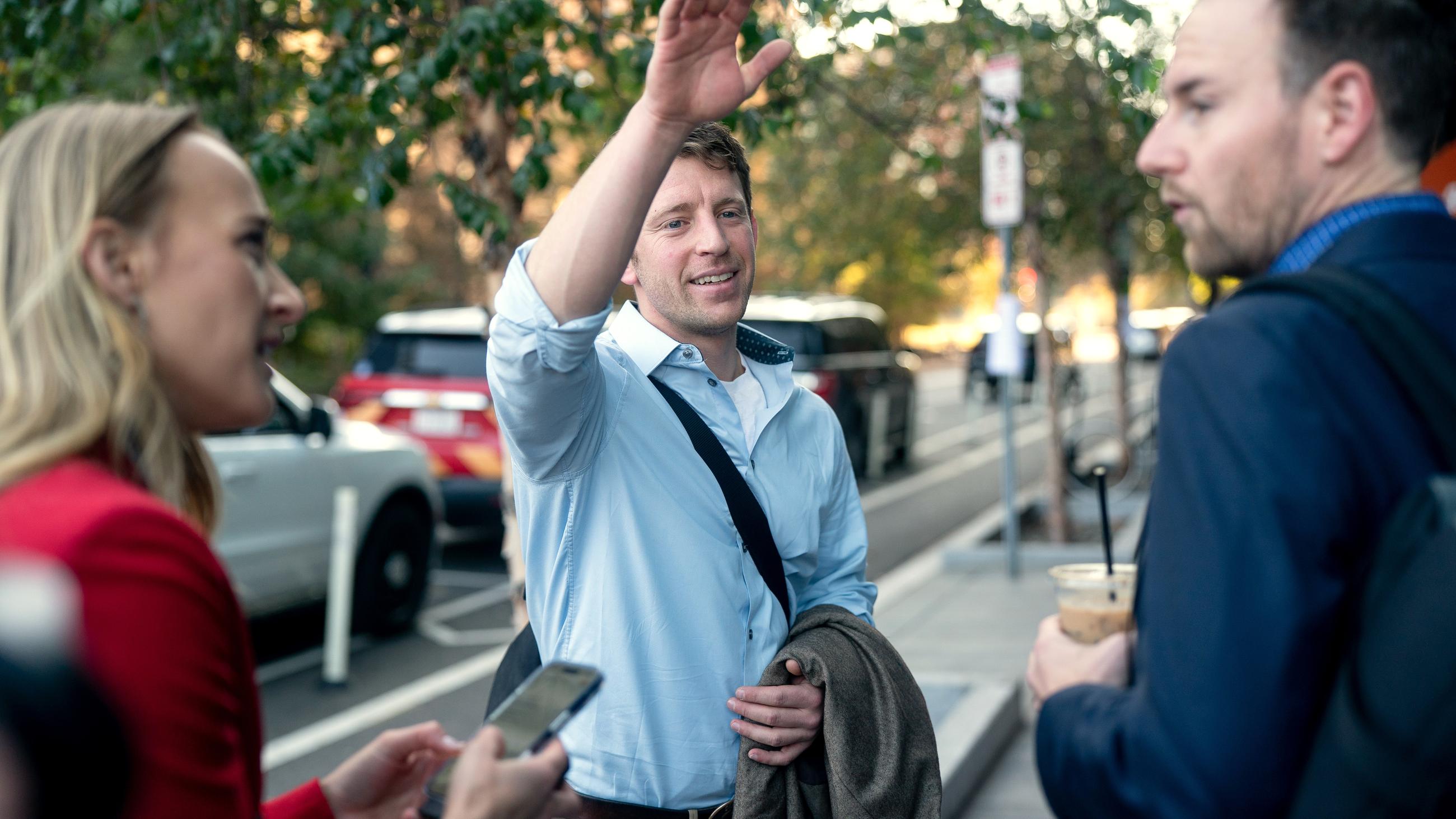
“I want to make sure we pause to recognize the extraordinary success of what just happened,” former Transportation Secretary Pete Buttigieg said in his keynote address. “I can tell that everyone is looking over their shoulder like: ‘Are we allowed to celebrate? Are we permitted to rejoice?’ We are.”
But a week after romping to a historic wave that resulted in the largest House majority this century, nine Senate seats flipping in their favor, and a net gain of more than 560 state legislative seats, the hangover from the election is starting to settle in. As they grappled with the scale of their win, Democrats also grappled with, well, what comes next.
At happy hours, receptions, and informal and formal meetups of the 3,500 Democratic politicians, strategists, and activists, the same question kept popping up: How do we not f- up this opportunity? This is how the “nauseously optimistic” attitude that plagued anxious Democrats before the election manifests even after they outperformed their wildest expectations.
They have reason to be concerned. The Democratic Party remains vastly unpopular with voters despite the overwhelming wins. Only 43 percent of voters said they had a favorable view of the party, according to Gallup.
Every Democrat at the conference had their own prescription to treat this budding hangover. For Sen. Chris Van Hollen of Maryland, the most immediate fix is a change in congressional leadership. The looming return of Sen. Chuck Schumer, who did not attend the conference, as Senate majority leader hung over the gathering.
Activists within the party have complained about Schumer and his fellow New Yorker, House Democratic Leader Hakeem Jeffries, for months. Jeffries, who was interviewed by Fox News’s token liberal commentator at the conference, was the only speaker interrupted by multiple protesters at What’s Next. Several anti-Schumer protests popped up outside the security perimeter, but the biggest threat to the New Yorker’s leadership position came from inside.
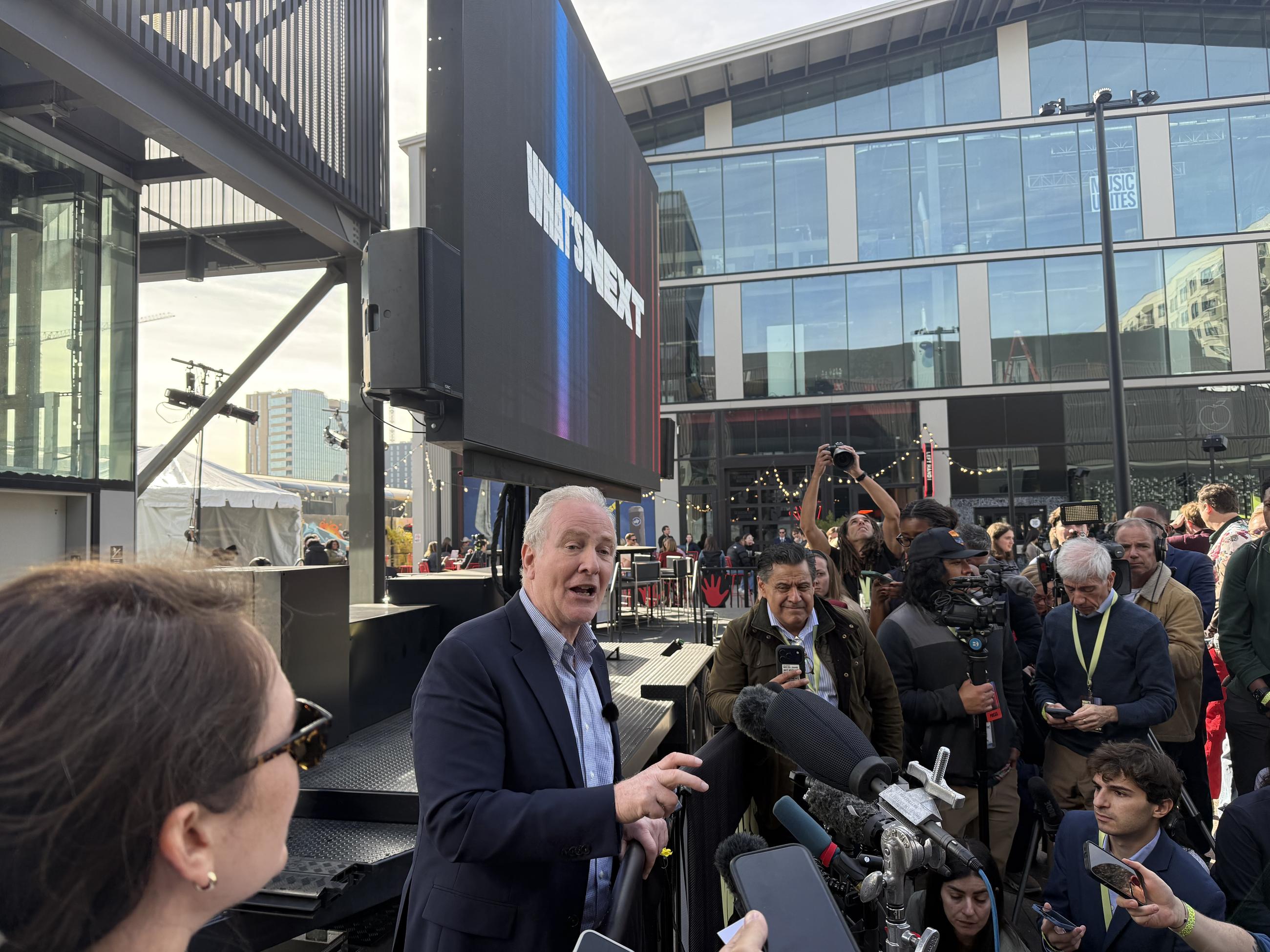
Just hours after announcing his challenge to Schumer, Van Hollen walked on the main stage on the conference’s second day to shouts of “Leader!” as some attendees sported “Van Hollen for Leader” shirts stylized like the Van Halen logo.
Under a giant digital screen illuminated with the “What’s Next” logo, the 67-year-old from D.C.’s Maryland suburbs made the case that he was the generational change voters demanded as they turn away from Schumer, the soon-to-be-76-year-old from Brooklyn.
“Voters chose change, and I think that the Democratic caucus needs to be open to new ideas, a different way of governing, and a different way of conducting and approaching politics,” Van Hollen said.
Along the sidelines of the event, Democrats who spoke with National Journal were more focused on the X's and O’s and less on the Jims and Joes in their prescriptions for power.
North Carolina Democratic Party Chair Anderson Clayton—one of the architects of her party’s remarkable turnaround to not only beat, but embarrass the GOP despite its gerrymander—emphasized that it all starts with investing in rural voters.
Gesturing with her Carolina Blue nails (or were they for the blue wave?), Clayton said the election results were “a culmination of four years of investment into rural communities that said, ‘We're actually going to vote for our best interest this year.’”
Clayton said she plans to contest every single seat on the ballot next cycle down to judgeships and district attorney.
Rep. Brendan Boyle of Pennsylvania, who moonlights as an election expert when he’s not winning them himself, said the best thing for Democrats to do is let President Trump be Trump.
Voters chose change, and I think that the Democratic caucus needs to be open to new ideas, a different way of governing, and a different way of conducting and approaching politics. ”
—Sen. Chris Van Hollen
“As Yogi Berra might say, ‘It's deja vu all over again,’” Boyle said before explaining that he sees very little indication that Trump’s approval ratings or the economy will substantially improve before 2028. “This is very eerily similar to what George W. Bush and Republicans faced in 2007, going into 2008, so I am quite bullish and optimistic that we can actually carry this into 2028.”
But in order to replicate an Obama-level wave, Democrats need to nominate an Obama-level nominee. Was that candidate in Denver this time?
Whistle stop
“Are you guys here for the Shapiro presidential announcement?” a late-arriving reporter joked to the mass of media mobbing the press stand following Pennsylvania Gov. Josh Shapiro’s remarks on the second day of the conference.
More than half a dozen potential 2028 candidates, including the aforementioned Shapiro and Buttigieg, along with Sens. Elissa Slotkin of Michigan and Raphael Warnock of Georgia, and even former New Orleans Mayor Mitch Landrieu, addressed the gathering. The confab was an opportunity for the more-moderate wing of the party to wrest back control over the presidential nominating process from the progressive groups that defined 2020, and perhaps give a boost to their favored candidates.
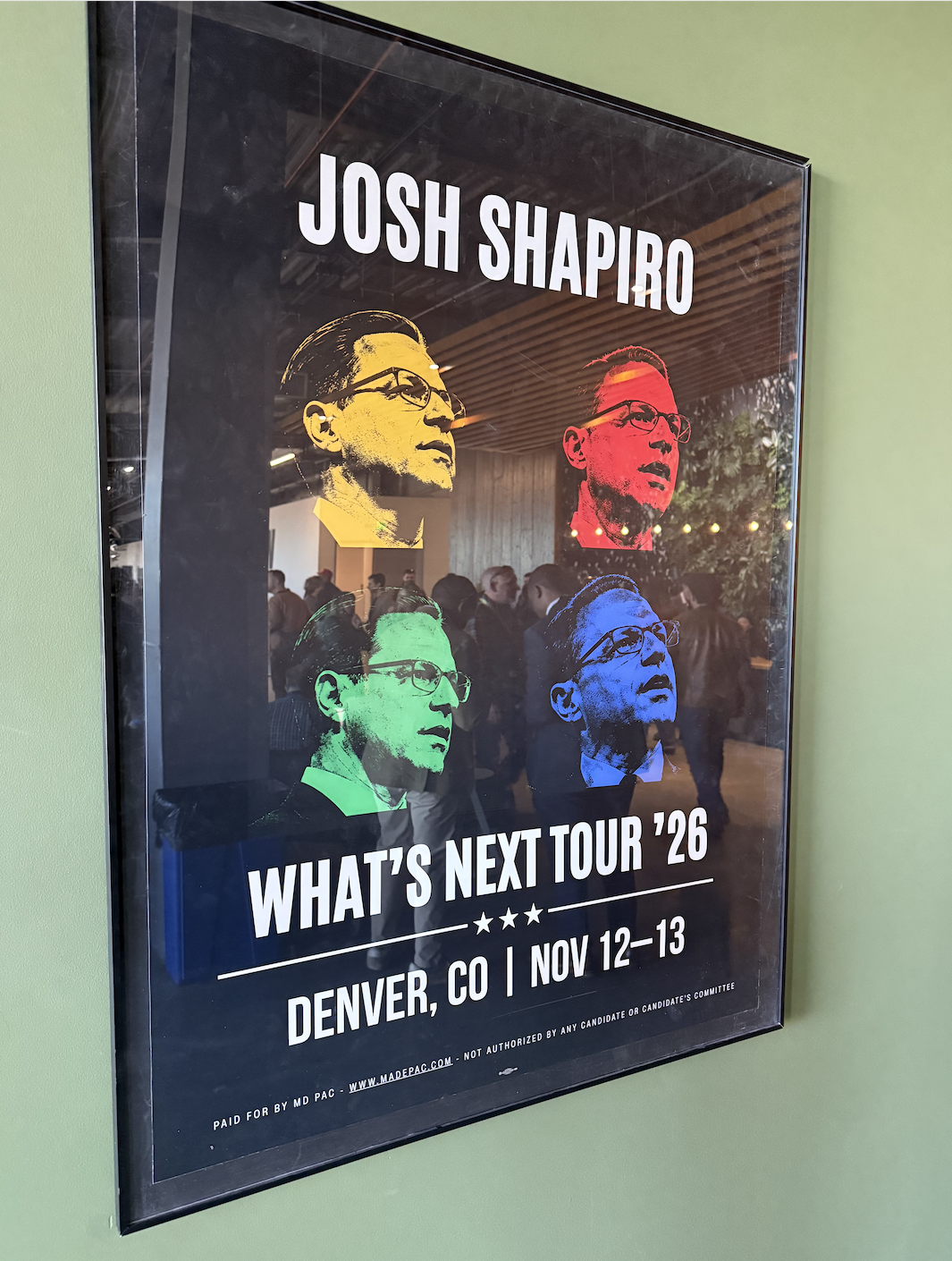
The concert venue seemed more at home hosting Dashboard Confessional or the early days of The Fray, so conference organizers leaned into the theme. Along the walls by the bars and merch tables (whose holiday shopping would be complete without a “Tax and Spend Liberal” baseball cap for a loved one?) were posters of the headliners appearing as rock stars. Virginia Gov. Abigail Spanberger was stylized like psychedelic Fleetwood Mac; Shapiro was all four Beatles; and Warnock was done up like Jimi Hendrix.
These were the stars Democrats hope will rock the vote in two years. None of them were radically different on policy—the candidates who would take up the progressive lane, like Rep. Alexandria Ocasio-Cortez, were not in Denver—and all were more likely than not going to be seeing plenty of each other in green rooms on the campaign trail before too long. What mattered at the conference was whether or not they had the star power to capitalize on the Democratic momentum following the blue wave.
Democrats could be returning to Denver again in short order. The Mile High City is on the short list of sites to host the 2028 Democratic National Convention. The reviews from Democrats who spoke to National Journal during and after the conference were mixed—possibly clouded by the longest nationwide air-traffic ground stop since 9/11—but Democrats still have fond memories of that football stadium. Democrats are fired up and ready to go, to borrow a phrase, but what direction they’re going has yet to be charted.