Nov. 12, 2026, 5:37 p.m.
Politics isn’t all shaking hands and kissing babies. An unspoken reality of campaigning is that a lot of time and money spent as a candidate is moving from one place to another.
As primaries wrapped up and summer recesses came and went, campaigns spent much less on air travel in the third quarter of 2026 compared to the first two quarters of the year, with expenditures dropping by roughly 83 percent. Campaigns reported spending about $3,127,000 in Q1 and $2,841,000 in Q2.
Campaigns reported spending just shy of $484,000 on airline travel over the most recent quarter, from the start of July until the end of September, according to Federal Election Commission disbursement data.
Democrats spent more on air travel than Republicans in Q3, a few hundred short of $300,000 compared to Republicans’ roughly $156,000. Third-party and independent candidates rounded out the total spending with about $28,000.
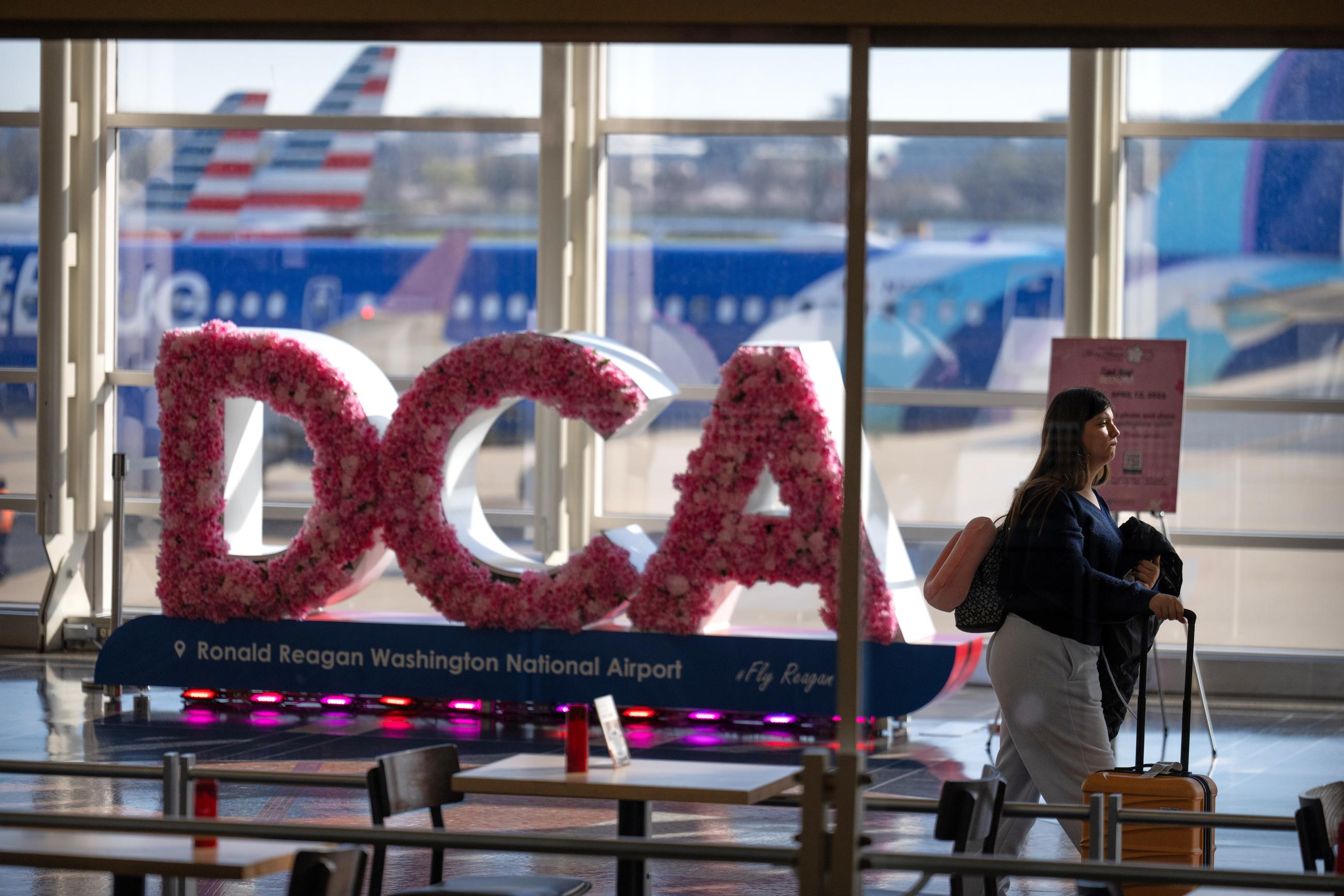
The bulk of spending went to American Airlines and United Airlines, which accounted for 58 percent of the total Q3 spending on air travel. It’s no surprise that these airlines topped the list given that they both have hubs at two major D.C.-area airports—American at Ronald Reagan Washington National Airport and United at Northern Virginia’s Washington Dulles International Airport. American has over half of the market at Reagan, flying to just shy of 100 destinations mostly within the United States. United holds 67 percent of the market at Dulles, with both domestic and international destinations.
All told, American received $163,702 from Democrats, Republicans, and even some independents running for Congress last quarter. United received about $50,000 less, with candidates spending $118,128 on the airline.
Delta Airlines rounds out the top three, with candidates sending $77,381 to the Atlanta-based airline. While Delta does not operate any hub in the D.C. area nor in the greater mid-Atlantic region, the airline’s hubs in Atlanta, Detroit, and Minneapolis made it the carrier of preference for campaigns in those respective states. Former Rep. Mike Rogers, the Republican candidate for the Michigan Senate seat, spent more on Delta than any other airline in Q3.
Southwest Airlines, with its dominance at Baltimore/Washington Thurgood Marshall International Airport, found itself in fifth place, below West Coast-based Alaska Airlines. Campaigns spent only about $50,000 on the lower-cost carrier, which does not operate a traditional “hub” out of Baltimore but does have a large share of the airport’s market.
Campaigns spent over $13,700 last quarter traveling on JetBlue Airways, which has a modest 6.1 percent share of D.C.-based traffic from Reagan but operates frequent flights up and down the East Coast. In the first and second quarters, campaigns spent $4,158 and $2,402 on JetBlue, respectively.
Spending on international airlines decreased on Q3 reports after campaigns had reported around $6,000 in spending in both the previous two quarters. Former Rep. Alan Grayson of Florida spent $1,329 on British Airways, while Rep. Ilhan Omar of Minnesota spent $1,658 on Virgin Atlantic; these were the only two international carriers present on the Q3 reports.
In Q1, $6,332 in spending on international travel went exclusively to German carrier Lufthansa, while in Q2 campaigns spent $6,054 total on a diverse set of international carriers from Europe, Africa, and Asia—including Asiana, China Eastern, and Singapore airlines.
The top airlines by political party were also the top airlines overall, with both Democrats and Republicans spending the most on American, followed by United and then Delta.
The highest spender overall was former Rep. Mary Peltola of Alaska, who spent just shy of $40,000 on air travel in Q3. Most of her money spent on air travel—roughly $24,750, or 63 percent—was for flights aboard Alaska Airlines. The Seattle-based carrier operates numerous daily flights throughout the Last Frontier, making it the logical choice for Peltola. In second was United, at $9,885, and in third was American, at $2,412.
Peltola also spent money on smaller, local Alaskan airlines. She spent $562 on Sterling Airways, which operates as Aleutian Airways. The propeller-plane service operates flights throughout the Aleutian Islands, mostly to smaller airports that lack service from other airlines.
Rep. Alex Vindman of Florida came in second, spending $15,629 on travel across multiple airlines, the bulk of which went to American—$8,456. The rest was evenly divided among United, JetBlue, and Breeze Airways.
Rep. Nanette Barragán of California came in third for Q3’s top air-travel spenders, with $14,830 in reported spending, splitting the spending 60-40 on American and United, respectively. Barragan’s Los Angeles-based district has a long list of available airlines to choose from when flying to D.C. from Southern California.
Rep. Thomas Massie of Kentucky reported $11,549 in spending on air travel in Q3, while Rep. Dan Meuser of Pennsylvania was close behind in fifth place, spending $11,437.
While most campaigns spent money to travel aboard large U.S. carriers like American and United, some like Peltola spent money on smaller local carriers. All told, campaigns spent $2,111 on small carriers, including Washington state-based San Juan Airlines and Caribbean-based Seaborne Airlines.