
Democratic governors will hold a majority of governorships for the first time in 16 years, representing over three-fourths of the U.S. population. The Democratic Governors Association flipped ruby-red states like Iowa, Ohio, and—their biggest win—Texas.
But for DGA Executive Director Meghan Meehan-Draper, it was no accident, and not just the result of a favorable midterm environment. Having just 15 Democratic governors in 2016, a near-century low, the DGA spent the last decade investing hundreds of millions of dollars to flip traditionally red territory. This interview has been edited for length and clarity.
Democrats had just 15 governors nationwide in 2016. Now Democrats could double that when the dust settles. How did the party turn it around?
It is thrilling to have 30 Democratic governors in America. It's surreal, and it didn't happen overnight. The DGA's work to build Democratic governing power in the states, I think, over the last decade has been foundational for truly what's a generational shift in power that we achieved this year. So when I started at the DGA, I think we had 15 Democratic governors. You may have heard my joke that we had more governors named John than women. But now I think we have more Amy's than Johns. But for the last decade, the DGA has honestly led the charge with super-smart strategic investments in red states. There are governors' races every year, so we're forced to learn lessons, we're forced to refine our tactics. We have no off years. We have to keep raising money all the time, and we've been relentlessly focused on having a comeback. When I became executive director in 2023, I said, "I want my goal to be 26 by 2026; I want the majority of states." And so to not only have hit 26 but exceed it to hit 30 has been incredibly gratifying, but also a long, long, long work in progress.
How do you make sure that the gains Democrats made aren't just a reflection of a favorable midterm environment, but translate into a durable presence in states where the party has struggled in recent years, like Iowa, Ohio, and Texas?
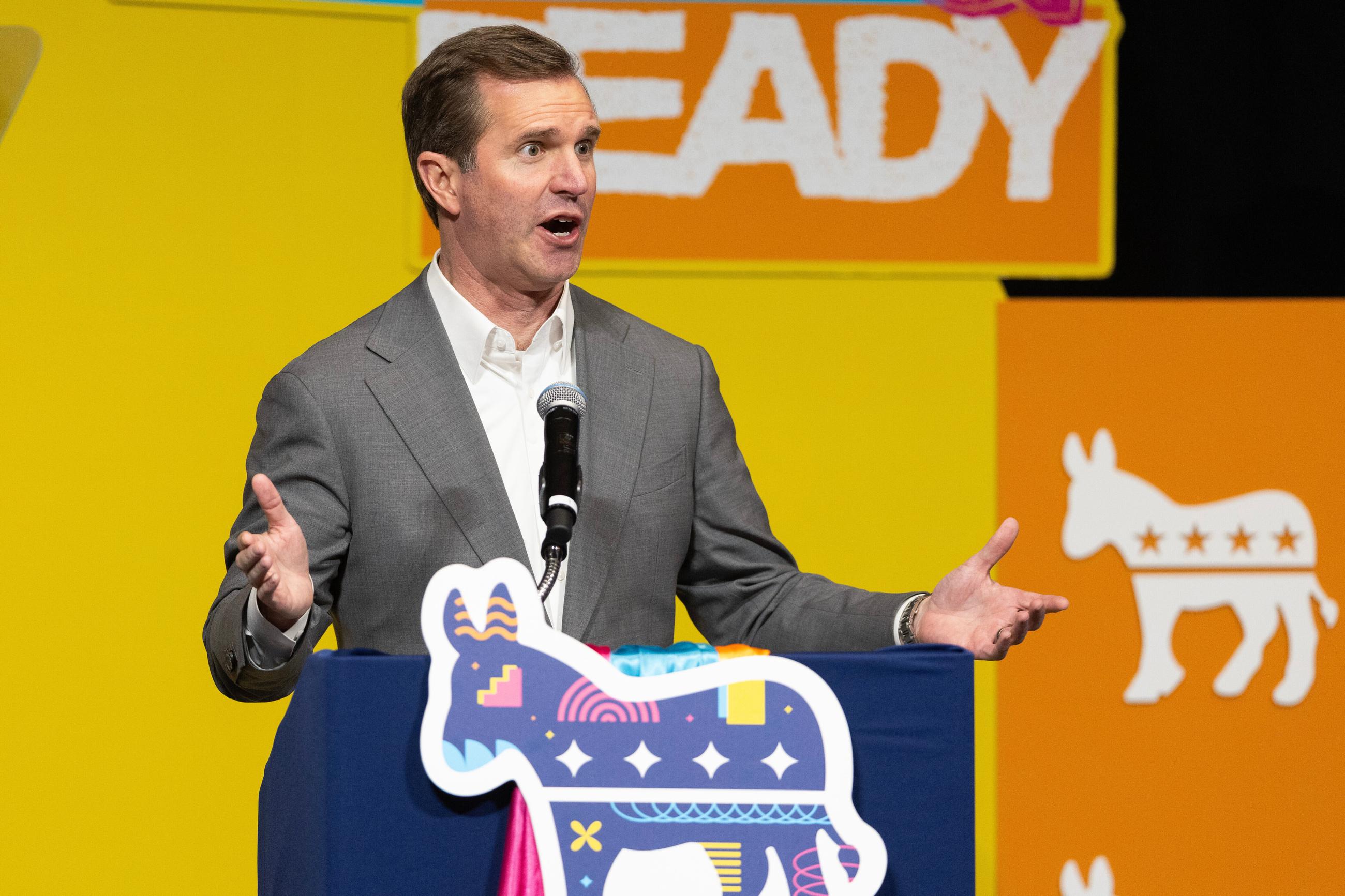
I think you know Democratic governors are the most popular elected officials in the Democratic Party because they have to get things done for people. Our chair, Kentucky Governor Andy Beshear, says it's because they have to show receipts. So I think a couple things. One, these candidates who flipped these states didn't just win because it was a good year for Democrats. They had great campaigns, flawless campaigns, frankly, and great candidates who were able to seize this moment. Democratic governors also just are leading the fight against Trump, and that's what people want. Electing Democratic governors also has massive implications for the future of democracy and future of the party. Democratic governors build strong state parties in their states. They do things like overseeing consequential redistricting maps. They do things that people don't think about, like appointing thousands of judicial appointments all over the country, which becomes a pipeline for the federal judiciary. And finally, I think the legislative trifectas that so many of these states achieve this week will give Democratic governors the opportunity to get things done. So this is a generation of the next decade of, frankly, Democratic Party power and Democratic governing power.
Democrats now have trifectas in a majority of key presidential battleground states—Arizona, Michigan, Pennsylvania, Nevada, and Wisconsin. How could Democratic control of state governments shape the political environment in these states ahead of the next presidential election, when these states will be key?
With our 30 Democratic governors, they represent now I think almost 400 Electoral College votes. So that's just an exciting thing to note about 2028. They're leading by example to show you can be a Democrat and get things done. I think that's why you see someone like Governor Laura Kelly in Kansas, Governor Wes Moore in Maryland, Beshear in Kentucky, all be among the most popular Democrats in this country, because they have to work across the aisle, get things done. In so many states, you're constitutionally required to pass a budget and work across the aisle, and have to show the receipts of how you're improving people's lives. I think also they're setting very, very good state-by-state policy examples, whether that's canceling medical debt, making free day care the law of the land in a place like New Mexico, which will certainly have ripple effects across the country.
Democrats saw overperformances in the Mississippi and Louisiana Senate races this year. What, if anything, are you taking away from those results as you look ahead to gubernatorial contests in those states next year?
It shows me that with the right candidate, voters are completely open to supporting a Democrat, even if they are not a Democrat. I think we frankly saw the same thing in a place like Georgia, where voters were very, very open to electing their first Black woman governor because they knew that she was going to deliver for Georgia. So I just think we're excited to go on offense in those three places. We have won them before. It's also I think highlights the importance of focusing on the issues on the ground and speaking directly to what folks are feeling, and that's something that at the DGA our candidates are always focused on, not getting bogged down by national noise or sort of distracting issues, and instead focused on the issues that matter most to people in the state.
Going into the election, some polling suggested there might be ticket-splitting in states like Texas, Georgia, and Kansas. But Democratic gubernatorial and Senate nominees in some of these states appeared to run more closely together than expected. What did that tell you about how voters were approaching the ballot this year?
It shows me also that people do see their governor and Senate candidates very differently. I think people elect a senator to go stand up for them in Washington, but for governors' races, typically people want someone who's going to lead with a steady hand and kind of deliver the basics for their everyday lives, and deliver jobs and a good local economy and invest in their local schools. There's a handful of states like Maine, Michigan, Iowa, Alaska where the Democratic governor candidate ran ahead of the Senate candidate, or a handful of wins we had, like in Nevada, Wisconsin, Arizona, where there was no senator; it's just the governor was top of the ticket. And I think it's all about, you know, electing leaders who you think will deliver for you. And across the board, our candidates conveyed that message and then won.