
Voters across the nation Tuesday rejected the message President Trump had been trying in his own uniquely Trumpian way to send them in the last month, instead sending their own message of deep dissatisfaction with him, his White House, the Republican Party, and the state of the nation.
It is not clear that the president heard their message any better than they heard his, though, as his initial reaction suggests he will blame everyone except himself for one of the most sweeping electoral rejections in modern American history.
His reaction was unlike that of any modern president who suffered losses in a midterm. Presidents from Dwight Eisenhower in 1954 to Joe Biden in 2022 hastened to assure voters they had heard them and understood their frustration. Bill Clinton in 1994 accepted “my share of the responsibility” for Democratic losses. George W. Bush acknowledged “a thumping” in 2006. And Barack Obama in 2010 recognized “a shellacking” from the voters.
There was no similar acknowledgement of responsibility from Trump. His reaction has been one of denial, projecting a blithe “business as usual” approach. It was very much in sync with his decidedly quirky closing message on Monday, in an event at the Reflecting Pool in which he talked about pipes, algae, and caulking in what The New York Times called a speech “mostly about landscaping.”
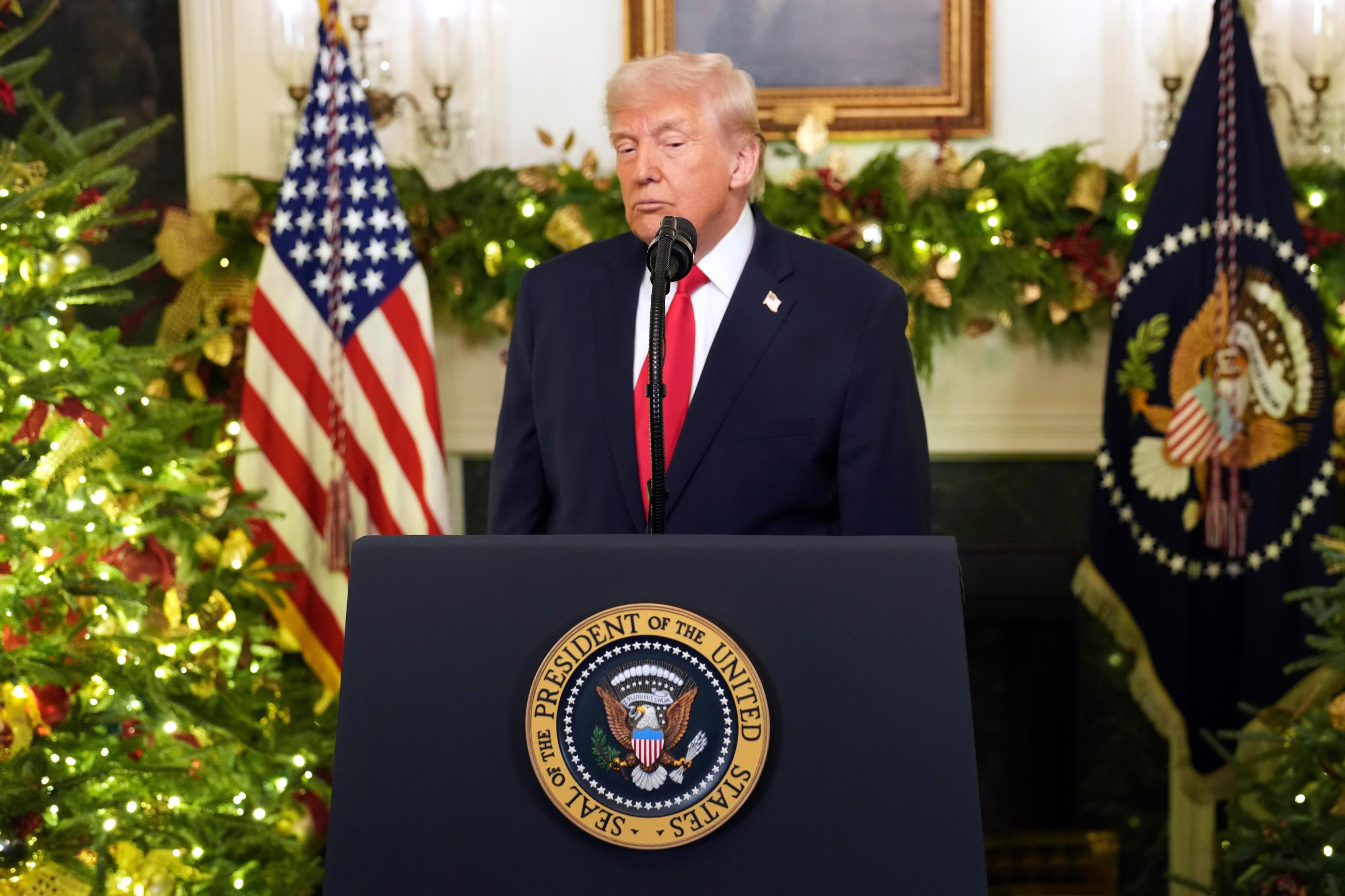
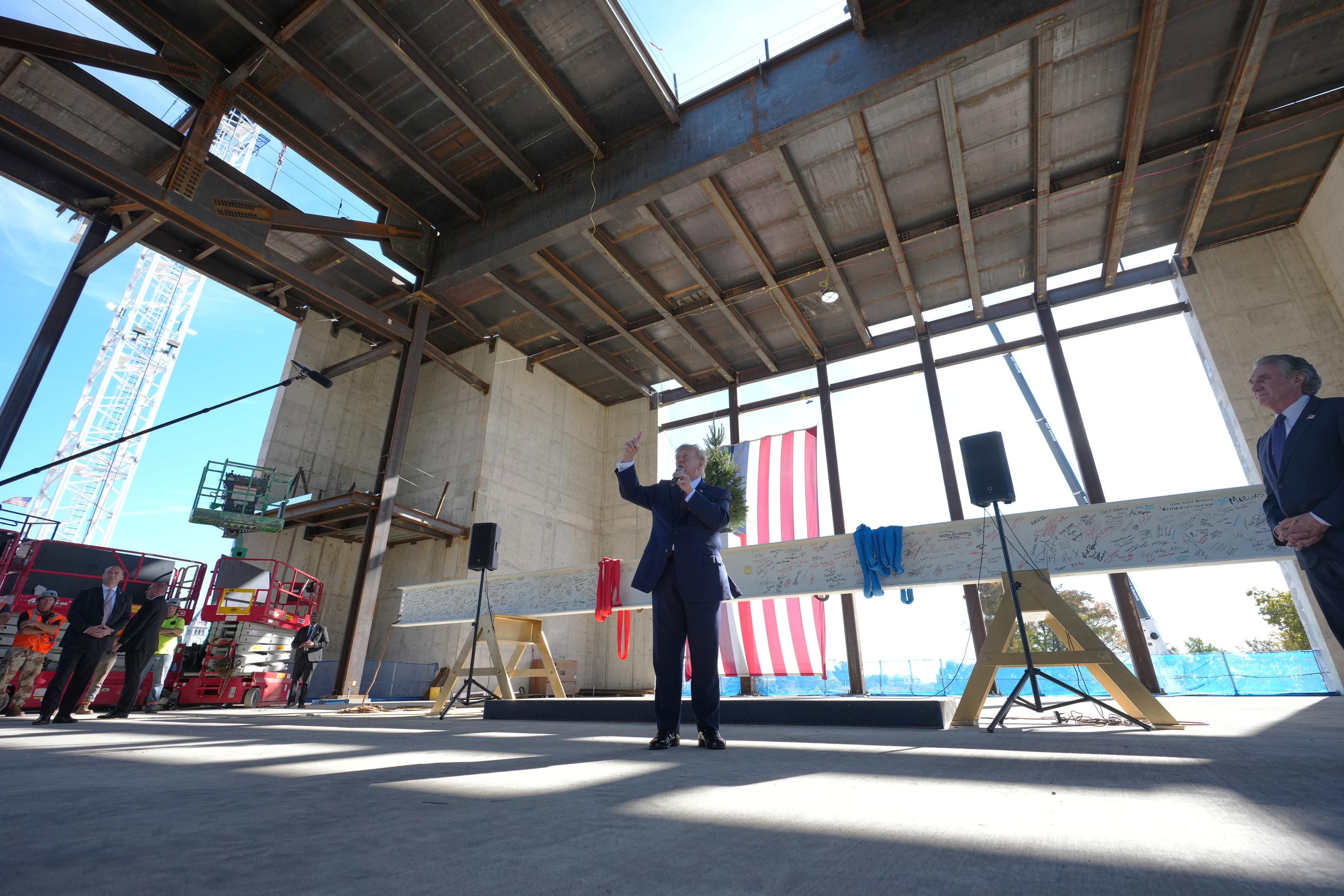
If watching his hand-picked candidates crash and burn and seeing his party lose both the House and the Senate threw him off his stride, it didn’t show in his only public appearance after the election, a Wednesday appearance at the construction site of his controversial White House ballroom. As he did on Monday, he again talked about caulking, “magnificent columns,” “the most beautiful marble you’ll ever see,” “beautiful limestone,” “Corinthian design,” a “50-foot ceiling,” the helipad, the Reflecting Pool, his triumphal arch, statues of heroes, and a renovation of a municipal golf course.
He devoted his first 14 minutes in public following the election to a recitation of every single one of his construction projects, before giddily telling reporters to “watch the beam go up.”
It was a tone-deaf performance that was both bizarre and deeply frustrating for Republicans trying to bury their political dead and tend to the survivors of Tuesday’s massacre. “He just got handed his head and he's talking about monuments to himself," said a veteran Republican congressional aide after watching Trump tout his pet projects while airily dismissing the damage done to his party and his agenda.
His denial extends to his own unpopularity in the country. In numerous interviews, he has called low poll numbers "fake" and insisted he really is at 60 percent approval. The exit polls conducted by CNN say otherwise, particularly when contrasted to where he stood on Election Day in 2018 and 2020.
In the 2018 midterm, the network’s exit polls had him at 45 percent approval/54 percent disapproval. That improved to 50/49 on Election Day 2020. But it cratered on Tuesday, with only 37 percent of voters approving of the job he has done as president and 63 percent disapproving.
Trump also fell short of his own measuring stick of his clout. After losing the House in 2018, he insisted that only he had kept the carnage in check. “We saw the candidates that I supported achieve great success last night,” he said the next day. “Of the 11 candidates we campaigned with during the last week, nine won last night.”
Using the same metric, of the 13 candidates Trump stumped for in the last week of this campaign, 10 lost their races. Two—both in Florida—won. And one of those races, in Mississippi, is still to be determined.
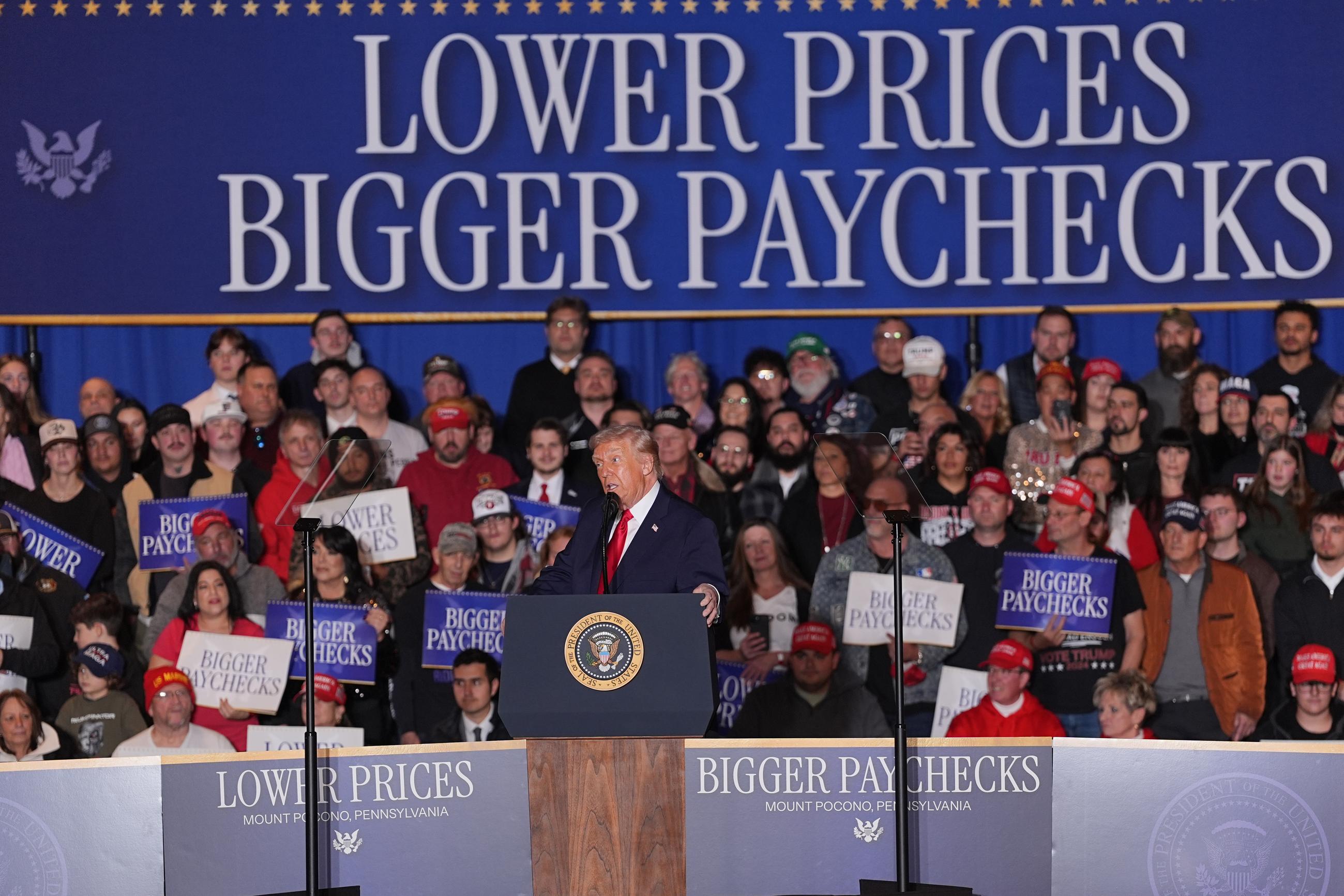
The president’s campaign effort was unquestionable—28 rallies in 20 states in the last 32 days. He spoke for 32 hours and 35 minutes in his quest to save flailing candidates. What was questionable was what he said. He never settled on a clear message, careening from the Iran war to men’s posteriors, from his ballroom project to cognitive tests. He was over the top and vituperative, a tone that seemed to turn off more voters than it pleased.
A National Journal analysis of all the rallies found that his only mentions of “affordability” came when he was mocking the word. He mentioned inflation 116 times, but always to declare it resolved. The word he mentioned the most was “communist,” 123 times, along with “lunatic” 65 times and “socialist” 21 times. But Trump never accepted that a heavy emphasis on transgender mutilation, the border, and demonization of Democrats was not the best way to gain votes in 2026.
The campaign was a reminder that Trump has yet to master the bully pulpit that comes with his job. Persuasion has never been his strong suit, lawmaking never his preference. Unless legislation has tax cuts or one of his pet projects, members of Congress often find him bored by the process. When Republicans this year pushed through a housing bill, the president called it “a big yawn” and wouldn’t sign it.
Now, with hostile Democrats in charge of Congress, he will need to tap previously unseen skills of persuasion if he wants anything out of Capitol Hill. That is yet another message he has yet to absorb. So far, he has indicated he will just try to bully Congress into submission. “You veto, veto, veto, and then they come and they say, 'How do we get it done?' and you make a deal,” he told reporters two weeks ago about how he would respond to a potential Democratic Congress.
Exasperated Republicans are waiting for him to learn that will not work. “What they still don’t get down there is that after what just happened, Trump will never be able to tell Republicans what to do again,” said a longtime Republican strategist. “That makes him the biggest loser of all tonight.”