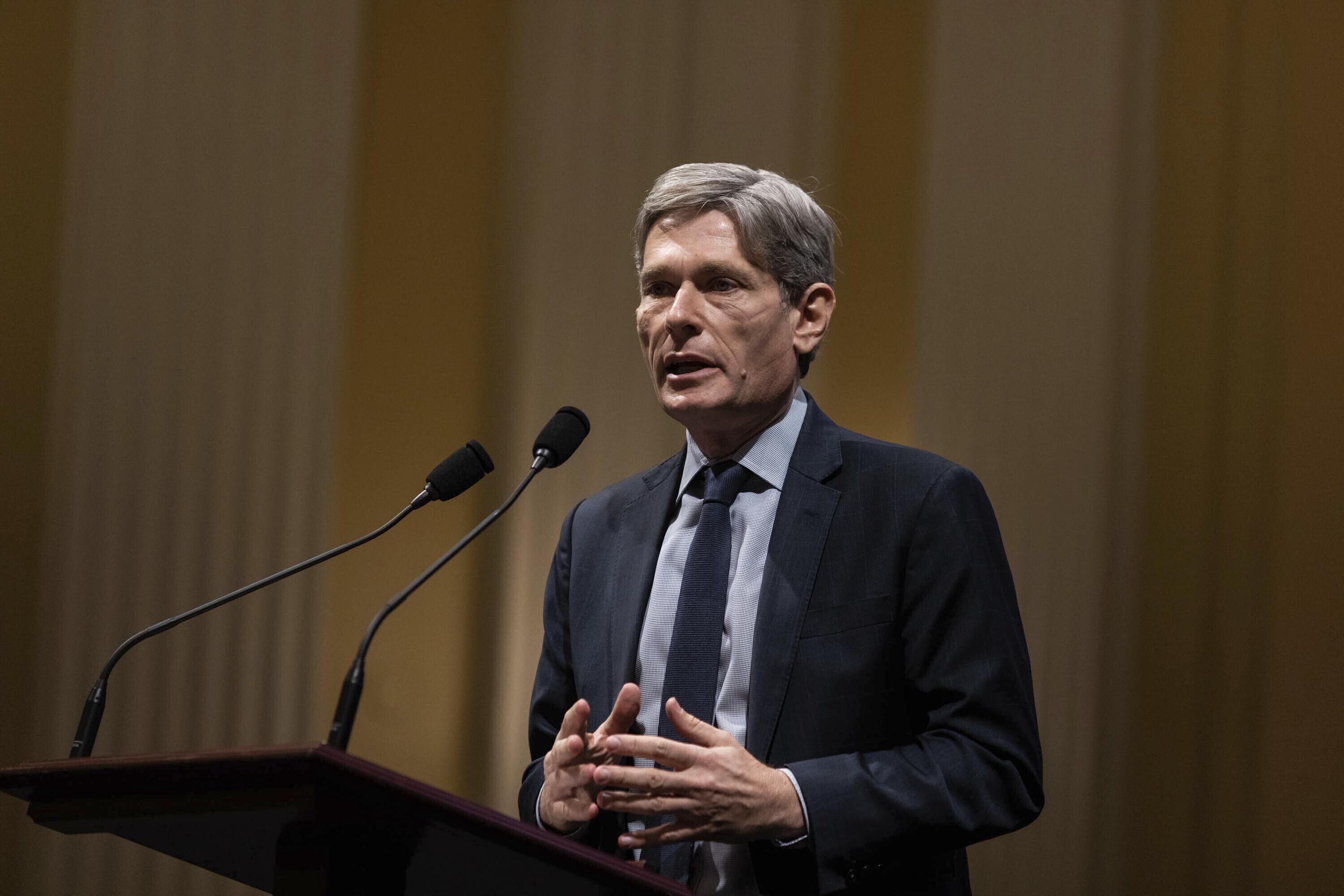

Former Rep. Tom Malinowski mounted a comeback bid earlier this year in the special election to succeed New Jersey Gov. Mikie Sherrill in the 11th Congressional District. He narrowly lost a crowded primary, partly because the American Israel Public Affairs Committee’s super PAC upended the race by spending millions on attack ads against him.
The spending surprised Malinowski, a pro-Israel Democrat, and he issued a warning to other Democrats. AIPAC’s involvement in a slew of races became a focus of this year’s Democratic primaries, with more Democrats than ever shunning the group’s support. Malinowski spoke to National Journal about AIPAC’s intervention and the changing role of the group in American politics. This conversation has been edited for length and clarity.
AIPAC has announced it would end endorsements and donations through its AIPAC PAC, but would continue supporting allies through its super PAC, the United Democracy Project. What do you make of this decision?
In one respect, it’s an admission of failure. They are conceding that their brand is toxic. At this point, pretty much no one in the Democratic Party, or even in the Republican Party, wants to be publicly associated with an organization that imposes a hard-line “unconditional support for whatever the Israeli government wants” position.
But it also appears to me that they’re doubling down on the larger political approach that led to the failure through their dark-money super PAC, which presumably will continue raising a lot of money to run slimy ads against candidates who AIPAC decides it doesn’t like—ads that won’t mention Israel—and will try to disguise the entity sponsoring them.
United Democracy Project’s ads against you didn't mention Israel, and they continued that practice throughout the year in other races. Do you think this trend is healthy?
No, I don't think that running dishonest, slimy attack ads that have nothing to do with the issue you care about because you’re afraid to communicate your actual point of view is healthy for American democracy. It’s legal because we have a First Amendment, and the way these ads are funded is legal because of the Supreme Court decision Citizens United, which I would love to see overcome by a constitutional amendment. But it’s wrong and profoundly unhealthy.
It’s also—and this is the good news from my point of view—beginning to backfire on a lot of the single-issue special-interest groups that are doing this. AIPAC is one example, and I think you could say the same about some of the pro-cryptocurrency super PACs that I don’t think are doing as well in this cycle as they did before.
In my race, we didn’t really have the time or money to push back effectively, but my race did have the salutary impact of alerting Democrats across the country as to what AIPAC was doing.
Back in January, you told me: “The stakes have just gotten higher, because if these assholes get away with doing this to me … they will do it to every Democrat they want to target in the country in the midterms.” You feel that warning was heeded by other Democrats?
I mean, I was right and wrong. I was right that their intention was to send an intimidating message to other Democrats along the lines of, “We’ll do to you what we’re doing to Tom.” But the good news is that Democrats weren’t intimidated and managed to turn the tables against AIPAC in part because so many people, even in the pro-Israel community, were outraged by what AIPAC did in my race. I think what they did in N.J.-11 contributed to the delegitimization of AIPAC in American politics because they so clearly went too far.
AIPAC’s spending against you helped a more vocal critic of the U.S.-Israel relationship win the seat. Do you think that was something that they considered or that they maybe even regret?
Well, I can’t speak to their feelings today. You’d have to ask them.
I know many, many, many pro-Israel folks across the country were furious, including many members of AIPAC. I think their leadership may have felt—and this is the interesting part—that having somebody like me, who expressed criticism of the Israeli government from a pro-Israel point of view, would have been more dangerous to their hard-line agenda than somebody who took a more radical position, a position less likely to persuade the mainstream of the Democratic Party.
So I think at least some of them at the leadership level preferred [progressive organizer Analilia Mejia] won the primary for that reason. Not that they loved the prospect, but that they preferred it to the alternative of having an influential national security Democrat with a strong pro-Israel background expressing support for greater pressure on the Netanyahu government.
How should Democratic leadership approach the burgeoning Israel-skeptic wing of the party, whether it’s the base or the increasing number of Israel-skeptic members of Congress?
I think they should approach it with consistent principles. They should have nothing to do with AIPAC, but also nothing to do with other single-issue dark-money super PACs that are corrupting our democracy.
They should support the idea and the vision of a Jewish and democratic state of Israel that is safe and secure, alongside the idea and vision of a sovereign and secure and democratic homeland for the Palestinian people. They should resist the racism and extremism of the Israeli Right, which is bad for America and for Israel, and they should resist the extremism of the Far Left that I think cares more about its ideological anti-Zionism than about finding workable solutions that save Palestinian lives.