
Polls in California will close at 11 p.m. Eastern on Tuesday, but observers may need to wait much longer for results.
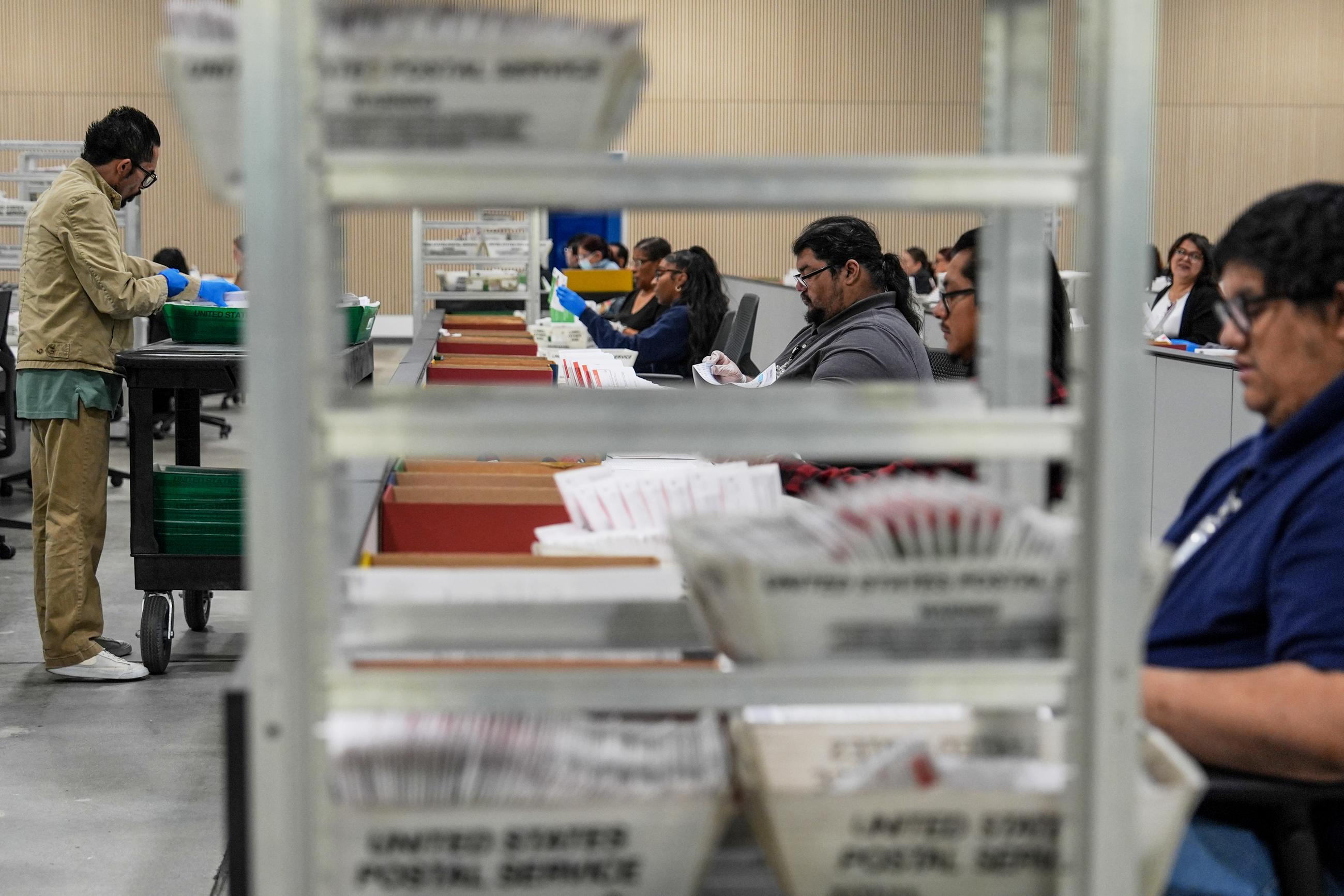
Most California voters vote by mail, which takes election officials longer to process than ballots submitted in person. More than 80% of California voters used mail-in ballots in the 2024 election, and nearly 90% voted by mail in the state’s June primary. Only 66% of ballots in the 2024 election were counted within two days of the election, per data from the California Voter Foundation. California counted 5.1 million ballots in its primaries earlier this year, a figure greater than the population of 27 states.
“California does not take much longer than any other state,” Center for Election Integrity and Research Executive Director David Becker said on a press call.
Election officials verify voters’ identities for every mail-in ballot cast, and they can begin the verification process as soon as ballots are received. In past cycles, many voters have submitted their mail ballots on or around Election Day, leading to slower processing times.
“This creates what we refer to as the pig in the python effect, where ballots are not able to be processed by election offices until after Election Day,” California Voter Foundation President Kim Alexander said on a press call.
The speed at which races can be called depends on the margins of victory, which could tighten after California redrew its congressional districts under Proposition 50.
The problem with these delays, Alexander said, “is that it is undermining voter confidence. It’s opening the door to election mis- and disinformation. It’s leading to threats and criticism of our elections staff, and it results in lost opportunity cost for the ultimate winner and their constituents, and it shortens the time required for an orderly transition of power.”
As election officials processed results in the state’s primary, President Trump questioned the delay and alleged Democratic “cheating.” The state has battled with the Trump administration as the Justice Department alleges 20,000 noncitizens are on the voter rolls—a huge figure that hasn’t materialized in other states. Election officials reportedly received subpoenas after a judge rejected the DOJ’s request to block the 20,000 ballots, signalling the legal battle will continue.
“Given that all the attempts to interfere with California’s elections from the federal government start with that piece of deceiving voters about the legitimacy of the elections, these delays really can add fuel to that strategy, and it can make it much easier to do that deception,” Ben Gips, California policy advocate at Protect Democracy, said on a press call.
— Erika Filter