
Congress will be in a crunch to deliver on any legislative wins after the November elections next week, before a potential party switch in either of the chambers takes effect. Its list isn’t a short or easy one to finish before the current congressional session ends in December.
From funding bills to the annual defense package, Congress will have to tie up much of its loose ends and find a way to finish must-pass bills.
Certain priorities will be harder to finish than others, as the Senate remains behind the House on a number of issues, including on spending, the defense-authorization package, and a farm bill.
Whether or not Congress will finish these priorities through the standard process remains in question, as the election results could also influence the dynamic of negotiations between the two parties.
If Democrats take back one or two chambers of Congress, Democratic members could be less incentivized to negotiate any bipartisan compromise with Republicans, potentially preferring to wait until next year when they retake the majority. Facing this possible scenario, Republicans could look to eke out a last-minute reconciliation bill pushing their priorities—a Hail Mary before party control is switched.
Looming funding deadlines
Both chambers are way behind on passing appropriations bills through the regular process. The House has passed funding for the Agriculture Department, the State Department, and the Veterans Affairs Department and military construction, leaving nine spending bills left in the lower chamber.
In the Senate, there has been no progress at all as a stalemate between the opposite sides of the aisle drags on. Earlier this summer, the Senate Appropriations Committee postponed markups of funding bills as lawmakers couldn’t settle on a funding agreement for toplines before they left for the campaign trail.
In September, Congress approved a stopgap funding measure that would keep the federal government funded through Dec. 11—preventing a showdown on the eve of the October campaign season. The measure also included a provision that would temporarily block the Office of Management and Budget’s proposed rule politicizing the federal grant-funding process.
Appropriators will now have to decide if they will extend the OMB ban in any potential funding agreement. Lawmakers will also have to decide whether to go with another short-term funding patch, or work out a larger funding deal for the 2027 fiscal year. If all else fails, an end-of-year shutdown becomes more likely.
Some GOP lawmakers are calling for Congress to address the looming debt limit during the lame-duck session while Republicans are still in the majority.
Congress will have to raise the debt ceiling before the Treasury reaches the point when it is unable to borrow money to help pay the federal government’s bills, which is estimated to be between mid-summer to late winter of 2027. While there is appetite for this to be addressed in a bipartisan fashion, it could be part of a partisan reconciliation bill if both sides are unable to negotiate.
A highway bill
Included in the September continuing resolution is an extension of funding for transportation programs. Before passage of the stopgap, funding for a number of surface-transportation programs within the 2021 bipartisan infrastructure bill was expected to expire on Sept. 30.
House lawmakers in May introduced a package dubbed the Build America 250 Act, which reflects a more traditional transportation bill compared to the Biden-era Infrastructure Investment and Jobs Act.
The new transportation legislation, however, is similar to IIJA as it extends previous language such as the permitting reforms previously included in that law. Some newer provisions include a new registration fee on electric and hybrid vehicles. The package also includes the first federal framework for autonomous vehicles as they become more available.
While the House’s version passed committee in an overwhelmingly bipartisan manner, the Senate has yet to introduce its own.
A 'skinny' farm bill
The chances of the Senate farm bill getting to the floor and passing are becoming increasingly narrow. The Senate Agriculture Committee was only able to advance the package with the return of Sen. Mitch McConnell, who came back from a several months-long hospitalization to break the partisan deadlock on the bill.
The bill still faces significant hurdles as Democrats remain opposed, pushing for Congress to reverse the cuts made to the Supplemental Nutrition Assistance Program in the One Big Beautiful Bill—a red line for Republicans. If the bill is put on the Senate floor, it would need Democratic votes to bypass the Senate filibuster—an effort that doesn’t look likely.
The defense-authorization bill
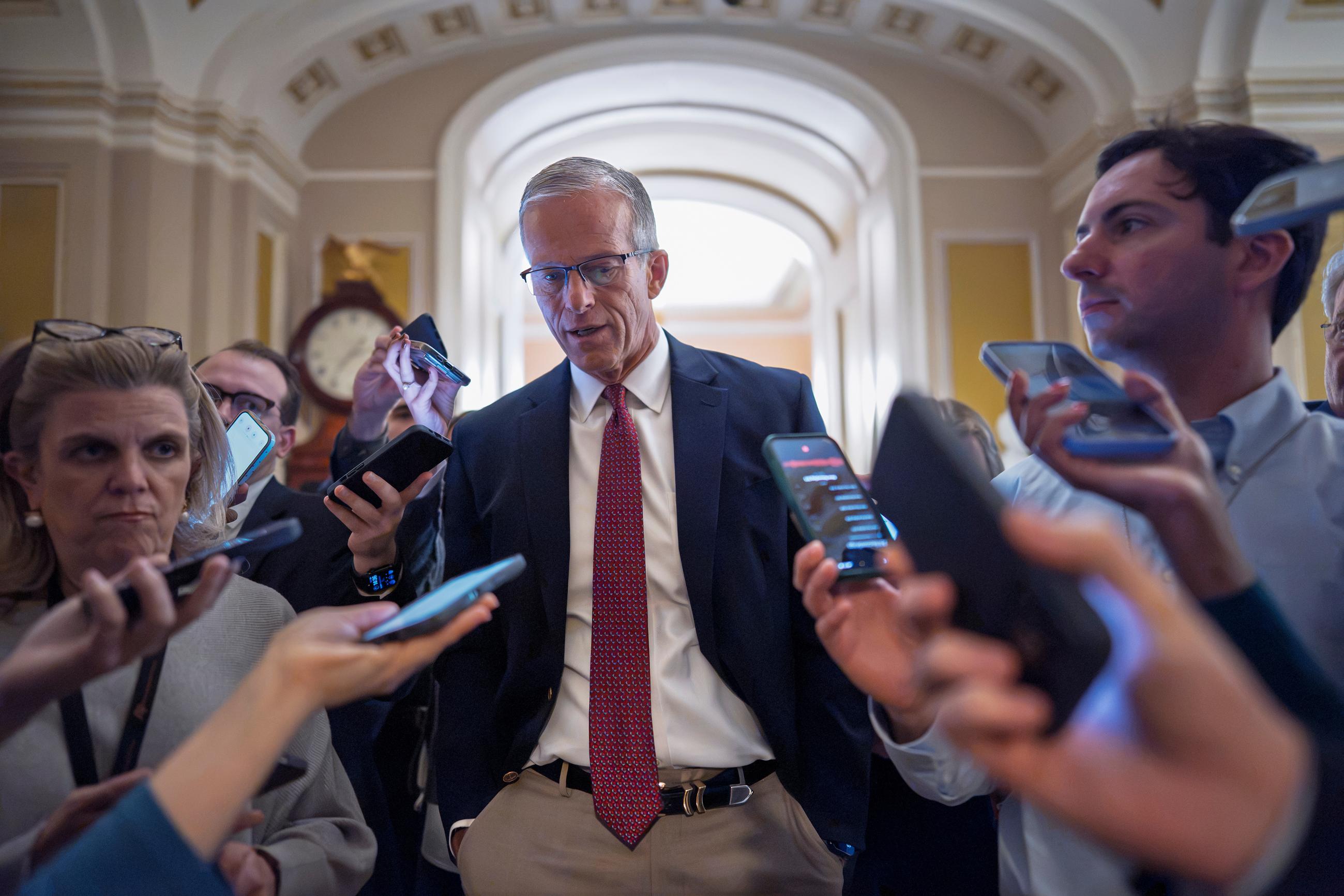
The House passed its version of the National Defense Authorization Act on a largely partisan vote back in July, with some Democrats breaking away to vote for the measure. The Senate, however, failed to advance its version earlier this summer. Senate Majority Leader John Thune put the bill up for a vote on the floor, and it fell short of the 60 needed to advance.
The NDAA has been a priority for decades, passing without fail every year. But with the Iran war continuing to be unpopular with voters, and the Pentagon pushing a $1.5 trillion budget request, it could be hard for Democrats to support any bill.
If Democrats win big in two chambers, it could also provide more leverage for the party to push for more policy concessions during negotiations.
A health-extenders package
Outside of the traditional health care programs that are extended annually, whether or not any additional priorities could be added is uncertain.
A price-transparency bill on health care costs, a bill mandating a $35 cap on out-of-pocket insulin costs, and a MAHA-friendly measure outlining food-labeling requirements could find themselves in any carefully negotiated package.