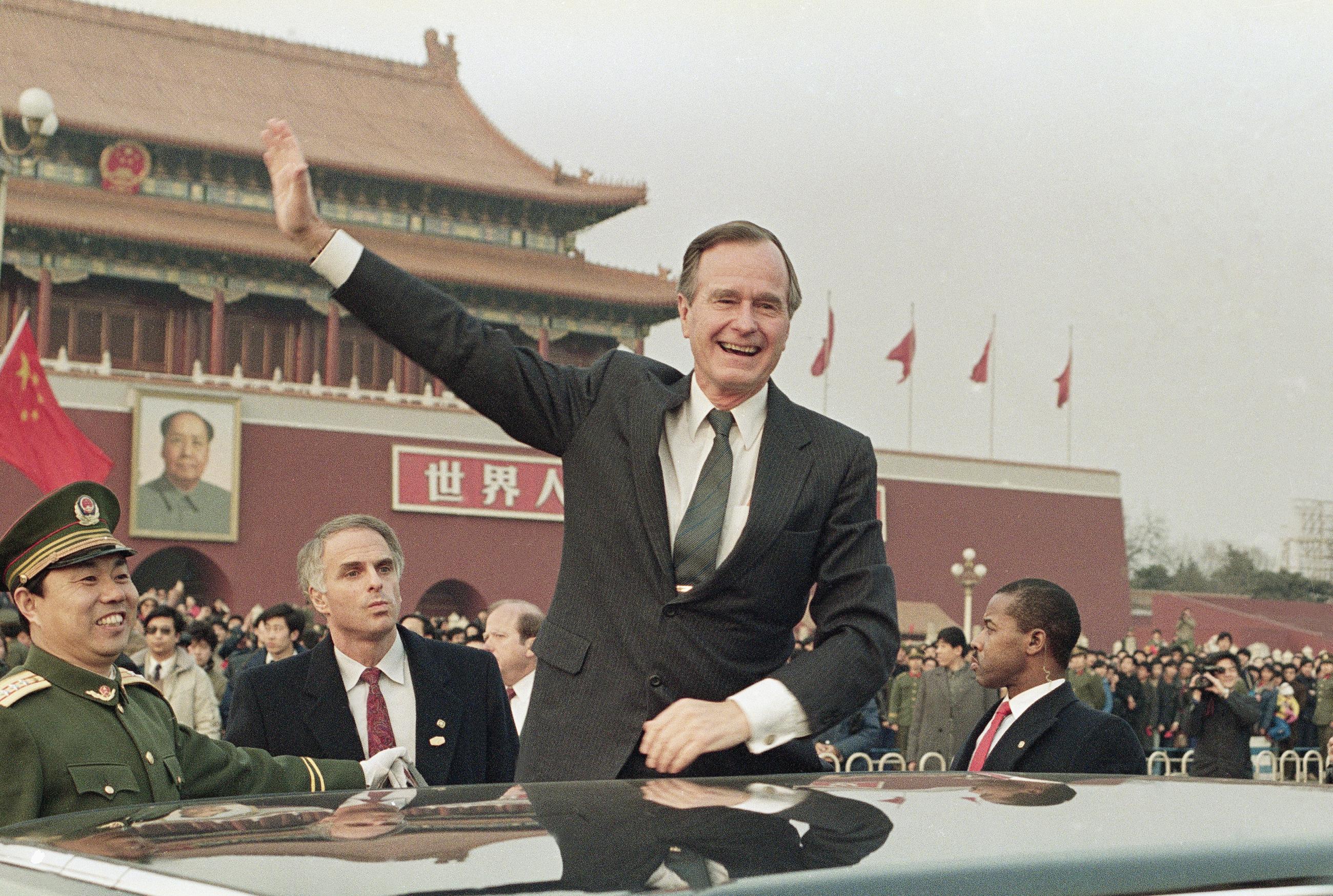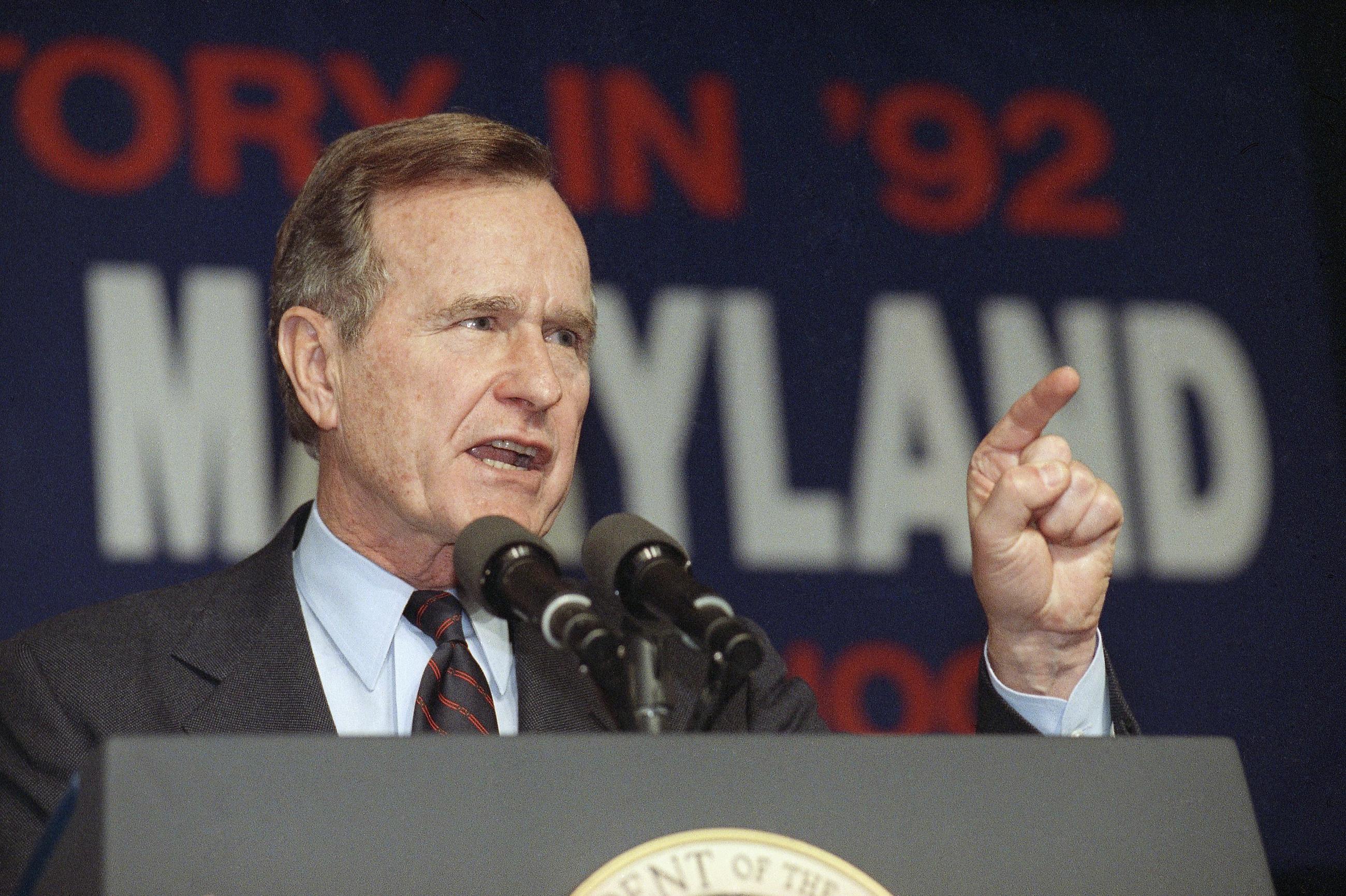

George H.W. Bush and Donald J. Trump had little use for each other, but the current and former president are ironically linked by the same electoral malady—their bungled handling of the economy.
In Bush’s case, economic malaise overrode his personal popularity and stratospheric job-approval ratings after the 1991 Gulf war that expelled Iraqi forces from Kuwait.
In Trump’s case, the unpopular war with Iran tanked his already dismal performance numbers while turbocharging voter concerns about the affordability crisis.
“Trump missed a big opportunity,” Bush 41 pollster Fred Steeper told National Journal. “He should have gone on national television before he started bombing and asked the American people to make a short-term sacrifice [higher gas prices] to prevent Iran from having a nuclear missile. That was a serious mistake.”
By appealing to patriotic sentiment before the fact instead of waiting until Operation Epic Fury launched, Trump could have temporarily lessened the war’s political fallout, Steeper added. “But he never tried to rally America’s support first, so now he’s to blame for the high cost of living” fueled by soaring gas, diesel, and fertilizer prices triggered by the war.
“That’s the wrong kind of force multiplier,” a gloomy Republican veteran of several congressional campaigns lamented.
In another irony a third of a century apart, Trump, like Bush, is on the wrong end of diminishing voter confidence about the country’s future—pollsters' critical right-track, wrong-track yardstick.
In the fall of 1991, Bush appeared headed to an easy reelection victory because of the Iraq war’s overwhelming success. His job approval soared past 70 percent.
But below the radar, private White House polls found a whopping 55 percent of Americans believed the country was on the wrong track—a historically dangerous finding.
In early 1992, a senior reelection campaign manager warned Bush the country was headed into recession. Though it wasn’t his fault, he added, Bush would be blamed unless he convinced voters he was doing everything he could to ease the perception that hard times were on the horizon.
An ever-optimistic Bush rejected the advice, telling several senior aides an economic turnaround, not a recession, would happen before the November election, and no mid-course correction was necessary.
That was a spectacularly bad call. With a majority of voters convinced the country was in recession, the hero of Desert Storm’s standing tanked by 50 points. On Election Day, he garnered just 37 percent of the vote in losing to Bill Clinton.
“They still liked him,” one of Bush’s closest political pals noted at the time, “but they still took it out on him.”
By contrast, President Trump has been unpopular throughout most of this cycle. His approval numbers have fallen from just over 50 percent after his second inauguration to the mid-30s. “This is one of the worst approval ratings for an incumbent president in an off-year election in my lifetime,” the 83-year-old Steeper said, noting it was second only to Richard Nixon’s scandal-ravaged low-20s ratings before he resigned in 1974.
Adding to Trump’s misery index, the RealClearPolitics average of 12 polls found this week that 63 percent of voters believe the country is on the wrong path, well above the number that tanked Bush.
“Pardon the pun, but a lousy economy always trumps a popular war, and when you’ve created a lousy economy and a lousy war you’re in serious trouble,” said another veteran GOP political strategist, who requested anonymity for fear of retaliation by Trump loyalists.