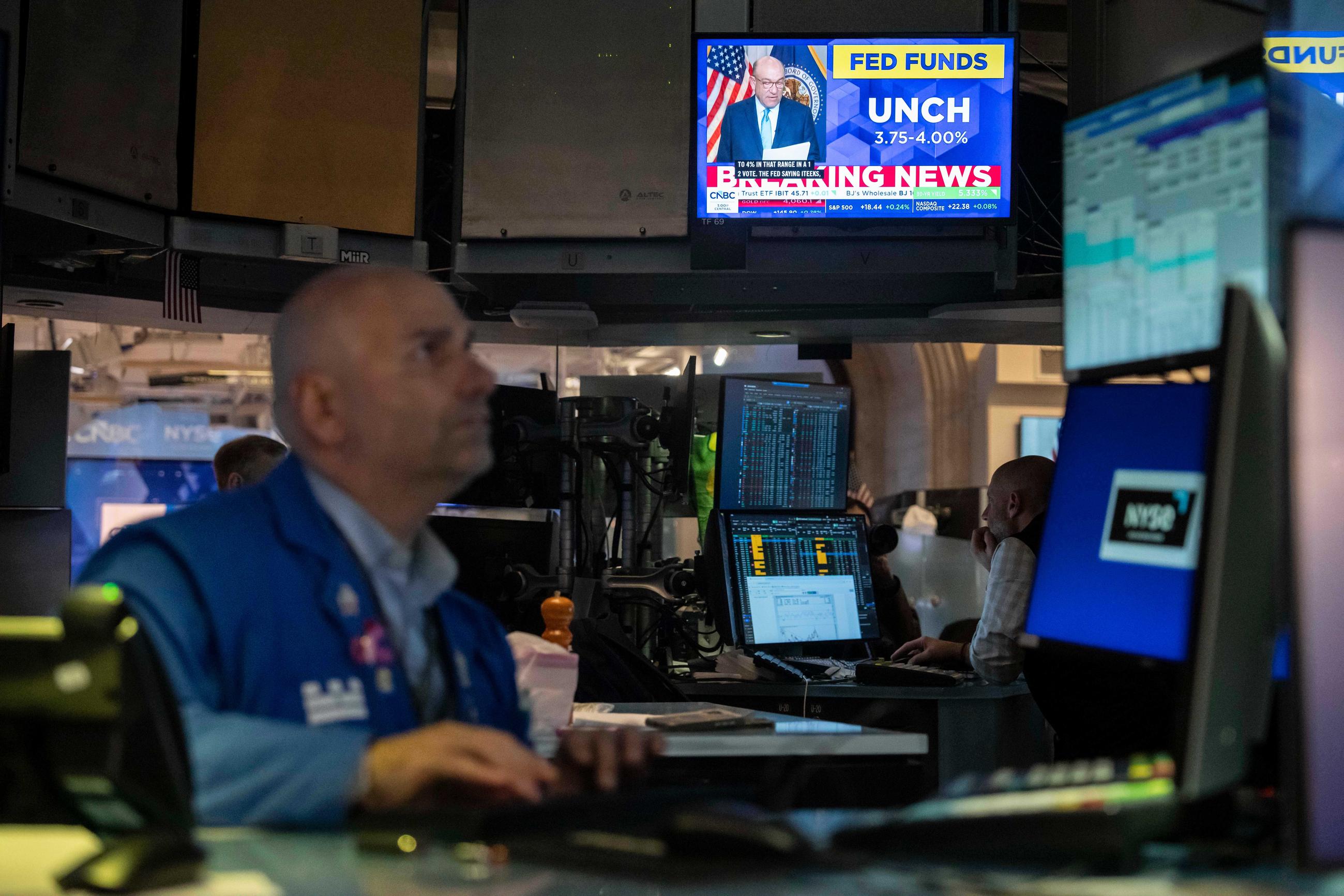
The Federal Reserve’s target interest rates won’t change before Tuesday’s election.
The rate-setting Federal Open Market Committee decided Wednesday to keep rates stable for now—though most experts expect that, a month after the election, the rates could go up.
For now, the economy, which polls show is usually the most important issue on consumers’ minds, gets no new jolts from Washington. Fed rates tend to influence interest charged on bank loans, auto loans, credit cards, and other loans.
The FOMC urged patience as it looked ahead in a statement Wednesday.
“Economic activity is expanding at a strong pace. While uncertainty remains elevated owing, in part, to geopolitical developments, domestic spending has been resilient,” the FOMC said in the statement.
But, the committee added: “Inflation remains elevated.” It pledged to continue to gather information that “will help the committee determine the policy stance appropriate to ensure a timely return of inflation to the committee's 2 percent goal."
"The committee," the statement continued, "will deliver price stability.”
Rates will hold steady between 3.75 percent and 4 percent, where they were set in September, in what was the first such increase in three years.
Interest rates are regarded as an important tool in stemming price increases, since higher rates should flatten consumer demand. As demand ebbs, the theory goes, sellers should lower prices to attract more purchases.
But energy prices, triggered by the eight-month-old Iran war and the Russia-Ukraine war, have remained stubbornly high.
The average price of a gallon of regular gasoline on Wednesday was $4.25, according to AAA. And though fuel prices have stabilized somewhat, analysts see them trending higher as the Iran war continues. At this time last year, the average was $3.04.
“[T]he relief motorists and policymakers have been hoping for remains elusive,” said Patrick De Haan, head of petroleum analysis at GasBuddy, which tracks fuel prices. Brent crude, the global benchmark for oil, was around $115 a barrel Wednesday, up from about $65 a year ago.
Mortgage interest rates also continue to sit too high for consumers’ tastes. While they tend to be tied more to bond markets, which consider longer-term trends, the average rate on a 30-year loan last week was 7.32 percent, according to Freddie Mac, which tracks mortgage rates. A year ago, the average was 6.19 percent.
The Fed has been aiming for some time to push inflation down to a 2 percent annual rate. The latest Consumer Price Index showed price increases of 3.7 percent for the 12 months ending in September.
A new reading on Personal Consumption Expenditures, which the Fed sees as a more useful yardstick, is due Thursday. The PCE for the year ending in August was 3.4 percent.
Inflation was the top issue mentioned by voters in the latest Economist/YouGov national survey of registered voters, taken Friday through Monday. Twenty-four percent of respondents cited inflation, with another 13 percent saying the economy was the major concern.
What complicates the Fed’s policies in the months ahead is that unemployment remains at historically low levels. The jobless rate has hovered between 4.1 and 4.3 percent since March, and shows few signs of spiking.
“Productivity growth is strong, and capital investment is robust,” the FOMC statement said. “Job gains have kept pace with the workforce, and the unemployment rate has changed little.”
There is concern among economists about whether consumers will continue to spend enough to keep demand steady at businesses and governments. Consumer sentiment has held steady in October, according to the University of Michigan survey of consumer attitudes. But expectations for inflation were up, and well above consumer predictions for prices prior to the Iran war.
President Trump and many Republicans have urged the Fed to lower rates. After the Wednesday announcement, House Ways and Means Committee Chairman Jason Smith, a Missouri Republican, said: “It’s well past time for interest rates to come down. Families still feel the weight of high borrowing costs every time they make a mortgage payment, finance a car, or use their credit card.”
At a news conference, Fed Chair Kevin Warsh, who was nominated by Trump and confirmed by Congress earlier this year, said “politics played no role in the decision.” During the committee deliberations, he said, “I didn’t hear an utterance about politics.”
Warsh would not speculate on the future path of rates.
The FOMC is scheduled to meet again Dec. 8 and 9. CME Group’s FedWatch, which compiles market predictions from experts, projects a 77.9 percent chance the committee will raise rates another quarter point.