
I’ve always been a “blue Texas” skeptic, but this year has challenged my skepticism more than any other. The Senate race is a true toss-up.
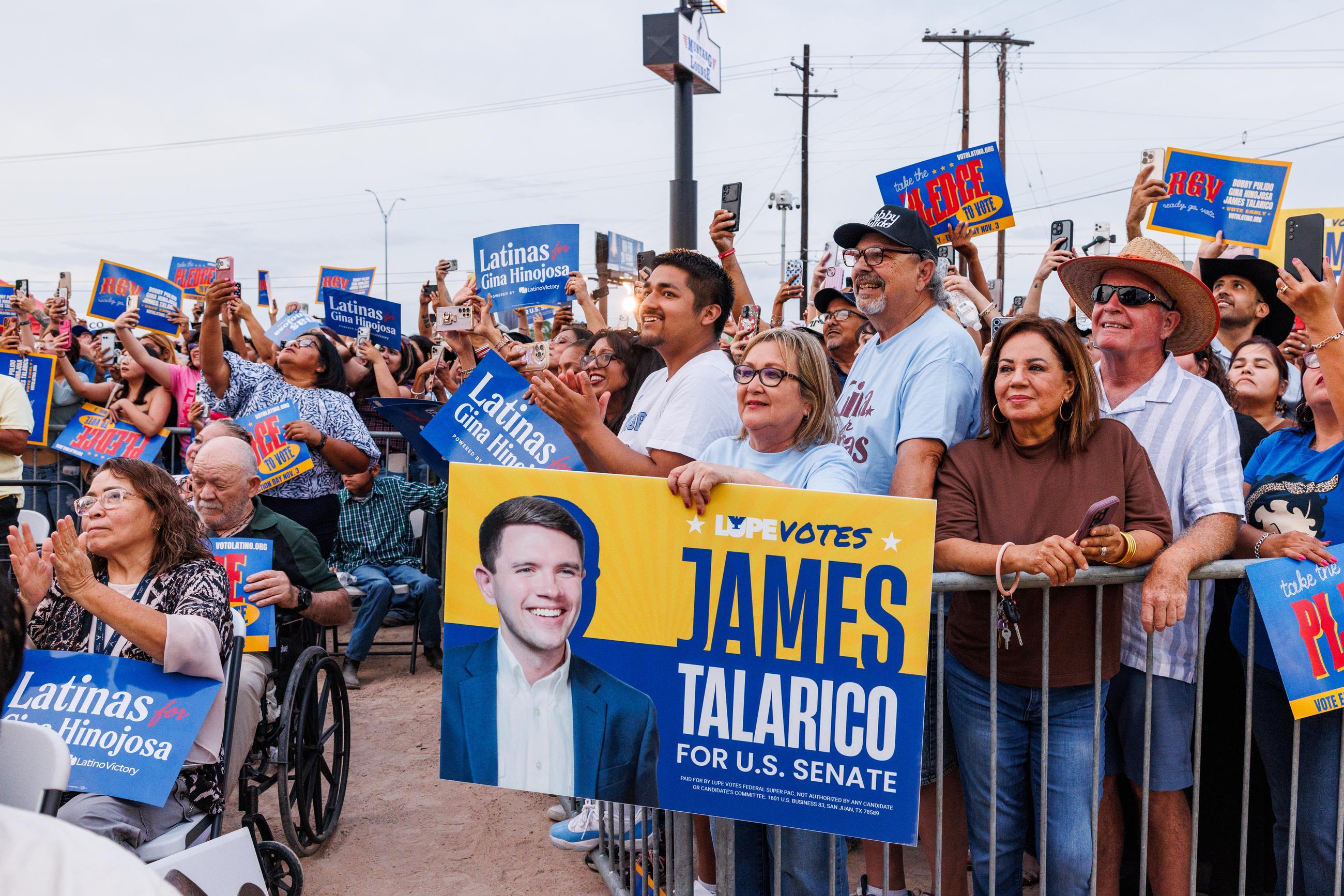
Democrat James Talarico could win. That doesn’t mean the state has turned purple. Two conditions made the Senate race a toss-up. First, you need a Republican candidate who is not just disliked—Sen. Ted Cruz keeps winning, after all—but so corrupt that his own staff called the FBI, and narrowly escaped being thrown out of office in impeachment proceedings. Second, you need a political environment that heavily favors Democrats.
Purple states can tilt in either direction with just one of those two conditions. Still-red Texas needed Ken Paxton and the 2026 environment to help make this a real race in a way we haven’t seen in Texas since I was a little kid posing for photos in the bluebonnet fields.
In September, I spent eight days traveling between one parent in Amarillo, the other in the Dallas-Fort Worth suburbs, and a friend’s farm in rural central Texas. I took three separate flights within the state and drove about 350 miles. I asked strangers I met about their political views. I really noticed what had changed—and what hadn’t.
Between 2000 and 2025, Texas added over 10 million people, growing from around 21 million residents to just under 32 million—that’s right, a population explosion of around 50 percent. In 2000, the state had 32 electoral votes and 30 congressional seats; now it has 40 and 38. Projections estimate the state could gain another four of each after the 2030 census.
I drove through a town outside Austin called Hutto, which appears briefly in a Talarico ad. I remember driving through it as a kid because the Hutto Hippos mascot is on the water tower. It was a pretty small town in the 1990s, but a few weeks ago I was stunned to see the population on the city-limit sign. Hutto grew from 1,250 people in 2000 to 27,577 in 2020. Census estimates for 2025 put the population at over 46,000. That is about a 3,600 percent increase over 25 years, and 67 percent growth in just the last five years. This insane growth curve is common across Texas suburbs and exurbs.
Political observers (and hopeful Democrats) have spent much of the last 25 years expecting Texas to start leaning blue because of the population growth. The fallacy they commit is that they’re looking across averages rather than within individual communities. After all, that growth is not ubiquitous. Small towns in the state's western and northwestern parts are shrinking. Rural areas have lost resources, and residents are moving to the small-city hubs like Amarillo, Lubbock, and Midland-Odessa. Towns and rural areas in central and east Texas, out of reach of the mega-metros, see a variety of population shifts: Some grow, others shrink. Many of these places still operate mostly as they did in the 1990s.
Some observers also incorrectly assumed the growing minority population would turn Texas blue. The state became majority-minority in 2004, and as of 2025, about 41 percent of the state is Hispanic, 38 percent non-Hispanic white, 13 percent Black, and 7 percent Asian.
Demographics are not destiny. Part of what makes Texas so attractive for business and industry, and for those following jobs to the state, is the lower cost of living than on either coast and the lack of a state income tax. Moving to Texas means affording a home because construction is booming, and keeping more of your income in your pocket. That incentivizes voting for the same conservatives who have kept taxes somewhat lower. Democratic policies are viewed as costly, and even worse, their climate-change agenda threatens the state’s massive oil and gas industry. Want to make a six-figure income and have a solidly middle-class life with a high school diploma or less? Go work on a rig.
The problem now, of course, is that the Trump administration has utterly failed to address the cost of living. The war in Iran made it worse. Texas is massive, and public transportation is very limited even in the largest cities. Everyone drives a lot. Everyone buys gas a lot.
Still, Republicans vastly outnumber Democrats statewide, so the top-of-ticket races might have remained solidly in the Republican column if not for Paxton, his toxicity, and his terrible campaign. Either way, neither party should read this year’s outcome as a long-term trend. Democrats still need to hustle to get ahead of the 2030 count that will make Texas even more politically powerful, and Republicans still need to hustle to reverse this year’s damage.
Contributing editor Natalie Jackson is founder and principal of Centerline Research and Strategy.