Oct. 28, 2026, 5 a.m.
Gubernatorial races are insulated, but not immune, from national headwinds, and Republicans are feeling the pressure. Republican strategists told Hotline that some GOP nominees in the map’s most competitive races are running against the environment rather than their Democratic counterparts, with Republicans on defense in double-digit Trump states.
Republican gubernatorial candidates also can’t escape the cash triage their House and Senate counterparts are experiencing. The Republican Governors Association has cut ad reservations for John James in Michigan. That race, which debuted in the No. 2 spot in Hotline’s initial gubernatorial Power Rankings, is now off the list as Democratic prospects have continued to improve.
Democrats are favored to win a majority of governorships for the first time since 2006.
These rankings of the seats most likely to flip are based on interviews with committees and operatives, as well as analysis of fundraising and polling.

1. Iowa: Open (R) ↑
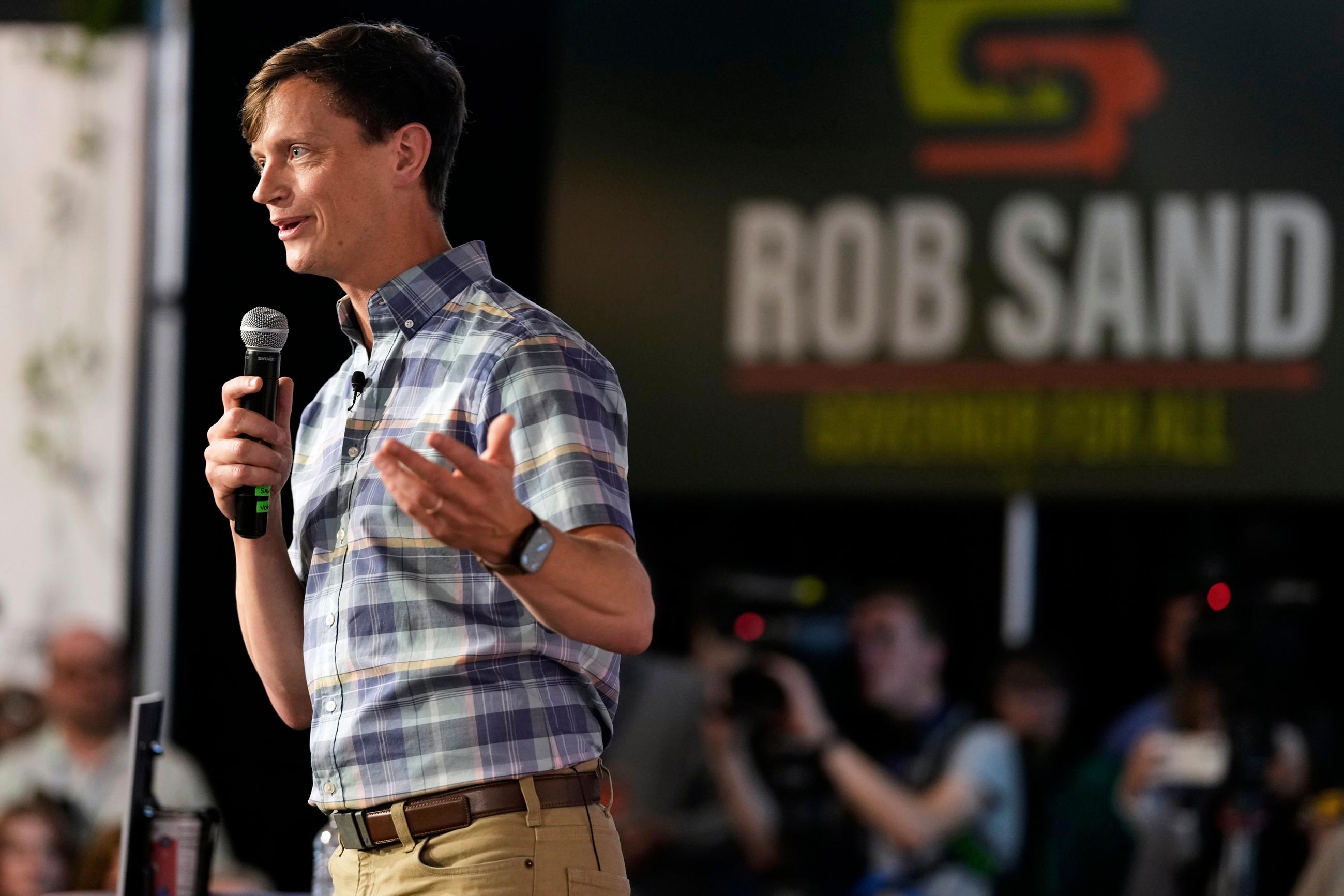
Rob Sand had already emerged as one of the best Democratic recruits when Hotline released its first Power Rankings last year. But a worsening environment for Republicans in Iowa has catapulted this race to the top flip opportunity on the map. Add in Republican businessman Zach Lahn’s slow start in trying to define Sand as a rich liberal, and GOP strategists have conceded that Lahn’s path to victory is narrowing. Still, Lahn starts off with a sturdy floor thanks to Republicans’ heavy voter-registration advantage.
2. Kansas: Open (D) ↓
The race between Republican state Senate President Ty Masterson and Democratic state Sen. Cindy Holscher has not shown the same signs of tightening as the Senate contest. Holscher’s more-progressive bona fides appear to be costing her support after she had deftly tapped into populist frustrations for her upset win in the Democratic primary. Kansas hasn’t elected two different governors from the same party in consecutive elections since the 1960s, and it doesn’t seem likely to break that pattern this cycle despite the political winds blowing at Democrats’ backs.
3. Alaska: Open (R) ↑
The math ain’t mathing for Alaska Republicans. Their biggest threat isn’t just former Democratic state Rep. Jonathan Kreiss-Tomkins, but an inability to get on the same page about ranked-choice voting. Republican front-runner Bernadette Wilson and President Trump have called on fellow Republicans Dave Bronson and Treg Taylor to drop out. Bronson and Taylor, alongside the RGA and the state party, are instead encouraging voters to rank all Republican candidates.
If Wilson, who will likely face Kreiss-Tomkins in the final RCV round, doesn’t explicitly campaign for Bronson and Taylor voters, the exhausted ballots could cost Republicans the governor’s mansion, local party leaders have told National Journal. Republican voters may also struggle to embrace a “rank the red” strategy at the same time the GOP is pushing to appeal ranked-choice voting in a ballot measure this year. Republican strategists told National Journal this race is in God’s hands.
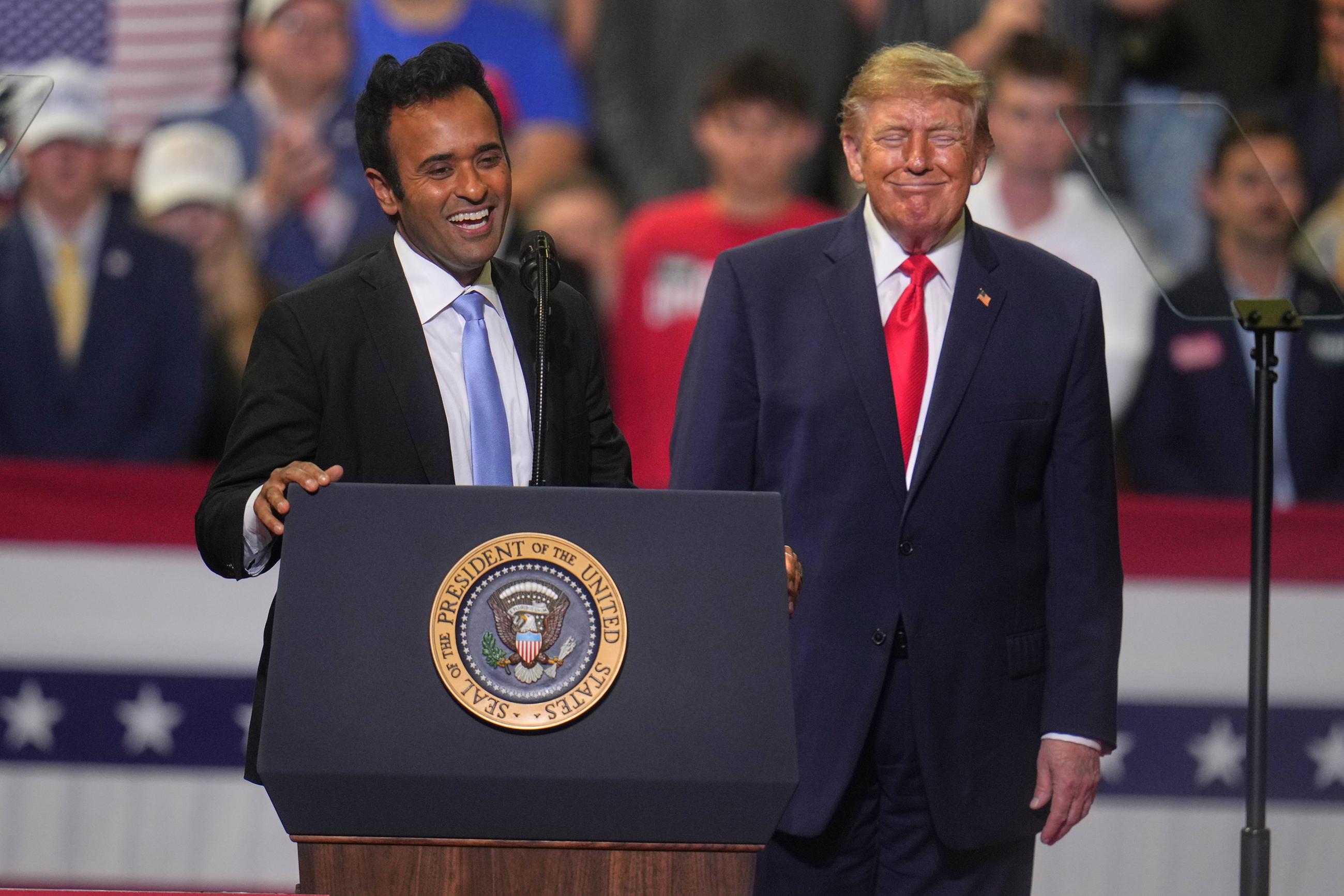
President Trump listens as Ohio gubernatorial candidate Vivek Ramaswamy speaks at a campaign rally in Youngstown on Oct. 12. (AP Photo/Gene J. Puskar)
AP Photo/Gene J. Puskar
4. Ohio: Open (R) ↑
After Vivek Ramaswamy and his allies spent $125 million on attack ads only to lose ground in polling to Amy Acton, he tried to pull off one last Hail Mary: airing an ad featuring Acton’s estranged mother, who supported Acton’s sexual abuser. It’s just one of the many times this cycle that Ramaswamy has sabotaged himself, leaving his campaign and Ohio Republicans to clean up the mess.
He has played into the hands of Democrats, who have tapped into affordability concerns, spending this cycle painting the billionaire as sleazy and out of touch. But in what has been an increasingly Republican state, if Trump can juice turnout from his low-propensity voters, Ramaswamy could cut into Acton’s lead.
5. Georgia: Open (R) ↓
Along with deep-pocketed super PACs and official party campaign committees, health care executive Rick Jackson is one of the top spenders of the election cycle. Between the primary and the general election, the billionaire GOP nominee has spent more than $200 million on his campaign to succeed term-limited Gov. Brian Kemp. His vast resources have been enough to put former Atlanta Mayor Keisha Lance Bottoms on her backfoot and seek outside resources from Democratic groups. But riding the coattails of Sen. Jon Ossoff, who is running away with his reelection bid, might be just enough to drag Bottoms across the line.
6. Wisconsin: Open (D) ↓
Republican Rep. Tom Tiffany has run a strong, competent campaign compared to the chaos on the Democratic ticket, but the blue wave might come crashing down on his chances to replace Democratic Gov. Tony Evers. Democratic Milwaukee County Executive David Crowley secured the nomination a little more than a month after first dropping out of the race. He rejoined when it appeared that progressive state Rep. Francesca Hong would win the primary and leave the seat vulnerable in November. Now with the political environment in shambles for Republicans and no other major statewide races, Crowley appears poised to ride the wave into Madison.
7. Nevada: Gov. Joe Lombardo (R)
Lombardo is running against the environment, not state Attorney General Aaron Ford (D). The Democratic nominee’s campaign hasn’t blown anyone’s socks off. He’s consistently trailed Lombardo and his affiliated PAC in fundraising, and hasn’t been able to eke out an edge in polling even as the environment gets more favorable. Ford has also been plagued by attacks over his frequent travels, and most recently, his role on the clemency board.
Lombardo has tried to strike a tone of independence from Trump, despite rallying with the unpopular president. In a state where Latino voters swung to the right in 2024 to deliver the state to Trump, those same voters are starting to sour on Republicans—including Lombardo.
Four years ago, Nevadans found former Gov. Steve Sisolak at fault for a struggling economy. They may do the same to Lombardo.
8. Oregon: Gov. Tina Kotek (D) ↑
Kotek will test the limits on how unpopular a candidate can be and still get bailed out by an electoral wave. Her job-approval ratings are below Trump’s as Oregon voters heap some of the blame for the affordability crisis on her leadership. Republican Christine Drazan could have an opportunity to score a major upset, but only if she has the resources to litigate her case. If deep-pocketed national GOP groups weren’t spending resources on defense in so many races, organizations like the RGA would have invested heavily in Oregon.

Oregon Gov. Tina Kotek (AP Photo/Jenny Kane, File)
ASSOCIATED PRESS
9. Texas: Greg Abbott (R) ↑
Everything is bigger in Texas, including Gov. Greg Abbott’s war chest. In a closer-than-expected race, he’s had to deplete his cash reserves to compete with state Rep. Gina Hinojosa. She’s run an effective campaign tapping into voter frustration with school vouchers, data centers, and Flock cameras, portraying the three-term governor as beholden to billionaire interests.
But it seems the $74.1 million Abbott blew through in just three months has kept Hinojosa at bay. Despite Democrats having a good shot of flipping the Senate seat, she hasn’t eked out the same polling lead James Talarico is enjoying.
10. Arizona: Gov. Katie Hobbs (D) ↓
Rep. Andy Biggs, a Trump-aligned member of the House Freedom Caucus, is not the right candidate for the moment. At the beginning of the cycle, Hobbs had several unique weak points that would have made her vulnerable against middle-of-the-road GOP challengers. That’s not the firebrand congressman’s MO. Biggs will more likely than not continue the recent trend of far-right statewide candidates leaving winnable Arizona races on the board.