Oct. 28, 2026, 5 a.m.
Rounding out one of the most unproductive Congresses on record, in which a united Republican government failed to quell voter frustration on data centers, AI regulations, and utility bills, voters are turning to their states for answers.
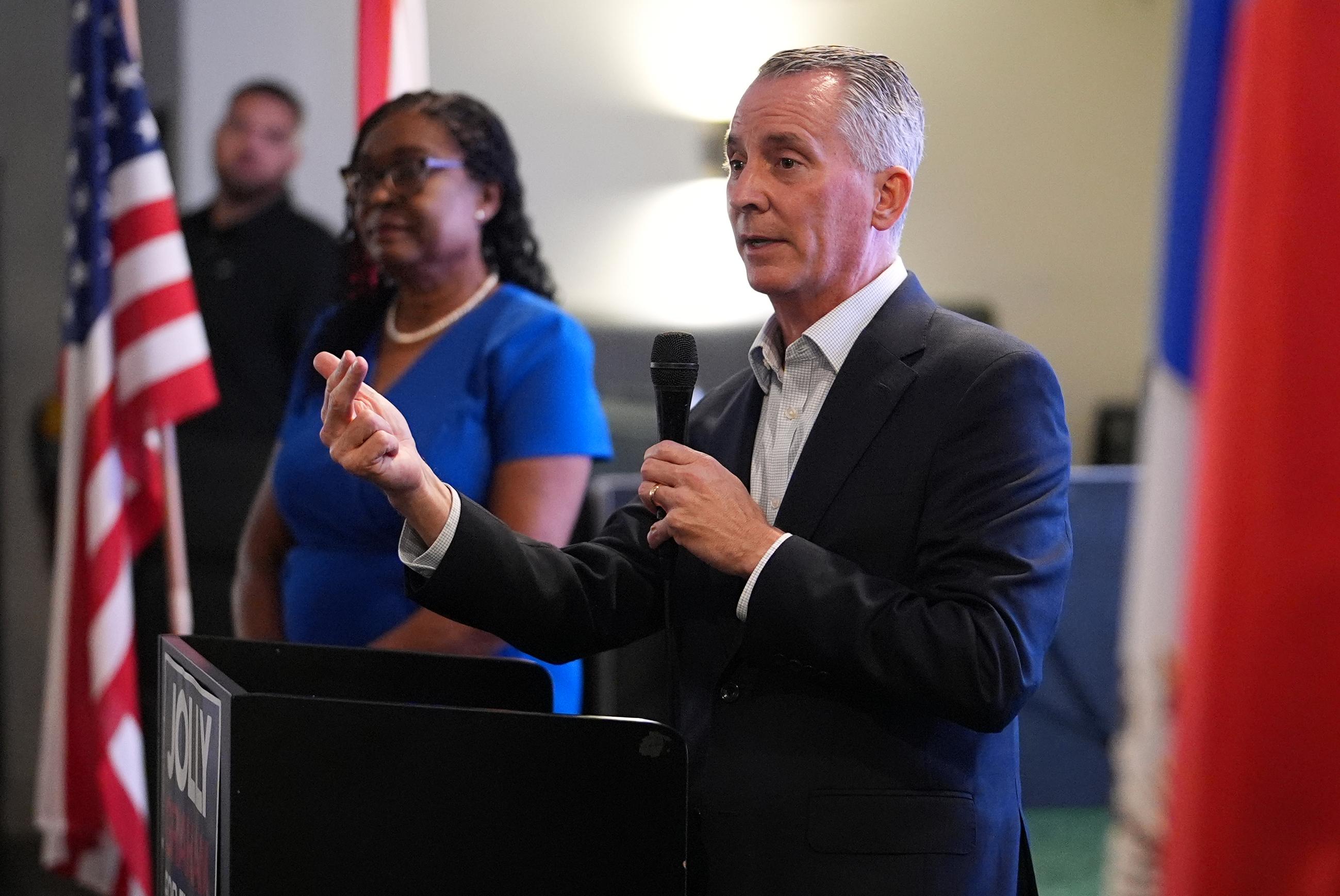
At a time when voters feel a “loss of economic and political power,” as Florida Democratic gubernatorial nominee David Jolly put it, candidates running to be state executives are making a broader pitch: to give communities more control and empower their states to go after corporations on behalf of the people.
While candidates may disagree on specific policies, the common thread is to give voters more agency and protection from forces shaping their daily lives.
“The conductors are screaming that they lost control, and people are going, ‘Well, I can't drive a train or stop one.’ So there is a sense out there from voters that there's less control over these things that are just barreling ahead,” Democratic strategist Eric Schmeltzer said.
Schmeltzer, who founded the public relations company Winning Progressive, sees this moment as the endpoint of a broader disillusion with government that has been building for years. Voters have felt that the “system is corrupt, stodgy, ineffective” since 2016, he said, arguing that Donald Trump rode this sentiment to the White House. Trump’s populist message, he said, addressed voter frustrations over increased globalization and jobs being shipped overseas—changes that local communities had very little agency over but that had outsized impacts.
Data centers are one of the most high-profile manifestations of that frustration this cycle.
“What is actually happening is it has become a physical metaphor for people who have felt like they have lost economic and political power because the amount of special-interest money—big tech, big data, big utilities—who have come in and created a relatively unregulated or favorably regulated environment, who have paid off our politicians, and are coming into your community,” Jolly said.
That frustration is now playing out against a backdrop of declining trust in the federal government.
Trust in the federal government to handle domestic policy matters is at a record low, according to recent polling by Gallup. Just 33 percent say they trust the federal government a great deal or fair amount.
But they’re feeling better about governments closer to home.
Fifty-five percent of voters say they trust their state governments a great deal or a fair amount to handle problems, and 67 percent say they feel the same way about their local governments.
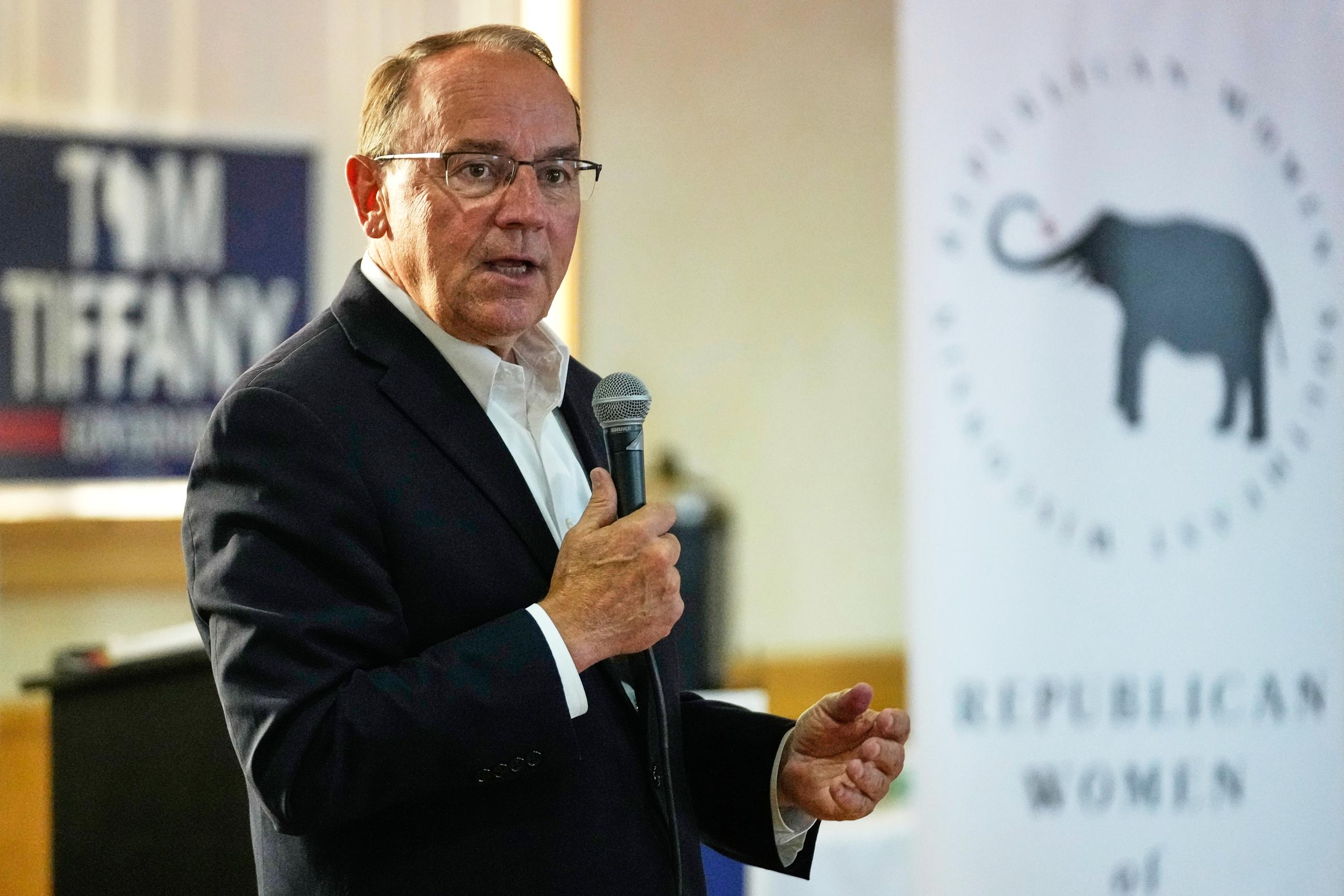
Wisconsin Republican gubernatorial candidate Tom Tiffany (AP Photo/Nam Y. Huh, File)
AP Photo/Nam Y. Huh
That gap offers a potential opening for gubernatorial candidates to argue for empowering local governments and using state government as a guardrail against large corporations.
In Wisconsin, Republican Tom Tiffany is vowing to sign legislation restoring local control over industrial-scale wind and solar developments, and supports local control over data-center development. Right across the border in Minnesota, Democrat Amy Klobuchar has said local communities should decide whether to welcome data centers.
In Georgia, Democrat Keisha Lance Bottoms wants local leaders to have the power to suspend or eliminate local taxes on groceries, giving municipalities a direct tool to address affordability concerns.
Up north in Connecticut, Republican Ryan Fazio is leaning toward housing reform in his challenge to Democratic Gov. Ned Lamont. Fazio has criticized large developers who have been allowed under state law to skirt local zoning requirements to build large affordable-housing projects.
“I think we need a balance and a smart approach that ensures we can create more housing and create more housing affordability, while also not centralizing all decision-making powers,” Fazio told National Journal.
Fazio argues that moving decisions further away from communities themselves can make voters feel like they have less agency.
“People are increasingly alienated from the decision-making process as more things become federal rather than local, and more things become bureaucratically and complexly decided rather than decided through the legislative branch of government, and so it is no surprise that you see rising cynicism, rising alienation politically, as we've had more and more powers be centralized in our states and in our federal system,” he said.
Democrats are making a similar case in states where they say Republicans have stripped local control.
Jolly is vowing to restore home rule in Florida. He says the GOP-dominated state Legislature has overridden local zoning, labor standards, and environmental protections, and that “Republicans for a decade in Florida have not just abandoned, but they've attacked local control and home rule.”
“The government closest to the people knows best,” said Jolly, a former Republican. “From my early days in politics, it's been a bedrock, a foundation of my ideological conviction, and we've seen the abandonment of local control.”
Jolly said his vow to restore home rule is a way to make inroads with “the almost 20 percent of Republicans that we have available to us” in his uphill battle to win the governor’s race.
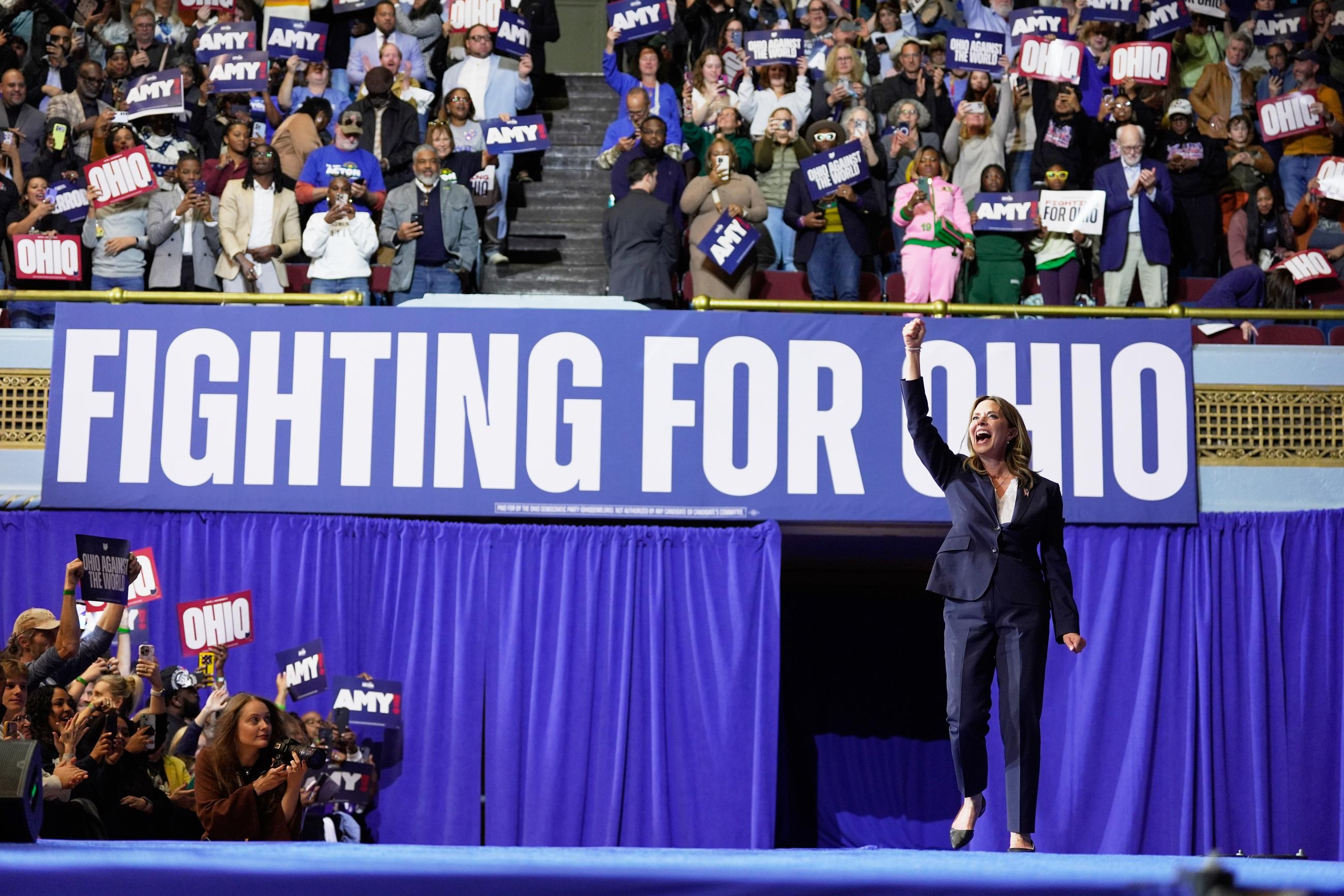
Democratic Ohio gubernatorial candidate Amy Acton arrives for a campaign rally in Cleveland on Saturday. (AP Photo/Sue Ogrocki)
AP Photo/Sue Ogrocki
The push to make the government more responsive isn’t limited to local authority. Candidates are also vowing to empower the state government to stand up against utility companies and corporations—tapping into growing frustration with rising energy costs and the role of big tech in public life.
In Ohio, Democrat Amy Acton has proposed deploying the Office of the Ohio Consumers’ Counsel against excessive rate hikes.
Acton, along with Republicans like Tiffany in Wisconsin and John James in Michigan, have also vowed to install members of state utilities commissions who won’t support rate hikes.
In Iowa, Rob Sand wants the state to ban social media accounts for children and conduct state-run audits of platforms’ algorithms. And in Nevada, Aaron Ford wants to ban the use of algorithms and AI to set rent prices.
The question is which party can persuade voters it can give them more of a say.
Republicans have long championed home rule, Fazio and Republican strategist Mark Weaver both said.
“For 100 years, it's been progressives who have been advocating for more and more central centralized control and power in administration and in bureaucracy and in the federal government,” Fazio said. “They have generally been advocates for a more powerful and influential centralized government, and so now, kind of, they're reaping what they sow.”
But Schmeltzer said the recent failure of the federal government to address big-ticket issues like data centers and energy costs opens up a lane for Democrats to win on the localization issue.
“I think it's a strong argument to make that they've kind of heard voters' frustrations, and they can meet it with a lot more professionalism than the Trump administration has,” Schmeltzer said.