Oct. 28, 2026, 5 a.m.
Democrats are in earshot of reclaiming their Senate majority, but it isn’t a guarantee with just days until Election Day.
Senate Democrats are virtually in the driver’s seat in the closing weeks of the campaign, a position they once thought was impossible after the 2024 election. Nearly two years ago, Democratic Senatorial Campaign Committee Chairwoman Kirsten Gillibrand said it would take two cycles for Democrats to regain the majority. Now, Democrats could plausibly get the job done in one midterm election.

The five most flippable Senate seats in the country are Alaska, Maine, North Carolina, Ohio, and Texas—all in GOP territory that’s souring on President Trump’s handling of the economy and the war in Iran. Democrats are also paying attention to close contests in Iowa and Kansas, and keeping an eye on Mississippi and South Carolina in a "blue tsunami" scenario.
Senate Republicans have shifted their resources away from Democratic-held Georgia and North Carolina toward GOP-held seats in Kansas, Mississippi, and South Carolina. Republicans are also keeping their foot on the gas pedal in Michigan, their best offensive target on the battlefield by far.
Apart from North Carolina, Democratic and Republican strategists alike argue that the top eight races are all margin-of-error contests. Republicans’ massive spending advantage is keeping those races close, with GOP ad reservations as of Oct. 21 outpacing Democratic ad buys, $968.8 million to $686.4 million, since Labor Day, according to the nonpartisan ad-tracking firm AdImpact.
The range of possible outcomes heading into November is Democrats netting zero to six seats, even when factoring a GOP flip in Michigan. Republicans would be relieved to just hold their majority when the dust settles, but it would still be a far cry from the 55-seat strategy touted by National Republican Senatorial Committee Chairman Tim Scott at the beginning of the cycle.
This is the final edition of Hotline's Senate Power Rankings before Election Day. These rankings are based on conversations with operatives, strategists, campaigns, and pollsters in both parties.

1. North Carolina: Open (R)
What was supposed to be one of the most expensive Senate races in history ended not with a bang, but with a whimper. Republicans are waving the white flag, with national groups canceling ad buys and Michael Whatley, the GOP nominee, cutting his own airtime. Former Democratic Gov. Roy Cooper’s sky-high name ID and impressive fundraising chops have been too much for Republicans to overcome. With races in deep-red territory becoming more competitive in the closing weeks, North Carolina was an easy triage. The state is primed to elect its first Democratic senator since 2008.
2. Alaska: Sen. Dan Sullivan (R) ↑
The two-term senator is facing a tough reelection, both environmentally and systemically. The GOP incumbent is experiencing his first election under the state’s ranked-choice voting system, and the battlefield isn’t set in his favor. The inclusion of a namesake challenger in Dan J. Sullivan and a perennial Republican candidate on the four-way ballot benefits former Democratic Rep. Mary Peltola, putting the onus on the senator to encourage RCV-skeptical voters to rank him on their ballot. Still, it remains a tight race, with some Democratic doubts surfacing in the final stretch. The final result isn’t expected to be known for more than two weeks after Election Day, making this a nail-biter for either party.
3. Ohio: Sen. Jon Husted (R)
One of the most expensive races in the cycle is coming down to the wire. Husted has relied on millions in outside spending to buoy him against former Sen. Sherrod Brown’s spirited comeback campaign. Husted is getting additional help from more than $50 million in crypto-industry-linked groups attacking Brown, but the political environment continues to deteriorate for Republicans. Not helping matters is Vivek Ramaswamy’s flailing gubernatorial campaign, which could drag down the entire GOP ticket.

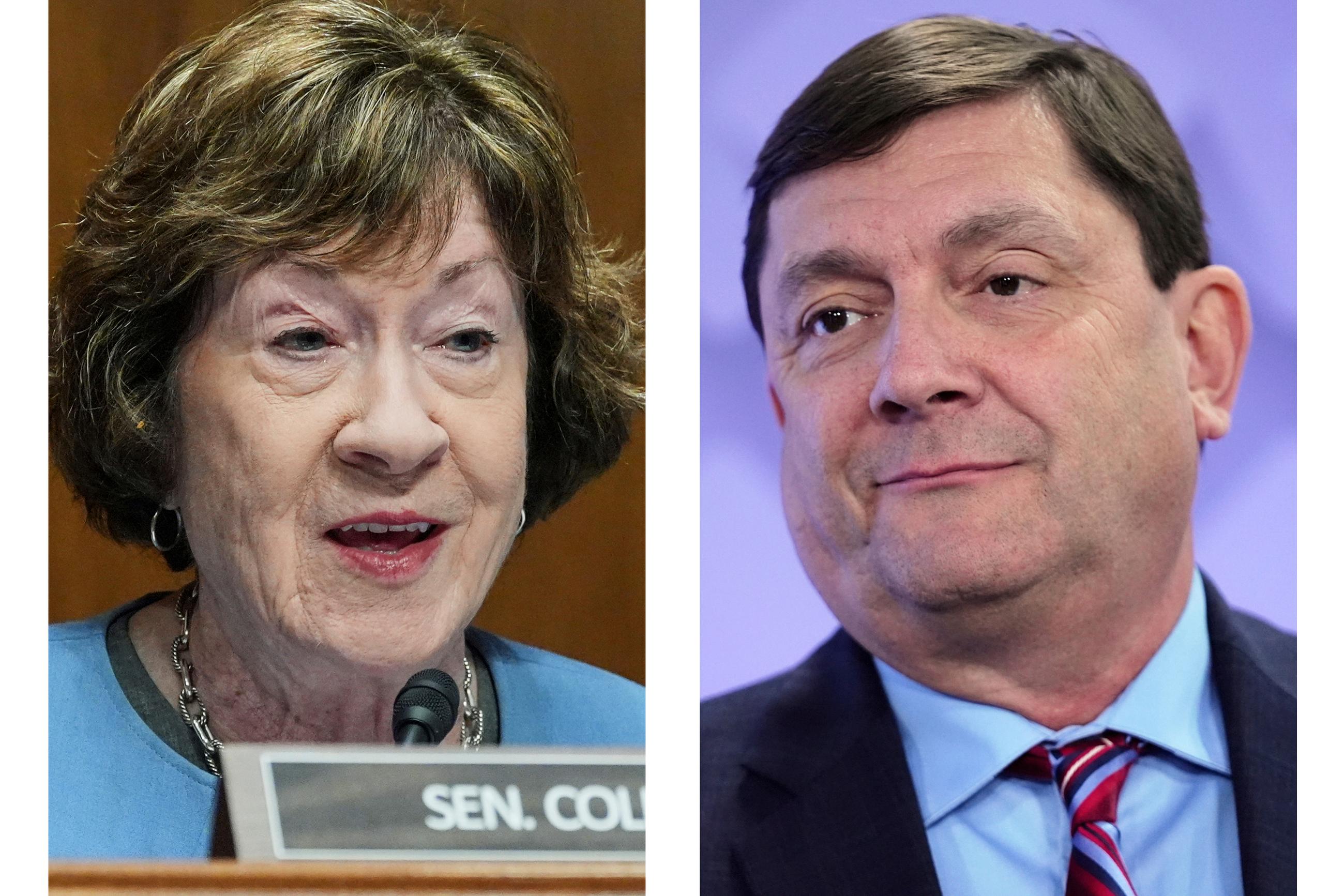
Collins arrives at a campaign stop in Lewiston, Maine, on Oct. 21. (AP Photo/Robert F. Bukaty)
AP Photo/Robert F. Bukaty
4. Maine: Sen. Susan Collins (R) ↑
Democrats think they can unseat Sen. Susan Collins on their fifth try, but the Republican once again isn’t making their job easy. The bungled Democratic nomination following Graham Platner’s withdrawal in July started former state Senate President Troy Jackson on a shaky foot and helped the Appropriations Committee chair consolidate some of her coalition early. A Jackson victory would likely manifest from voters’ dissatisfaction with President Trump’s second term and Collins’ tenure over the past six years.
In 2020, the senator found her magic toward the end of the campaign, when voters viewed her as a check on an expected Joe Biden presidency. The senator could defy political gravity once again, but she’s facing a much tougher environment six years later, and that can’t be discounted.
5. Texas: Open (R) ↑
Sen. John Cornyn warned Trump, but the president didn’t listen. State Attorney General Ken Paxton’s ethical dilemmas have caught up with him, forcing the GOP nominee into the most competitive Texas Senate race since 2018. Gov. Greg Abbott’s surprisingly competitive reelection race is also affecting Paxton’s odds, giving the Republican thin coattails to grab from. Meanwhile, state Rep. James Talarico is exceeding Democratic expectations as he breaks fundraising records and puts himself in a better position than former Rep. Beto O’Rourke was at this point in the 2018 race. Yet Democrats aren’t betting their Senate majority on the Lone Star State, allowing Republicans to try and fund their way out of a loss. The GOP-aligned Senate Leadership Fund has invested roughly $170 million through its Texas PAC affiliate, helping give Republicans a 3-to-1 spending advantage over Talarico heading into November.
6. Iowa: Open (R) ↑
Rep. Ashley Hinson remains one of the strongest GOP recruits on the Senate map, but she’s still struggling to gain a foothold against state Rep. Josh Turek. The congresswoman’s broadcasting chops helped her through debate season, but her image has taken a hit following a barrage of attack ads. Turek isn’t spared, either, facing scrutiny over missed state House votes this session. State Auditor Rob Sand’s front-runner status in the governor’s race could be a blessing for either campaign. Turek could benefit from his fellow Democrat's strong support, allowing him to win a plurality of the vote. Yet Iowans could be inclined to split their tickets, a factor that allows Sand-Hinson voters to clear their conscience.
7. Michigan: Open (D) ↓
A more generic Democrat would likely be running away with this race. However, a large part of Abdul El-Sayed’s appeal is that he is not a generic Democrat. Despite being one of the more progressive statewide candidates and running in a perennial swing state, he’s run a strong campaign. However, he has plenty of liabilities. The closing weeks of the campaign have focused on El-Sayed’s Muslim faith and his family’s alleged ties to the controversial Muslim Brotherhood. The biggest concern for Democrats should be whether El-Sayed can turn out Black voters in Michigan as Republican Mike Rogers attempts to court them.
8. Kansas: Sen. Roger Marshall (R) ↑
The inclusion on this list of a state that hasn’t elected a Democratic senator since President Franklin Roosevelt’s first term is a testament to how far the bottom has fallen out for Republicans. It’s a perfect storm for Democrats: an unprepared and underperforming Republican in Marshall, Trump’s economic policies hitting the agricultural community hard, and a Democrat—pastor Adam Hamilton—tailor-made for the state. Republicans have been forced to spend millions for a rescue operation they didn’t budget for less than six months ago.
Republican Sen. Roger Marshall of Kansas participates in a debate with Democratic challenger Adam Hamilton in Kansas City, Mo., on Oct. 21. (AP Photo/Charlie Riedel, Pool)
Charlie Riedel/AP via AP
9. Minnesota: Open (D) ↑
Minnesota would be a top-tier pickup opportunity in any other cycle, but Republicans concede that the GOP-unfavorable environment following Operation Metro Surge and their priorities elsewhere on the map are keeping this off their spending list. Former sportscaster Michele Tafoya is running a strong campaign for a Minnesota Republican, from outraising Lt. Gov. Peggy Flanagan last quarter to tying the Democrat to the state’s social-services-fraud scandal under Gov. Tim Walz’s tenure. Yet the progressive is still the slight favorite in a state former Vice President Kamala Harris won by 4 points in 2024, even if she’s underperforming or hovering around Harris’ margin in polling.
10. New Hampshire: Open (D) ↓
There was a brief period around Labor Day when it seemed like former Sen. John E. Sununu was gaining steam on Rep. Chris Pappas. But then the Democrat went on air, and Sununu started sliding in the polls again. The Granite State might have the biggest disparity between the gubernatorial race, where Republican Gov. Kelly Ayotte is heavily favored, and the Senate race.