Oct. 21, 2026, 5:20 p.m.
The Senate’s powerful tax-writing panel is about to see a big shake-up, as top members are leaving—and their colleagues are already showing lots of interest in joining the prestigious Finance Committee.
At least four Republicans are set to leave due to retirement or losing their primaries—including Sens. John Cornyn, Bill Cassidy, Steve Daines, and Thom Tillis.
Sen. Marsha Blackburn is running for governor in Tennessee, and Sen. Roger Marshall is in a tough reelection campaign in Kansas. On the Democratic side, Sen. Tina Smith is retiring as well.
The November election will determine which party controls the majority, how large the majority will be, and how many vacancies will be available on the Finance panel.
Still, a number of senators are already making their pitch to be on the coveted “A” panel, which has a wide jurisdiction overseeing and writing the country’s tax code, trade policies, and entitlement programs.
Sen. Bernie Moreno, a freshman Republican from Ohio, said that he has been interested in joining the committee since he became a senator last year and talks to leadership “every day” about the subject.
“I was interested two years ago,” Moreno said. “That hasn’t changed.”
Sens. Rick Scott and Kevin Cramer, both Republicans, also told National Journal they’re interested in joining the committee, though they caution that selection depends on a number of considerations from leadership.
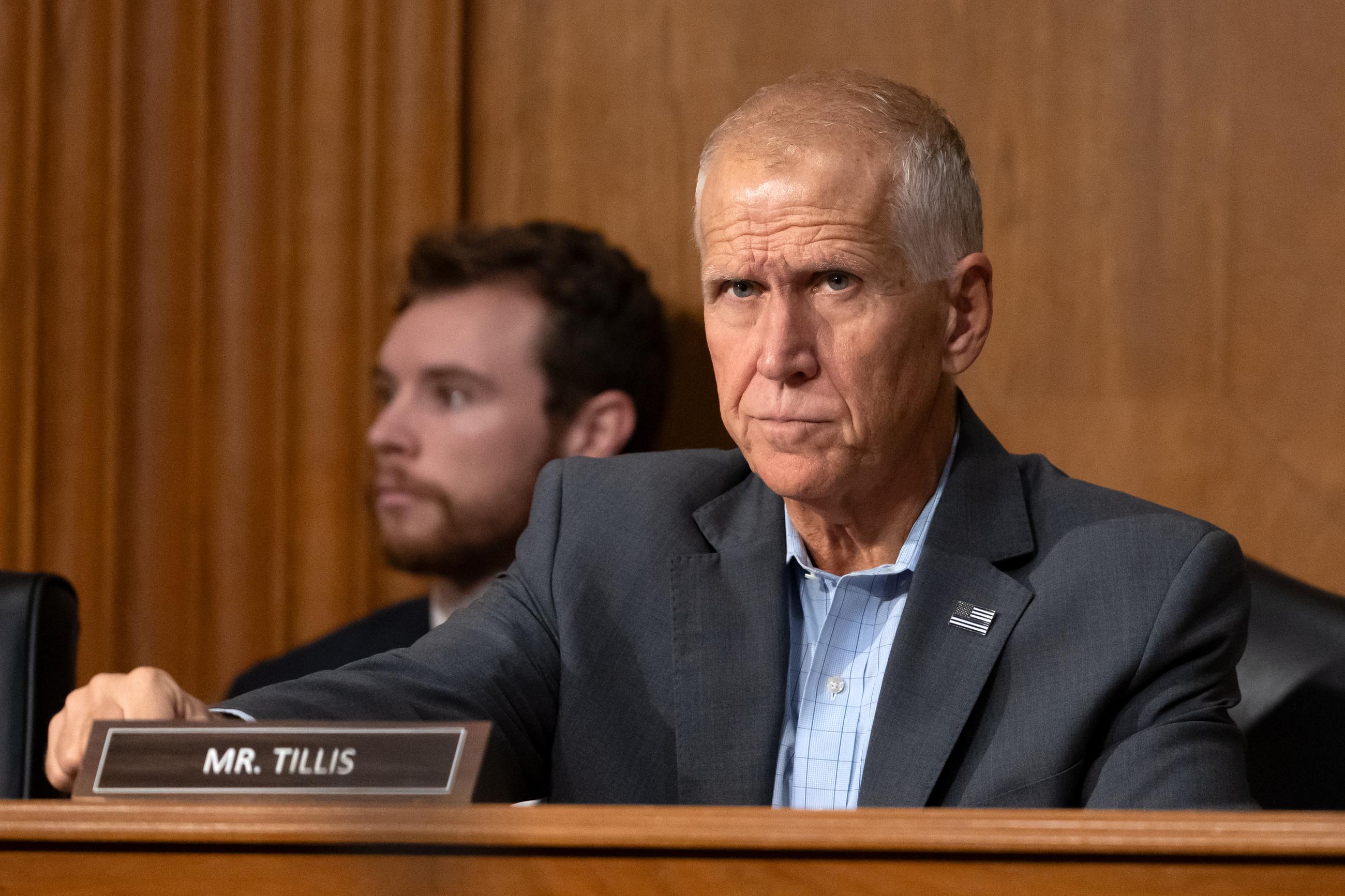
Sen. Thom Tillis arrives for a hearing of the Finance Committee in July. (AP Photo/Mark Schiefelbein)
AP Photo/Mark Schiefelbein
Can Ds and Rs work together?
Many Republicans leaving the committee have been heavily involved in the panel’s bipartisan work, particularly on health care issues such as drug pricing and reining in pharmacy-benefit managers. But a question looming over the committee is whether the members looking to replace them would bring the same spirit of cross-aisle collaboration.
“They brought a degree of policy rigor to the committee,” a Senate Democratic aide told National Journal. “It remains to be seen if that is adequately replaced with newer members, who have shown more of a penchant for partisanship.”
A number of the panel’s potential new members are staunch conservatives who have worked across the aisle on specific policy issues without having an overall reputation for bipartisanship.
Moreno, a populist conservative, has a proposal with progressive Sen. Elizabeth Warren to lift the Social Security payroll-tax cap in an effort to extend the program’s solvency.
Scott, a hard-line fiscal hawk, has offered a number of ideas to overhaul the country’s entitlement programs, including ones that have drawn the ire of both Democrats and Republicans, such as his 2022 “Rescue America” plan that would sunset all federal legislation after five years, including Medicare and Social Security.
Cramer, a reliable GOP vote who rarely breaks with President Trump, has introduced plenty of bipartisan measures with Democratic colleagues, but he has also voted for ambitious program overhauls that have run through Senate Finance, such as those within the One Big Beautiful Bill Act.
The committee could tap a woman in the conference to replace Blackburn, although there is no requirement to have a woman on the panel.
A spokesperson for the Finance Committee declined to comment on questions regarding committee assignments.
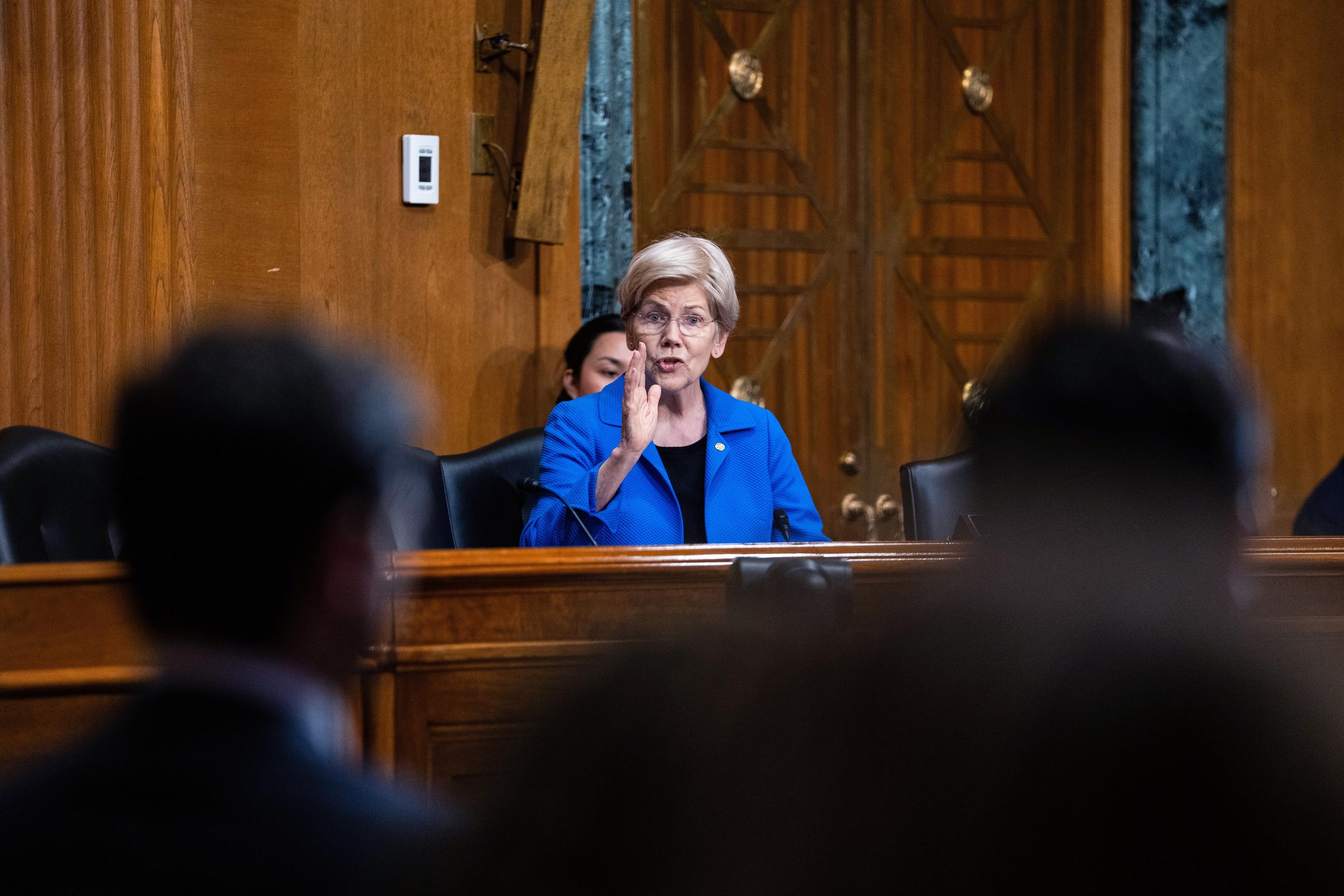
Sen. Elizabeth Warren asks questions during a Senate Finance Committee hearing in June. (AP Photo/Allison Robbert)
AP Photo/Allison Robbert
Angling for a seat begins
It’s still premature for members to lay claim to seats on the panel; senators will have to wait until after the November elections to figure out who will be in the majority and who may be entering the chamber as freshmen.
Finance Committee Chairman Mike Crapo says it’s too early to tell what the dynamic of the committee will be.
After the election, formal conversations on committee assignments begin, and members will have to make decisions on which committees they’ll want to remain on. The GOP leader, along with the Committee on Committees, which Crapo also chairs, will make the final decisions on who sits on what committee.
“Until we know who wants to stay on various committees, and who wants to shift around, and who the new members will be, there's no way to predict anything,” Crapo said.
Scott openly made his pitch to National Journal about why he should sit on the Senate Finance panel, citing his previous business running a hospital corporation of nearly 300,000 employees.
But the former hospital executive is pessimistic that he’ll be granted the committee assignments he seeks, considering his past attempts to run for GOP leader against Sen. Mitch McConnell and now-Majority Leader John Thune.
“That would be a good committee for me to be on,” he said. “I would be interested in it. I ran against McConnell, so that killed my chance … and I ran against Thune, too.”
Cramer also mentioned that he’s “always interested” in joining the Finance Committee, but noted that “you don’t get to just join.”
There will also be at least one Democratic seat open with Smith retiring. One complication for Democrats is that former Democratic Sen. Sherrod Brown, who’s running against Sen. Jon Husted in Ohio, has indicated that he’d be interested in retaking his place on the Finance panel.
This sets up a potentially awkward committee dynamic between Moreno and Brown—who ran against each other in the 2024 Senate race.
If Brown wins, Democratic leaders will have to make the decision on whether to break party rules and restore his seniority. While both parties have rules prohibiting senators from the same party and state from serving on the same committee, there are no rules limiting such a scenario for split delegations.
Senate Democrats consider a number of factors for committee assignments, including senators’ preferences, state demographics and representation, policy views, and personal and occupational backgrounds.
Senate Republicans rely on a seniority formula to make nominations. And while Moreno, Scott, and Cramer have confirmed their interest in joining the panel, there are likely more Republicans and Democrats vying for the slots as well.
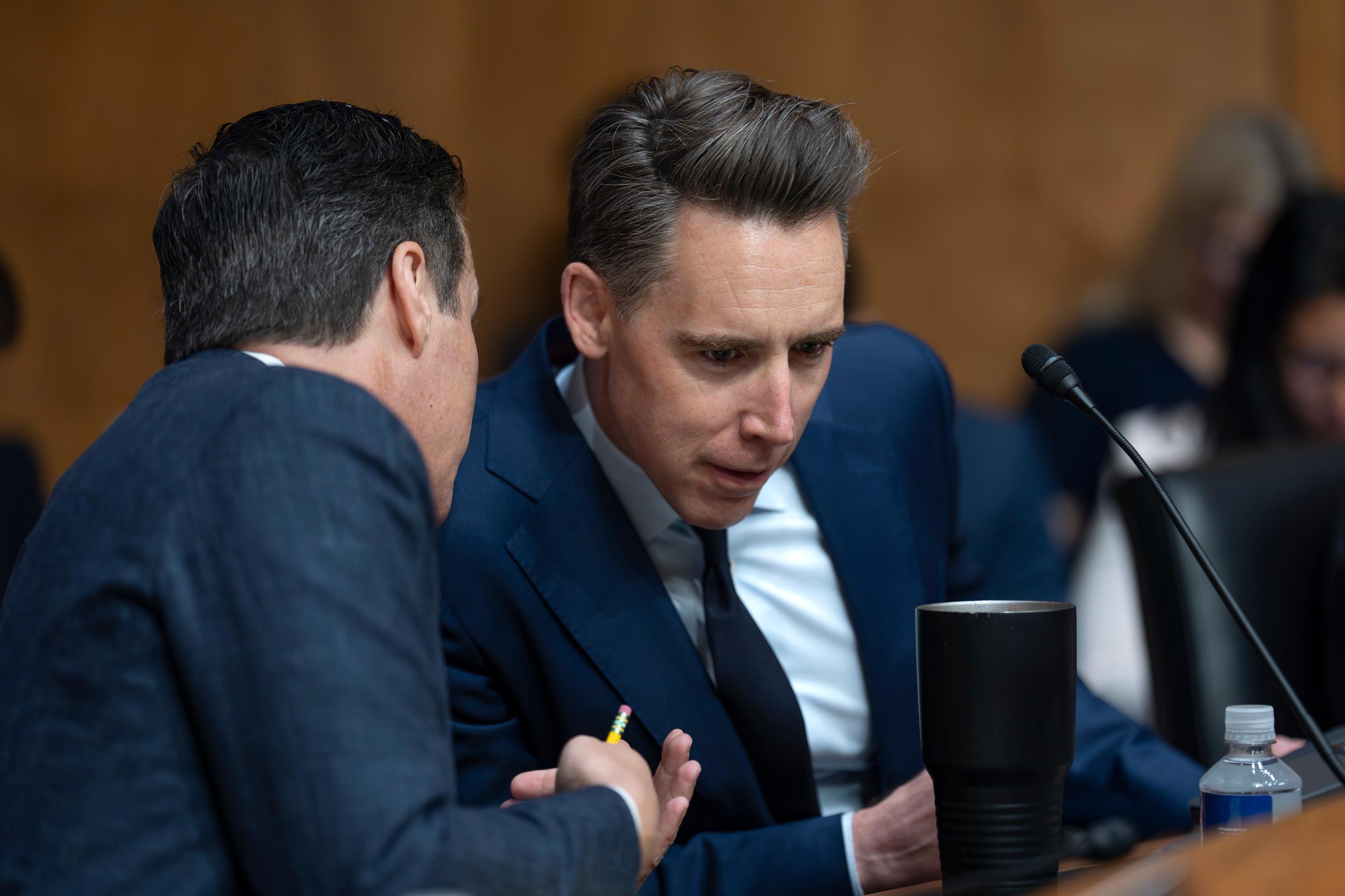
Sen. Josh Hawley (center) confers with Sen. Bernie Moreno at a Senate Homeland Security Committee markup in May. (AP Photo/J. Scott Applewhite)
AP Photo/J. Scott Applewhite
What the focus could be
In a brief interview last month, Moreno said that his main focus would be tax and trade. The Ohio Republican could tap a more-populist vein that bleeds into his policymaking.
He has introduced a bill that would impose a 100 percent tax on data-center incentives amid voter anxiety on the buildout of the projects and the rise of artificial intelligence. He’s also led efforts to scrutinize efforts by U.S. manufacturers to offshore jobs abroad, and bills to ban Chinese-made vehicles from the market.
Scott has introduced measures to expand health-savings accounts and to redirect federal dollars directly to patients rather than insurance companies.
Cramer’s focus on tax and trade has largely involved protecting agriculture interests and supporting domestic energy manufacturing.
The North Dakota Republican has supported bills that could set the foundation for a carbon tax, specifically his PROVE IT Act—which featured language signed into law at the beginning of this year. The language, which was added into the 2026 appropriations bills, directs the Energy Department to begin a study of the emissions generated in the production of U.S. goods compared to production in other countries.