Campaign legal teams are taking the driver's seat in the final stretch of the midterm campaign cycle. Several campaigns have issued cease-and-desist letters to their opponents in high-stakes races, disputing contested content in their ads.
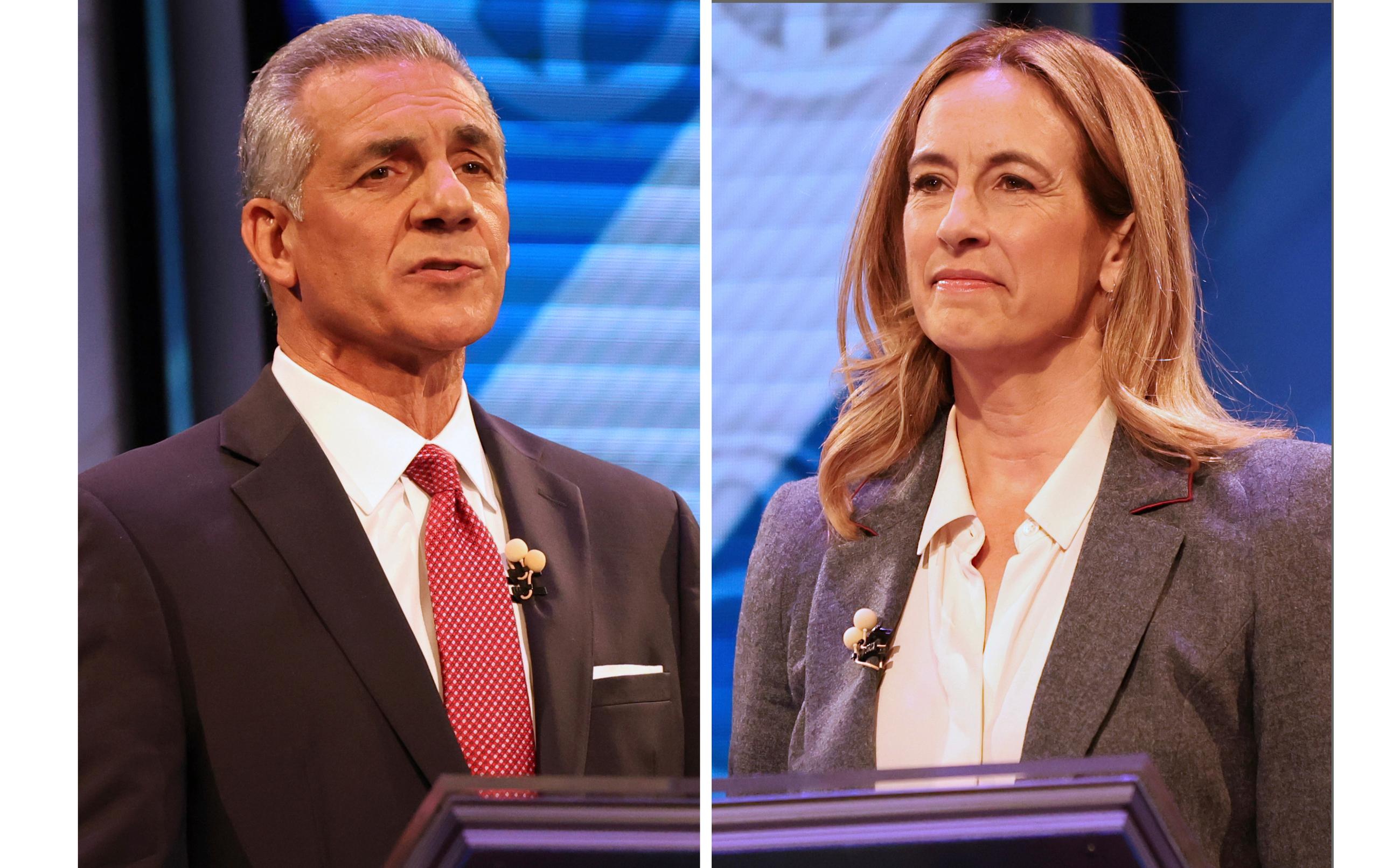
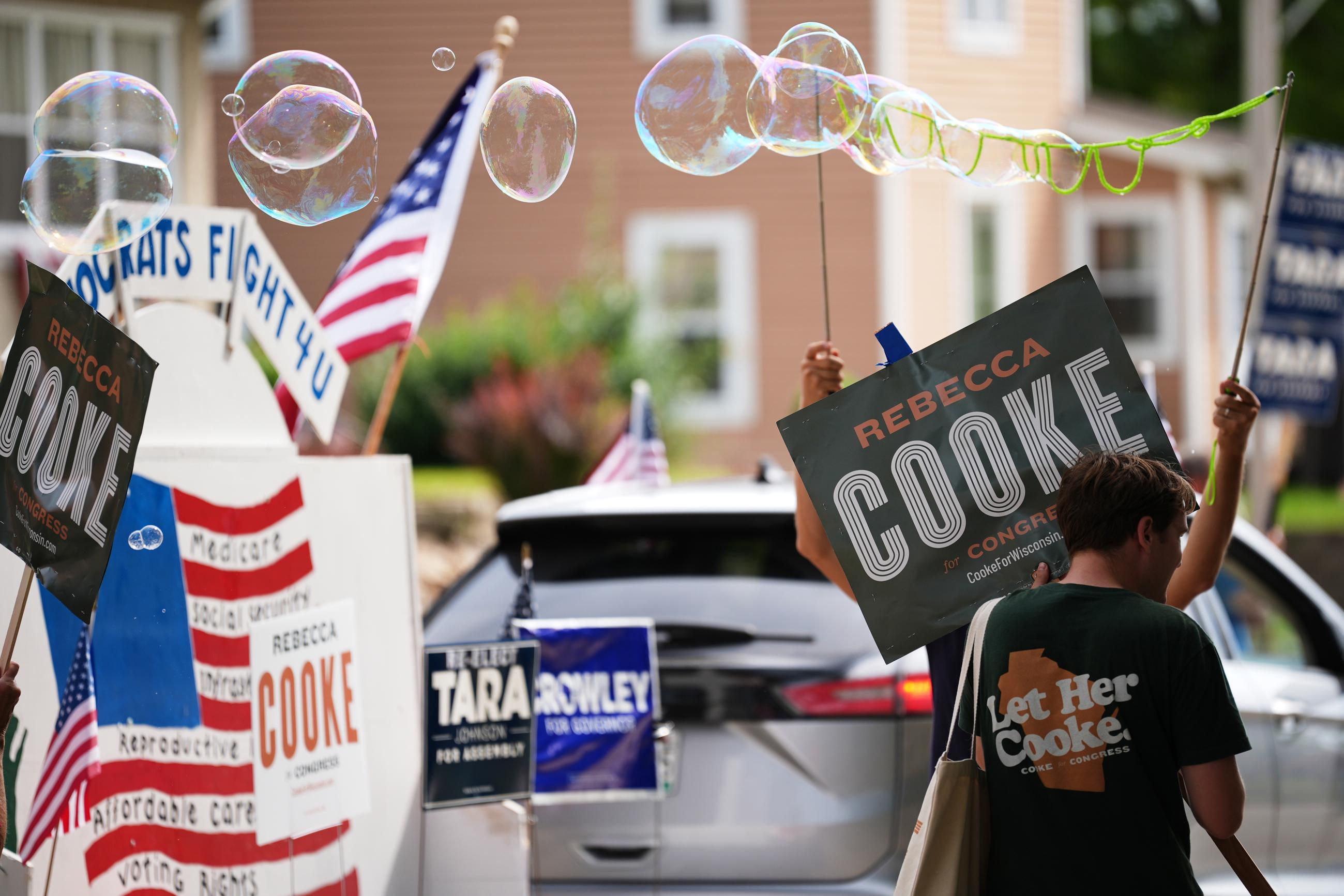
Rebecca Cooke, a Democratic candidate challenging Rep. Derrick Van Orden in Wisconsin's 3rd District, sent a cease-and-desist over an AI deepfake the incumbent posted of her purportedly standing in front of former President Biden saying she is running to “take advantage of as much corruption as possible and give every illegal alien free health care." She never said that.
Republican Sen. Roger Marshall of Kansas, a physician, sent a cease-and-desist to his opponent, Adam Hamilton, contesting an allegation in an ad that implied one of his patients had been arrested and jailed for missing a payment.
Candidates this cycle have used cease-and-desist letters to mark their disapproval of ads, but attorneys, campaign strategists, and free speech advocates said the burden to prove political candidates have defamed their opponents is high, and many such letters don’t result in actual litigation. Some of the ads in question, as in Van Orden’s case, use artificial intelligence to portray their opponents, adding new legal questions on what counts as legitimate attack.
“It’s not even bringing a knife to a gunfight; it’s bringing letterhead to a gunfight,” Democratic strategist Kelsi Browning said of the cease-and-desist letters.
These letters in and of themselves have no legal consequences. Though they could indicate a candidate’s intention to file a defamation case, it’s rare that those cases escalate further and are resolved before an election. Candidates who approve ads, as mandated by the Federal Election Commission, would be liable for any defamatory information they included.
“A cease-and-desist order is not a legal activity, other than perhaps putting somebody on notice that you may file a lawsuit later,” said Gene Policinski, senior fellow for the First Amendment at the Freedom Forum. “But it carries no force of law.”
Brett Johnson, a partner at Snell & Wilmer who practices political and election law, said some campaigns use a cease-and-desist letter “as a marketing ploy.”
“Candidates are trying to generate a buzz and possibly get some free media out of it,” Johnson said. “Sometimes you have to take those cease-and-desist letters with a little bit of a grain of salt.”
When Republican Rep. Anna Paulina Luna of Florida sent a cease-and-desist to opponent Leela Gray over an attack ad, the Democratic-aligned firm Elias Law Group responded with a letter arguing that the content of Gray’s ad was “core political speech protected by the First Amendment.”
Sometimes, a cease-and-desist from a candidate can have the unintended effect of spurring curious onlookers to research an issue that keeps the candidate on the defensive.
“It’s not a legal issue," Johnson said. "That’s just the realities of trying to not highlight possibly something that’s negative, even if it’s false.”
The use of artificial intelligence to portray political opponents, a phenomenon new to this cycle, has drawn scrutiny. Van Orden posted several AI-generated videos of Cooke saying things like, “There is a 100 percent chance I just voted for two Communists,” and, “Let the peasants eat cake. They will vote for me, anyway.”
Researchers at the Wesleyan Media Project found candidates and political groups have spent $137 million this year promoting AI-generated political ads.
“Having [AI] as a tool where you can take someone’s likeness and make them say things that they didn’t actually I think has made it easier to be disingenuous, but there’s still the intent that seems to have always existed,” Browning said.
Those bringing suits, even against AI-generated ads, need to prove the use of false information was actively malicious, not just negligent.
Van Orden’s videos, created using X’s Grok, ran only on social media. Section 230 of the 1996 Communications Decency Act shields social media platforms from liability for anything posted on their sites.
Johnson said producers and owners on television and radio stations can’t restrict ads from a certain campaign, but they’re not obligated to “publish lies.” Stations can request information substantiating a claim behind an ad, which the producer would need to supply.
Large campaigns usually run their ads by legal teams to help ensure their claims are verifiable.
“Whenever you’re drafting ads, you want to make sure that they run on the air,” Republican strategist Jesse Hunt said.
Campaigns don’t want to go through the trouble of recutting ads to ensure they’re up to snuff, costing them time in front of their target audience, Hunt said. “You always want to have rock-solid, believable information running on air."
For online content, however, the vetting may be less rigorous.
“Your local NBC affiliate is held to higher standards and will pull an ad if something is slanderous or libelous, or potentially so,” Browning said. “The issue is that we live in the internet age now, and things move at the speed of keyboards and cell phones.”