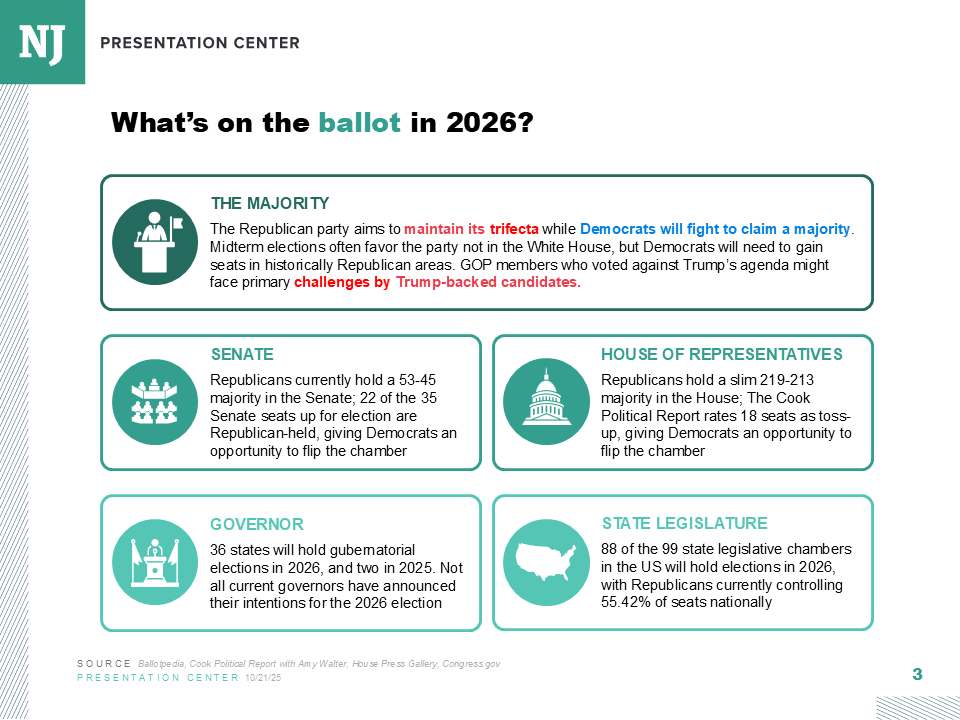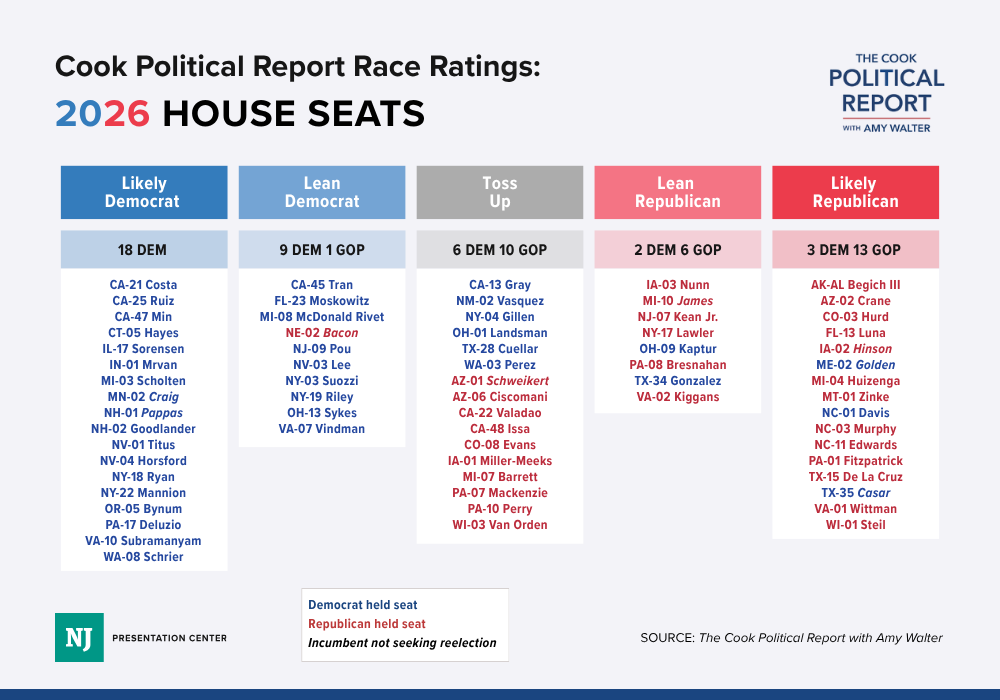


Dozens of newly configured congressional districts and a rapidly expanding battleground have left the race for the House in flux, leaving many observers in the dark on how competitive these contests might be. Enter a flurry of Democratic polling to shed a blue-tinted light on the ever-growing map.
These Democratic polls are some of the only windows into these districts that weren’t on the radar a month ago. Gold-star pollsters focus the brunt of their attention on headline-grabbing Senate and gubernatorial races, while House strategists and analysts scramble for data.
Partisan polls can fill that gap, but imperfectly. Democratic congressional candidates and committees have released dozens of internal polls in recent months, but their GOP counterparts have been relatively silent, sharing only a handful of polls from competitive races.
Most internal polling never sees the light of day. Campaigns release surveys for strategic reasons, making analysis of publicly disclosed polls more of an art than a science. The difficulties leave onlookers in a tough spot as they work out which races are genuinely competitive and which pose false alarms.
Jeff Horwitt, a partner at the Hart Research polling firm, told National Journal that campaigns, particularly those on the edge of the battle map, publicly release internal polls to project legitimacy to donors and party leaders.
“If you're a campaign, it's to show that you're viable and that people should invest in you,” Horwitt said.
Hart Research primarily conducts polls for Democratic campaigns, but it also works alongside a GOP-aligned pollster on NBC’s polling efforts. Hart Research conducted several of the recent polls used by long-shot Democrats to prove their viability. In August, former Ohio State University professor Don Leonard released a Hart Research poll showing him down just 4 points to Rep. Mike Carey, a Republican still favored to win reelection in a seat President Trump carried by 10 points in 2024.
The public got its eyes on that particular survey, but Horwitt said only a “small number” of the polls he conducts are released. He said pollsters, who still rely on their record to be commissioned for polls, are typically involved in the release of internal polls.
“Our reputation is on the line to make sure that it's being characterized in an accurate and fair manner,” he said.
Another reason a political party might release internal numbers: to put the opposition on its back foot.
“If you can extend them out, you really force your opponents to play defense until they break,” Horwitt said. “There are limited resources, so if you have to play defense in places where you didn't think you'd have to spend money, that's also to the party's benefit.”
Democrats have been far more willing to disclose their internal polling than Republicans this cycle. Seth Hill, a political science professor at the University of California San Diego, said that likely reflects the strong political environment currently favoring Democrats.
“If indeed the environment is turning favorable to Democrats, then we should expect to see a lot more Democrats releasing those polls and a lot more Republicans sitting on their internal polls because they don't want donors to get the sense that they're in trouble,” Hill said.
Since mid-July, Democrats, mostly in districts rated Likely Republican or Solid Republican by The Cook Political Report with Amy Walter, have released more than three dozen internal polls. Republicans have released just eight such polls in competitive districts in that time frame.
In 2022, when the GOP sought to surf a red wave, Republicans released about two dozen polls, including 11 from the National Republican Congressional Committee. Democrats also released about three dozen during that 2022 time frame, according to data from the now-defunct FiveThirtyEight.
Committees like the NRCC or the Democratic Congressional Campaign Committee don’t accept a candidate’s internal poll as gospel, Hill said.
“[Committees], of course, have their own polls because they know they can't really trust the candidates to be totally transparent with the polls that they're taking,” he said. “But obviously they don't have unlimited resources, so candidate internal polls are still an input into their decision-making process.”
Republicans say Democrats are unleashing the onslaught of internal polls to make up for the significant fundraising deficit they face heading into November. Democratic candidates have largely kept up with their Republican counterparts in the money department, but Trump’s massive war chest and the NRCC’s continued fundraising prowess give GOP-aligned committees the advantage of sending huge sums to nominees in need.
“National Democrats are so desperate to close a fundraising gap the size of the Grand Canyon that they're smoking too much 'hopium' and pumping out polling slop just to raise money for their failing campaigns,” said Mike Marinella, an NRCC spokesperson. “No one with half a brain believes this crap, while Republicans have the stronger map, the resources, the candidates, and the message to win.”
DCCC spokesperson Viet Shelton said the polls are just one data point showing a Democratic edge heading into Election Day.
“Polls are a data point, and, along with massive primary turnout and an early-vote advantage, all the data is pointing to one thing: Democrats are taking back the House majority next month,” Shelton said.
Ultimately, internal polls and their resulting analysis are insider baseball. Hill, a scholar of elections and representation, said he doesn’t believe campaigns release internal polls to sway individual voters, nor should they.
“My guess is the occasional internal-poll release has no effect on most voters,” he said. “So I really think it's much more of an intraparty game.”