
Social Security will be in the spotlight this week. On Wednesday, the program plans to announce the 2027 cost-of-living increase for beneficiaries, expected to be around 3.5 percent.
That increase, said the nonpartisan Senior Citizens League, would boost the average benefit check by $67.90 to $2,007.98.
So get ready for serious talk—again—about how the government can continue to afford all this.
Finding consensus has been difficult, though members of Congress do agree on this much: Social Security desperately needs financial help.
The program’s trustees estimated earlier this year that Social Security’s Old-Age and Survivors Insurance Trust Fund, which pays monthly retiree and survivor benefits, is equipped to cover all benefits only until the end of 2032. After that, Social Security expects only enough funding to pay 78 percent of scheduled benefits.
Lawmakers from both parties are talking seriously about having constituents pay more into the program, but they worry any such proposal would be political poison.
Congress is stuck
While there’s nothing near a consensus on how to stabilize Social Security, there is general agreement that action is needed.
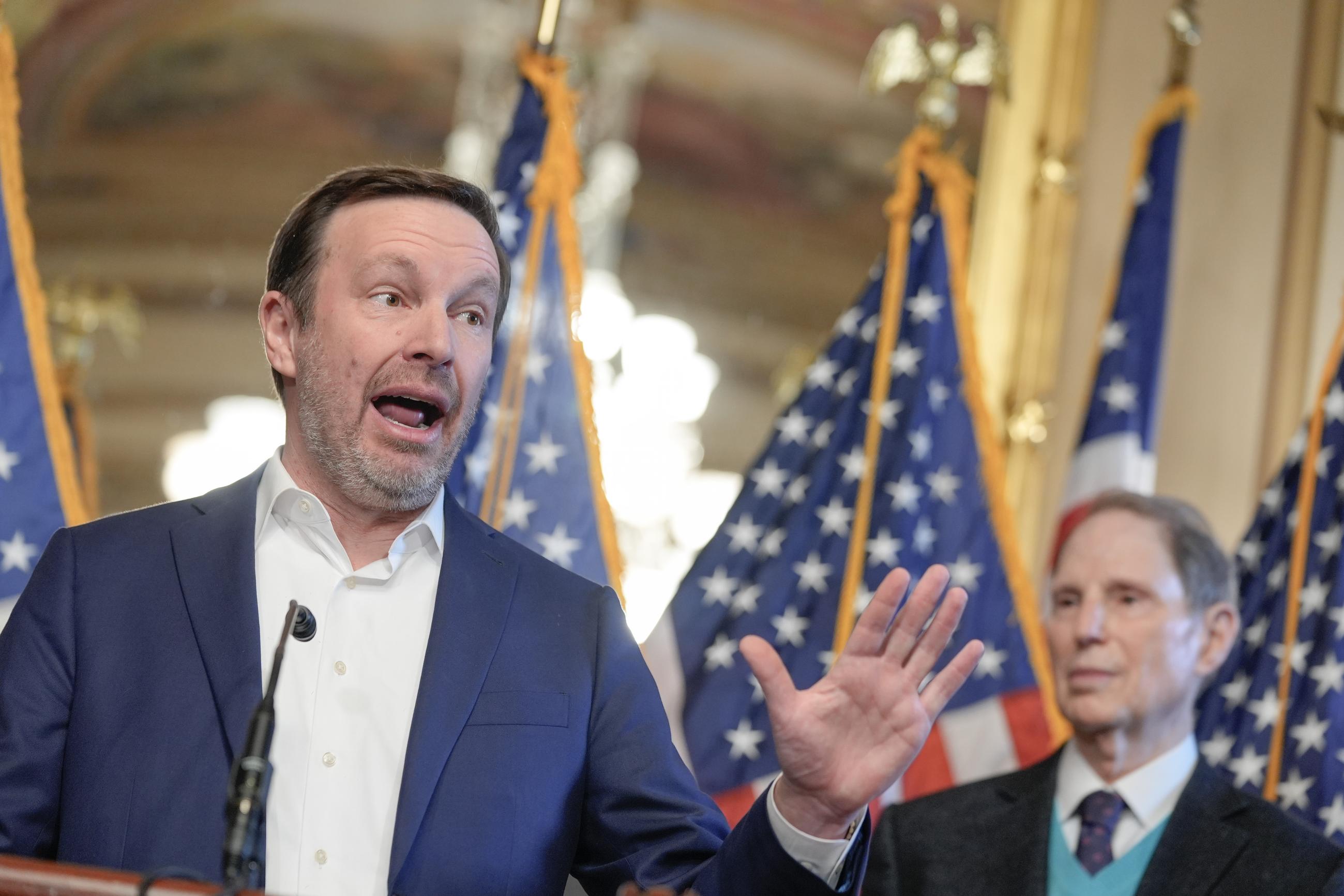
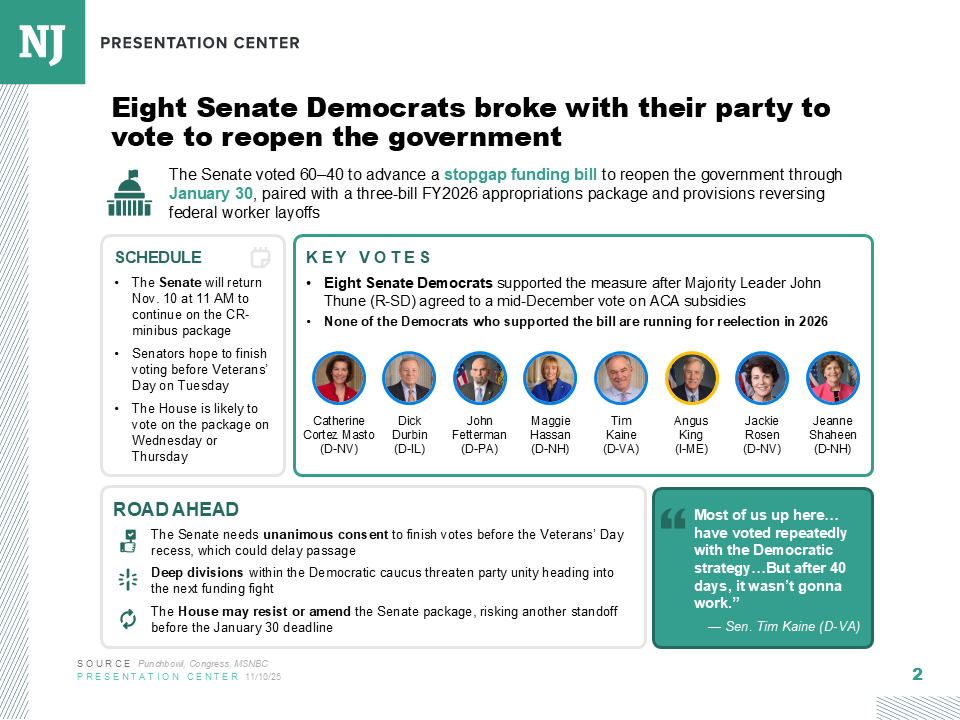
“What I’m for is doing something. Don't sit there and point fingers at this looming disaster,” said Sen. Dick Durbin, a Democrat who’s part of a bipartisan group pushing for reforms.
Chances are that in the future, rescuing Social Security is going to mean a mix of higher taxes, changes in benefits, and other features, said Sen. Tim Kaine, another Democrat who is part of the bipartisan group.
“There’s not just going to be one thing that’s going to happen that will preserve Social Security solvency,” Kaine said.
Congress, though, has long been reluctant to make constituents pay more to the government.
Most people who earn less than $226,600—that is, all but the top 20 percent of incomes—”will pay more in payroll taxes than federal income taxes” this year, said a study by the nonpartisan Tax Policy Center, a Washington research group..
Employees pay 6.2 percent of their incomes into Social Security, but only on the first $184,500 of income. Employers match that with 6.2 percent of their own. They pay a combined Medicare tax of 2.9 percent. There is no income cap on that tax, though wealthier people pay an additional 0.9 percent.
Saving Social Security
At a recent Senate Finance Committee hearing, some senior activists and policy analysts saw reasons to make changes in the payroll tax.
They cited a survey by the National Academy of Social Insurance, AARP, the National Institute on Retirement Security, and the U.S. Chamber of Commerce that asked people to evaluate different ways of stabilizing Social Security.
“The results reveal a level of agreement that is rarely seen in American public life. Americans overwhelmingly prefer revenues to benefit cuts,” said Rebecca Vallas, CEO of the National Academy of Social Insurance.
Eighty-five percent of respondents agreed with the statement: “We should ensure benefits are not reduced, or that we should increase benefits, even if it means raising taxes on some or all Americans.”
“The preference for revenues over cuts crossed party, income, education, and generational lines," Vallas said. "More than 3 in 4 Republicans, more than 9 in 10 Democrats, and more than 8 in 10 independents preferred raising revenue to reducing benefits.”
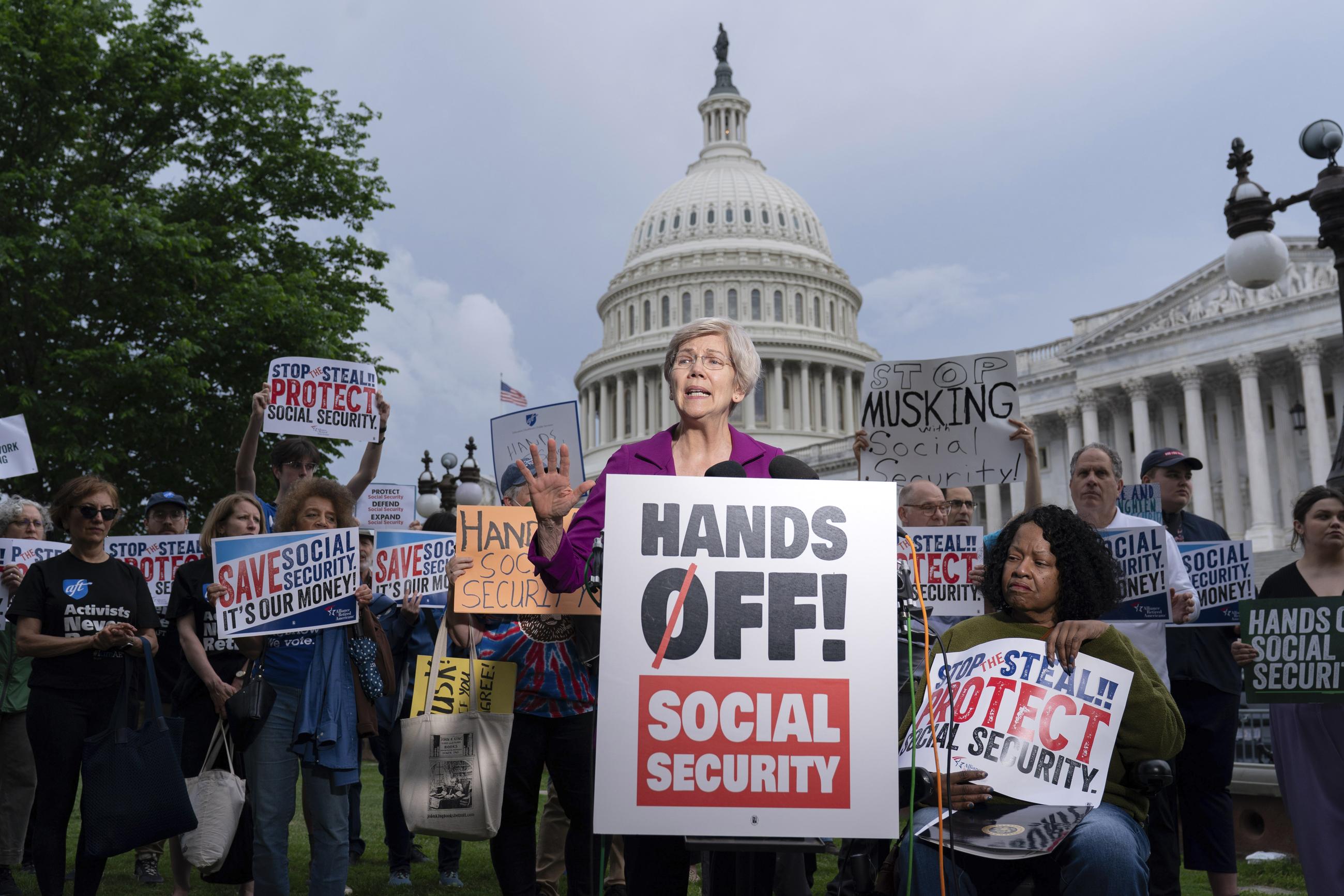
Republican Sen. Bernie Moreno and Democratic Sen. Elizabeth Warren have proposed lifting the $184,500 cap.
“I just think Congress has a choice to make,” Warren said. “Either we can decide to protect the top 6 percent of all earners in America and let the Social Security trust fund get into trouble, cut benefits for seniors, throw more seniors into poverty, or we can decide that everybody pays the same share and protect Social Security forever into the future.”
Republicans for decades have resisted tax increases for any purpose. House Speaker Mike Johnson said earlier this year he has a plan for rescuing the program next year, but would not provide details.
At the Finance Committee hearing, Republican Rep. Ron Johnson bluntly rejected raising taxes on the wealthy.
“Let's recognize how grossly this [is] mismanaged, how the American people were literally sold a bill of goods, and now we're going to fix it,” said Johnson, who chairs the Senate Budget Committee.
“And fixing it is not going to be taxing the heck out of high earners who create all the jobs and prosperity in this country,” he said.
Durbin, who was a member of the House in 1983, the last time Social Security underwent a major overhaul, said his team’s plan is to set up a process that would have a commission look at different ways of resolving the crisis. Congress would then amend it and vote on it.
That, he said, offers a broad range of possibilities.
“What I’m for,” he repeated emphatically, “is to do something.”