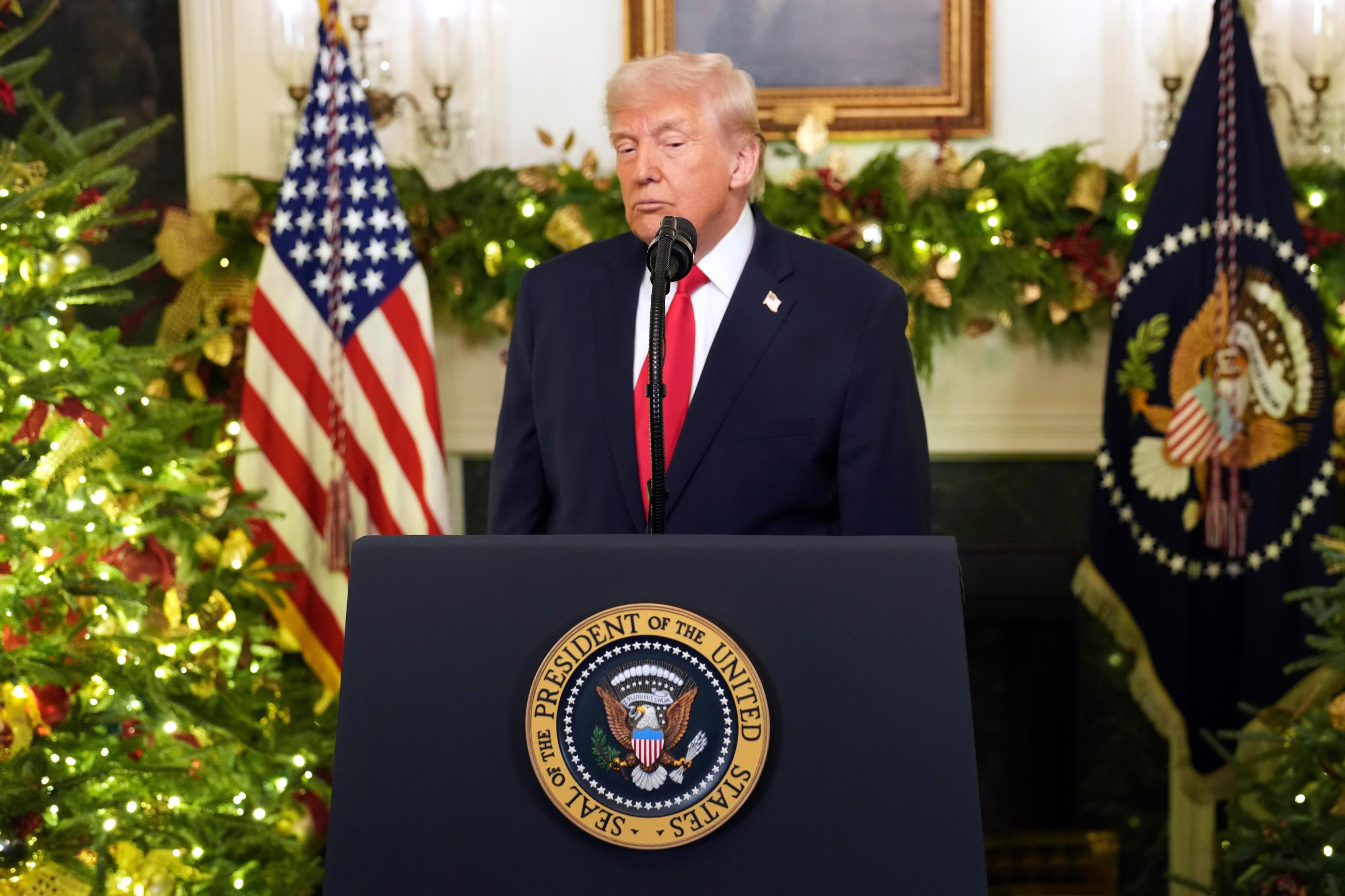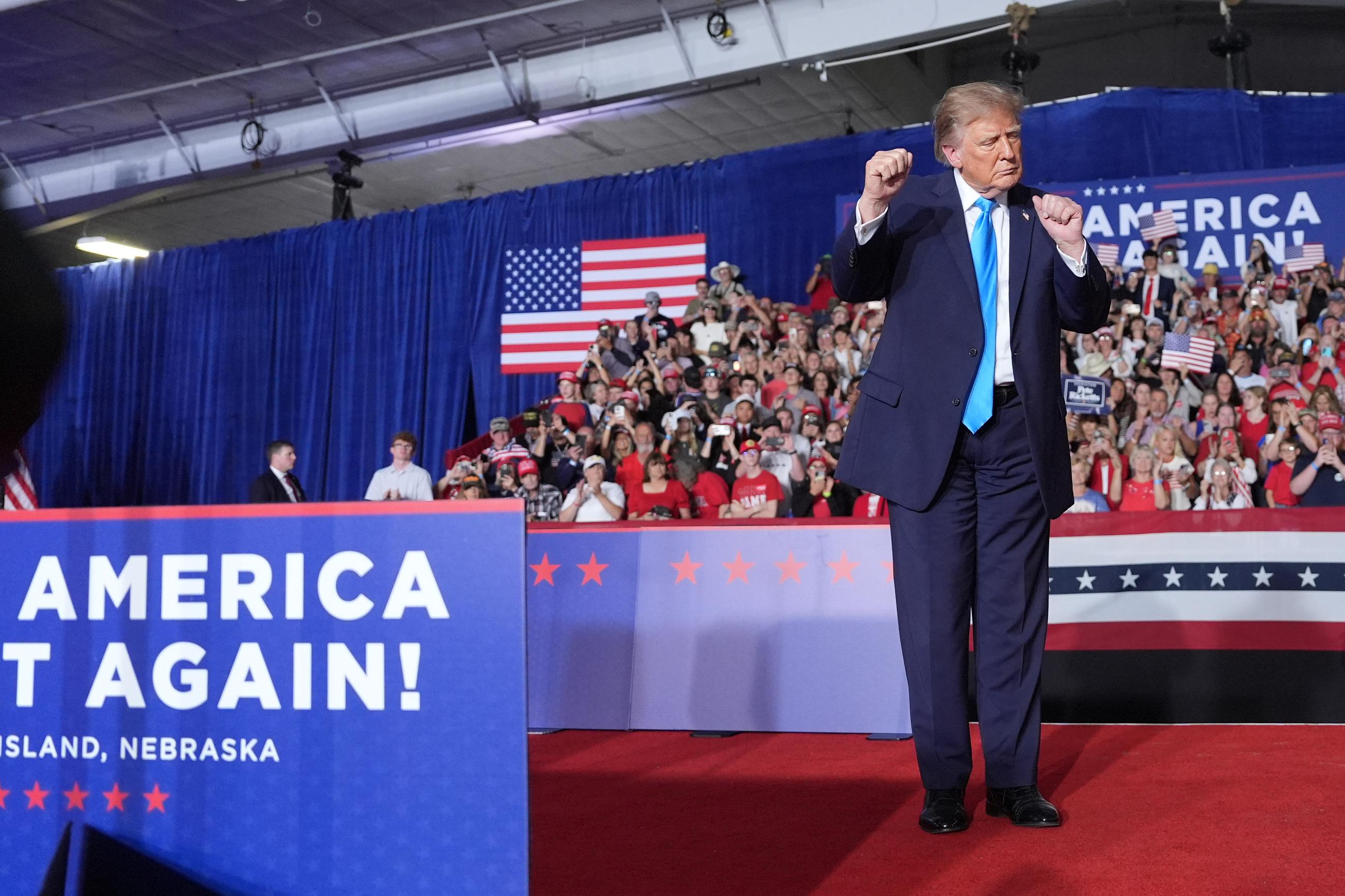
Over a five-day period, from Thursday to Monday, President Trump flew 8,300 miles to attend four rallies. He spoke 46,700 words over more than five hours. According to calculations by National Journal, it is the most the president has spoken over such a short stretch in his second term and more than any other president (for whom such data is available) has spoken in any week.
To be kind, the results were mixed.
The intent was to rally Republicans dismayed by bad polls and an energized Democratic opposition. Yet despite talking so much and so long—or maybe because he talked so much and so long—his message was often confused, regularly garbled, and routinely buried under a mountain of verbiage.
The map and the numbers tell much of the story.
The fact that, only a month before Election Day, Trump had to go to four states he won easily three times is telling. The most important resource for any White House and any political party is the time of the president. Yet here was a Republican White House dispatching the president on an October rescue mission to Oklahoma (+34.3 in 2024), Alabama (+30.5), Ohio (+11.2), and Nebraska (+23.5). It was a map that shouted Republican agita.
That alone is unprecedented. Just as remarkable was the rhetorical fusillade launched by the president:
- Thursday in Durant, Oklahoma: 1 hour, 21 minutes; 13,000 words
- Friday in Mobile, Alabama: 1 hour, 10 minutes; 9,000 words
- Saturday in Dayton, Ohio: 1 hour, 15 minutes; 12,200 words
- Monday in Grand Island, Nebraska: 1 hour, 22 minutes;12,500 words
With so many words over so many hours, it became difficult to discern any coherent message beyond "Trump good, Democrats evil." It was only the latest sign that a decade of pleadings from veteran Republican strategist Karl Rove have gone unheard.
Rove is the apostle of message discipline, first publicly preaching the gospel in 1994 when he guided a young George W. Bush to the Texas governorship. Despite the best efforts of Democrats to rattle him and throw him off message, every question to Bush was met with some variation of his four campaign themes: education, juvenile justice, tort reform, and welfare reform. Then, when Bush ran for president in 2000, Rove was asked why he could beat Vice President Al Gore. He responded succinctly: “Because Bush will stick to his message and Gore won’t.”
In 2016 and 2020, he urged Trump to try that strategy. Trump ignored the advice. Rove tried again in 2024. “You want to have a simple message that the media has to cover. Instead, he gives them a gigantic smorgasbord," he said, noting that allows often-hostile reporters to “pick and choose.”
There was an awful lot for voters in Oklahoma, Alabama, Ohio, and Nebraska to pick from. As promised, they did hear pitches for local Republicans. But, in a National Journal analysis of the speeches, those consumed only about 15 percent of the rallies—12 percent in Oklahoma, 13 percent in Alabama, 20 percent in Ohio, and 16 percent in Nebraska.
The bulk of Trump’s rally speeches—85 percent—was taken up by Trump’s tried-and-true rally staples: men playing women’s sports (29 mentions), transgender surgeries (22 times), “fake news” (26) and, of course, his favorite bête noirs of Joe Biden (26), Barack Obama (20), and Kamala Harris (12).
In the four rallies, he also called the Democrats “communists” 30 times, along with “radicals” (35), “socialists” (8), “lunatics” (11), “crazy” (36), and “extreme” (7).
In between attacks and boasts, there were the usual tangents. Topics ranged from his ballroom construction, the White House helipad, Dennis Rodman, his preferred brand of aspirin, the complexity of modern lawnmowers, the number of counties he won, and his favorite hosts on Fox News.
He even raised a still-raw grievance from his first-term handling of the COVID pandemic, complaining, “We did a great job with that. We never get credit.” He also pressured Alabama officials to name a new bridge after him and threatened Ohioans that if they elect a Democratic governor, "I’m not going to help her, probably," if she asks for disaster aid.
That went along with his decidedly un-presidential coarseness: calling foes “a pain in the ass,” saying “hell” 52 times, dismissing a Democratic charge as “a line of crap,” and promising Ohioans, “We’re going to shove it up their ass.”
He said things that made life more difficult for the candidates he purported to help. It didn’t help Sen. Jon Husted of Ohio, who is getting clobbered by Democrats on his past backing for data centers, when Trump said, “We want them. … You can’t just turn them off. They'll go to China.” The result was a decidedly unhelpful AP story on the rally headlined: “Trump defends data centers in Ohio as he rallies to boost Jon Husted in a tight Senate race."
Two nights later, Trump’s mangled syntax in Nebraska forced the White House to spend time denying that the president wanted Iran to target San Diego and Los Angeles with a nuclear attack. In trying to make his usual pitch that high gas prices are a small price to pay for denying Iran a nuclear weapon, he said: “Let them take out Los Angeles. Let them take out San Diego. That's—this is a very small price to pay, and it's going to be over very soon.”
Any fair review of the context would lead to the conclusion that CNN was correct when it said the comment “was incoherent, not malicious.” But it threw Republicans off message.
With so many self-inflicted wounds and so much understandable confusion, it was difficult to discern a message that could resonate with unhappy voters who increasingly believe that the president’s interests don’t align with theirs. It’s what happens when you scoff at Karl Rove’s calls to show a little discipline.