
If enough farmers become angry with the Republicans over tariffs and high diesel and fertilizer prices, could their votes deliver control of Congress to the Democrats?
No, because the number of farmers is now simply too small, said Matt Russell, the executive director of the Democratic-leaning Iowa Farmers Union, in an interview last week. But, he added, if respected farmers start telling their neighbors they will vote Democratic, it could give their more-numerous non-farming neighbors a permission structure to do the same.
Russell’s analysis goes a long way in explaining the dynamics of this year’s election in rural America, one that could have a dramatic impact on the leadership of the congressional agriculture committees in the next Congress.
About 70 percent of rural Americans voted for President Trump in 2024, according to a recent KFF poll, but farmers and other rural Americans have plenty of reasons to be dissatisfied with the administration’s performance. The cost of gasoline and diesel is a particular issue because rural Americans must drive more than people in the suburbs and cities. Farm machinery runs on diesel.
Trump's aggressive immigration-enforcement policies have also drawn criticism from the ag sector. Last week, the Texas Cattle Feeders Association, the Kansas Livestock Association, and the Oklahoma Cattlemen’s Association wrote that Immigration and Customs Enforcement raids have had “a massive chilling effect on the legal, documented, skilled workers that put beef on the table and keep the cattle supply chain moving.”
The administration, and by extension Republicans in Congress, can still point to wins that they’ve delivered for farmers. Trump’s Environmental Protection Agency has reduced regulations. Both Congress and the Agriculture Department have sent extra subsidy payments to farmers. Commodity prices are low and input prices are high, but in October farmers will receive higher subsidy payments than in the past due to provisions in the One Big Beautiful Bill Act, which Republicans passed last year without Democratic support.
Yet the battles for House and Senate seats in disproportionately rural states are much tighter than usual. Senate races in Iowa, Kansas, and Nebraska, where Republicans have prevailed for years, are competitive.
The rural dissatisfaction has spread even as far as Mississippi, where Sen. Cindy Hyde-Smith, a Republican who serves on the Agriculture Committee, is no longer considered a shoo-in for reelection. In Maine, with its vast potato and blueberry industries, small farms, and lobster boats, Trump’s tariffs have forced Republican Sen. Susan Collins to distance herself from the administration.
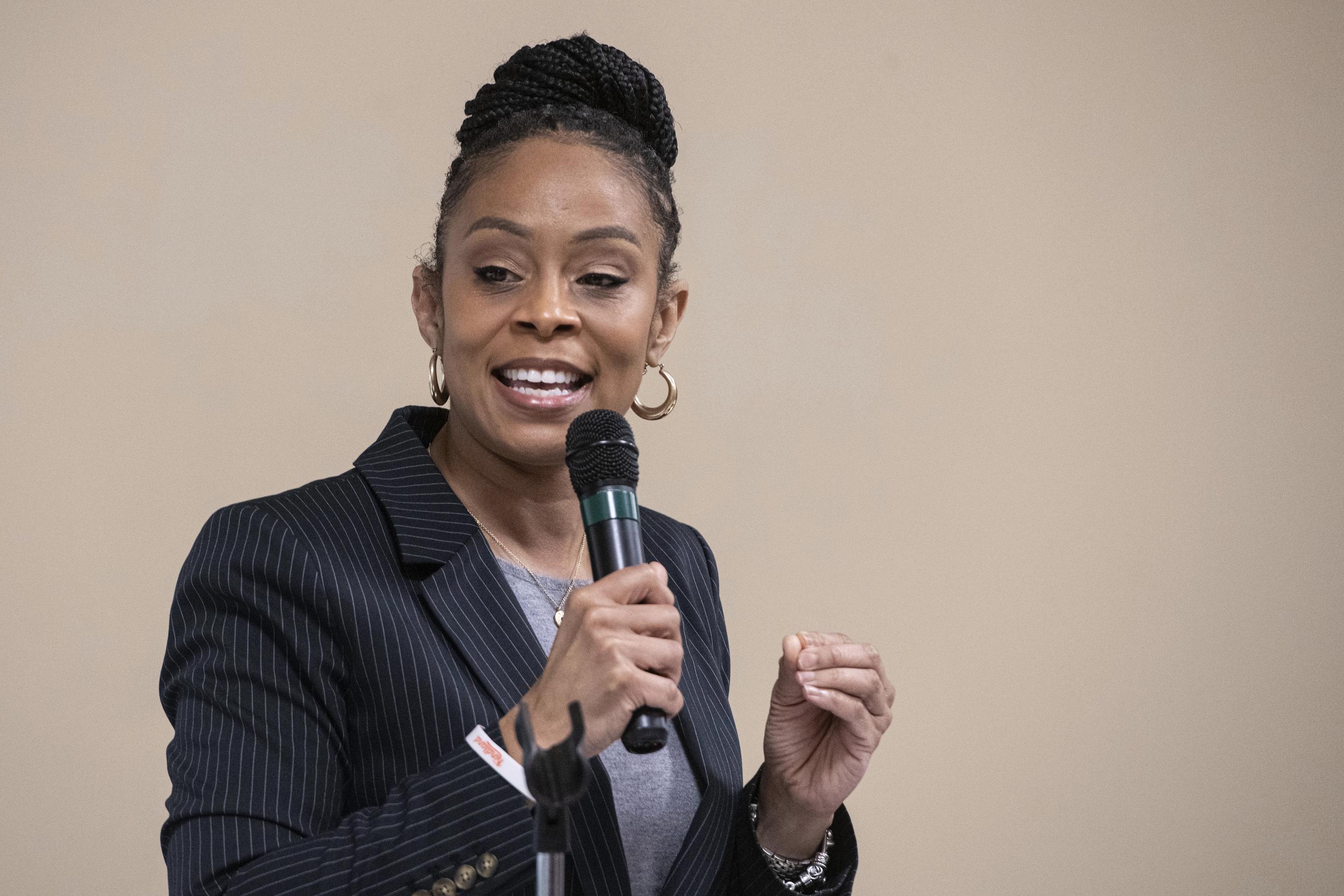
If Democrats do take control of Congress, there will be big changes in the leadership of both the House and Senate agriculture committees. On the House side, Rep. Shontel Brown, an African American who represents an urban district centered in Cleveland, formally announced last week that she is running to be the top Democrat on the committee. In a letter to her colleagues, Brown noted that her family has personal experience with the Supplemental Nutrition Assistance Program, the country’s biggest anti-hunger program, but she also pointed out she has “visited row-crop operations, specialty crop growers, organic and regenerative farms, food banks, farmers markets, and controlled-environment agriculture operations, and traveled to colleagues’ districts in Illinois, Georgia, Mississippi, Florida, Colorado, Hawaii, and beyond.”
Rep. Jim Costa of California has signaled he may also run for the position, but Rep. Angie Craig of Minnesota, the outgoing ranking member, has endorsed Brown, calling her “a strategic thinker” who is “committed to restoring Congress’ oversight role.”
There may be a battle on the Republican side, too. House Agriculture Committee Chairman Glenn Thompson is term-limited under Republican rules, but he has asked leadership for a waiver. Rep. Austin Scott of Georgia is in line to be the top Republican. Last week Brown told DTN/The Progressive Farmer that while she has “no leverage on Republican politics,” she has “a decent relationship with Austin Scott” and “we would be better positioned to be able to try to find some compromise” than she would with Thompson.
On the Senate side, there will be another Democratic vacancy assuming Agriculture Committee ranking member Amy Klobuchar wins the Minnesota governor race. Farm leaders were thrilled that Sen. Michael Bennet of Colorado lost his bid for the Democratic nomination for governor because he has more seniority than Sen. Cory Booker, who would have been in line to be top Democrat on the committee. The New Jersey Democrat worries farm leaders because he is a vegan and has been critical of agribusiness. Bennet is known mostly for his work on forestry policy, an important issue for both Colorado’s timber and recreation industries. James Henderson, a Colorado rancher and Farm Bureau member who traveled to Washington recently to urge Congress to finish the farm bill, said Bennet, who has no rural background, has been surprisingly helpful on farm and ranch issues.
Some farm leaders are even more excited about the possibility that former Sen. Sherrod Brown of Ohio may beat Sen. Jon Husted and use his existing seniority to claim the position of top Democrat on the committee. Ohio has more row-crop production than Colorado.
Whatever the outcome, rural voters will be able to claim they deserve more attention in the next Congress.