The Senate is expected to vote Wednesday on the Ratepayer Protection Act. Supporters hail the measure as a way to curb the additional energy costs borne by consumers when data centers crop up in their area.
Skeptics see the bill another way: While it does send a congressional message to shield consumers from additional costs, it doesn’t require anyone to do anything.
The bill is “a fraud," Senate Minority Leader Chuck Schumer told reporters last week. "It's voluntary. No company has to do it.”
The House passed the bill overwhelmingly earlier this month, with strong support from members of both parties.
Most Democrats at the time were as enthusiastic as Republicans about its message.
Democratic Rep. Kathy Castor, one of the chief sponsors, said the bill “ensures that wealthy Big Tech companies cover the full energy and infrastructure costs of new data center development and are held accountable for their promises.”
When the bill hits the floor, it could be the last major congressional vote before the midterm elections. Republicans in particular, who are desperate to maintain control of Congress, hope that the bill’s passage sends a signal to inflation-weary voters that the GOP is listening.
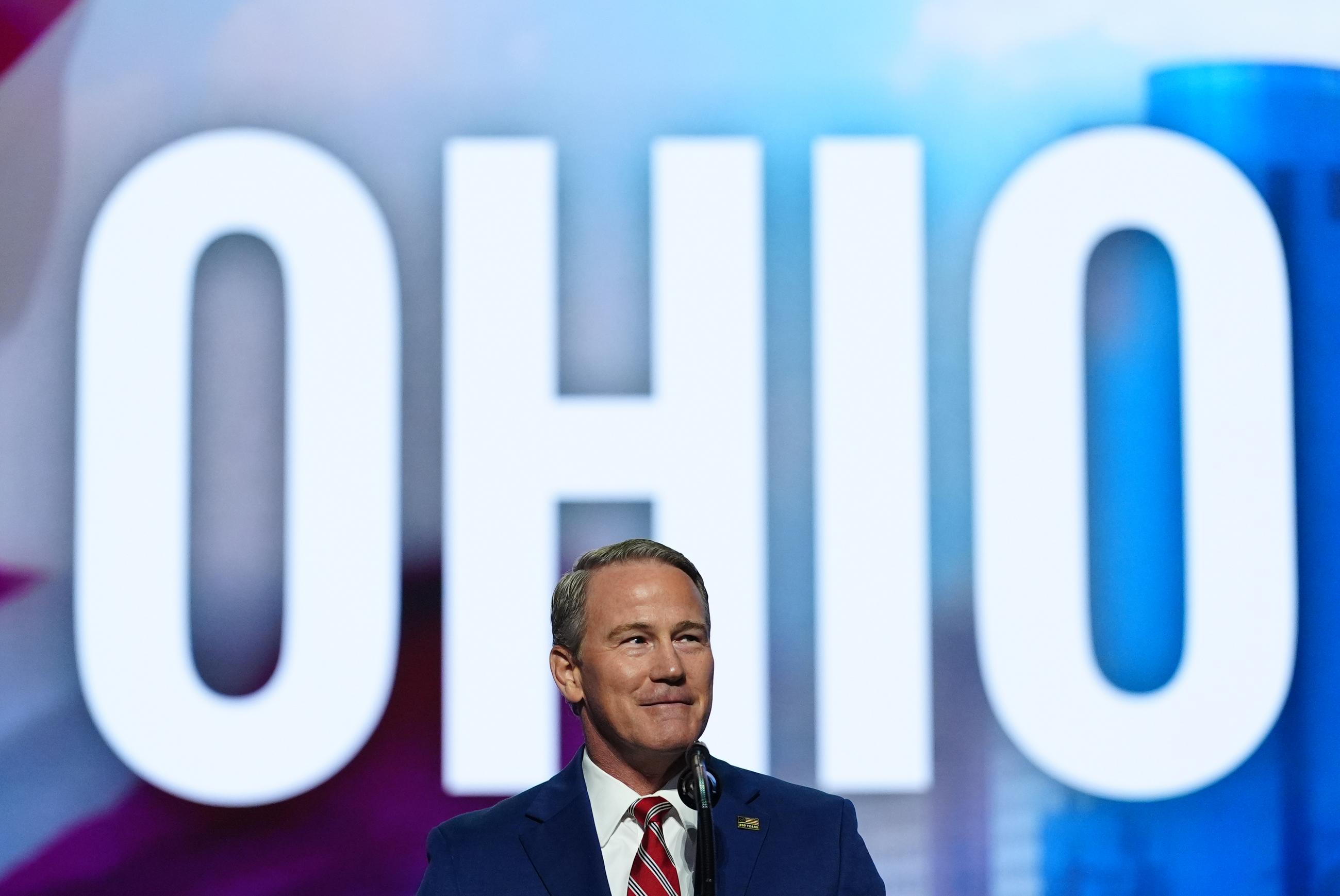
The bill’s chief Senate champion is Sen. Jon Husted, an Ohio Republican in a rough reelection battle against former Sen. Sherrod Brown.
“What we should do is protect the ratepayers from bearing the burden of the cost of building the electricity those data centers use,” Husted said in an interview.
“It strikes at the very heart of the issue that a lot of people are talking about right now, which is affordability,” Senate Majority Leader John Thune said.
The industry says it’ll help keep consumer costs reasonable. Michele Nellenbach, vice president of federal affairs at the Data Center Coalition, said her group “supports the underlying goal of the Ratepayer Protection Act, and we appreciate the bipartisan effort that brought it to the House floor."
“As the bill moves forward, we welcome the chance to work with the Senate and the administration to ensure all large-load customers and stakeholders pay their own costs for grid upgrades and related infrastructure,” Nellenbach said.
Data centers grow hungrier
The Energy Department-sponsored Lawrence Berkeley National Laboratory said in a report last year that in 2023, data centers used roughly 4.4 percent of total electricity in the U.S.
It predicted that the figure could double or triple by 2028 to meet the needs of more data, notably from artificial intelligence. From 2017 to 2023, the study showed, power demands of data centers more than doubled, mostly because of growth in AI services.
“Al requires increasingly powerful chips and intense cooling systems, driving energy demand growth,” the report said.
While consumer energy prices are already spiking, mostly because of fuel costs, electricity prices in the last year have risen along with the overall rate of inflation, increasing 3.8 percent in the 12 months ending in August.
Consumers’ electricity prices generally are driven by how much it costs to generate and deliver electricity. State and local regulators usually set those rates.
Democrats grow skeptical
The ratepayer bill urges regulators to consider a federal standard that requires big power users to cover the entire cost of new generation and transmission improvements.
While supporters say that an overwhelming congressional vote sends a strong message, critics counter that the bill is nothing more than a statement of concern.
“It’s a step forward. More needs to be done,” House Minority Leader Hakeem Jeffries said.
Other Democrats weren’t as circumspect.
“It pays lip service to affordability talking points and doesn’t address the water and noise pollution or the environmental and health concerns that continue to harass front-line communities that data centers are strategically placed in,” said Rep. Summer Lee, one of the three Democrats who opposed the measure in the House.
When Husted tried to get the Senate to consider the bill earlier this month, Democratic Sen. Martin Heinrich blocked the effort.
Heinrich said the legislation “does nothing to meaningfully address the rising costs of AI data center development."
"Instead, it relies on a voluntary framework that does not require AI data centers to pay the full cost of the energy they consume or the strain they place on the grid.”
League of Conservation Voters Senior Vice President for Government Affairs Sara Chieffo put her objection simply, noting that “state regulators could ultimately choose to ignore this bill.”
Trump is on board—to a point
President Trump has said he sees no need for curbs on AI, but he and House Speaker Mike Johnson plan to meet with AI leaders Tuesday at the White House.
Earlier this year, Trump got commitments from many of this country’s biggest technology firms for the Ratepayer Protection Pledge.
“Large data center operators—not ratepayers—fund the electricity generation and infrastructure their projects require,” the White House said.
Trump, though, has railed against any efforts to go further.
“We already have tremendous CRIMINAL and REGULATORY power over these companies! There is a SICK conspiracy going on against AI and Data Centers, and the only one that is happy about it is China,” he posted on Truth Social on Sept. 14.
When Congress returns after the election, it’s expected to consider a wide range of bills dealing with AI, including measures that would set moratoriums on data centers, curb federal tax breaks, and pause AI super-intelligence development.
For now, members may be content to go home boasting about the Ratepayer Protection Act, even though many of them question its usefulness.
After all, said Sen. Peter Welch, a Vermont Democrat, “all of our voters are really concerned" about AI.