
Sept. 28, 2026, 5 a.m.
Two years ago Sunday, Hurricane Helene reached North Carolina and dumped record-breaking levels of rain over three days. In Asheville, analysts would have expected to see 11.4 inches of rain over a three-day span about once every 1,000 years. Helene brought more than 14 inches of rain to the city, shattering a millennium’s worth of expectations.
Helene was the most devastating storm in the state’s modern history. The deluge overwhelmed rivers and triggered more than 2,000 mudslides, many of which took homes or roads with them. The storm killed 107 people in North Carolina and caused an estimated $59.6 billion in damage, mostly in the western part of the state.

Two years later, the rebuild continues for many North Carolinians. The storm destroyed or severely damaged thousands of homes, and only a fraction have been rebuilt. State leaders have angled for more federal funding, but some worry that progress is slowing, especially as it’s increasingly politicized in a consequential election year.
The Trump administration scaled back Federal Emergency Management Agency aid for Helene recovery earlier this year, pulling out of former President Biden’s agreement to match 100 percent of the funds that the state put toward recovery. At the time, Democratic Gov. Josh Stein said the decision would cost the state hundreds of millions of dollars.
And at a rally earlier this month, Trump threatened to withhold relief funds if North Carolinians elected a Democrat to the Senate. He quickly added that he was joking, but there’s reason to believe he might not be fully joking.
Earlier this year, Trump broke from precedent and blocked funding to four states despite FEMA and the National Oceanic and Atmospheric Administration determining they had reached the threshold for aid after February’s blizzard, according to Politico. The states—New York, New Jersey, Massachusetts, and Rhode Island—are each helmed by Democrats. The White House denied that the rejections were politically motivated.
Trump’s comments have put a political tinge on efforts that officials usually attempt to make nonpartisan, while also complicating the GOP’s standing in the state ahead of a key Senate and House race. The president tapped Michael Whatley, the GOP nominee for Senate, to help lead Helene recovery in the state, and Democrats are hoping to flip the congressional district most affected by the storm.
“I think it was an unwise joke to make, but he did say afterwards that was a joke,” longtime North Carolina GOP strategist Carter Wrenn said. “I think that Trump sort of rambles a lot, and he says things that backfire on him, and that probably could backfire a little bit. I don't think it's decisive, but it could be a bit of a problem.”
Jamie Ager, the Democratic nominee in North Carolina’s 11th District, home to Asheville and much of the storm-battered region, condemned the remarks.
“It’s foolishness,” Ager told National Journal. “This is not a joke. We’ve got people still living in campers and tents, trying to get their lives back together from two years ago when we were promised a bunch of things, and it hasn't come.”
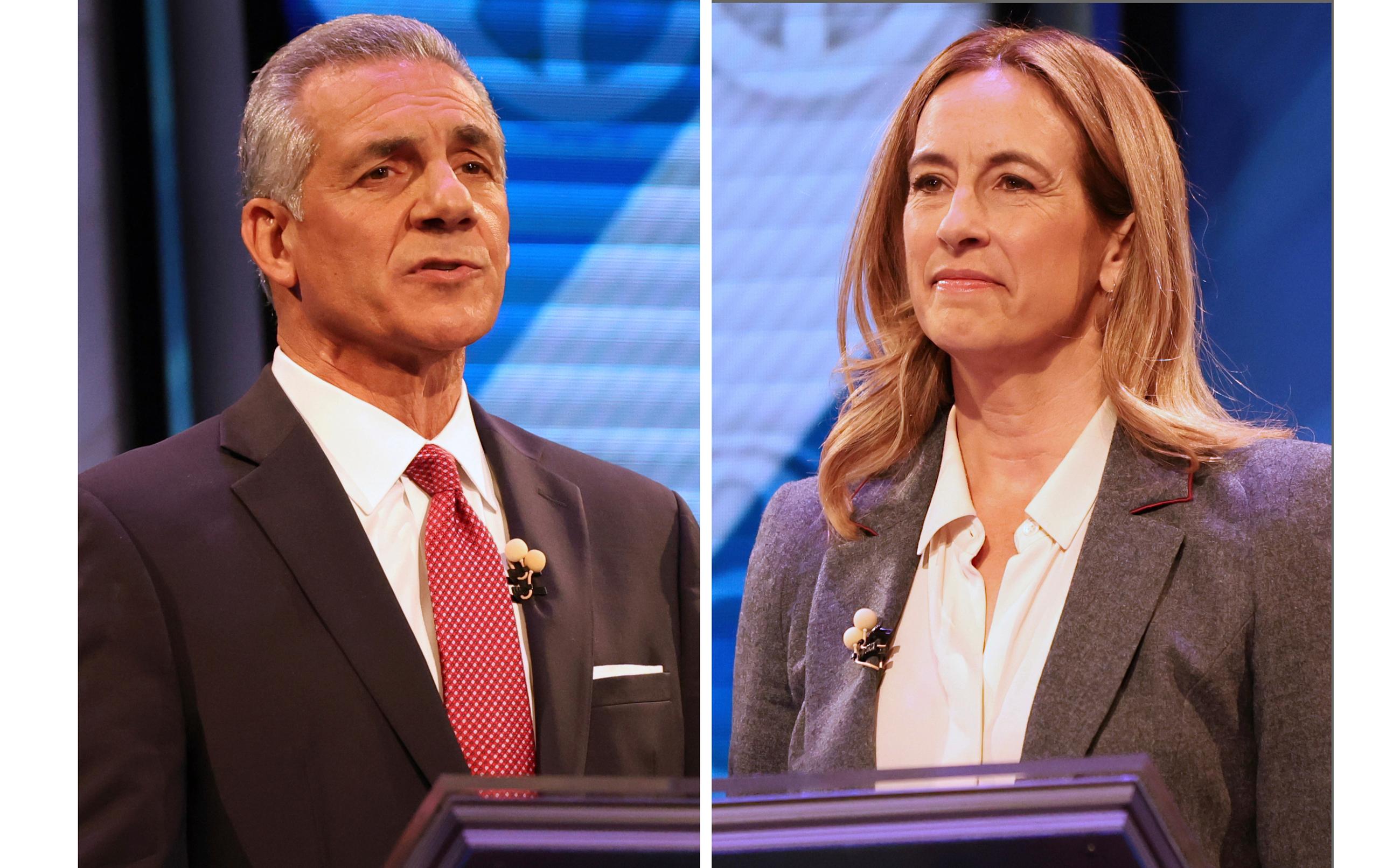
Ager, a farmer, faces Republican state Rep. Jennifer Balkcom in a district that voted for Trump by nearly 10 points in 2024. Balkcom took the GOP nomination over from Rep. Chuck Edwards, who dropped his bid for reelection earlier this summer after an ethics investigation determined he had inappropriately showered a pair of female staffers with gifts and attention.
Balkcom served as vice chair of a legislative committee focused on Helene recovery, and Republicans hope her clean slate will allow the GOP to keep the red-leaning seat in a Democratic political environment.
The district’s rightward lean means Ager will have to make inroads with Republicans to win, but many Democrats say his common-sense approach, trucker hats, and salt-of-the-earth appeal make him the ideal candidate. Last week, The Cook Political Report with Amy Walter said the race is now a "Toss Up," crediting his head start over Balkcom’s nascent campaign. Ager also has familial ties to the district: His grandfather, James M. Clarke, represented the 11th for six years in the 1980s and ’90s.
His campaign has partly focused on securing more relief for Western North Carolina, and his introductory TV ads note that he donated food and opened his farm up to locals in the aftermath of Helene.
“We had resources to help, and so we helped,” Ager said. “I don't think anybody that I know didn't step up to help when they had the opportunity.”
Ager said Edwards didn’t stand up to party leaders when North Carolina needed more funding, and that former Homeland Security Secretary Kristi Noem did “stupid stuff” with FEMA during the recovery.
“Our congressman here was very cautious to challenge the leadership in Washington and ended up just staying in a very complacent place,” Ager said. “We needed a fighter, and we didn't have one.”
Balkcom’s campaign did not respond to a request for comment. Her initial ads have focused on introducing her to voters, but she’s listed Helene relief as a top priority.
“From being on the ground helping families in need, to fighting in Raleigh for Helene relief, to securing the resources our communities need to recover—I’m proud to have played a role in that effort,” she said in an online post on the two-year anniversary of the storm. “Our work is not done, and I will continue the fight in Washington.”
The western part of North Carolina has traditionally been pretty Republican, ... but this year we're in one of those off-year elections where there are a lot of … national headwinds that are affecting voters. ”
—Carter Wrenn, North Carolina GOP strategist
Helene is also a flashpoint in the race for the Senate seat considered most likely to flip in the country. Former Gov. Roy Cooper, the Democratic nominee to replace retiring Sen. Thom Tillis, was in office when the hurricane devastated North Carolina. Whatley, a Gastonia native and former state GOP chair, was tasked by Trump to help with recovery following the 2024 election and was named to the FEMA Review Council.
“Whatley has helped deliver more than $11 billion in federal hurricane relief for North Carolina—more than any natural disaster in state history,” Whatley campaign spokesman D.J. Griffin told National Journal in a statement. “But the job is not yet done, and Michael will continue speaking with local leaders about what they need help with.”
Cooper’s campaign has painted a less rosy picture of Whatley’s efforts, arguing that federal funding has covered about 15 percent of the estimated damage in the state.
“While DC insider Michael Whatley has failed as federal recovery czar,” a Cooper campaign spokesperson told National Journal in a statement, “Roy Cooper will work with leaders in both parties to fast-track federal funding to ensure Western North Carolina gets every federal dollar it's owed.”
Democrats are attempting to make the Senate campaign a referendum on Whatley’s handling of recovery efforts, seeking inroads in the GOP-leaning region.
In the spring, Majority Forward—a nonprofit arm of the Democratic-aligned Senate Majority PAC—spent six figures on digital advertisements that criticized Whatley’s performance as Trump’s “recovery czar.” The ads, some geotargeted to several counties within the 11th District, racked up millions of impressions while Whatley and Republicans focused their dollars on hitting Cooper on the issue of crime.
“I’ve never seen the guy,” said Canton Mayor Zeb Smathers in one Majority Forward ad. “Release all the recovery funds, Michael Whatley. Do your job.”
Cooper’s electoral history in the current 11th District is mixed. During his four state attorney-general campaigns, he lost the district in 2000, but carried it with increasing margins in 2004, 2008, and 2012—when he ran unopposed. He lost the district in his two gubernatorial bids, however, garnering 46 percent of the vote in 2016 and 47 percent in 2020.
The former governor could flip the Senate seat without carrying the 11th District, but strategists from both parties recognize that a Democratic-favorable environment and a strong performance from Cooper in the district could help give Ager the coattails he needs to go to Congress.
“The western part of North Carolina has traditionally been pretty Republican,” Wrenn said. “You know, they've been winning congressional races up there for years and the senators have generally won the western part of the state, but this year we're in one of those off-year elections where there are a lot of … national headwinds that are affecting voters.”
Western North Carolinians got their first referendum on Helene in 2024, but two years’ worth of recovery efforts under Trump will give the region’s voters another opportunity to decide how their government performed in the wake of the storm.