Sept. 23, 2026, 5:28 p.m.
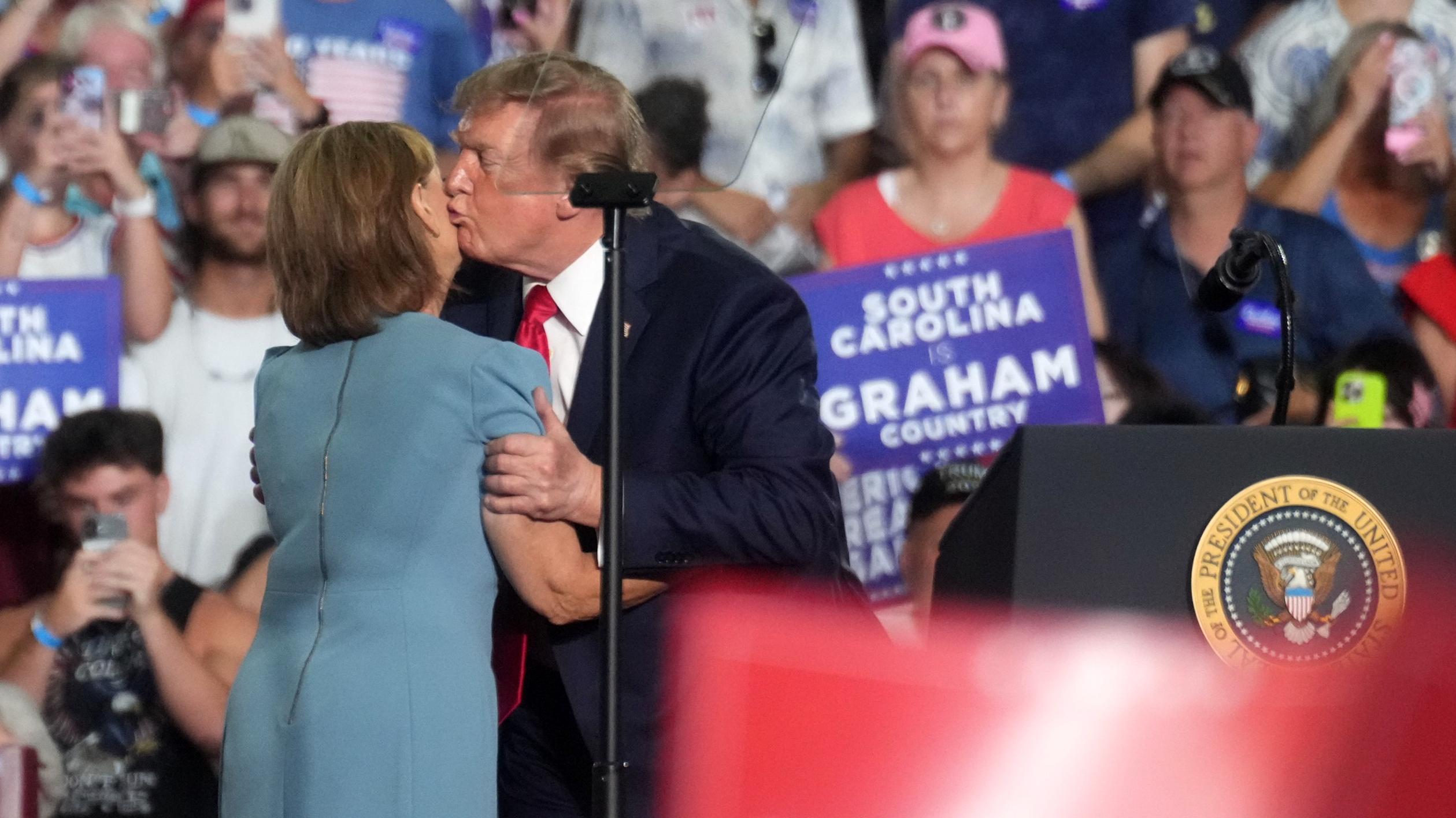
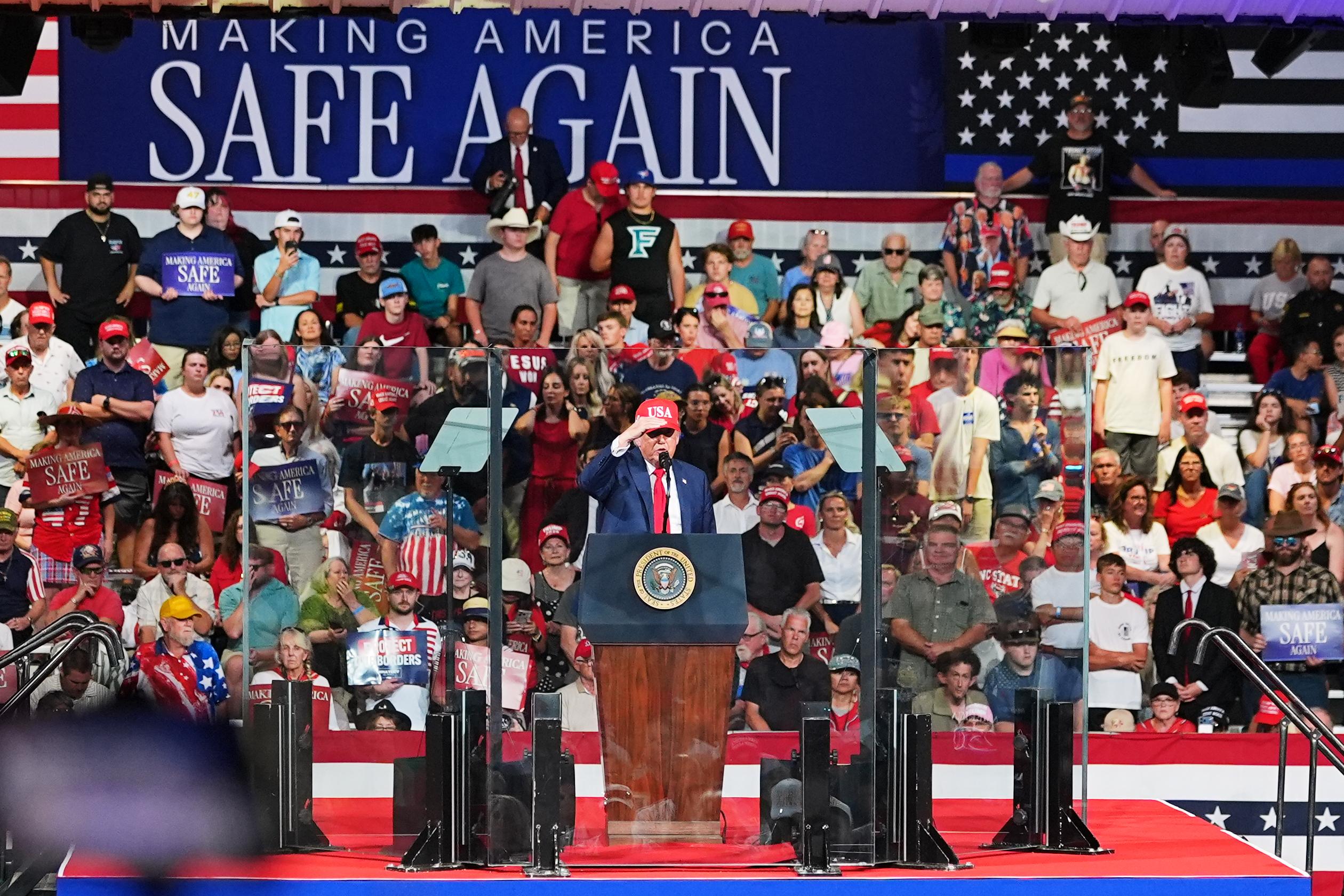
Speaking at the GOP’s first-ever midterm convention, President Trump asked downballot candidates to pretend he is on the ballot. In return, he pledged to visit roughly 35 battleground races as many times as needed before Election Day.
“You’re going to be saying, ‘Get him the hell out of here. He’s here so much,’” Trump said at the convention earlier this month. “No, I’ll come once or twice or three. I’ll come whatever.”
With 41 days left until the midterm elections, Trump has made 12 campaign stops in 2026, compared to the 17 he had made by this time in the 2018 midterm cycle, according to a National Journal analysis of his schedule.
There’s evidence to suggest that some battleground Republicans might not want Trump in their districts. Some downballot Republicans have increasingly distanced themselves from the president, calling for a pause on diesel exports to lower prices and for an end to the war in Iran. Several downballot Republicans skipped the midterm convention, citing scheduling conflicts or a need to stay in their districts.
Republican strategists said downballot candidates will decide on a case-by-case basis whether to coordinate with the Trump campaign to set up stops in their districts, depending on how closely they want to associate with him in the final stretch of their campaigns.
“President Trump is the unequivocal leader, best messenger, and unmatched motivator for the Republican Party, and he is committed to maintaining Republican majorities in Congress,” White House spokesperson Davis Ingle told National Journal in a statement.
Trump has had an uneasy relationship with downballot candidates in past midterm cycles. His directive for congressional Republicans to target repealing the Affordable Care Act harmed their midterm odds in 2018, and during the 2022 cycle he feuded with midterm candidates who did not support his false claims about the 2020 election.
This cycle, Trump has requested that downballot candidates point to his promised $5,000 dividend checks and tout his record, which many have ignored in favor of their own messages.
“Best-case scenario is it helps turn out low-propensity voters that Republicans are going to need to win in November,” Michigan-based Republican strategist Jason Cabel Roe told National Journal. “Worst-case scenario, he’s trying to make it a referendum on him, which I don’t think is a winning proposal right now.”
For the first time, Trump has dispensed much of his war chest in the final stretch of the midterms to boost Republicans. Three super PACs affiliated with the president—MAGA Inc., Safety and Affordability PAC, and No Going Back PAC—have reserved more than $165 million in ads between Sept. 1 and Dec. 31, according to the nonpartisan ad-tracking firm AdImpact.
“There was a lot of skepticism of them spending that MAGA Inc. money, and they’ve followed through,” Roe said. “Obviously, there is a lot on the line for this president on these election outcomes.”
These efforts may not be enough to outrun historical precedent—the party in the White House loses an average 28 seats in the midterms.
“It’s kind of baked-in that Trump supports Republican candidates and Republicans support Trump, so I don’t think there’s any kind of revelatory aspect to it for voters,” Roe said. “No one’s surprised when they learn that there’s an alliance between Republican candidates and a Republican president."
The president may have less time to deliver his midterm message than he bargained for. Mail voting has already begun in 19 states, and early voting has started in Alabama, Mississippi, South Dakota, Virginia, and Vermont.
For races in more comfortably red territory, Trump has resorted to his trademarked tele-rallies—short virtual speeches encouraging voters to turn out for his desired candidates. So far, Trump has held tele-rallies for 18 candidates—though he has done multiple rallies for several of those candidates.
“He can’t be everywhere all at once, and it’s super heartening that he is going to be out on the campaign trail quite a bit,” Republican strategist Mark Bednar said.
Of the 13 candidates he held tele-rallies for during primary season, three—Burt Jones in Georgia, Pamela Evette in South Carolina, and Megan Degenfelder in Wyoming—lost their contests.
Bednar said Trump’s rallies, both in-person and over the phone, allow his campaign to collect contact information for attendees who they may be able to encourage to make larger donations or convince their friends to vote.
“The data acquisition that the Trump campaign and Republicans are able to gather up with his presence, either in a rally or a tele-rally—that cannot be underestimated or under-discussed,” Bednar said. “It’s a really important element of engaging low-dollar donors that then become more fervent in the process.”
The stakes of this midterm cycle are higher for the president than in past ones. He and other Republicans have stressed the threat that Democrats could impeach him once again if they regain power, and Trump has successfully used Congress to further his agenda in his two years back in office.
“His ability to get what he wants out of Congress would make Ronald Reagan or any of the Bushes blush,” Bednar said. “With reconciliation bills or with different spending bills, President Trump can order what he wants off the legislative menu, and it’ll be delivered.”