Sept. 15, 2026, 4:05 p.m.
Before a single vote was cast in the general election, two senators, 12 House members, and a governor lost reelection this year in one of the more tumultuous primary seasons in recent memory.
From generational challenges to ideological purity tests, Democrats and Republicans alike have rejected several incumbents in this year’s primaries amid low congressional approval ratings. Democratic incumbents on average faced tougher primaries across offices compared to recent cycles. President Trump’s influence and mid-decade redistricting were the leading factors in competitive Republican primaries, unseating members of the House and Senate.
Next year’s Congress will see at least 13 new senators and 75 new House members. Eleven senators retired this cycle, the most departures since 2010, when 12 incumbents opted for the exits, according to the Brookings Institution. Sixty-one members of the House are retiring as well, nearly matching the record 65 House retirements during the 1992 midterms. Two incumbents also resigned earlier this year, including scandal-plagued former Rep. Tony Gonzales of Texas, who exited one month after placing second in his GOP primary and withdrawing from an impending runoff.
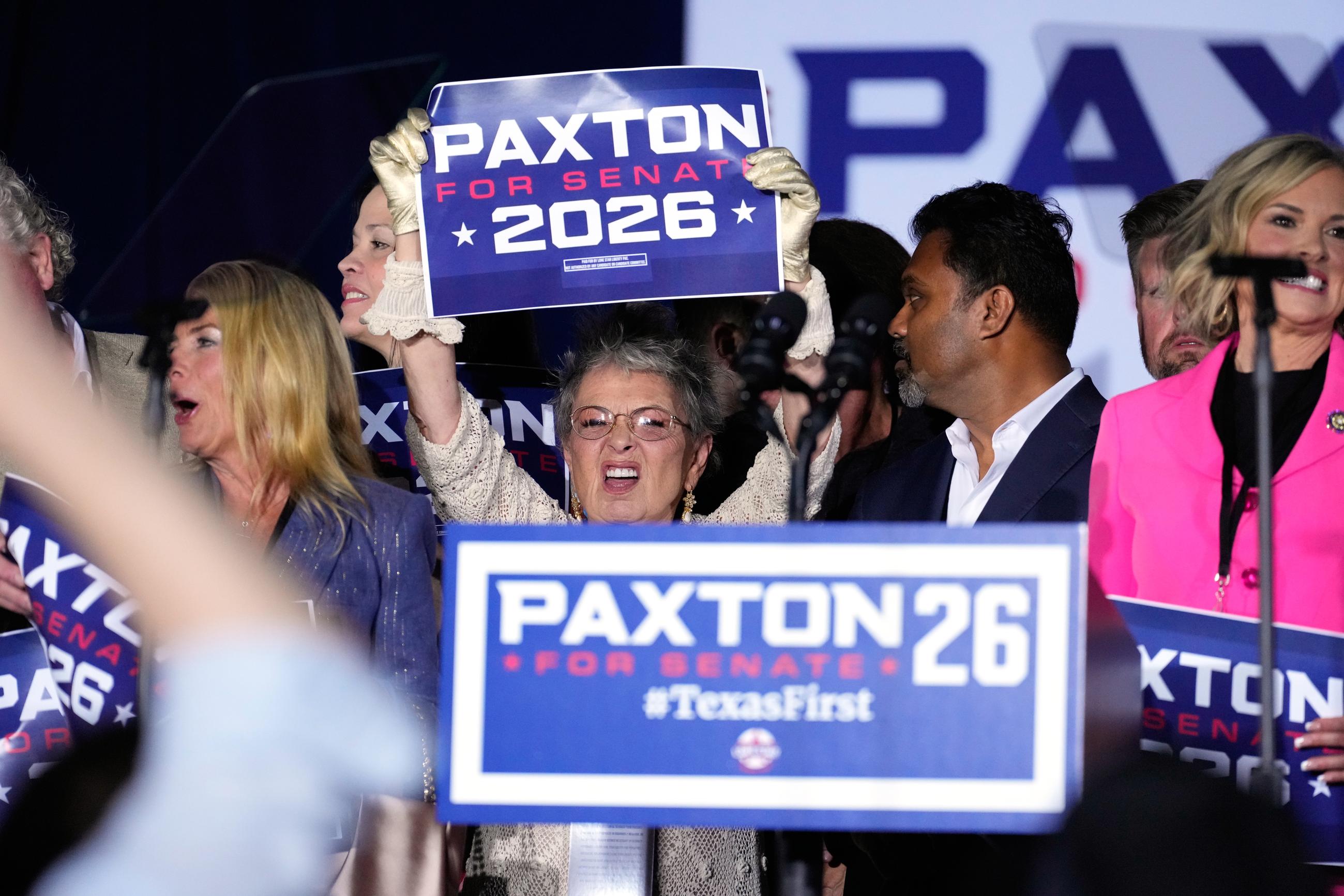
Trump's endorsements, made with revenge on his mind, were a major factor on the Right. In Louisiana, Rep. Julia Letlow unseated Sen. Bill Cassidy, who had voted to convict the president during his 2021 impeachment trial. In Texas, state Attorney General Ken Paxton secured the GOP nomination over Sen. John Cornyn, who the president argued “was not supportive of me when times were tough.” In Kentucky, former Navy SEAL Ed Gallrein defeated Rep. Thomas Massie, one of Trump’s most vocal GOP critics.
Despite a few outliers, Trump’s endorsements against incumbents rarely missed. It’s a departure from his 2022 politicking, which helped push out eight House Republicans who had impeached him and two senators who had voted to convict, but which failed to defeat Sen. Lisa Murkowski of Alaska, Georgia Gov. Brian Kemp, and Idaho Gov. Brad Little.
The Cassidy and Cornyn defeats marked the first time elected senators had lost a primary since Sen. Richard Lugar of Indiana in 2012. With the two losses, this cycle saw the most senators to lose renomination in a single cycle since 2010, when three incumbents failed to secure their party’s label.
Republican senators in contested primaries on average received 67 percent of their party’s vote, their lowest performance since 66 percent in the 2014 midterms. Democratic incumbents facing competition got 75 percent on average, their weakest performance since 73 percent in 2010.
Democrats nearly saw Sen. John Hickenlooper of Colorado lose the nomination to progressive state Sen. Julie Gonzales, who came within 6 points of unseating the moderate septuagenarian. Yet 80-year-old Sen. Ed Markey of Massachusetts improved upon his 2020 Democratic primary performance against 47-year-old Rep. Seth Moulton, increasing his vote share from 55 percent six years ago to 65 percent this month.
Democratic House members running in Senate primaries mostly struggled to secure their party’s nomination. Only Rep. Chris Pappas of New Hampshire advanced to the general election, while Moulton and Reps. Robin Kelly and Raja Krishnamoorthi of Illinois, Haley Stevens of Michigan, Angie Craig of Minnesota, and Jasmine Crockett of Texas lost Senate primaries.
House Republicans saw the reverse as Letlow and Reps. Barry Moore of Alabama, Mike Collins of Georgia, Ashley Hinson of Iowa, Andy Barr of Kentucky, Kevin Hern of Oklahoma, and Harriet Hageman of Wyoming cleared their Senate primaries with Trump’s endorsements. Reps. Buddy Carter of Georgia, Ralph Norman of South Carolina, and Wesley Hunt of Texas failed to secure the GOP nomination without the president’s support.
Redistricting didn’t help all incumbents, either. Nearly half of this year’s failed House renominations occurred in GOP states that engaged in mid-decade gerrymandering, including Florida, Tennessee, and Texas.
The double-digit tally puts it in line with incumbent primary losses in redistricting years, which often see greater defeats due to unfamiliar territory in new districts or multiple members being drawn into the same district. Fourteen House incumbents lost renomination in 2022, 13 lost their primaries in 2012, and eight lost their party’s nomination in 2002.
Trump’s stamp of approval couldn’t save Reps. Cory Mills of Florida and Andy Ogles of Tennessee, who both faced scandals and campaign finance investigations. In Texas, Rep. Dan Crenshaw lost his primary against state Rep. Steve Toth, who was endorsed by Sen. Ted Cruz. Trump notably didn’t endorse Crenshaw for reelection.
Lone Star State redistricting spurred quirky Democratic primaries as well. In Texas’ 18th District, the member-on-member primary between 79-year-old Rep. Al Green and 38-year-old Rep. Christian Menefee saw the latter benefit from his youth and stronger fundraising. In Texas’ 33rd District, freshman Rep. Julie Johnson lost renomination to her predecessor, former Rep. Colin Allred, who had pivoted from a Senate campaign to a well-funded House bid.
Outside of redistricting, several progressive House challengers unseated their more-moderate incumbents. In Colorado, attorney Melat Kiros defeated Rep. Diana DeGette. In New York, activist Darializa Avila Chevalier and former New York City Comptroller Brad Lander unseated Reps. Adriano Espaillat and Dan Goldman, respectively. In Michigan, state Rep. Donavan McKinney dispatched Rep. Shri Thanedar. All of these challengers, excluding Lander, are Democratic Socialists of America members who are younger than the incumbents they beat.
An exception was Connecticut’s 5th District, where former Hartford Mayor Luke Bronin, who’s 47, succeeded in his generational challenge against 78-year-old Rep. John Larson, who argued he was more progressive than his opponent.
Democratic House members in contested primaries on average amassed 72 percent of the vote, a sharp decrease from 81 percent in 2024. It’s the worst performance for Democratic incumbents since 1992, when contested House Democrats garnered 66 percent on average. Contested House Republicans on average got 73 percent, a slight increase from 72 percent in 2024 and 70 percent in 2022.
Rhode Island Gov. Dan McKee was the only incumbent governor to lose a primary this cycle, losing by 25 points to former CVS executive Helena Foulkes. It’s the first time an elected governor lost renomination since then-Hawaii Gov. Neil Abercrombie’s 36-point loss in 2014.
South Dakota Gov. Larry Rhoden came the closest among Republican governors to losing renomination this cycle. Rhoden garnered only 25 percent of the GOP primary vote, placing second behind businessman Toby Doeden’s 31 percent. Yet the state’s runoff system—which requires candidates to win at least 35 percent—saved Rhoden, allowing him to defeat Doeden, 71 percent to 29 percent, one month later.
Democratic and Republican governors fared similarly in contested primaries this year, with the average Democratic incumbent receiving 73 percent of the vote and the average GOP governor earning 71 percent. It’s the weakest performance since the 2018 midterms, when the average Democratic governor in a contested primary amassed 64 percent while the average Republican incumbent got 66 percent.
D.C. politicians saw mixed results in gubernatorial primaries. Sens. Tommy Tuberville of Alabama, Amy Klobuchar of Minnesota, and Marsha Blackburn of Tennessee, and Reps. Andy Biggs of Arizona, Byron Donalds of Florida, John James of Michigan, and Tom Tiffany of Wisconsin won their primaries.
Less successful were Sen. Michael Bennet of Colorado and Reps. David Schweikert of Arizona, Randy Feenstra of Iowa, Nancy Mace of South Carolina, Dusty Johnson of South Dakota, and John Rose of Tennessee, who lost gubernatorial primaries. Rep. Chip Roy notably failed to win the GOP nomination in Texas’ open state attorney-general race.
All in all, the majority of primary voters stood beside their current leaders this primary season. In the looming general election, however, the voter dissatisfaction and gerrymandering that already factored into primaries could still force more members of Congress into early retirement.