Sept. 9, 2026, 4:24 p.m.
Gubernatorial candidates are tripping over themselves to capitalize on the public backlash to Flock cameras, the controversial system of automated license-plate readers that have put voters in an uproar. The AI-powered cameras, totalling more than 120,000 around the country, have become a major flashpoint in the debate over privacy and surveillance.
Candidates on both sides of the aisle are seizing on the issue to tap into growing populist backlash against government overreach, and the power of technology companies to collect and store data.
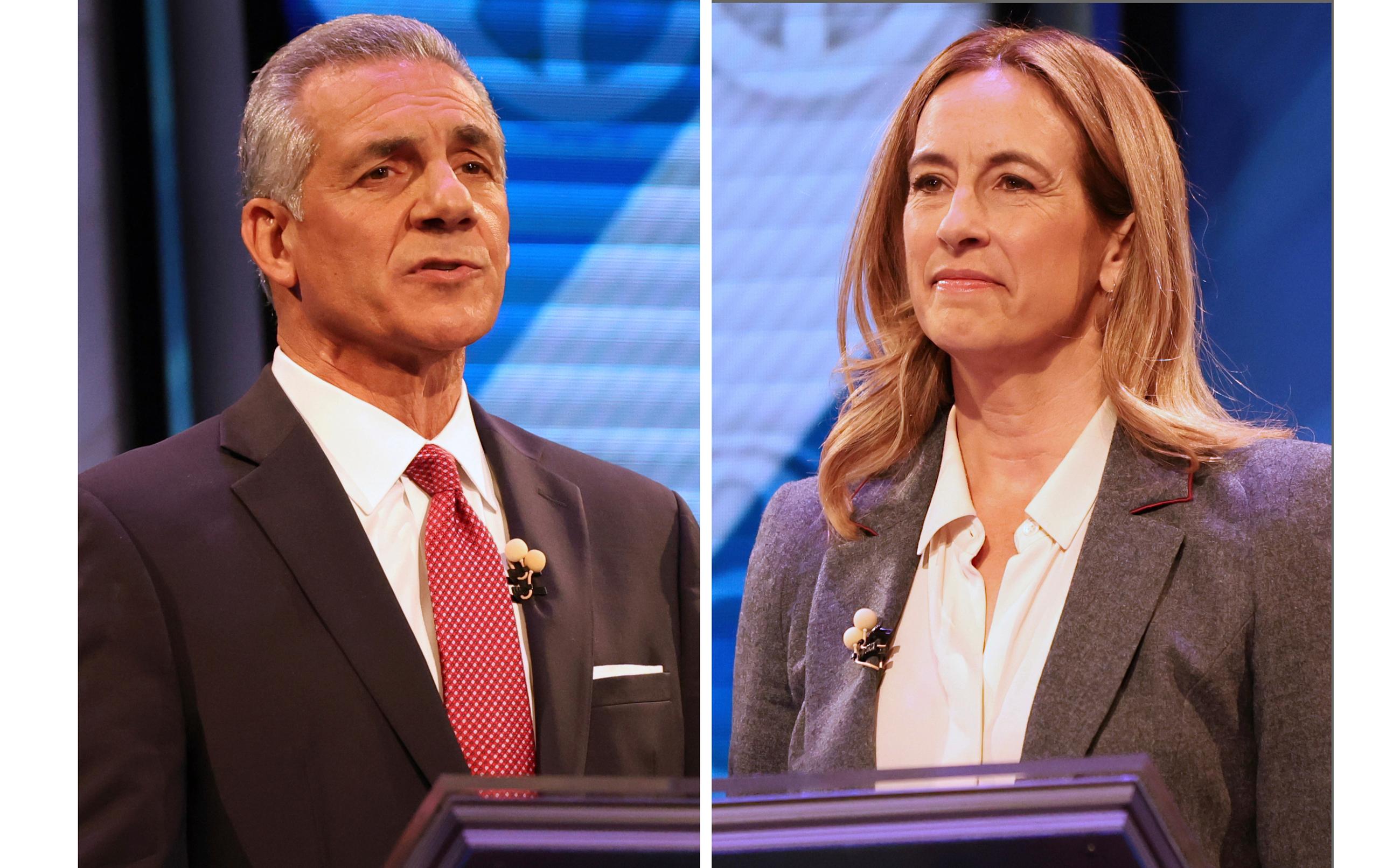
Michigan Secretary of State Jocelyn Benson, the Democratic nominee for governor, said the state can strike a balance to “protect public safety and personal privacy when government is transparent about how it uses technology and is accountable for the power it has.” Her Republican opponent, Rep. John James, struck a similar tone, saying, “Our right to privacy is non-negotiable. But we also need to make sure that we are working within the Constitution to keep innocent people safe and put bad actors away.”
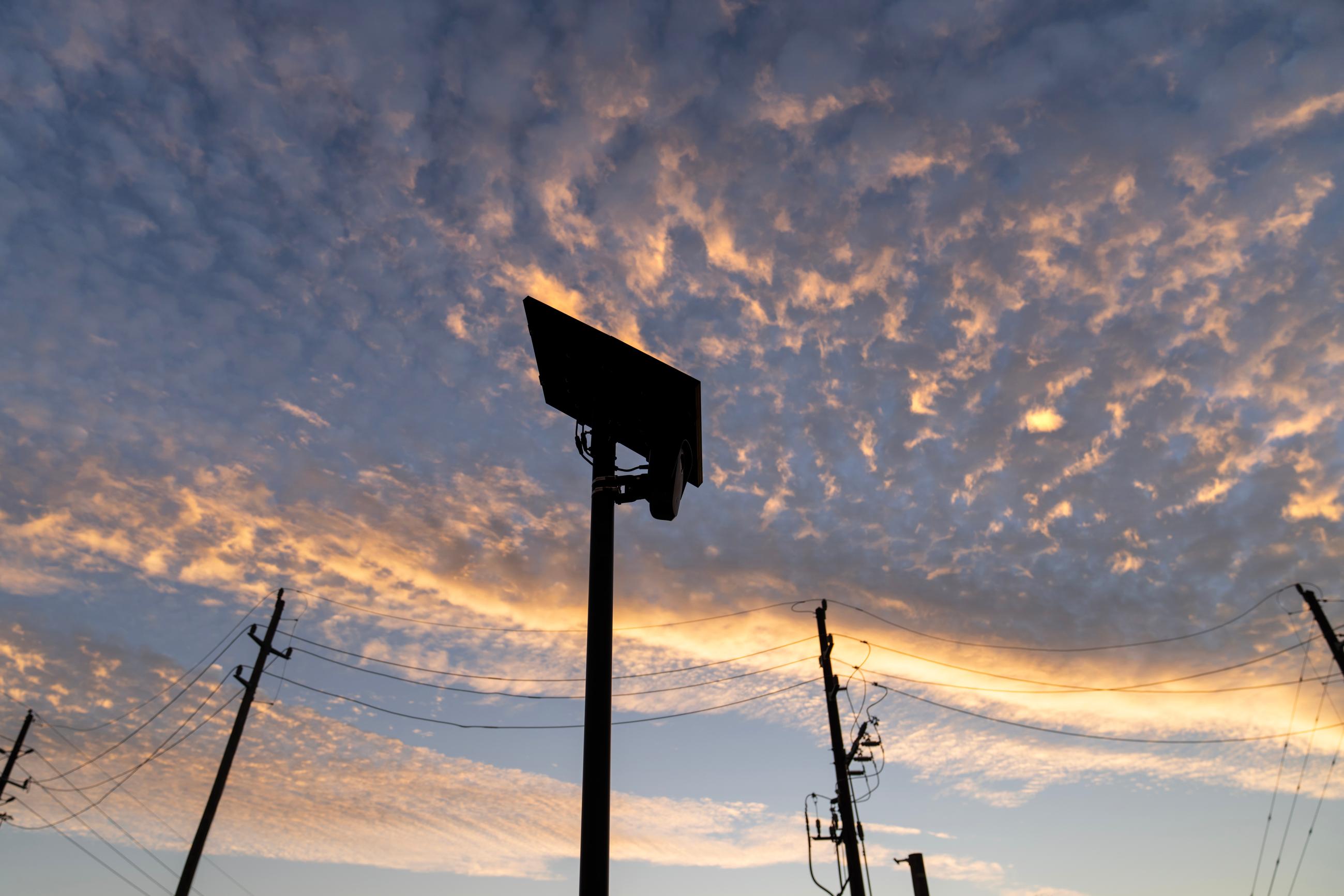
The cameras, used by over 5,000 law enforcement agencies, are placed along streets and highways and can capture license plates—along with the make, model, and color of cars, and even a vehicle’s bumper stickers and scratches.
That data is then uploaded to a cloud network that law enforcement agencies can search across jurisdictions without first obtaining a warrant.
“I think people want more control of the system, and they want a system that is more properly bound by checks and limits,” Jake Laperruque, deputy director of the Security and Surveillance Project at the Center for Democracy and Technology, told National Journal.
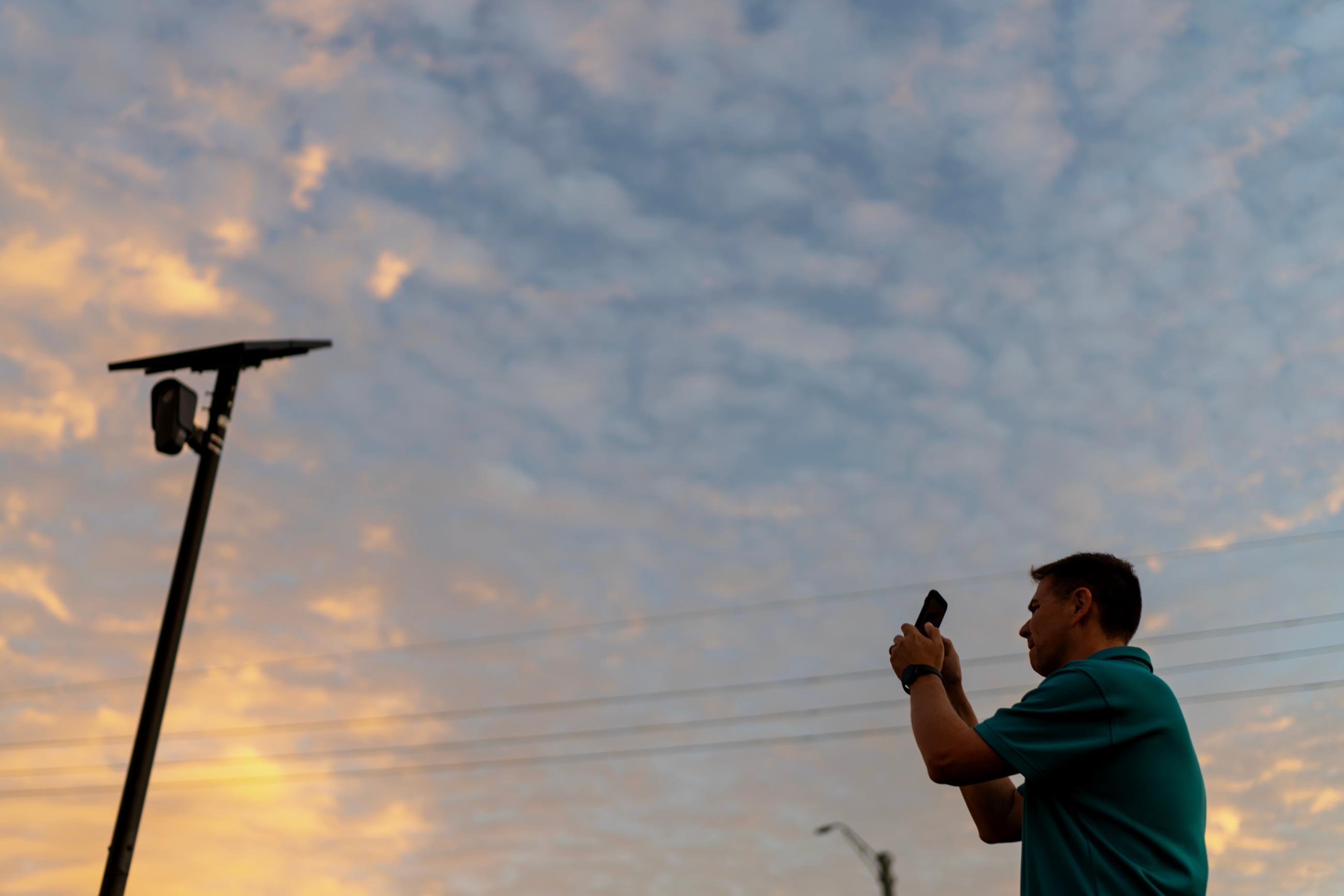
A man photographs a Flock Safety license-plate reader in his Houston neighborhood in 2025. (AP Photo/David Goldman)
ASSOCIATED PRESS
Although Flock, one of the largest automated license-plate-reader systems, was founded in 2017, it’s just now becoming a major flashpoint because, according to Laperruque, “the growing capabilities of AI are really shining a light on how dangerous these systems are.”
The evolving system isn’t just impacting drivers. It allows law enforcement to use descriptive features like clothing or tattoos to search camera records for individuals.
“We've always expected there to be privacy even in public places, but in the past we've relied on obscurity to do that," Laperruque said. "The fact that police can't have someone tailing you all the time, everywhere—there just weren't resources to do that. There weren't capabilities for that. In an AI age, you can put the government over everyone's shoulder effortlessly, and I think that doesn't seem like the right balance to people.”
A Washington Post investigation found that dozens of law enforcement officers have misused the cameras, including to spy on and stalk previous romantic partners. The Institute for Justice has also documented more than 100 incidents of Flock camera abuse, including wrongful stops and detentions.
The ACLU has sued local jurisdictions over Flock records and argues that its ability to track drivers' movements is unconstitutional under the Fourth Amendment.
Most candidates support the use of Flock cameras to address crime but have called for stricter guidelines governing their applications, including requiring a warrant to access the data and controlling who can access the footage, when it can be shared elsewhere, and when it must be deleted.
But others have gone further.
GOP Rep. Byron Donalds, running for governor in Florida, called for a full pause on Flock cameras for evaluation before Gov. Ron DeSantis banned Flock’s use on state highways. In the Nevada race, Democratic Attorney General Aaron Ford supports a similar proposal—he called for a pause on Flock cameras until substantial guardrails are passed.
Even though most candidates have denounced Flock cameras' unchecked use, candidates are seizing on the issue to attack their opponents.
Texas state Rep. Gina Hinojosa launched a digital ad targeting Gov. Greg Abbott over a $26 million state contract for Flock cameras.
“Welcome to Texas, y’all, where we celebrate freedom from big government," the ad's narrator says. "So relax. There’s only 10,000 Flock cameras reading your plate, logging where you sleep and pray; no warrant needed in Greg Abbott’s Texas.”
After the ad, Abbott ordered state agencies to pause state funding for the cameras.
In the Wisconsin governor's race, GOP Rep. Tom Tiffany slammed Milwaukee County Executive David Crowley online and on the campaign trail for approving funding for automated license-plate readers and Flock cameras in the county. Tiffany said that, as governor, he would pause state funding for the cameras while a task force establishes guardrails. Crowley last week issued a directive limiting the use of the cameras and establishing consequences for misuse.
Even some candidates in the middle have changed their stances. Ohio Democratic governor nominee Amy Acton initially raised concerns about Flock’s ability to track day-to-day movements, saying at an August press conference that she will do “a very comprehensive overview of all our public safety and emergency response.” But this week, she went further, supporting potential legislation to ban them.
The emerging political fight over Flock mirrors another issue increasingly animating voters this cycle: data centers.
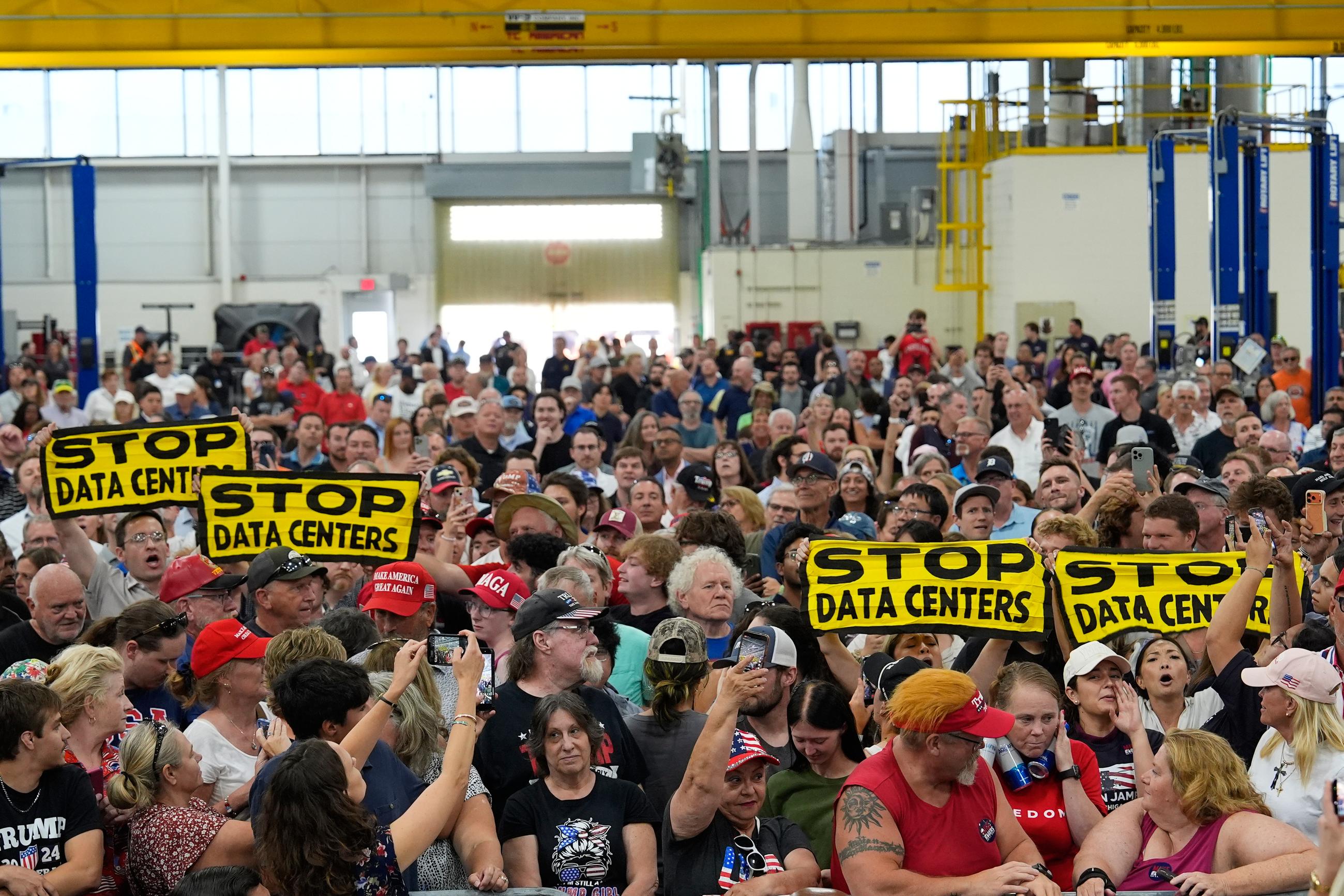
People wait for President Trump to arrive at an event at the General Motors Proving Ground in Milford, Mich., on July 27. (AP Photo/Paul Sancya)
AP Photo/Paul Sancya
In both debates, candidates are tapping into concerns about who controls powerful technology and what little say voters have in allowing either surveillance cameras or data centers into their communities.
Zach Lahn, the GOP nominee for governor in Iowa, lumped Flock cameras and data centers together as issues that need to be regulated at the state level, citing concerns that “technology and the implementation of technology is far ahead of how do we use that technology properly.”
“This is your data on your license plates and everywhere you drive being shared with a big tech company, and in lawsuits we can already see many times that information is being accessed by people that should never have access to it,” Lahn said at a recent campaign event in Audubon, Iowa.
Basil Smikle, a Democratic strategist, said Flock cameras hit on two issues—the increase of the surveillance state and the associated cost of these technologies—that Democrats are in a better position than Republicans to address, pointing to President Trump’s support for large technology companies and data centers.
But unlike with data centers, where numerous Democrats have called for construction moratoriums, Democrats aren’t as eager to support outlawing Flock cameras.
“They are so closely associated with crime reduction that you don't want to look like you're soft on crime," Smikle said. "You don't want to be in a situation where someone says, 'If we had a camera, we would have got that information.’”
Mark Weaver, a national GOP strategist based in Ohio, said Republicans are in a better position than Democrats to argue they can address government overreach while still maintaining a tough-on-crime stance.
“Republicans can put forth common-sense regulatory measures to limit the storage of the data to a certain window of time, increase penalties for anyone in government who misuses the data, and provide transparency about how Flock camera images are used in prosecutions,” Weaver said.