Aug. 20, 2026, 4:15 p.m.
With fewer than 80 days until Election Day, officials are in crunch time.
This stretch is normally a scramble for the thousands of election workers on the front lines of the sprawling, decentralized electoral system. This year, President Trump’s—so far largely fruitless—efforts to wrest control of how Americans cast their ballots have added complications.
Most of the changes to voting the Trump administration has proposed over the last two years have faltered. The Justice Department has lost 23 straight cases seeking states’ voter rolls, and courts have struck down most components of Trump’s executive orders, including attempts to restrict mail-in voting. The proposed SAVE America Act, which would require voters to present photo identification and proof of citizenship, looks unlikely to pass in the Senate, despite Trump’s campaigning.
“I think the big open question is just litigation,” said Wren Orey, managing director of the Elections Project at the Bipartisan Policy Center. “We have seen a high frequency of litigation this year and can expect that to continue through the election, whether that be targeting specific rules or targeting specific voters. It could create additional work and stress for election officials and downstream implications for voters.”
Courts have previously considered when their rulings might add too much pressure to election infrastructure. The so-called "Purcell principle," which has been invoked in many court cases, dictates that courts avoid changing election law too close to an election to avoid confusing voters, but it doesn’t specify what time frame counts as “too close.” Earlier this year, the Supreme Court issued a ruling in Louisiana v. Callais striking down the state’s map after early voting in the primary had already begun, forcing the secretary of state to delay until new maps were drawn.
The Trump administration has targeted noncitizen voting, though it remains rare. It has encouraged states to run their voter rolls through the Systematic Alien Verification for Entitlements database housed in the Homeland Security Department.
Most states are legally required to complete any systematic voter-roll audits 90 days before Election Day under the National Voter Registration Act of 1993. But states can remove voters from the rolls on a case-by-case basis after that window, including in the case of recently deceased voters.
“It is difficult to make a blanket statement about who can and can’t be removed, and there’s not a lot of consensus around what is a reliable source to identify noncitizens and remove them within that window,” Orey said.
Some potential changes to procedure are pending in the states: North Carolina Gov. Josh Stein vetoed a bill Monday that would have required post-election audits and allowed challenges to ballots submitted during early voting up through the third day after Election Day. The state election board is still determining details for early voting.
“We’ve seen different attempts at elections changes fail because they have not gotten the coordination required, and that means the secretary of state’s office, the legislative offices,” said Michelle Kavanaugh, the clerk for Bernalillo County, New Mexico.
Several Democratic states have adjusted their laws in the hopes of avoiding last-minute crises brought by federal interference. Connecticut passed a law in May allowing for universal vote-by-mail, and in March, New Mexico became the first state to explicitly bar armed federal agents from polling sites, a move other blue states are considering.
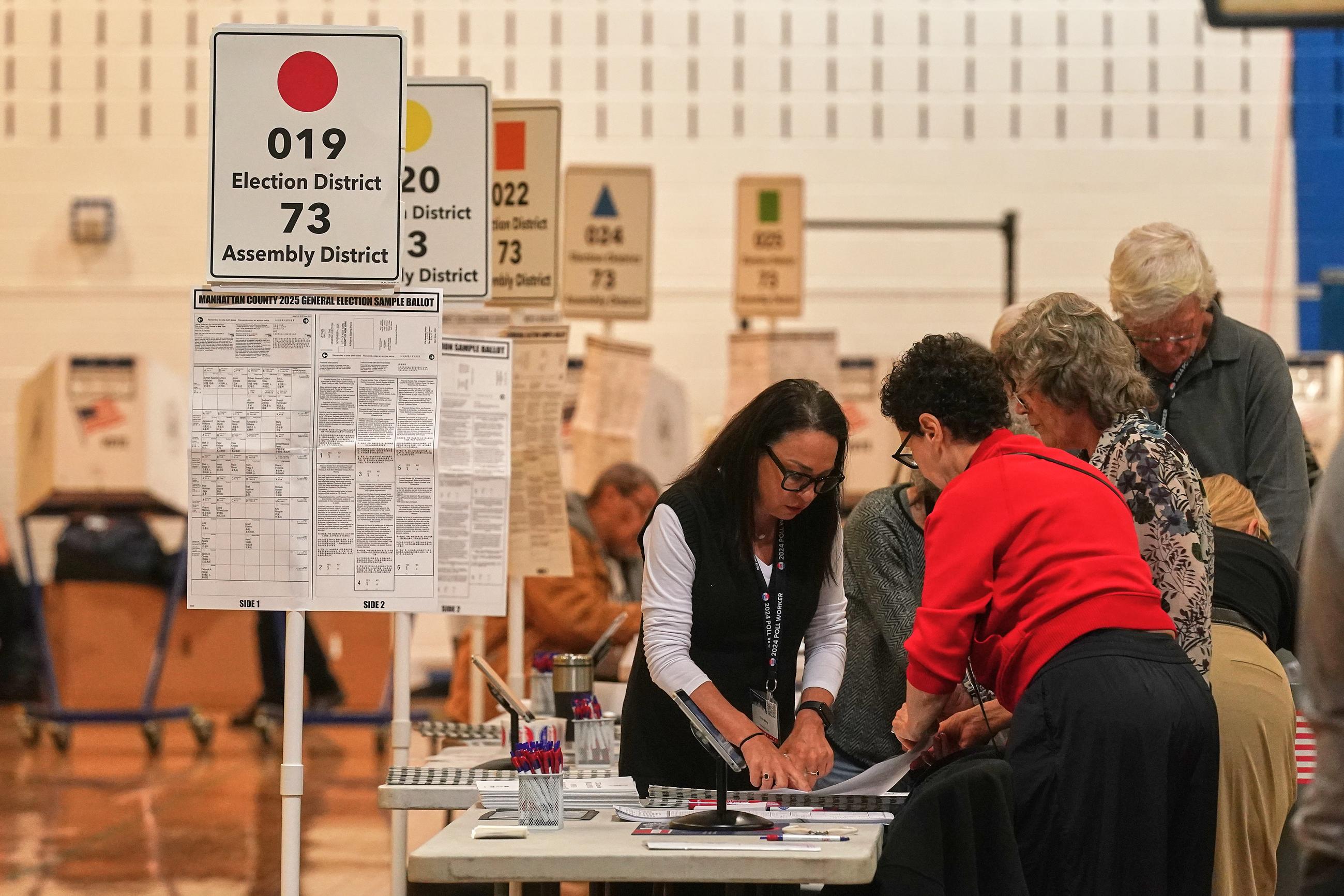
Workers prepare for voters at a polling site in New York on Nov. 4, 2025. (AP Photo/Richard Drew)
ASSOCIATED PRESS
As debate over election procedures continues, certain deadlines are unmoveable—ballots must be printed by a certain date, meaning candidates who dropped out might still receive votes. Ballots must be sent to uniformed and overseas citizens voting absentee at least 45 days before an election.
“When you’re close to Election Day, stability and certainty are the most important elements of operating an event like elections,” said Nick Lima, the registrar and director of elections for Cranston, Rhode Island. “It’s the largest event that any township or city or county or state conducts.”
The Bipartisan Policy Center’s Task Force on Elections, which consists of nearly 30 state and local election officials, recommended that states avoid legislative or administrative changes to elections during the 90-day window before Election Day “unless extreme, emergency circumstances apply.” Ideally, the task force said, states should finalize changes a year before the election.
“The earlier things come, the better, but clerks are used to working with last-minute changes,” said Kamryn Hoadley, a former clerk in Michigan who is now a senior adviser for Keep Our Republic. “I mean, the February [2024] presidential, we had a tornado in Michigan in February, which no one was prepared for but everyone knew how to work around.”
Election officials are preparing for a host of situations, including last-minute changes to the law, court orders, and extreme weather events.
“We crushed 2020,” said Tate Fall, the former director of elections in Cobb County, Georgia. “We administered an election in the middle of a global pandemic, and we got through that.”
In the coming weeks, officials will begin training poll workers on what to expect on Election Day and how to respond.
“The election workers—because of their role, they spend a lot of time looking into different stories on the news, different possible changes, and they are not afraid to ask questions,” Hoadley said. “They want things as clear as humanly possible.”
Orey added that election officials need to be prepared to quickly communicate responses, respond to legal challenges, and protect ballots, voting equipment, and election security.
“We don’t know exactly what could happen in November, but regardless of what happens, election officials are exercising the same practices to respond to whatever might occur,” Orey said.
Election officials acknowledged the need to be flexible until the polls close.
“This is not a static field, and it hasn’t been for a long time now,” said Lima of Rhode Island. “That goes with the territory of being an election official, is always being alert for modifications.”