Aug. 18, 2026, 4:15 p.m.
In many of the key House districts that will decide the majority, there is a looming complicating factor: the races at the top of the ballot.
Mid-cycle redistricting significantly narrowed the battlefield. A larger proportion of competitive House races will play out under the shadow of high-profile statewide elections. The fortunes at the top of the ticket could trickle further down the ballot.
House majorities have been decided by thinner margins in recent cycles, putting pressure on top-of-the-ballot stars to deliver. Just one extra percentage point in Pennsylvania, Iowa, or Ohio could make the difference.
Democrats are targeting four House seats in Pennsylvania, where Democratic Gov. Josh Shapiro is seeking reelection. Three of Iowa’s four House districts are considered highly competitive, all while state Auditor Rob Sand tries to flip the governorship for Democrats.
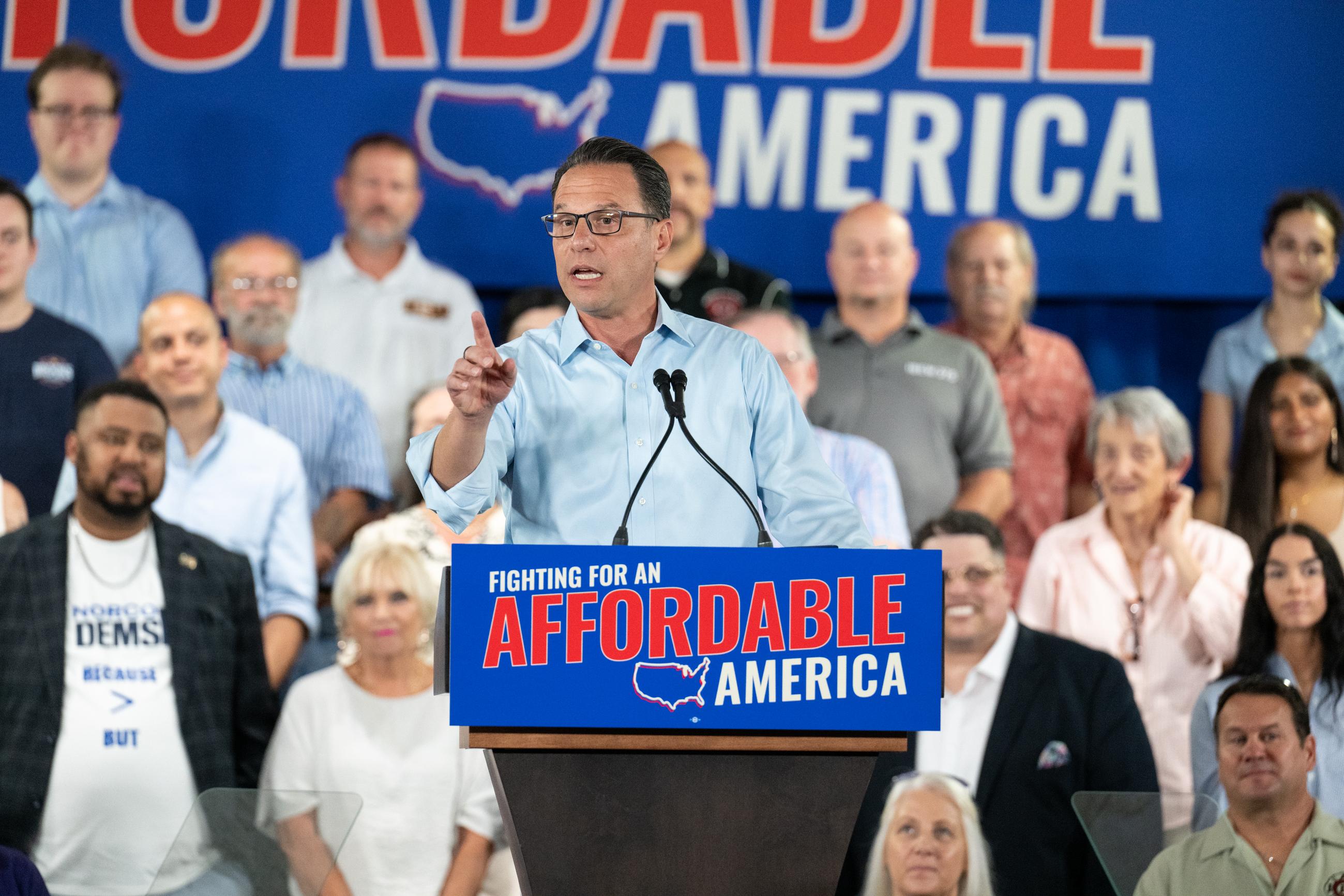
Shapiro, widely expected to win reelection in the Keystone State this year, sees the stakes. The governor has propped up the campaign of firefighter Bob Brooks, a Democrat running against Rep. Ryan Mackenzie in the Lehigh Valley. Shapiro helped recruit Brooks and boost him to the front of the primary field.
Pennsylvania Democrats are going in on two more toss-up opportunities: Scranton Mayor Paige Cognetti challenging Rep. Rob Bresnahan in the 8th District, and former news anchor Janelle Stelson taking on Rep. Scott Perry in the 10th District in a rematch of 2024. And Shapiro spent primary night in the 1st District with Bucks County Commissioner Bob Harvie, the Democratic nominee against Rep. Brian Fitzpatrick.
Eugene DePasquale, the chair of the Pennsylvania Democratic Party, told National Journal that Shapiro’s role as a figurehead for the state party allows a batch of strong nominees the chance to build on the immense resources the governor is capable of bringing in. Shapiro has rallied with each Democratic nominee, and he’s put his weight behind a statewide Democratic coordinated campaign to which he’s donated more than $3 million.
“We have an incredibly popular governor who really is known in the state for just getting stuff done, being hands-on—education, infrastructure,” DePasquale said. “He's not only talking with Democrats and independents, but also a pretty big chunk of Republicans.”
With donors expecting a major Shapiro victory, his opponent, state Treasurer Stacy Garrity, lacks the ability to dish out similar sums to down-ballot candidates on the Republican side. Still, the state GOP said Shapiro’s “mask will come off.”
“Democratic candidates and office holders in Pennsylvania are making the wrong choices for working families everyday,” James Markley, communications director for the Pennsylvania GOP, said in an email. “Whether it's their embrace of socialism or letting murderers walk free, they're making decisions every day that make Pennsylvania less safe and more expensive.”
Democrats say they are confident in several of their top statewide nominees this year. Sen. Jon Ossoff is raising hordes of cash in his reelection bid in Georgia; the party hopes Senate nominee James Talarico can make Blue Texas a reality after years of wishcasting; and former Rep. Mary Peltola of Alaska hopes to bring her fish-focused brand of politics to the Senate.
But it’s Sand in Iowa who is making a run to land the biggest Democratic upset of the year. As the only statewide elected Democrat in Iowa, Democrats in the state’s three competitive congressional districts hope his success might give them a boost.
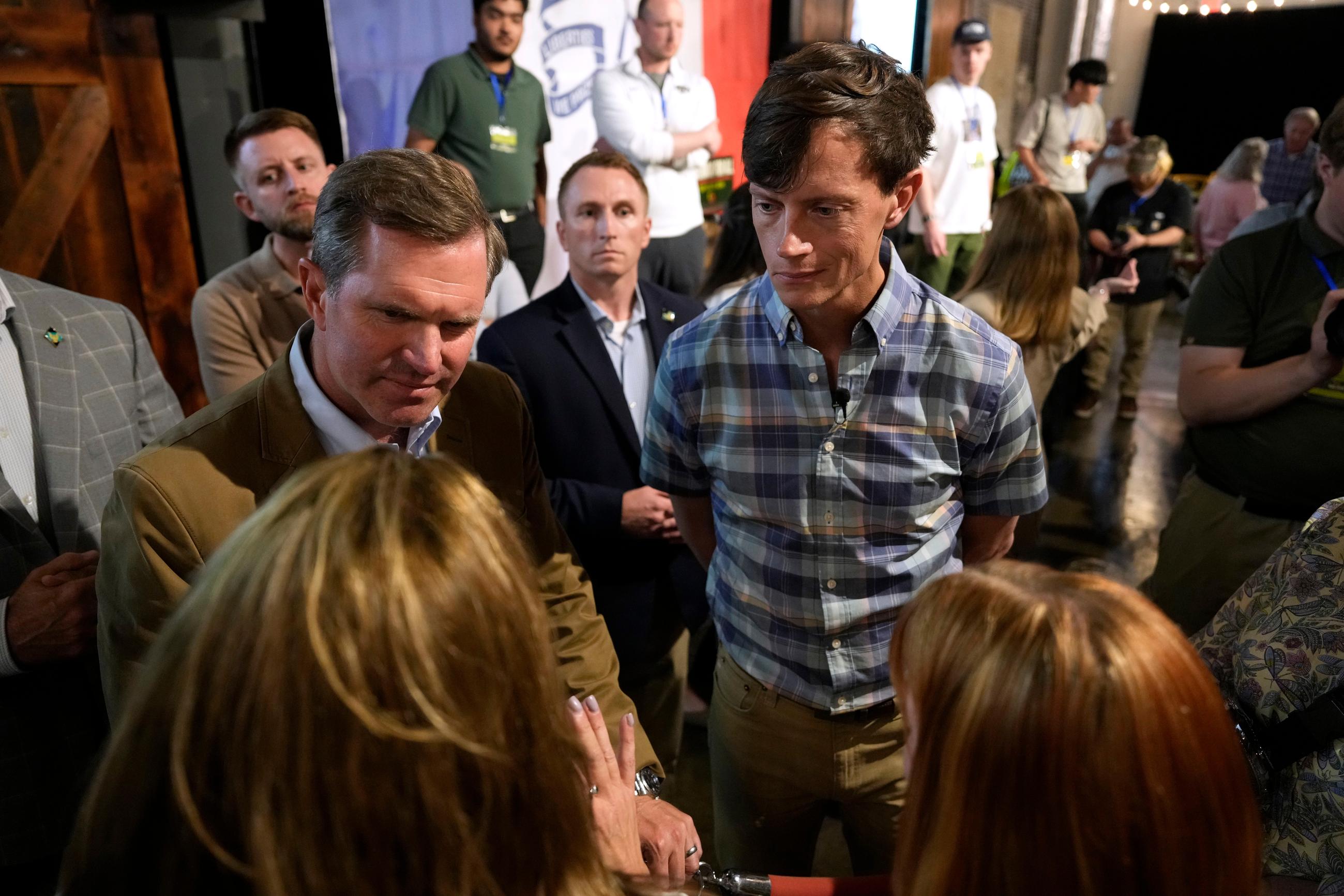
Kentucky Gov. Andy Beshear and Iowa Democratic gubernatorial candidate Rob Sand speak to supporters during a campaign rally in Des Moines on June 7. (AP Photo/Charlie Neibergall)
AP Photo/Charlie Neibergall
The Cook Political Report with Amy Walter rates two Republican-held Iowa congressional seats—Rep. Mariannette Miller-Meeks's 1st District and Rep. Zach Nunn's 3rd District—as "Toss Ups." A third, the open seat in Iowa-02, is rated Lean Republican. The Democrats are fielding a trio of current and former state legislators: Christina Bohannan, Sarah Trone Garriott, and Lindsay James, respectively.
The Democratic nominees could likely have brought a fight in this political environment without Sand’s presence, but his record-breaking fundraising hauls at the top of the ticket will only help his fellow party members.
A Democratic strategist who spoke with National Journal on the condition of anonymity said it’s still mostly up to downballot candidates to win their races, but having the chance to point to an official like Sand—one with a reputation for effectiveness rather than partisanship—gives them further legitimacy.
“People know him as their auditor who, in a very nonpartisan way, has just been doing stuff for the last number of years,” the strategist said.
David Kochel, a Republican consultant in Iowa, said Miller-Meeks and Nunn have proven themselves to be strong candidates in tough political environments, and that Rep. Ashley Hinson, the GOP nominee for Senate, is running a strong campaign at the top of the ballot as well.
“I don't think the ballot line matters,” Kochel said. “Whether or not Rob Sand does well shouldn't affect these House races.”
These dynamics aren’t exclusive to Pennsylvania or Iowa. According to the Cook ratings, four districts in both Michigan and Ohio are on the battleground as both the Wolverines and Buckeyes have expensive, high-profile statewide races to sort out.
There’s a final complicating factor for ambitious statewide candidates: 2028. Shapiro has teased interest in running for president, and there are few things the Democratic base appreciates more than a proven electoral powerhouse. Four pickup chances in Pennsylvania are but further opportunities to prove that he’s capable of leading a national party.
For DePasquale, it’s first things first.
“2028 is obviously a couple of years off,” he said. “The Pirates could actually be in contention for a World Series, I can only hope, so that’s a ways off.”