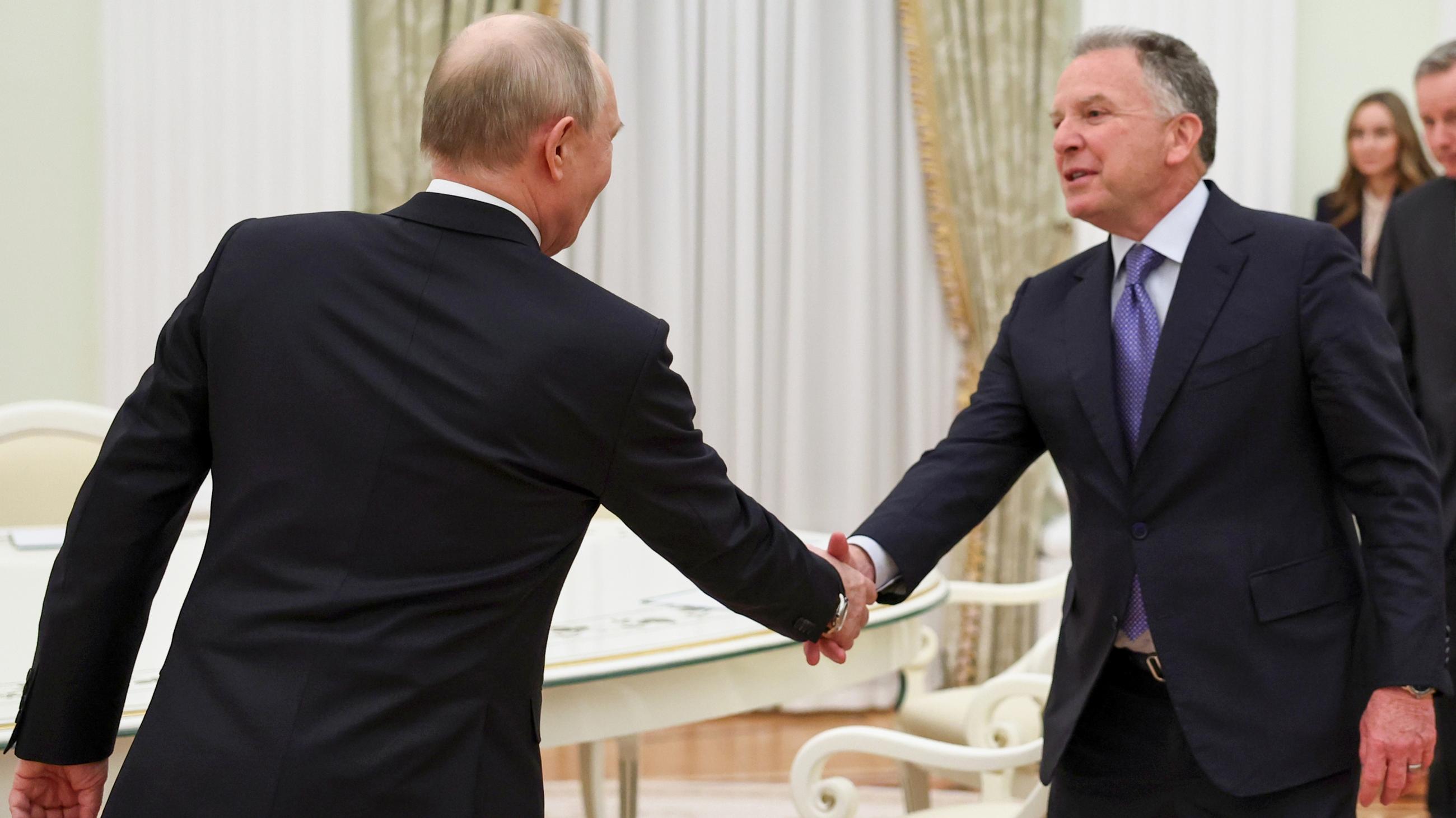

When President Trump concluded an almost-80-minute meeting with Israeli Prime Minister Benjamin Netanyahu on Tuesday, the White House was tight-lipped, saying only that the session was “positive and productive.”
Anyone not in the Oval Office was left to guess what that meant about the agenda, or even if the two leaders spent any time one-on-one.
Given the president’s history, it is fitting to leave a little mystery. Analysts have been guessing at Trump’s true feelings about Israel and its longest-serving leader since the day he announced his candidacy at Trump Tower in 2015. They were a mystery then and are only slightly less so today, even after 17 meetings with Netanyahu—nine in the first term and a remarkable eight already in the second term.
The two leaders have waged war together, proclaimed solidarity, smiled publicly, and fought privately. They even had an open break when Netanyahu congratulated Joe Biden for defeating Trump in the 2020 election. Trump was furious and was quoted in an Israeli newspaper in 2021 saying, “I haven’t spoken to him since. F— him.”
Now, Netanyahu calls Trump “the greatest friend that Israel has ever had in the White House.” But in 2015, his record on Israel was so sparse that his main pro-Israel credential was a one-day stint as grand marshal of the Israel Day parade in New York. That, he insisted, should have quieted those questioning what he would do as president.
“In spring 2004, at the height of violence in the Gaza Strip, I was the grand marshal of the 40th Salute to Israel Parade, the single largest gathering in support of the Jewish state,” he told the American Israel Public Affairs Committee in a speech in which 12 times he pleaded with Jews to “believe me.” As he said more than once in the campaign, the parade was significant: “It was a very dangerous time for Israel and frankly for anyone supporting Israel. Many people turned down this honor. I did not. I took the risk and I’m glad I did.”
Organizers of the parade, though, remembered the facts differently. They told New York Magazine they invited Trump to be the co-grand marshal with sex therapist Dr. Ruth because they wanted a big name to build interest. They scoffed at the idea of danger.
It has been a long, 22-year-road from that parade to this week’s meeting. But even after more than five years in office and more one-on-one meetings with Netanyahu than any other world leader, there still are questions about the depth of Trump's commitment to Israel because his approach to the Middle East is different from any of his predecessors as president.
“It’s not as cut-and-dried as the relationships that previous presidents have had with Israel or Israeli prime ministers,” said Aaron David Miller, who worked on Middle East policy for every president from Jimmy Carter to George W. Bush. “It’s much easier to understand them,” Miller told National Journal.
For some presidents, like Carter and Harry S. Truman, their affection for Israel came from study of the Bible. For others, like Biden and Bill Clinton, it was something they grew up with. Miller said their “regard, love, and sensibilities toward Israel" were "deeply implanted in political and emotional DNA.” Others, like Barack Obama, felt the relationship on more of an intellectual and strategic level.
“But Trump belongs in a different box altogether,” said Miller, who was at the State Department from 1978 to 2003 and serves now as a senior fellow at the Carnegie Endowment for International Peace.
On the one hand, Trump is unswayed by the growing anti-Israel sentiment in Congress and the public, standing publicly with Israel. But, said Miller, “at the same time, he has done things and said things about Israel that no American president has ever said publicly,” frustrating Netanyahu. And, noted Miller, he violated a key rule in the relationship—“no surprises”—when he talked with Hamas without informing Israel, removed sanctions on Syria, cut a deal with the Houthis opposed by Israel, and forced Netanyahu into talks with Lebanon.
“Trump has constrained Israel at the same time that he has enabled and acquiesced in Israeli behavior,” he said. “So, it’s a complicated relationship.”
As in so many things Trumpian, the explanation may lie in his transactional approach to policy.
“I’m not sure anyone really can say with authority what goes through Trump’s mind. I think there is an unpredictability and a confusion there that I can’t explain,” Miller said. “I link the pro- and anti-Israel dimensions of Donald Trump’s personality to his transactional nature.”
Despite his genuine support for Israel, Miller added: “If Israel or Netanyahu get in the middle between Trump and something Trump wants, it’s a very dangerous place to be.”
The president also remains frustrated at what he sees as the lack of gratitude by American Jews. “With all I have done for Israel, I received only 24 percent of the Jewish vote,” he complained at a campaign event in 2024. “I really haven’t been treated very well, but that’s the story of my life.”
According to exit polls, Trump lost the American Jewish vote by 71-24 percent in 2016, 77-21 in 2020, and 78-22 in 2024.
As the Pew Research Center found, the problem for Trump is that Jewish voters believe he is friendly toward Israel but not friendly to them. And Israel is not necessarily their key issue when voting.
Driven by that grievance, he has lashed out at Jews who vote against him, calling them “crazy” and saying that “any Jewish person that votes for Democrats hates their religion” and “should have their head examined.”
Tying himself closer to Netanyahu is not likely to help his standing. A Pew survey in April found that 56 percent of Jewish Americans have “little or no confidence” in Netanyahu on world affairs.
It is not the first time an American president has stumbled on the contradictions of Middle East politics. Trump succeeds a long string of presidents who had to grapple with the complexities of the most turbulent region in the world.
Almost all of them steeped themselves in the history of the Middle East. But this administration has made sure Trump is unburdened by either that history or the details of past diplomacy. It is their preferred approach everywhere, as demonstrated in Ukraine, where his negotiators Steve Witkoff and Jared Kushner have declined briefings from experts on the country. In the Middle East, diplomats tell the same story.
“Jared Kushner called me in 2017,” recalled Miller. “I met with him a couple of times. I was deep into the backstory and the history when Kushner cut me off. ‘Look, with all due respect,’ he said, ‘we don’t care about the history. My father-in-law is going to do things differently.'”
For good or for bad, truer words have never been spoken since Trump first took office.