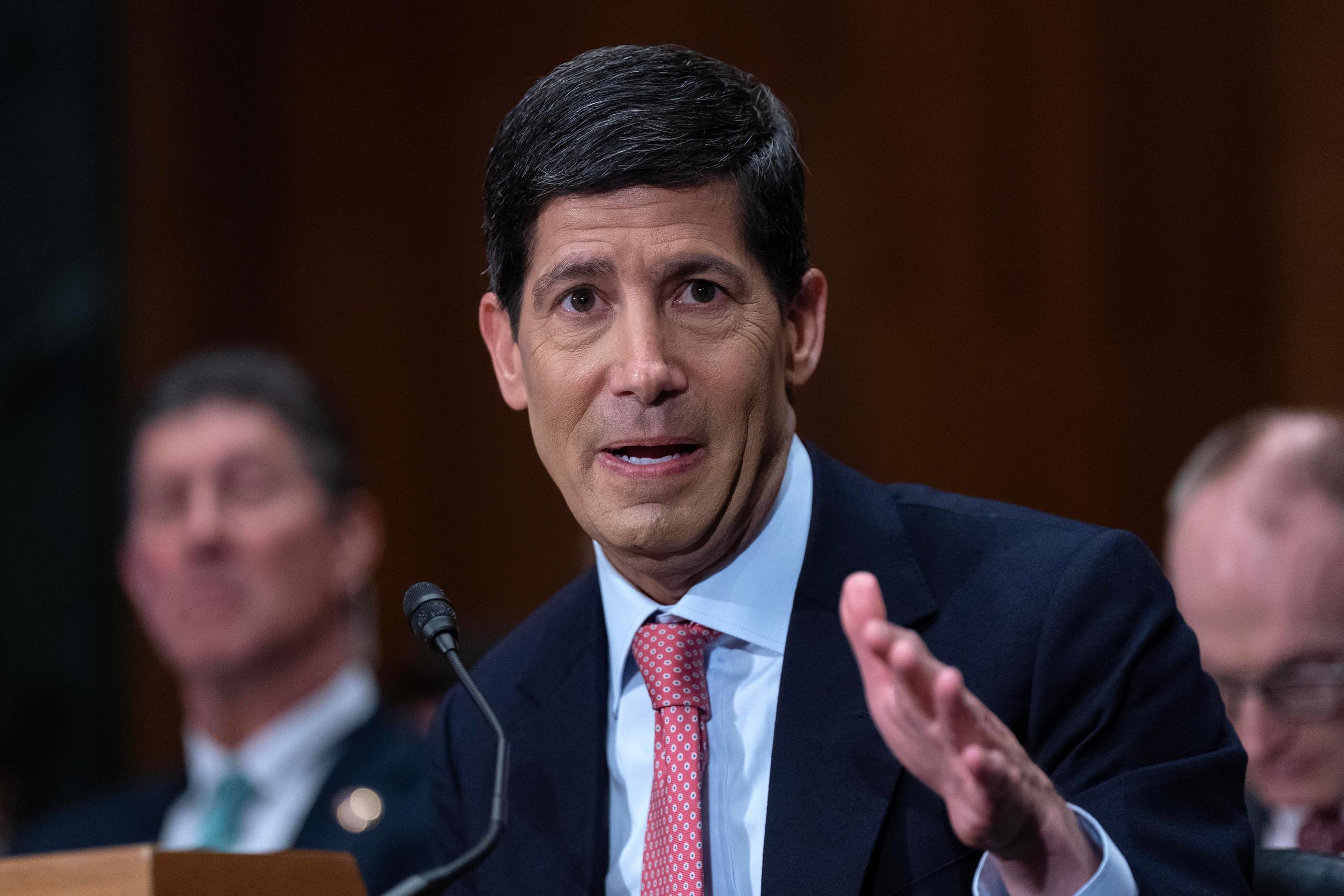
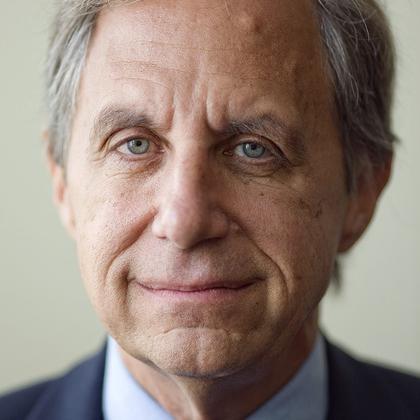
When President Trump appointed Kevin Warsh to head the Federal Reserve, many thought the appointee would almost reflexively try to lower interest rates.
Now, that’s not looking so likely. Instead, the financial world now wonders whether an increase is coming.
Warsh will preside Tuesday and Wednesday over his second meeting as Fed chair. Trump named him to the job after spending years bashing Jerome Powell, Warsh’s predecessor, for not being aggressive enough in lowering the Fed’s target interest rate. Warsh vowed he’d be independent from political influence, but experts fully expected rate reductions later this year.
That’s not so certain anymore. While the June Consumer Price Index fell, largely due to lower gasoline prices, prices have rebounded in July and the CPI is expected to once again jump.
June’s figures didn’t cool the skepticism that lower rates were needed anytime soon.
“For the Federal Reserve, the June CPI is unquestionably good news—but it is not an all-clear signal,” said Sung Won Sohn, president of SS Economics in Los Angeles.
Higher rates?
Warsh has been tight-lipped about his plans for curbing inflation.
"Inflation's a choice. We monetary policymakers need to choose lower prices, and that's the commitment my colleagues have made,” he told the House Financial Services Committee on July 14.
CME Group FedWatch, which estimates the likelihood the Federal Reserve will change interest rates based on market predictions, on Monday reported a 37.9 percent probability of the Fed announcing a rate increase of a quarter of a percentage point at the upcoming meeting, rising to 54.6 percent at the next session in mid-September.
The minutes of Warsh’s first meeting as chairman, released earlier this month, show the Fed staff and the Federal Open Market Committee, which sets the rates, concerned about inflation.
The staff's inflation forecast for this year and the next was higher than the one prepared for the April meeting, reflecting incoming data, higher energy prices, uncertainty over Middle East tension, and the impact of artificial intelligence, the report said.
While retail gasoline prices were expected to stabilize or drop in the second half of this year, “[c]ore inflation was forecast to change little over the rest of the year,” according to the report.
Core inflation strips out food and energy prices, which tend to be more volatile. That measure, which reflects longer-term price trends, has been somewhat lower without those two categories.
In June, prices excluding food and energy were unchanged, though the 12-month increase was 2.6 percent, still stubbornly above the Fed’s 2 percent target for inflation. But since then, gasoline prices have soared as the Iran war has helped push up costs.
AAA reported Monday that the average price nationwide for a gallon of gasoline was $4.11, up 24 cents from a month ago.
Ongoing uncertainty
Perhaps the most important sentence in the Fed minutes was this: “The staff continued to view the uncertainty around their forecast as elevated, importantly because of uncertainty about the conflict in the Middle East and about the potential economic effects of AI investment and adoption.”
Raising rates a quarter-point would not suddenly upend the economy. The rate is a benchmark for many other rates—banks use it to lend funds to each other overnight.
Some consumer interest rates would go up, but mortgage rates, for instance, are more tied to bond markets. The 30-year fixed rate for a mortgage during the week ending July 23, for instance, was 6.58 percent, according to Freddie Mac, which tracks mortgage rates.
The impact of a Fed rate hike would be more psychological; it would be an acknowledgement that inflation remains a threat, which in turn could spur bond markets to keep rates elevated.
What does Warsh do?
Where this leaves Warsh is uncertain, but it doesn’t appear to be a scenario favoring lower rates. The Fed last lowered interest rates in December, to the current level of 3.5 percent to 3.75 percent.
Typically, the Fed chair dictates policy, but there appears to be enough skepticism at the FOMC about how to handle rates that Warsh’s strength has yet to be proven.
According to the minutes, “a few participants commented that, in light of these developments, there was a case for raising the target range for the federal funds rate, but those participants indicated that they supported maintaining the current target range at this meeting.”
Analysts tend to agree that the uncertain outlook is hardly a signal that rates will be dropping.
Warsh’s first Fed meeting was “more hawkish than expected,” said Goldman Sachs chief economist Jan Hatzius.
At the same time, Hatzius and others saw caution ahead.
“If inflation comes down in coming months—rapidly for headline and gradually for core—and growth remains muted, we expect most voters to continue supporting unchanged rates,” Hatzius said.
The biggest issue facing the Fed is a world where economic predictions are growing more difficult.
“Old disinflationary tailwinds are fading. Cheap goods from China are less abundant, lean supply chains are being traded for resilience, unstable weather patterns are disrupting production and low-cost energy can prove fleeting,” said Diane Swonk, chief economist at KMPG, in an analysis.
Certainly, Swonk said, rate hikes can cool demand, which in theory helps curb price increases.
But other forces make that logic more difficult. Swonk said rate increases “cannot add housing supply, reroute ships, repair crops or expand the grid.”
That’s Warsh’s challenge, she added. “Restoring 2 percent inflation would therefore require more pain in output and employment than it once did.”