The Senate’s top health care committee is delaying confirmation votes for President Trump’s picks to lead the Centers for Disease Control and Prevention and the pandemic-preparedness agency until next week, due to ongoing talks surrounding one nominee and attendance issues.
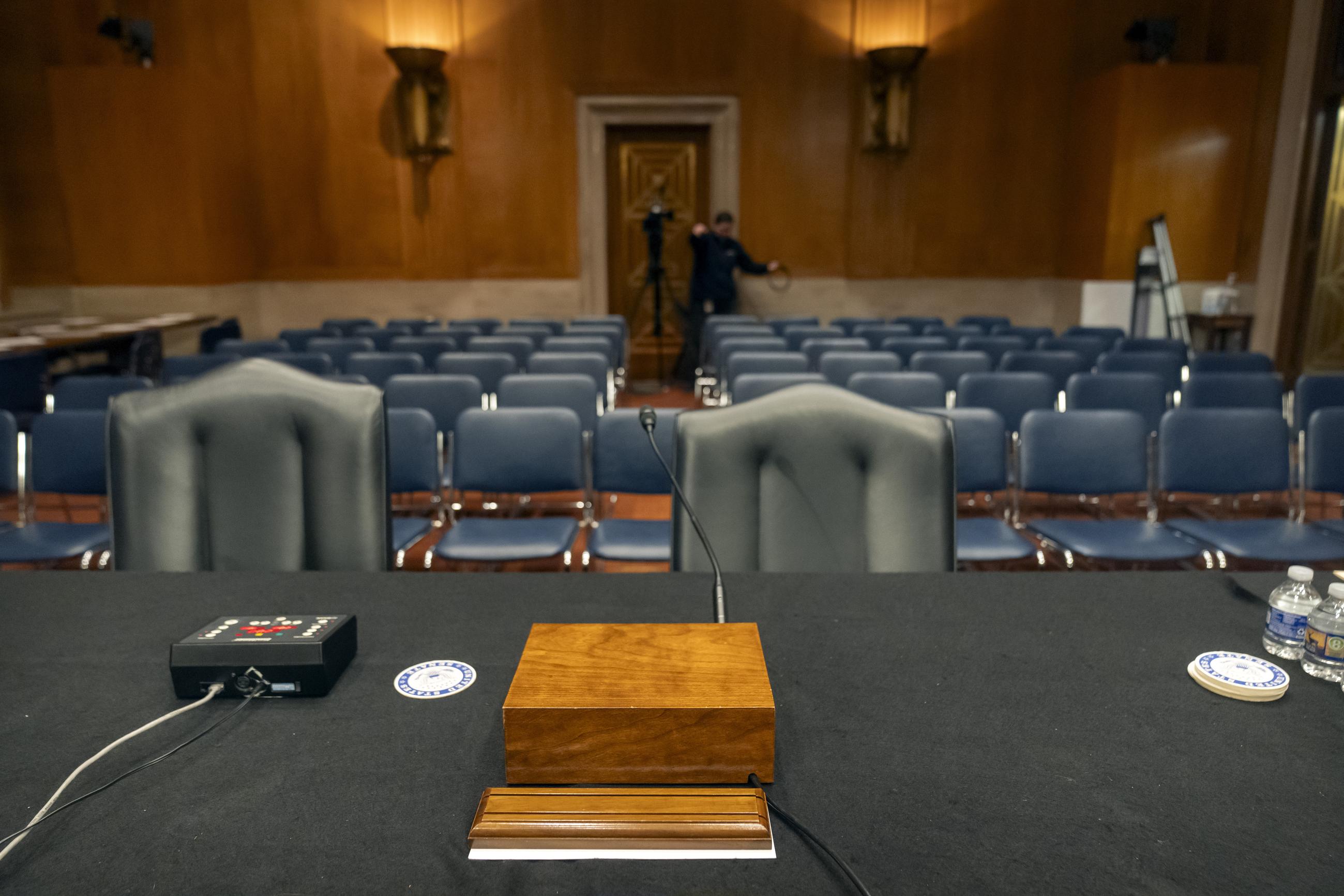
The Senate Health, Education, Labor, and Pensions Committee was scheduled to vote Thursday morning on Trump’s nominees for the CDC and the Administration for Strategic Preparedness and Response. But the vote was abruptly pulled from the schedule the same hour it had been set to take place.
The nominees are expected to be considered next week, according to the chairman.
The delay came after HELP Committee Chair Bill Cassidy and other center-right Republicans on the panel had raised concerns over ASPR nominee Sean Kaufman’s past statements expressing skepticism toward the hepatitis B vaccine and linking vaccines to autism.
These past comments, which were similar to Health and Human Services Secretary Robert F. Kennedy’s anti-vaccine rhetoric, remained an issue for the chair Thursday.
“Well, any time that there is somebody contributing to confusion on immunizations, that gives me concerns," Cassidy said.
According to a committee spokesperson, there are “ongoing conversations” between the panel and the administration on Kaufman’s nomination. However, Cassidy indicated that he would back the CDC nominee, Erica Schwartz, after meeting with her in the wake of last week’s confirmation hearing.
"After speaking with Dr. Schwartz again after the hearing, reviewing the transcript, and speaking to those that have served with her and know her well, I'm confident that she knows what she is doing and will stand against those that do not," he said.
Cassidy also mentioned that, per an agreement made with HHS, a CDC web page saying that vaccines do not cause autism was modified. The page had previously made clear that the heading stating "vaccines do not cause autism" was only up because of a previous deal made with Cassidy. He cited the removal of that passage “as a sign of good faith” for his support on Schwartz’s nomination.
However, the agency's site was also changed to say: "Scientists have not identified the root causes of autism. HHS continues to support rigorous scientific research and will update this page as reliable new evidence becomes available."
The site still states that vaccines not causing autism is “not an evidence-based claim” and that studies supporting any link have “been ignored by health authorities.”
A number of Democrats were expected to oppose Schwartz, including HELP ranking member Bernie Sanders.
“Let me say: I was impressed by Dr. Schwartz’s service to her country and her educational background,” Sanders said. “But I will vote against her. … The issue at hand is not complicated. And that is, will we have people in the Trump administration who have the guts to stand up to people who are anti-science and into conspiracy theories? And I’m afraid that right now, within HHS, we have a secretary who will not tolerate dissent.”
During the nomination hearing, Cassidy and Republican Sen. Lisa Murkowski, along with Democrats, pressed the nominees on whether they would stand up to Kennedy’s anti-vaccine agenda.
Schwartz and Kaufman refused to directly answer whether they would block the secretary’s moves undermining access to vaccines.
Their answers visibly frustrated Cassidy, a liver doctor who has made vaccines his banner issue during Trump 2.0. Much of his consternation was pointed at Kaufman in particular.
"I don't know what you were thinking. Why would you repeat those damn lies!" Cassidy, slamming his fist on the table, exclaimed to Kaufman—who once wrote on LinkedIn that if readers were to call him “an antivaxxer, then I’ll be forced to call you a pedophile,” before arguing against giving infants the hepatitis B shot.
"Because that destroys trust," Cassidy said. "And we don't start getting back to where we trust unless people start speaking the truth.”
This is the first set of controversial nominees who have come up in Cassidy’s committee since he lost his primary for reelection in May. Now freed from the political pressures that once restrained him, Cassidy presumably has the space to push for issues he’s passionate about, including public health.
The answers that Cassidy and other moderate Republicans were searching for from the nominees—mainly any reassurance they would act as a bulwark against anti-vax policy—were not forthcoming, thwarted by the reality that the nominees are ultimately subordinates of the HHS secretary.
“The issues that members had with Schwartz were less about her, and more about the CDC director being a subordinate of the secretary,” said one GOP health aide. “There’s no escaping that.”
The aide said the nominees were put in an impossible situation, having been nominated by the White House to serve under Kennedy but being asked by senators in charge of confirming them to go against their future bosses.
“Nobody is going to say they’ll buck the secretary whenever they feel like it,” the aide said.
Thursday’s hearing was also delayed over attendance issues. With Cassidy now on board, it was expected that Schwartz would have GOP support to move through the committee. However, two key Republican senators were unable to attend the vote: Murkowski and Sen. Rand Paul. The committee is made up of 12 Republicans and 11 Democrats. If Democrats were to unilaterally oppose a nomination, it would be held up in committee.
Finding nominees who can both be confirmed by the Senate and work under Kennedy has become an arduous task. The nomination of Dave Weldon, Trump’s first pick to lead the CDC, was withdrawn after it was clear that he wouldn’t have the votes to clear the HELP panel.
The last CDC director who was confirmed by the Senate, Susan Monarez, gave similar answers as Schwartz during her nomination hearing last year.
Monarez was later confirmed on a party-line vote—with the support of center-right Republicans Cassidy, Murkowski, and Susan Collins. She served for less than a month before she was ousted by Kennedy for refusing to pre-approve vaccine-recommendation changes.