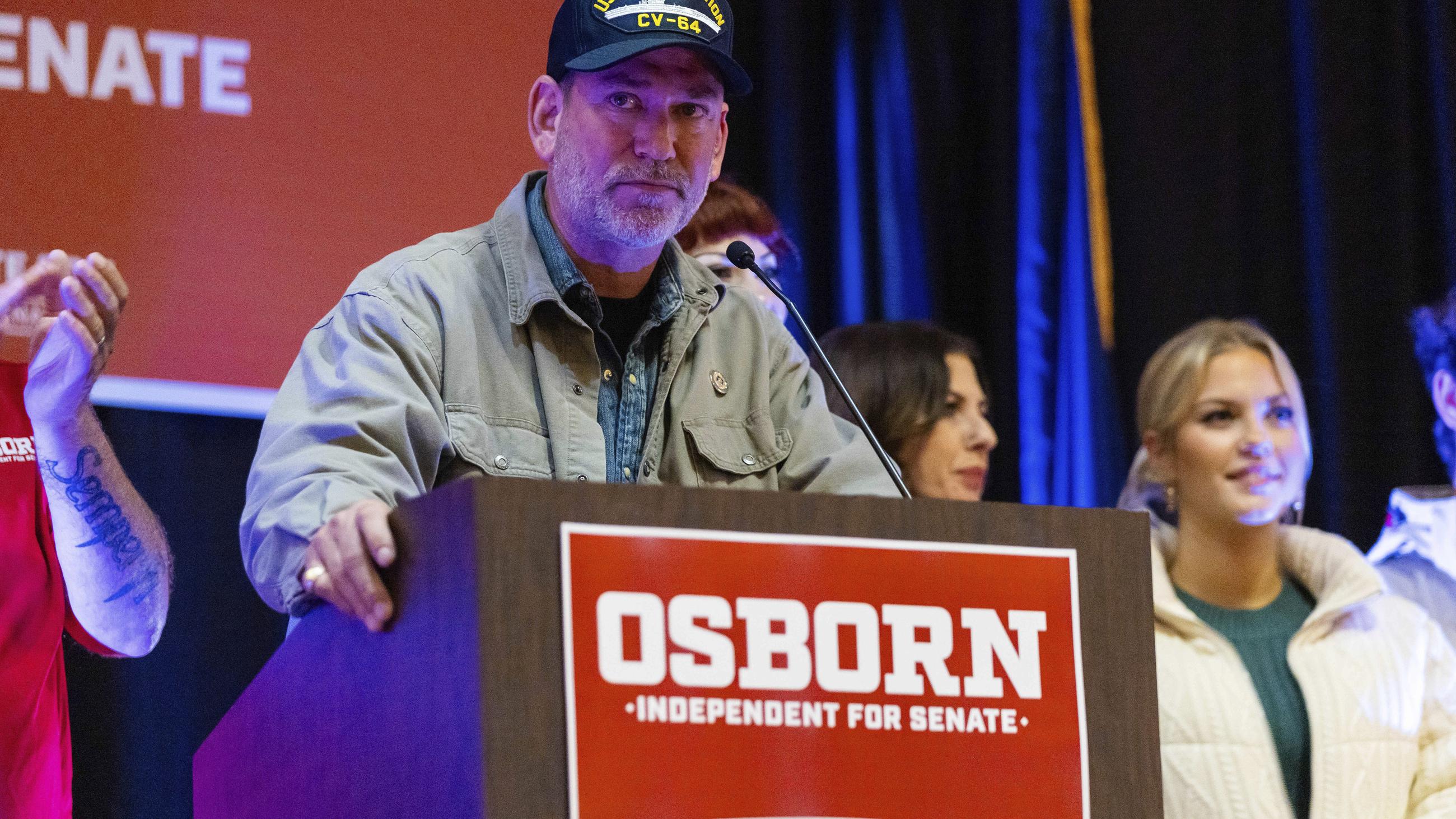


Independent Dan Osborn is poised to face GOP Sen. Pete Ricketts in Nebraska after the Democratic nominee bowed out last week. His fellow independent Senate candidates elsewhere on the map haven’t been so lucky in clearing the field.
Following Osborn’s surprise overperformance against Republican Sen. Deb Fischer in 2024, a slew of veterans across the country are waging independent bids, pledging they won’t caucus with either Republicans or Democrats if elected.
But they’re not receiving the runway they imagined. Instead, they’re facing pushback from Democratic nominees and their allies within state Democratic parties.
Unlike Osborn, Idaho’s Todd Achilles, Montana’s Seth Bodnar, and South Dakota’s Brian Bengs aren’t being given space to challenge Republicans directly without holding the Democratic Party label. In all three races, both Democrats and independents appear unlikely to drop out as withdrawal deadlines approach.
“I’m not interested in splitting the Democratic Party,” former Democratic Rep. Larry LaRocco of Idaho, who supports Achilles, told National Journal. “I’m just interested in winning and having good representation.”
The three independents argue they’d make their red-state races more competitive, citing polling and fundraising numbers.
Available polls from the independents’ campaigns and their allies don’t show them ahead of their GOP opponents, but they do show them placing second in three-way ballots and overperforming Democrats in head-to-head ballots against Republicans.
Bodnar amassed nearly $1.9 million last quarter, outraising both his opponents, Democrat Alani Bankhead and Republican Kurt Alme. Achilles and Bengs have also outpaced their Democratic opponents' fundraising this cycle, but lag behind the Republican incumbents they’re challenging.
Withdrawal deadlines are creeping up within the next two months, putting pressure on both Democrats and independent candidates to potentially exit the races and prevent a crowded ballot that benefits Republicans. The deadlines for general-election candidates to withdraw are Aug. 4 in South Dakota, Aug. 10 in Montana, and Sept. 4 in Idaho.
The Cornhusker State
Osborn’s road to becoming Fischer's and Ricketts’ main opponent without Democratic interference didn’t come easy. His 2024 run faced condemnation from state Democrats when he rejected the party’s support ahead of the general election after previously courting the party. Yet his competitive matchup against an asleep-at-the-wheel Fischer impressed Democratic skeptics, setting up a better reception for his 2026 comeback bid.
The Nebraska Democratic Party chose not to recruit a Senate candidate this cycle, giving Osborn the runway to challenge Ricketts directly. The state party did spend $136,000 to back labor attorney Cindy Burbank, a pro-Osborn Democrat, against an Osborn critic in the primary. Burbank handily won the Democratic nomination and dropped out of the race on Friday as promised.
“So I think that is a strong message to some fellow red states, that if you have a strong Democratic candidate, great. Some red states do,” Nebraska Democratic Party Chair Jane Kleeb told National Journal in May. “For us, we just knew, especially at the federal level, that we had to take a coalition approach in order to beat Pete Ricketts because of this money that he has.”
Big Sky Country
Aside from Nebraska, Montana could be independents’ best chance at a pickup this cycle if a head-to-head race forms ahead of the fall.
Nearly $162 million in spending from Democrats wasn't enough to reelect then-Sen. Jon Tester in 2024. Tester outperformed former Vice President Kamala Harris by 13 points, but still lost to now-GOP Sen. Tim Sheehy by 7 points. This time around, Tester is backing Bodnar, believing Democrats aren’t prepared to compete statewide in Big Sky Country.
Bodnar originally planned to challenge Republican Sen. Steve Daines, but the incumbent had other plans. Daines abruptly withdrew from the race three minutes before the deadline in March. Alme, a former U.S. attorney for Montana, filed to run five minutes before Daines’ exit, virtually coronating him as the GOP’s nominee. The move drew criticism from Democrats and Republicans.
Choosing the Democratic nominee hasn’t been as simple. Progressive Vet PAC spent $2.5 million boosting Bankhead, an Air Force veteran, over former state Rep. Reilly Neill, a noted Bodnar critic, in the June 2 Democratic primary. The GOP-aligned More Jobs, Less Government spent $1.9 million on ads boosting Neill’s liberal bona fides during the primary. Bankhead beat Neill by nearly 11 points.
Progressive Vet PAC later pulled its support of Bankhead, arguing in a press release that “recent polling and fundraising reports make it clear that a Democrat does not have a viable path to winning the Montana Senate seat.”
“They knew Reilly wasn’t going to drop out, and so they hedged their bets on me, but I’m not going to drop out,” Bankhead told The Bulwark following the primary. “You guys are making a lot of assumptions about what you think I’m gonna do, and dropping out is not one of them.”
Both Bankhead and Bodnar are determined to stay in the race despite a group of Democratic legislators urging either candidate to step aside ahead of next month’s withdrawal deadline.
The Gem State and the Mount Rushmore State
The losing streak for Idaho and South Dakota Democrats extends even further back than it does for Montana Democrats. Idaho hasn’t elected a Democrat to the Senate since 1974, and South Dakota hasn’t done so since 2008.
“We particularly have a big group of Democrats who really don’t like the guy who won the primary and are working very aggressively to get that guy out of the race,” Achilles, a former Democratic state representative, told National Journal. “I’m the only viable candidate.”
But, like Bankhead, the Democratic nominees in Idaho and South Dakota, David Roth and Julian Beaudion, respectively, aren’t giving into the pressure. Both are casting doubt on the independents’ chances of earning Democratic votes and winning against entrenched GOP incumbents. Beaudion, a former state trooper, received an endorsement from former President Biden last month.
“What we've actually seen is that a lot of [Bengs’] policies are aligned with policies of folks like Donald Trump, and so people on the ground are actually seeing where he's more MAGA-like than he is a Democrat,” Beaudion told National Journal. “With me being the Democratic nominee, we are really leaning into the grassroots organizing that we've been able to build here in this campaign, and also leaning on the infrastructure of what the state party offers us, when he's not able to do that.”
The campaigns of Sens. James Risch of Idaho and Mike Rounds of South Dakota both sponsored internal polls testing general-election scenarios, and the National Republican Senatorial Committee is monitoring the Montana Senate race, as evidenced by a poll shown at a donor presentation. GOP polls of the races notably conflict with independents’ assertions that the Democratic nominees are spoiler candidates, often showing the independents placing third in three-way matchups.
“Polls are for strippers,” Beaudion jokingly said during a June KOTA interview.