The anti-establishment Democratic Socialist wave, which felled incumbents in Colorado and New York this summer, could crest in Wisconsin, where an open Democratic primary for governor has revealed sharp divides within the party.
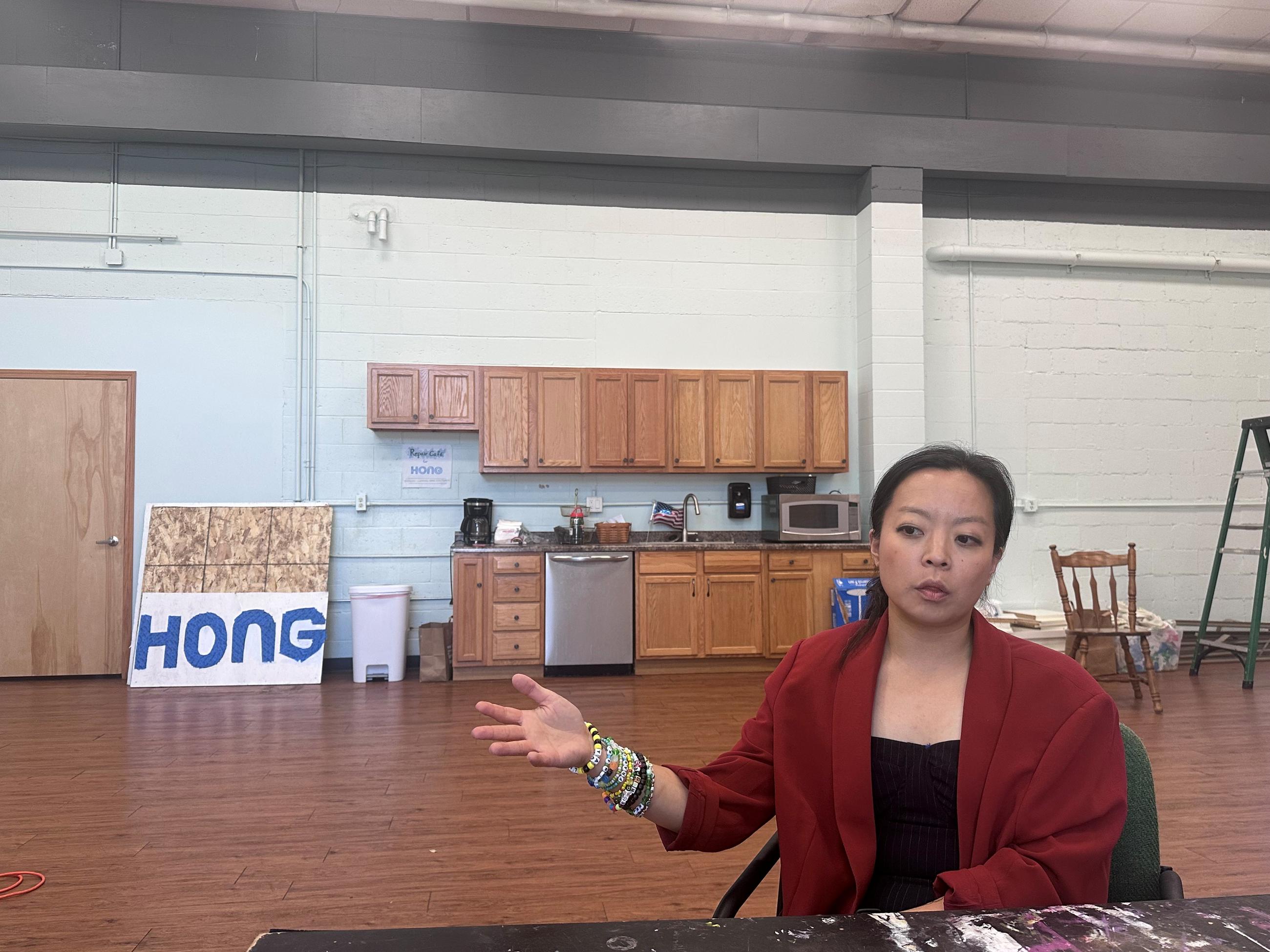
State assemblymember Francesca Hong, a self-described Democratic Socialist, has a monopoly on the left flank in a crowded primary field vying for slivers of the electorate. She’s clinched a loyal base, held varying leads in recent polling, and drawn the attention of progressive stalwarts like Rep. Ro Khanna and Hasan Piker.
But as the Aug. 11 primary in the race to succeed retiring Democratic Gov. Tony Evers inches closer, the math that has fueled Hong's rise in an election without ranked-choice voting or runoffs could begin working against her.
Hong faces Lt. Gov. Sara Rodriguez, former Lt. Gov. Mandela Barnes, former Evers administration member Joel Brennan, and state Sen. Kelda Roys. David Crowley and Missy Hughes both dropped out in recent weeks and endorsed Rodriguez, who political observers say could become Hong’s toughest competitor if she emerges as a consensus candidate.
“I think we've seen in races across the country that there is a proportion of the Democratic base that is looking for the left-most, and frankly the most anti-establishment, angriest-at-the-powers-that-be candidate, and frankly, no matter how much or how little attention each of these races get, there's a good subset of voters who find their way to that candidate,” said Andrew Mamo, a Democratic strategist who has worked on Wisconsin campaigns. “The question is: Is the cap on that in the Democratic primary 30 percent, or is it higher?”
Hong has leaned on her background as a single mom and former chef. She has vocally opposed corporate PAC money, criticized billionaires, and supported policies like universal childcare—hallmarks of other successful insurgent Democrats this cycle.
While Rodriguez, Barnes, and others have competed for center-left and establishment Democrats, Hong has been in the driver's seat in the party’s leftist lane.
That has given her a path to leading in a fractured field, but Democratic strategists and observers say she could hit a ceiling in the primary.
Mordecai Lee, a political science professor at the University of Wisconsin-Milwaukee, estimated that Hong is sitting at around 20-30 percent support in the primary, a standing that polling reflects.
“It’s certainly understandable that there's a silo of Wisconsin Democrats who are ideologically farther left, and who might consider themselves socialists, who might consider themselves Social Democrats, who might consider themselves sort of 'Bernie bros,' whatever it might be—that there's no doubt that she has a monopoly on that silo,” Lee said.
Hong says she doesn’t see her base in a left-leaning silo.
“We're actualizing the big-tent party that the Democrats want to be, and our coalition spans across ideologies because we folks believe in the vision and the work that we are going to do to deliver a government that's actually a force of good,” Hong told National Journal.
Unlike in the races Democratic Socialists won in Colorado and New York, this is not a safe blue seat. Republican Rep. Tom Tiffany has cleared his field, and the GOP sees the Badger State as one of its likeliest flips this cycle, making electability among Democrats a central argument in the closing weeks.
Hong’s rise in the primary has put her record under a microscope. She came under fire for previous comments advocating for defunding and abolishing the police, calling authorities on pro-Gaza protesters, and a civil lawsuit for unpaid personal debt.
“I think her negatives are very damaging. And I worry that they could make it a referendum on her instead of us making it a referendum on Republicans,” said Mamo, who is also a communications consultant at Majority Democrat, a PAC promoting moderate Democrats.
Mamo pointed to the Democratic primary in New York’s 17th Congressional District. While left-leaning candidates scored upsets in safe blue seats in the state, the establishment candidate won the Democratic nod in the toss-up race against Republican Rep. Mike Lawler.
A similar dynamic could emerge in Wisconsin if voters head to the polls with November on their mind, he said.
Rodriguez and Barnes have positioned themselves as the biggest names in the race. Rodriguez instantly launched her campaign last summer when Evers announced he would not run for another term. The former nurse has earned the backing of 314 Action and the Democratic Lieutenant Governors Association, which has pledged to spend $2 million on her behalf, along with the endorsement of the two Democrats who have exited the field.
Barnes previously served as Evers's No. 2, and he has a high name ID thanks to his narrow 2022 loss to Republican Sen. Ron Johnson. He has some anti-establishment appeal as well, Wisconsin Democratic strategist Joe Zepecki said. Barnes challenged sitting Democrats in bids for state Assembly and state Senate.
“The problem is it's such a fractured field,” Mamo said. “Can anyone credibly make the case and emerge from the pack saying, 'I am the electability candidate'?”
Crowley made the electability argument in endorsing Rodriguez last week. At an event, he called on the remaining candidates to evaluate whether they have what it takes to take on Tiffany.
“Sarah has the ability to build the coalition Democrats need in order to win our race, and to win our state Assembly and state Senate,” Crowley said.
In response to Crowley’s push, Hong said, “Let the voters decide,” adding that she’s best equipped to take on Tiffany.
Lee said if Hong wins, though, “Republicans might feel like this is going to be an easy race.” Tiffany is already getting a head start. He’s spoken out against Democratic Socialism on the campaign trail, and has made Hong one of his prime targets in social media posts.
President Trump's camp has jumped in with early attacks, too, with his campaign account posting that Hong “is NOT the RIGHT CHOICE for Wisconsin!” after the candidate was endorsed by Rep. Ilhan Omar.
Limited polling shows Tiffany leading Hong, or the two statistically tied—a similar standing to Barnes and Rodriguez.
The biggest hurdle for any eventual nominee will be overcoming Tiffany’s ad advantage. So far, he’s spent $4.7 million on-air in an uncontested GOP primary. Barnes is up with a six-figure ad campaign and another $500,000 in outside ad support, while Rodriguez has seen nearly $1 million in outside spending. Hong, by contrast, has spent just over $10,000 on digital ads, according to AdImpact.
Wisconsin Democrats and Evers kickstarted the Wisconsin Governor Readiness Project, a campaign fund to support the eventual nominee, though it’s unclear how much the effort has raised.
“I'm not sure [Hong] has the financial resources to take what she has built and pay to communicate statewide in the closing weeks of this race," Zepecki said. "That is the final missing ingredient for how you get from where she is to where she wants to be.”