July 13, 2026, 2:21 p.m.
Gasoline prices have come down from their spring peaks. But food prices may soon eat up any savings at the pump for American consumers.
Higher prices for food and other goods reflect the ripple effect of the spike in energy prices triggered largely by President Trump’s tariffs and the Iran war.
An analysis by the Purdue University Center for Commercial Agriculture says that, until recently, manufacturers absorbed many input costs, particularly energy-price increases from the winter and spring, but that now “the transmission has started” to consumers and “the pace will accelerate.” Indeed, oil prices spiked again on Monday. The Bureau of Labor Statistics is scheduled to release new consumer price data Tuesday.
Until recently, food prices were largely in line with overall price trends.
Food at home, as the government calls it—that is, food bought at grocery stores—was up 2.7 percent in the 12-month period ending in May. The March-to-April increase was 0.7 percent, and from April to May it was up 0.1 percent.
Food away from home, or restaurant and other food-service purchases, was 3.5 percent higher from May to May.
But, the Purdue analysis said, a peek behind the curtain at the Producer Price Index, the federal government’s monthly survey of product costs before they hit the market, reveals deeper problems.
“Final demand goods,” or those just about ready for sale, had their biggest monthly increase in May since the BLS began tracking the data 17 years ago. The increase was largely due to higher energy prices, the bureau reported.
Moderate consumer prices so far “are consistent with what three months of supply chain lag economics would predict,” according to the Purdue analysis. “Costs accumulating upstream have not yet cleared the wholesale-to-retail transmission threshold.”
Once they do, those costs are often passed on to consumers.
The looming, and in some cases current, increases are reflected in the Agriculture Department’s latest food-price projections.
USDA's June forecast saw prices for all food up 3.2 percent this year. Food at home is expected to increase in price by 2.8 percent in 2026, while food away from home goes up 3.5 percent.
While those numbers fall into the more moderate range of inflation, USDA found the potential for overall food prices to go up as high as 4.2 percent or only as much as 2.2 percent. That would still put the predicted range of increases well above the target inflation rate of 2 percent set by the Federal Reserve.
Coffee is up, eggs are down
Much is unknown. Oil prices have tumbled far from their peaks of near $120 a barrel earlier this year, and despite increases Monday, they have settled back into the $70-to-$80-a-barrel range.
USDA and Purdue saw some developments likely to drive prices up for widely used food items, notably beef, coffee, and fresh vegetables.
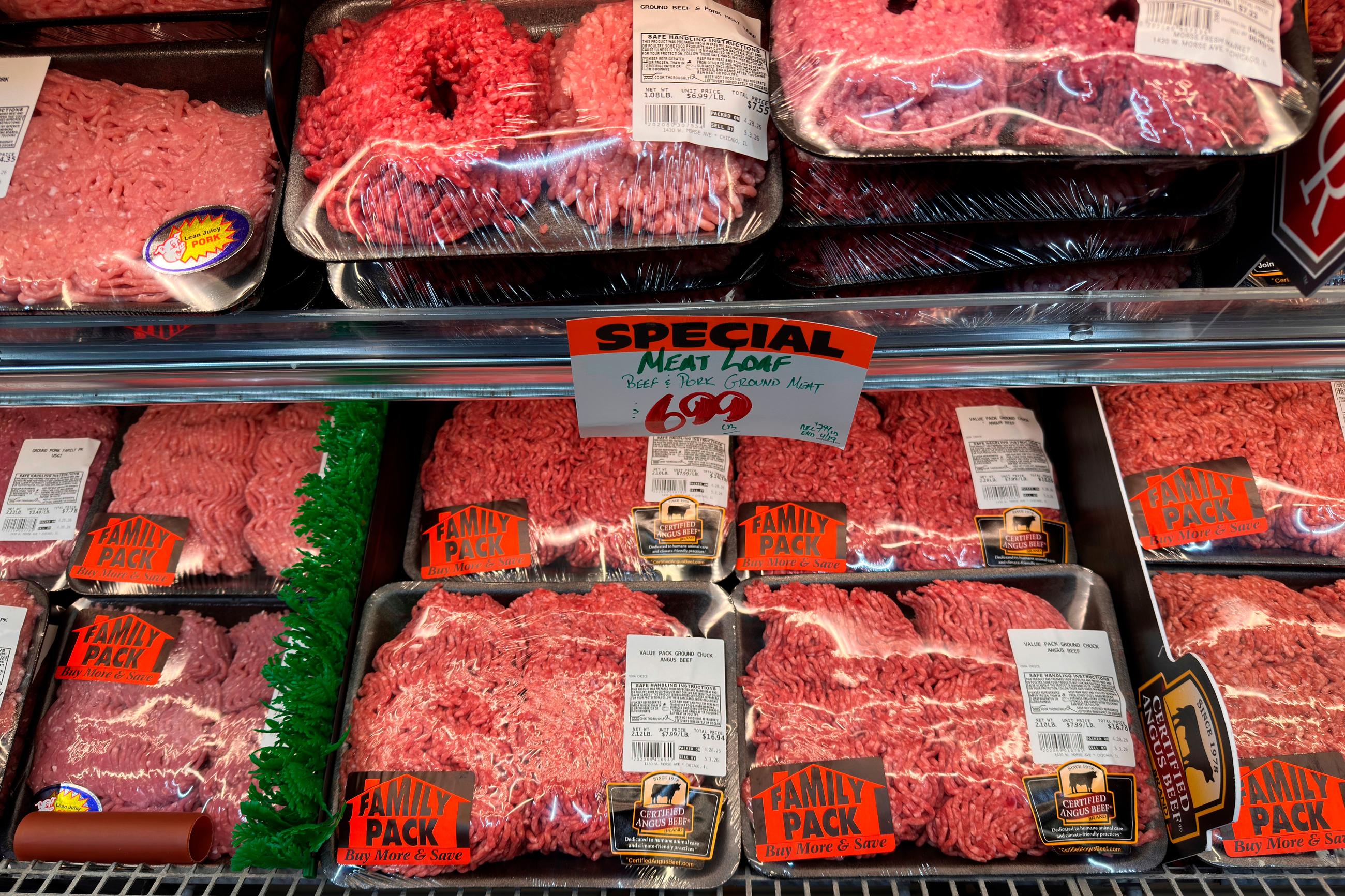
Beef and veal prices were up 12.9 percent over the year ending in May, thanks largely to a lengthy drought-driven contraction in cattle herds as well as tariffs that tend to limit foreign supplies. USDA predicted a 7.5 percent increase this year as consumer demand remains strong.
Coffee prices were up 17.5 percent over the year, as they were also affected by tariff-driven supply limits and bad weather. Instant-coffee prices were up 24 percent.
Fresh-vegetable prices were up 11.9 percent from May to May, though increases varied widely depending on the product. Potatoes bucked the trend, falling 0.6 percent.
Tomatoes were up 32 percent, despite a slight drop in May, largely because of weather-related problems and the federal government’s decision to reimpose tariffs on imports from Mexico, a major U.S. supplier.
Overall, USDA predicted fresh-vegetable prices bought at retail stores would go up an additional 7.7 percent this year.
Purdue and USDA did find some bright spots. Fats and oils were down 3.4 percent over the past year, while butter and margarine were off 7.1 percent.
The drop “reflects expanded biodiesel crushing generating soybean meal as a co-product, reducing feed costs and tempering vegetable oil prices at retail,” Purdue found.
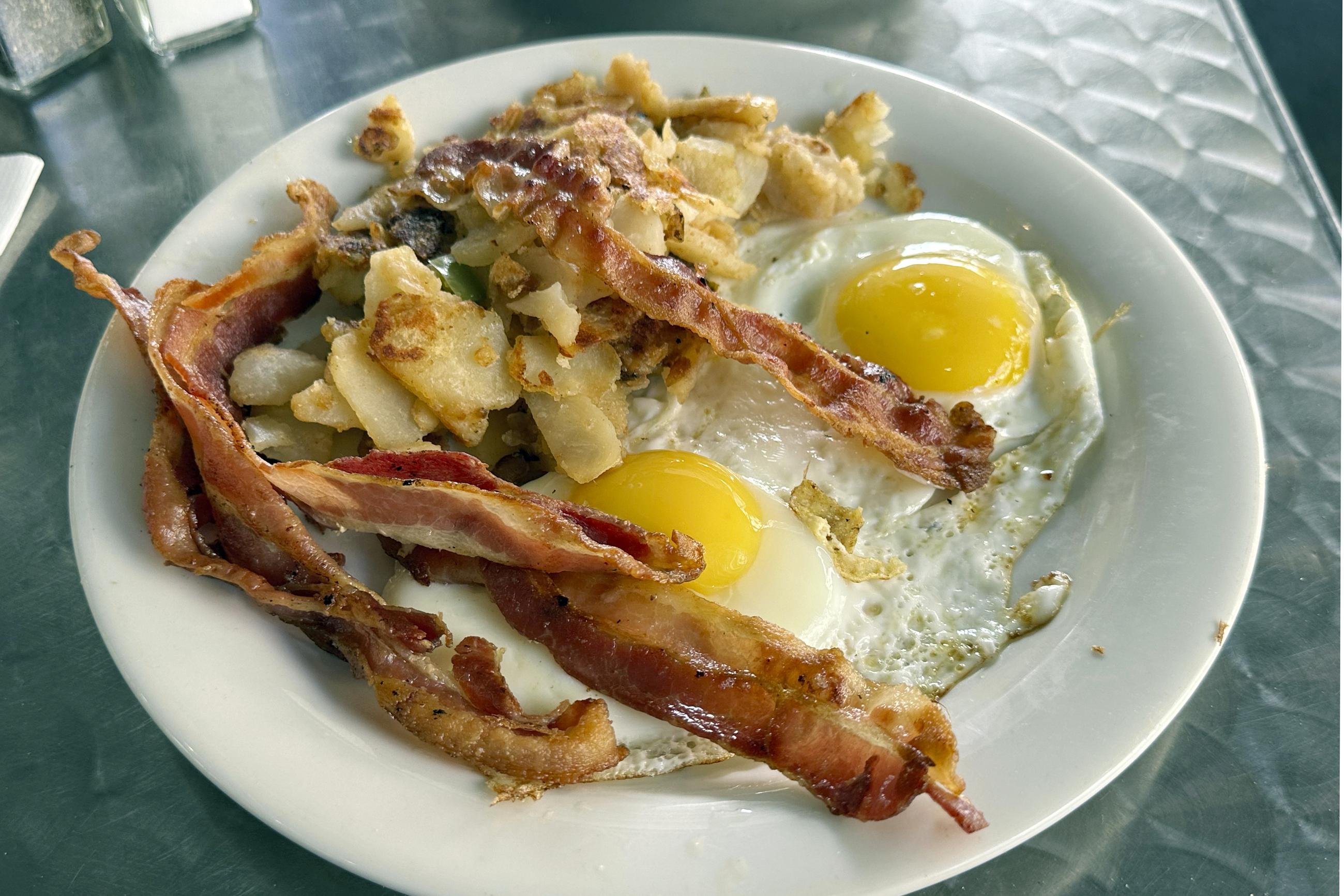
Also down year-over-year: dairy, cheese, and notably eggs, whose prices have declined 35.2 percent since last May.
It should remain a good year for egg lovers, USDA said, as there were fewer new avian-flu cases early this year. The forecast showed an overall drop in egg prices in 2026 of 30.4 percent.
But overall, Purdue found, “much uncertainty persists regarding how the economy will perform, including the trajectory of interest rates, inflation expectations, and the implementation of potential trade and immigration policies.”
The economy, trade policies, and weather, the analysis said, “will ultimately affect the performance of food prices over the course of the year. “
(AP Photo/Richard Drew)
None