National Journal Logo
×

Welcome to National Journal!

Enjoy this premium "unlocked" content until October 1, 2026.

Continue

Trump's disaster-preparedness pick attacked COVID measures, vaccines

These views could threaten Sean Kaufman's nomination to lead the Administration for Strategic Preparedness and Response.

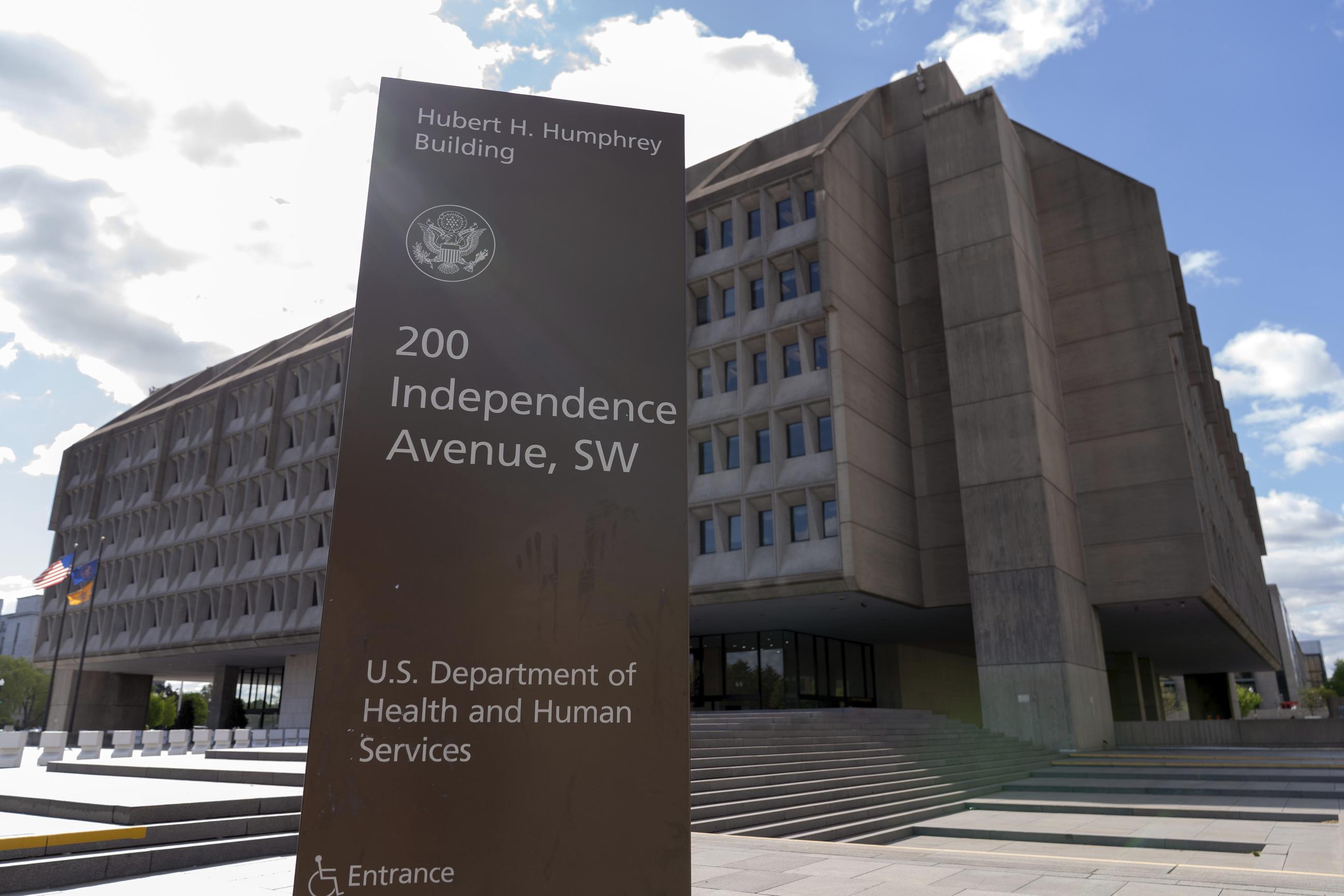
(AP Photo/Jose Luis Magana)
ASSOCIATED PRESS
Add to Briefcase
Nancy Vu
July 10, 2026, 8:29 p.m.

President Trump’s pick to lead the nation’s response to disasters and public health crises isn’t a big fan of some pandemic countermeasures—including vaccines.

Despite being a biosafety expert, Sean Kaufman has claimed that the COVID-19 vaccine caused “excessive death and injury in the United States and globally.” He also opposed pandemic countermeasures like mask and vaccine mandates, according to a review of past statements and videos by National Journal. As recently as 2022, he said getting a vaccine was a “personal decision.”

While running for a local school-board seat in Georgia in 2022, Kaufman was part of a slate of conservative candidates who preached a Make America Healthy Again-aligned ethos of “medical freedom” that advocated against vaccine, mask, and quarantine mandates.

Kaufman, the president’s nominee to lead the Administration for Strategic Preparedness and Response, would be in charge of an agency that coordinates the country’s medical response to public health crises, including bioterrorism and pandemic preparedness and disaster recovery.

The agency, one of 13 divisions within the Health and Human Services Department, is in charge of the Strategic National Stockpile, which provides emergency supplies like vaccines, ventilators, and personal protective equipment to areas that have become overwhelmed by public health emergencies.

Kaufman's views could lead to trouble for his chances of Senate confirmation. The Senate Health, Education, Labor, and Pensions Committee has scheduled his confirmation hearing for Wednesday. All Democrats and some Republicans on the panel have viewed vaccination skeptics warily.

Chairman Bill Cassidy is a liver doctor who has publicly gone toe-to-toe with HHS Secretary Robert F. Kennedy Jr. over his anti-vaccine rhetoric—and has frequently bucked the administration since he lost his primary to a challenger backed by President Trump. Kaufman is to appear before Cassidy's committee along with Trump’s pick to lead the Centers for Disease Control and Prevention, Erica Schwartz.

Other moderate Republicans, such as Sens. Lisa Murkowski and Susan Collins, have also been critical of Kennedy and other past nominees because of their vaccine skepticism.

The committee has 12 Republicans and 11 Democrats. If one Republican votes against Kaufman, then the nomination would be held up in committee and likely doomed.

“The reality is, I have always believed as a public health professional that no one has the right to make decisions for your body,” Kaufman said in a 2022 interview. “A vaccine is a personal decision. It is not something that someone says you do. It’s something that belongs between you and your doctor, your physician.”

Kaufman and a Senate HELP spokesperson declined a request for comment. HHS and White House spokespeople did not immediately respond to a request for comment.

Kaufman’s progression

Kaufman has an extensive résumé in public health emergency management and infectious-disease response.

With a master’s degree in public health from San Diego State University, according Kaufman's LinkedIn, he began his career at the CDC in the late 1990s, serving in various roles over the course of a decade, including as a health education specialist in the Office of Terrorism Preparedness and Emergency Response.

During his tenure, he supported and led on-the-ground responses to a number of infectious-disease outbreaks, including H1N1, Middle East respiratory syndrome, and Ebola.

Kaufman left the CDC in 2008, returning last year to serve as a senior adviser for Global Affairs. Between his first stint and the second, he started a business consulting clients on how to respond to infectious-disease threats.

These decades of experience in public health seem at odds with Kaufman’s more recent right turn into anti-vaccine rhetoric.

In 2022, Kaufman entered local politics in Georgia, running for a school-board seat in Cherokee County. He ran as part of a slate of four candidates looking to reshape the board with a more conservative leaning, a group dubbed “4CanDoMore.”

Earning the backing of the 1776 Project PAC, a national conservative group that has poured money into local school-board races, the group garnered attention for claiming that Cherokee schools had peddled pornography to students and supported Marxism in history classes.

His run for the local position came in the midst of the COVID-19 pandemic, as patients were receiving the first dose of the novel COVID vaccine and states were divided in their response to the national emergency. Cherokee County was one of the districts that forged ahead and reopened in August 2020 while larger school systems in other states opted to start the academic year online.

Kaufman meets MAHA

As the MAHA movement started to gain traction across the country amid pandemic chaos—with its followers advocating against vaccine and mask mandates, along with quarantine restrictions—Kaufman and fellow candidates echoed the movement’s message.

“What’s most important is individual freedom,” Kaufman said in an interview at the time. “When we start crossing a line and telling people that they've got to do things to make us feel more comfortable, where does that line end? And so I absolutely disagree with mask mandates, and I don't care if people are screaming and yelling at me.”

In the interview, Kaufman stated that he “hated CDC” despite having worked at the agency for nearly a decade, claiming that it was in a “crisis state.” At the time, the agency was under heavy scrutiny for its handling of the pandemic, as many people had issues with rapidly shifting guidelines and confusing public communication.

The four school-board candidates—including Kaufman—would go on to lose their 2022 election bids.

But Kaufman committed himself to the MAHA movement’s tenets questioning public health mandates, issuing expert testimony against the Biden administration’s mandatory workplace-safety rules in 2021 requiring businesses of 100 employees or more to be vaccinated, or agree to weekly testing and masking. The Supreme Court ruled against the regulation in early 2022.

Kaufman said that the COVID vaccine caused “excessive death and injury in the United States and globally.”

“The attorneys for [the Occupational Safety and Health Administration] argue that delaying the [emergency temporary standard] ‘would endanger many thousands of people and would likely cost many lives per day,” Kaufman wrote. “However, in all 490 pages of this document, there is not one single mention of the Department of Health and Human Services Vaccine Adverse Event Reporting System. … These injuries are permanent and life ending among low risk populations within the workplace.”

The statements were issued in a petition for review filed by The Daily Caller, alongside statements by now-National Institutes of Health Director Jay Bhattacharya and anti-vaccine activist James Lyons Weiler.

I was excited when I saw that his name was put forward, because I feel like we get the ‘real deal’ from a public health laboratory perspective. 
Scott Becker, Association of Public Health Laboratories, on Administration for Strategic Preparedness and Response nominee Sean Kaufman

An expert opinion

Many public health experts and former officials who reviewed Kaufman’s statements pointed out that VAERS—one of several different systems the CDC uses to monitor the safety of vaccines—is a screening surveillance tool that cannot be used to establish association or causation of “excessive death or injury” from shots.

Rather, scientists use VAERS to look for signals of harm and then test hypotheses looking for safety concerns.

Many of these experts, who spoke to the National Journal on the condition of anonymity in order to talk candidly about the nominee, expressed concerns about Kaufman’s past statements, questioning how these views would square with his approach to the job.

One former CDC official stated that the nominee was “singing from the COVID-conspiracy songbook.”

“It makes me concerned if he’s in charge of the Strategic National Stockpile and is in a position at some point when he needs to deploy a vaccine for public health purposes,” the former official said. “These aren't necessarily good signs that someone is going to full-throatedly be able to support emergency deployments of countermeasures if they seemingly don't really believe that there's a reason to deploy them in an emergency.”

One former HHS official who worked at the department for nearly a decade noted that while the nominee has a background in infectious disease and emergency response, there are still a number of questions about how Kaufman would approach the job given his views.

“I think that does get concerning because it affects how well you can prepare for the next pandemic, or how well you can prepare for the next threat out there if, just based on your experiences, you are making judgments about a particular class of interventions, like vaccines or particular policies related to mandates and closures,” the former official said.

At the same time, a number of experts who spoke to National Journal noted that Kaufman’s expertise in infectious diseases and on-the-ground experience in biosafety are strong points that can’t be overlooked.

Scott Becker, the chief executive officer of the Association of Public Health Laboratories, who has known Kaufman professionally for roughly a decade, spoke highly of his expertise and character, calling him “sincere” and “authentic.”

“I was excited when I saw that his name was put forward, because I feel like we get the ‘real deal’ from a public health laboratory perspective, and it's nice to also have someone in ASPR leadership who has practical on-the-ground experience and has actually been in labs and understands where risks might be,” Becker said.

Others argued that Kaufman has the right experience to lead the agency in charge of preparing for the next pandemic, and that his past statements show an alignment with the Trump administration’s approach towards COVID and vaccines under Kennedy’s leadership.

“This administration does take a different view of things, and I think unhappiness with the way that the COVID problem was addressed is part of their defining construct,” said Tevi Troy, a former deputy HHS secretary during the George W. Bush administration. “Whoever they pick for these jobs is going to be of that mindset. And then within people of that mindset, is this person individually qualified? It seems like he is generally qualified and knowledgeable about these issues, and he has a background at CDC.”

A different approach

Still, questions remain on how Kaufman will approach the job—and senators will have the chance to probe him during his joint hearing with the CDC nominee Wednesday. Since the beginning of the Trump administration, ASPR has gone without a Senate-confirmed leader for more than a year and a half, being led under Principal Deputy Assistant Secretary John Knox.

In the agency's time without a leader, the country has seen an uptick in measles cases, while the CDC has been handling international outbreaks of Ebola. ASPR and CDC just concluded their efforts to respond to a recent hantavirus exposure on a cruise ship.

Last year, Kennedy proposed a plan to largely consolidate the different agencies across HHS, including folding ASPR into CDC—a move that has yet to take place. Kennedy has also canceled roughly $500 million worth of contracts for the development of messenger RNA vaccines within the Biomedical Advanced Research and Development Authority, a center housed under ASPR.

Furthermore, the Pandemic and All-Hazards Preparedness Act—a law that allows HHS to prepare and respond to public health emergencies—is overdue for a reauthorization.

Funding for the law lapsed in 2023 after fiscal hawks raised concerns about the price tag. If Kaufman is confirmed as the head of ASPR, he would have to work with Congress to reauthorize the law.

Questions are also expected about how the agency is implementing an executive order that would shift responsibilities for hazard and disaster preparedness from the federal government to the states.

“We need this done sooner rather than later,” Becker said of the ASPR nomination. “We’ve had major responses. … I think the acting [leadership team] is doing fine. But there's a difference when you have a Senate-confirmed leader. They take the agency forward.”

Welcome to National Journal!

Enjoy this featured content until October 1, 2026. Interested in exploring more
content and tools available to members and subscribers?

×
×

Welcome to National Journal!

You are currently accessing National Journal from IP access. Please login to access this feature. If you have any questions, please contact your Dedicated Advisor.

Login