
Before President Trump returned to the White House, LGBTQ rights organizations were hoping for the best, but preparing for the worst.
“I'm excited to get the power that we need to get done the things that people need to have basic rights in this country,” Kelley Robinson, president of the Human Rights Campaign, told National Journal at the 2024 Democratic National Convention. At that moment, Democrats were cautiously optimistic after pivoting from President Biden to Vice President Kamala Harris as their nominee.
Even then, however, HRC was a year into a declared “state of emergency” for the LGBTQ community.
That began in June of 2023, in response to violence against and legislation targeting those in the LGBTQ community. Around the time the emergency was declared, more than 417 pieces of anti-LGBTQ legislation had been introduced in state legislatures across the country. Since then, more than 1,600 bills have made their way through the states.
Many of those were specifically anti-transgender measures; more than half of states and territories have banned gender-affirming care for minors and more than 20 passed bathroom bans in public schools. That surge in legislation has driven transgender Americans to vote with their feet.
A 2024 study from the Williams Institute at UCLA School of Law found that 48 percent of transgender adults have either relocated or are considering moving to a location within the country they view as more welcoming to transgender individuals. But these communities are reaching capacity.
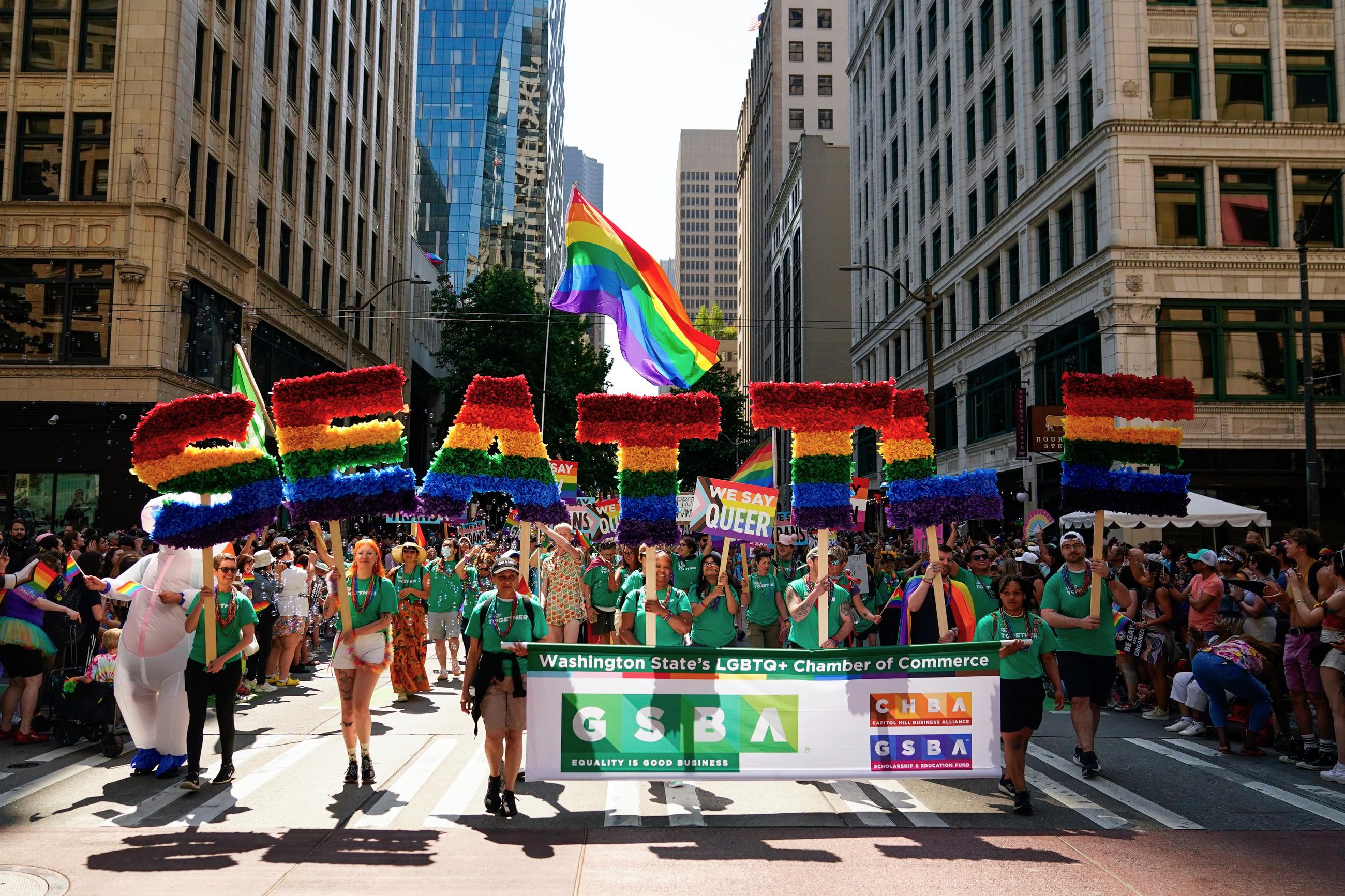
A recent Washington Post story dove into Seattle’s current headache: too many people, too few resources.
“Across the country, harmful legislation and increasing hostility have forced many people to leave their homes in search of refuge," the Seattle LGBTQ Commission posted to social media. "Seattle is already seeing the impacts, and our community organizations and support systems are being asked to meet growing and increasingly complex needs.” The post was accompanied by an official letter asking Mayor Katie Wilson to declare a civil emergency.
Seattle’s organizations can’t handle the large influx of those seeking refuge in the city. A civil emergency would free up money to create a program specifically helping those who fled to Seattle.
These problems are not unique to the Pacific Northwest. LGBTQ nonprofit organizations across the country have felt the strain due to increased demand and decreased funding.
One of former New York City Mayor Eric Adams’s final acts in office was to release $2 million in emergency funding to a handful of organizations within the city serving the transgender community, in an attempt to counter federal budget cuts.
“With this announcement of $2 million in emergency relief to providers who serve transgender, gender nonconforming and gender nonbinary New Yorkers, we are putting our money where our values are and stepping up to serve those who need our care,” Adams said when announcing his decision late last year.
The president’s backyard of Washington, D.C., hasn’t declared an emergency for LGBTQ organizations, but early last month the D.C. Council conditionally approved a budget that increases the number and size of grants the Mayor’s Office of LGBTQ Affairs provides for organizations serving the LGBTQ community.
“The legislation arrives at a critical moment, as LGBTQ-serving organizations face unprecedented uncertainty. Growing demand for services is colliding with shrinking resources, federal attacks on LGBTQ programs, and ongoing threats to local funding streams,” the D.C. LGBTQ Budget Coalition said in a statement.
But cities freeing up funding specifically for LGBTQ organizations are rare. In a political climate in which LGBTQ Americans feel increasingly singled out by policies in red states, like Kansas’s recent move to revoke driver’s licenses for transgender residents, advocates have to pick their battles.