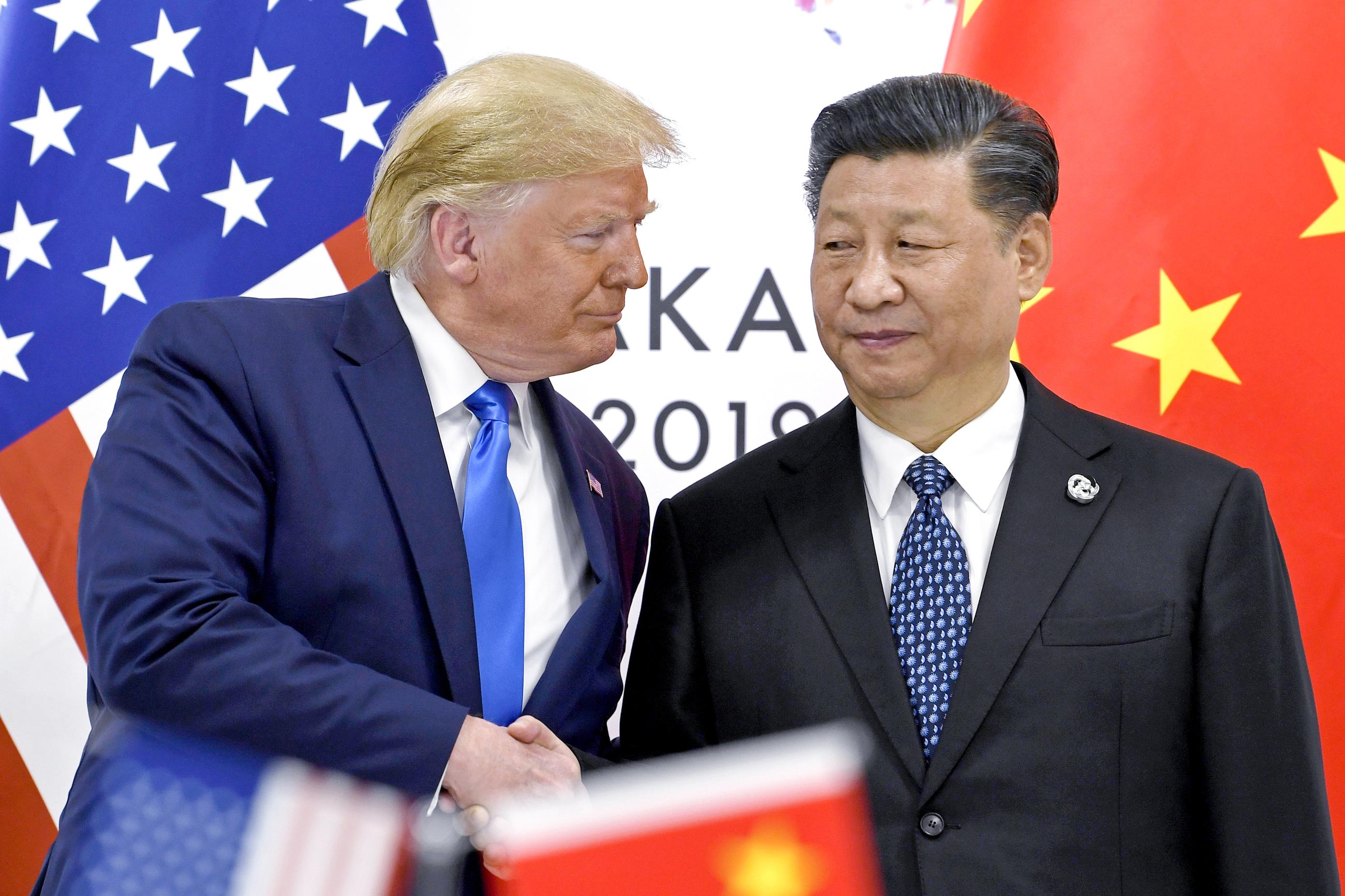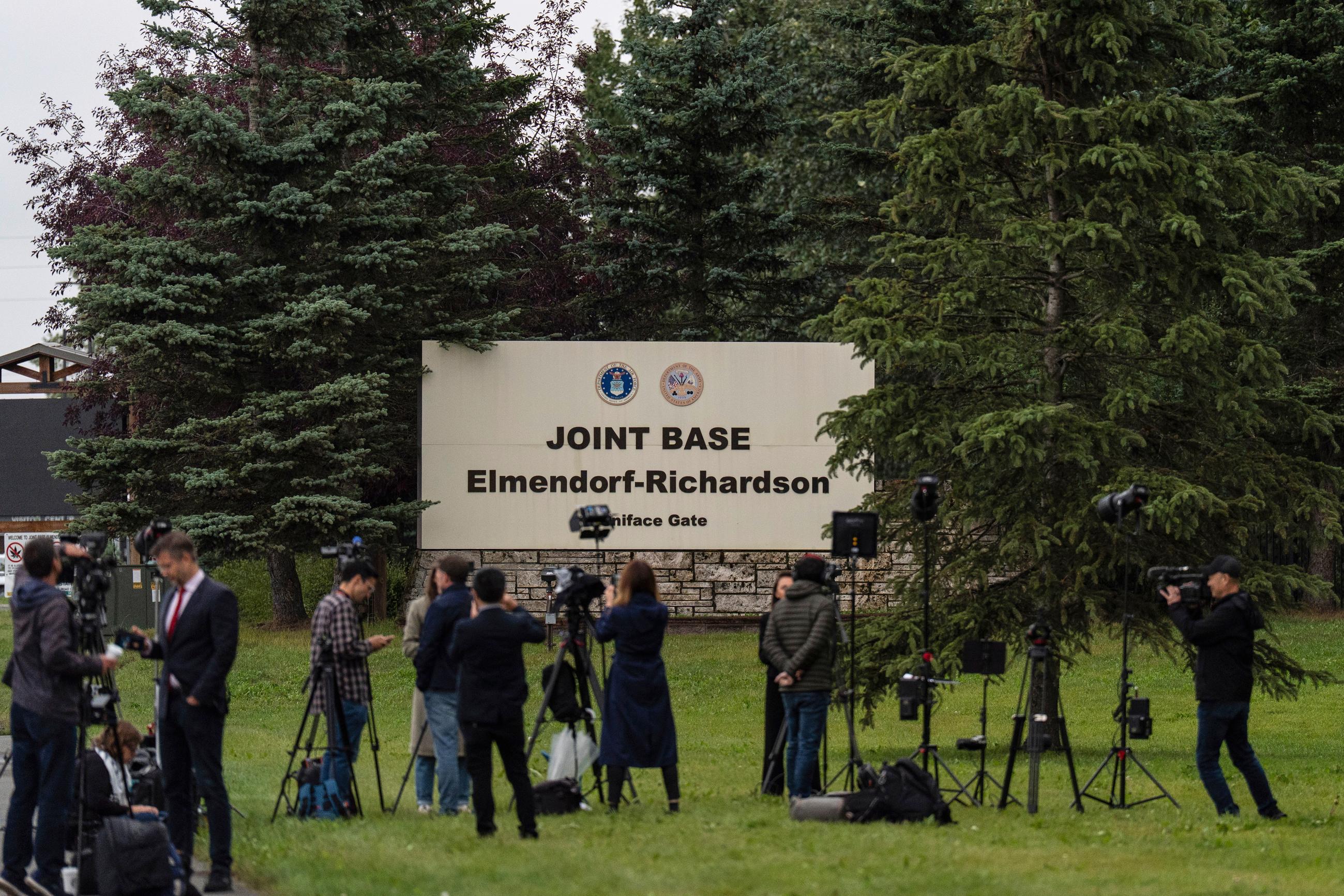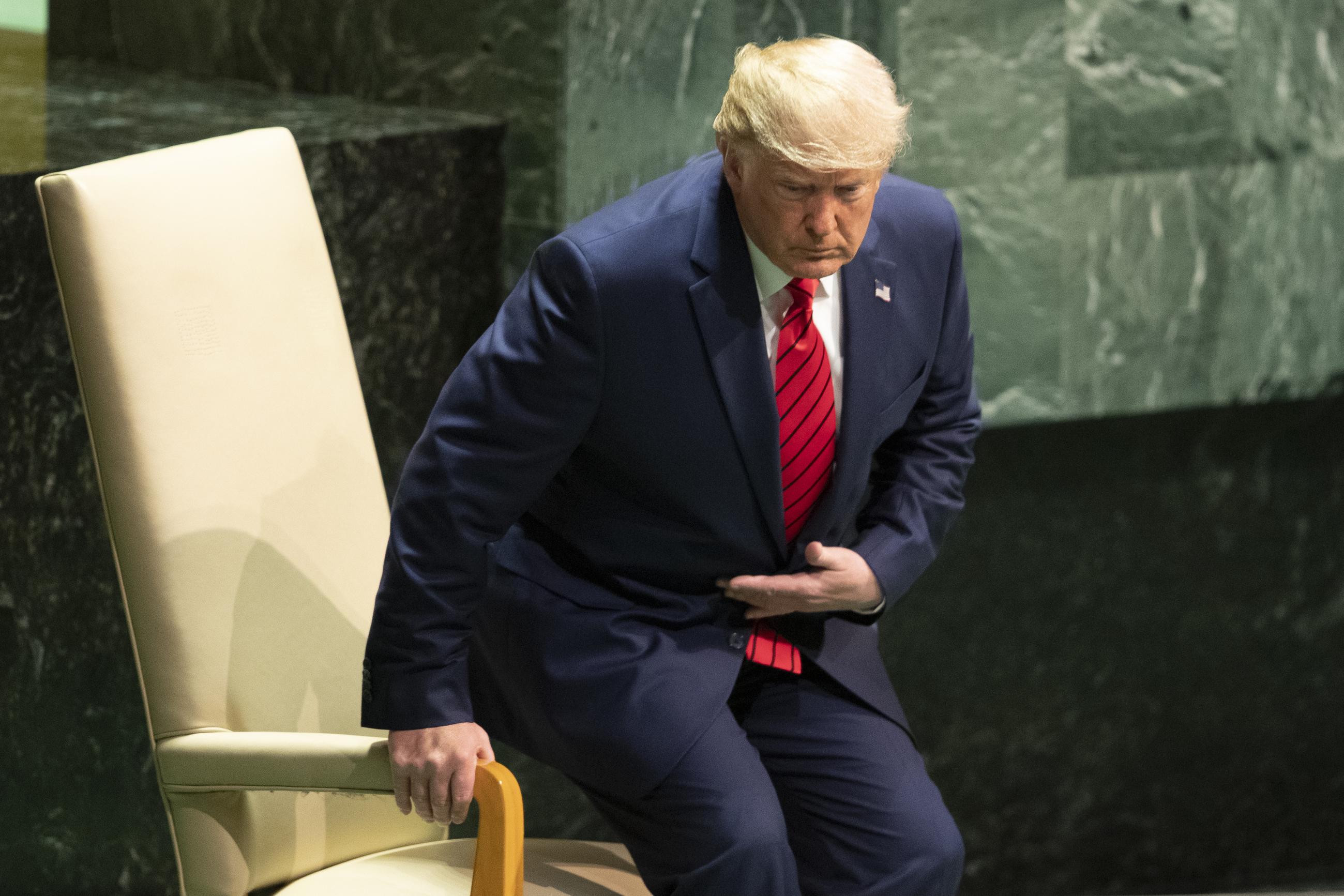
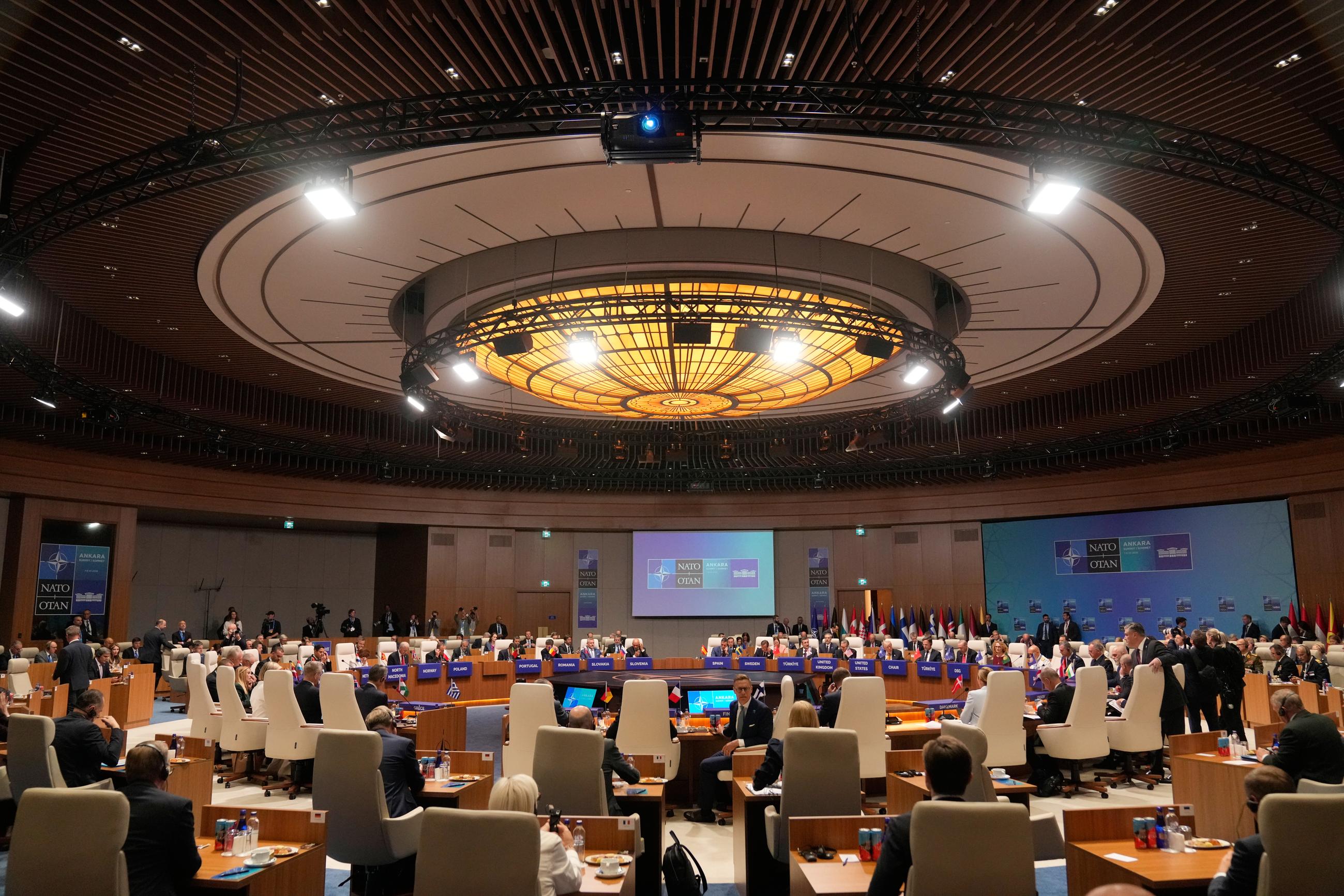
A NATO summit that on Tuesday appeared doomed to end in dissension and disarray miraculously concluded on Wednesday in elation, exhilaration, and effusive talk of a freshly united alliance. No leader seemed more buoyant than President Trump, who came to Ankara questioning whether NATO should exist and spent his first day grousing about the other leaders not carrying their weight, threatening to pull American troops out of Europe, again demanding Greenland, and pointedly asking, “Why are we spending hundreds of billions of dollars and they’re not there for us?”
That was Tuesday. On Wednesday, all seemed forgiven. “We just concluded a very successful NATO summit here in Turkey,” Trump exulted in a closing press conference. “I just want to say there was tremendous love in that room.” The other leaders, so often bashed by Trump, now drew his praise. “It’s too bad the press couldn’t have seen what we were doing in that room, because it was very smart people.”
He added, “They have a lot of good in their heart—not evil, good. And they’re doing a great job for their country. The world is doing well.”
For Trump, the fifth time was the charm. The three NATO summits in his first term as well as the one last year all ended in rancor amid the president’s denunciations of the alliance and the other leaders for not spending enough on defense and relying too heavily on Washington’s largesse.
In a Truth Social post last Thursday, Trump declared: “Ridiculous for the U.S.A. to continue along this one sided path when the relationship is not reciprocal. They were not there for us!!!” On Sunday, the day before he departed for Turkey, he mocked Italian Prime Minister Giorgia Meloni, insinuating that she was stalking him.
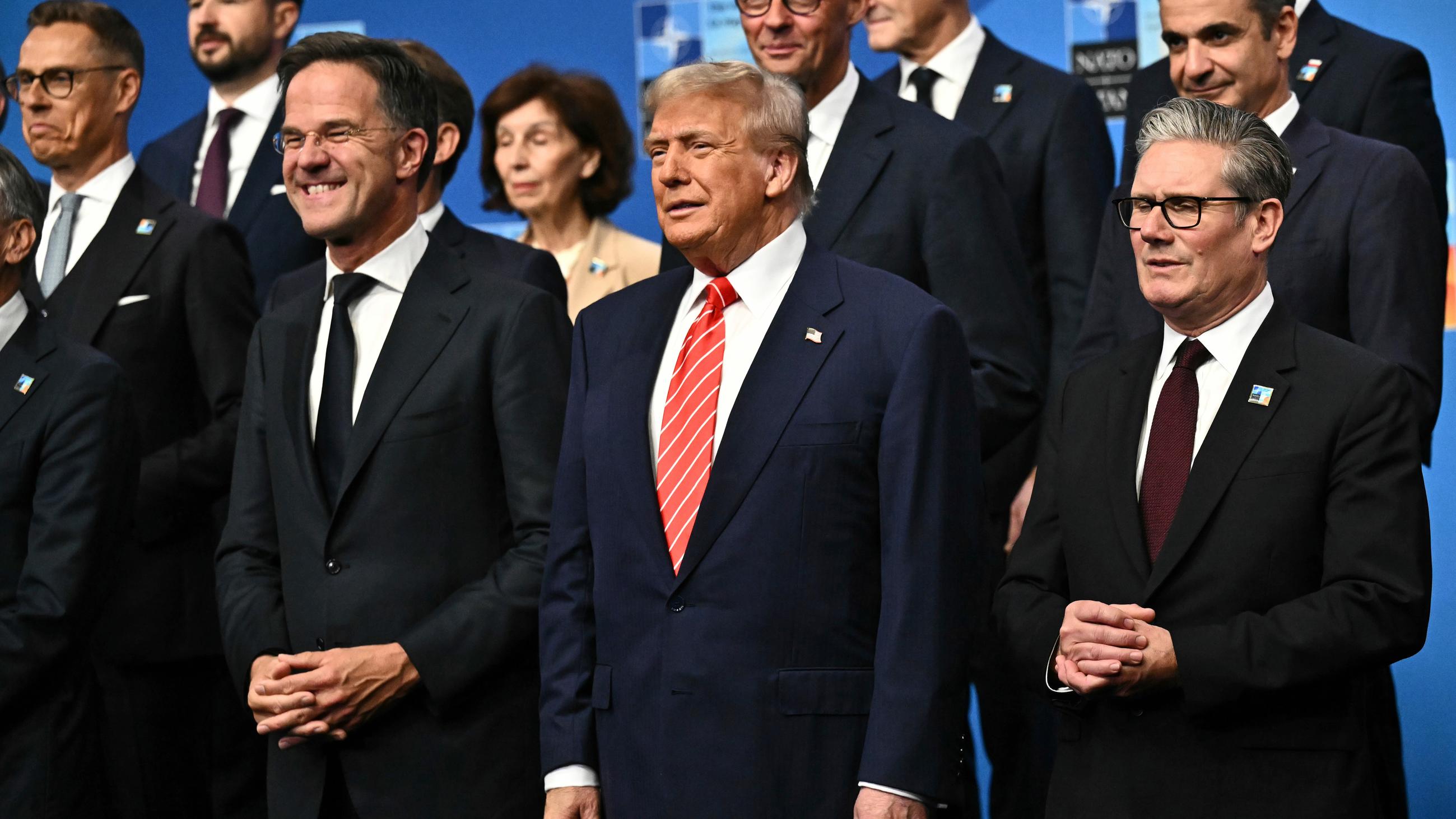
With that backdrop, few were prepared for Trump’s ebullience at his press conference.
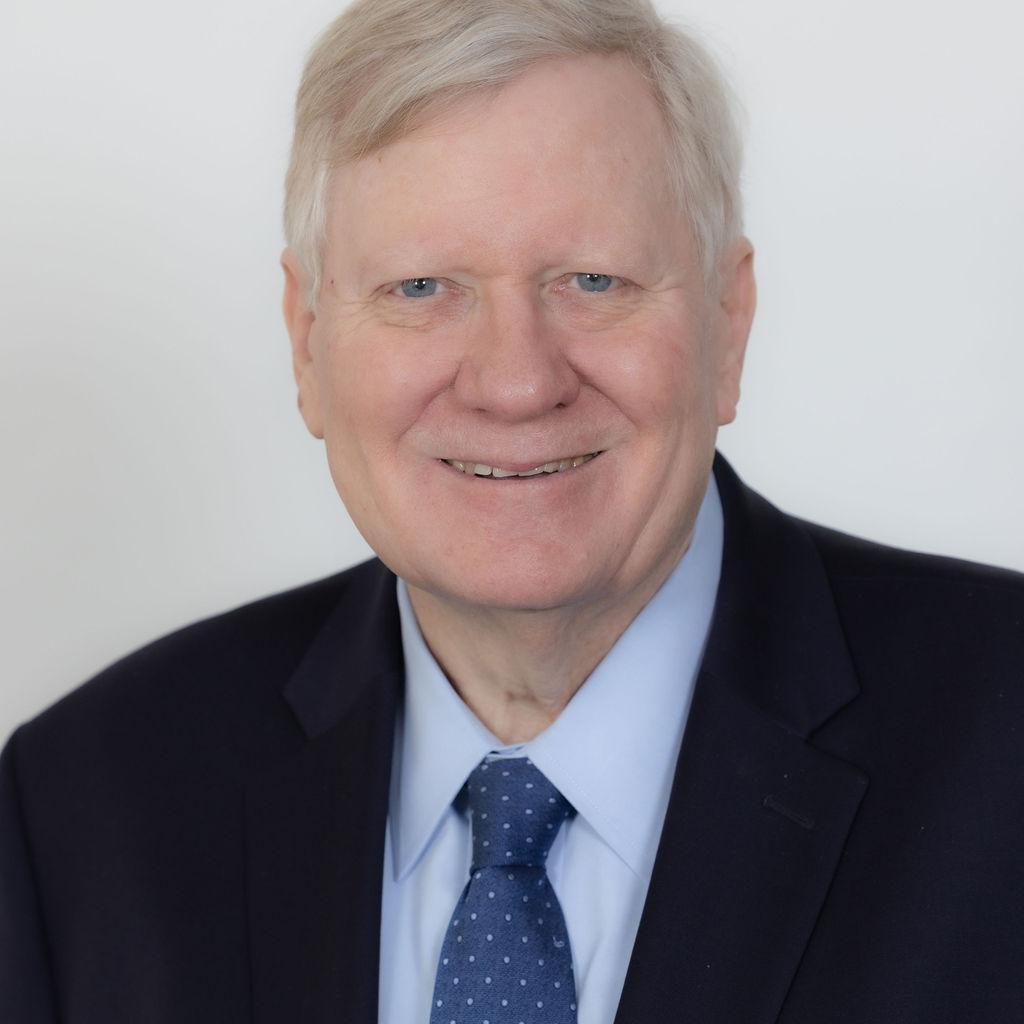
“This is whiplash if I ever saw it,” said Bradley Bowman, senior director of the Center on Military and Political Power at the Foundation for the Defense of Democracies. Bowman said he's learned that with Trump, “if you don’t like something you’re hearing, stick around 24 hours and it might change."
"It’s not exactly the way to run a country, but I’ll take it for now.”
Max Bergmann, director of the Europe, Russia, and Eurasia Program and the Stuart Center in Euro-Atlantic and Northern European Studies at the Center for Strategic and International Studies, was braced for a bad outcome after watching the first day. “Trump starts it off and tells everyone off, and at the end he praises everybody,” Bergmann said. His explanation? “Because everyone was nice to him.”
Bowman had a similar assessment. “There was a lot of fingernail-biting by Europeans going into this,” he said. “In his initial comments, he was kind of going through the greatest hits of the worst possible things an American president could say. But in this press conference at the end, it was quite a different tone.” The reason for the change, he said, seemed to be “a lot of compliments to President Trump that allowed him to set aside some of the perceived grievances and to recognize the truth."
"And the truth is that NATO is a grand strategic asset for the United States.”
The stark contrast with all of Trump’s previous NATO summits came after the other allied leaders changed their approach to the volatile American president. “It’s fair to say that world leaders have learned how to communicate with President Trump, and that approach often features flattery, and it seems to work,” Bowman said.
The president did not dispute that he enjoys the flattery: “If you could have seen the respect and love in the room—and it’s love, really for the country. … I don’t want to say me, because you’ll say, ‘Oh, he’s so conceited; he’s such a conceited person.’ But they do … like the job I’m doing.” He added, “They said, ‘We love—sir, we love you.’ These are grown people saying that. Isn’t it nice? Maybe. I don’t know. Maybe they’re trying to get to me. And in a way, they did, because there was tremendous unity in that room.”
With the flattery came a dash of the ceremonial flourishes that Trump so enjoys. He was enchanted from his first step off his new, Qatari-gifted Air Force One. “From the moment we got off the plane,” he said, “the airports were beautiful. They built a new terminal for our arrival. Everything was beautiful.” He effusively thanked Turkish President Recep Tayyip Erdoğan for naming a building at the airport after him: “To have a building named after me, I was very happy about that.”
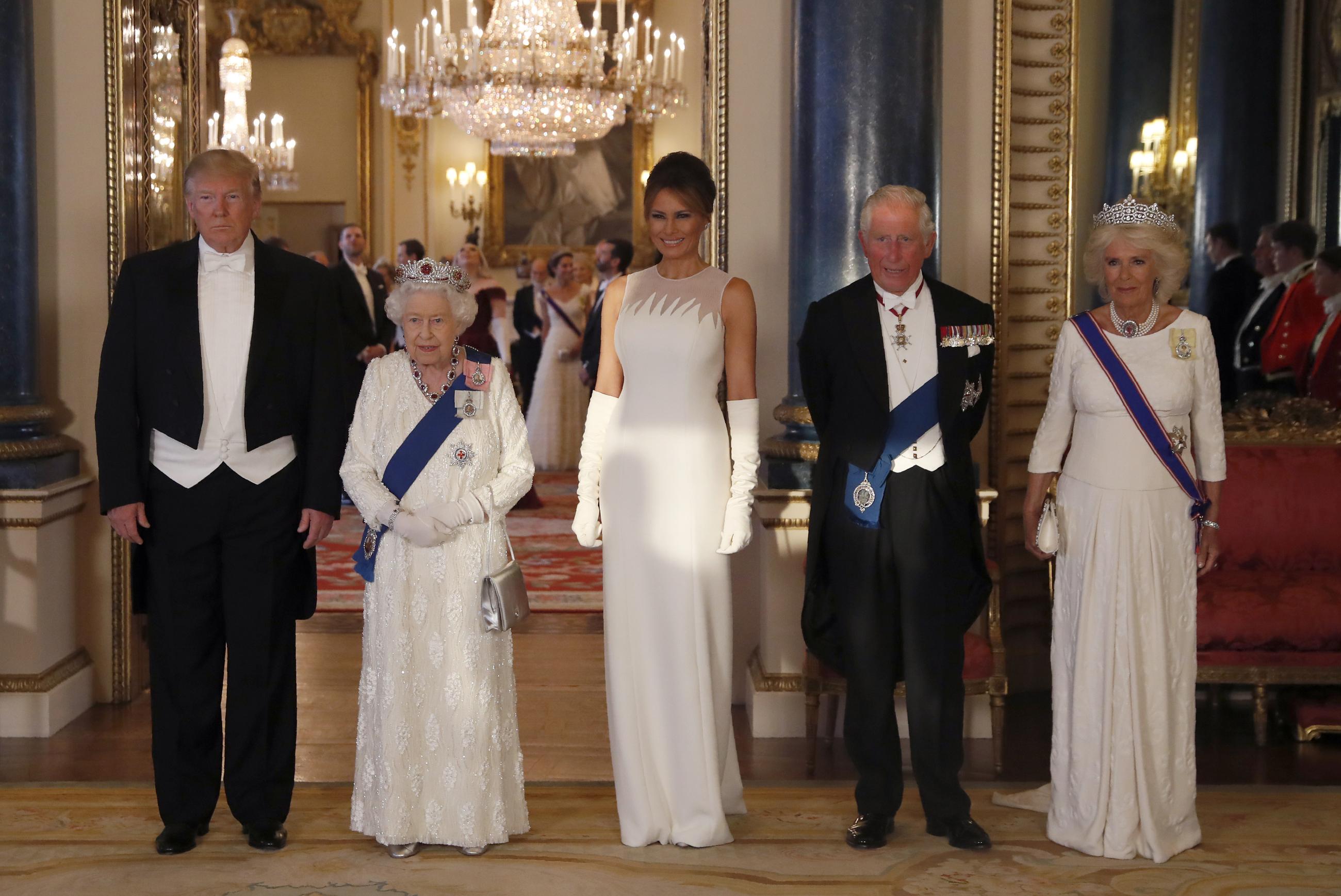
He was further pleased when Erdoğan pulled out the stops to welcome him—with soldiers dressed as Ottoman warriors in suits of armor and pointed helmets, riders on horseback to escort his limousine, and a reception at a marble palace.
His mood brightened by the flattery and the pomp, Trump participated in a summit that exceeded expectations by almost every account. “This was a remarkably good NATO summit,” said Kurt Volker, who was President George W. Bush’s ambassador to the alliance. “President Trump and Secretary General [Mark] Rutte should each be taking a victory lap.”
Bowman praised the emphasis on increasing defense-production capacity and speed, and was encouraged by the president's acknowledgement that Europe is spending more.
Bergmann agreed: “The announcements that were made on the defense-industrial side were really quite impressive. And what’s notable about them is that most of the major significant ones are Europeans working together as Europeans to buy European systems to reduce their reliance on the United States.”
As relieved as the allies were to leave Ankara without a Trump-induced blowup, they are not eager to test their luck again next year. With no public announcement, they quietly scrapped plans to meet in 2027. The summit declaration concluded with a bland message: “We look forward to our next meeting.” In contrast, the declaration after last year’s summit at The Hague concluded, “We look forward to our next meeting in Türkiye in 2026 followed by a meeting in Albania.”
Since it is unlikely there would be a summit in a presidential election year in the United States, that could mean Trump has just attended his last NATO gathering. It is what Bergmann had been expecting. “Before, I thought there shouldn’t be another summit—'NATO has survived the Trump administration. Just take the win and get out,'” he said. “I think that is how the leaders are thinking about this. I think it’s how the Trump administration is thinking about it, too.”
That was his view on Tuesday. But, like so much that happened in Turkey, Bergmann was looking at it differently on Wednesday. “There were a lot of big significant announcements,” he said. “I have to say there’s definitely some utility in what just happened.” It’s the difference 24 hours can make.