

In 1972, Democratic presidential nominee George McGovern and his campaign staff descended upon Custer, South Dakota, for what they hoped would be a restful strategy retreat before a grueling campaign kicked off in earnest.
The lodge’s “good vibrations,” as The Washington Post put it, were shattered when news reports revealed that McGovern’s running mate, Sen. Thomas Eagleton of Missouri, had been hospitalized several times for depression and undergone electroshock therapy. At first, McGovern stood by his man, but concerns over Eagleton’s readiness to take over the presidency only grew.
“DO YOU WANT NUT FOR VICE PRESIDENT. DROP EAGLETON,” a telegram addressed to McGovern read, according to a 1973 chronicle of the campaign, The Boys on the Bus.
A few days later, McGovern acceded to pressure and removed Eagleton from his ticket. The embarrassing episode contributed to McGovern's landslide defeat months later.

Eagleton's story has long stood as a cautionary tale for politicians worried about what revealing a mental illness could mean for their political aspirations. But more than half a century since Eagleton’s defenestration, such disclosures have nonetheless become more common.
Rep. Ritchie Torres, Sen. Ruben Gallego, and Sen. John Fetterman have opened up about their struggles. Fetterman announced his depression diagnosis soon after taking office in 2023 and then spent six weeks in inpatient care.
This week, Rep. Tom Kean Jr. returned from a nearly four-month absence from Congress. His office cited an unspecified “medical issue.” His leave was not forewarned, and though his staff repeatedly said he would be back “soon,” weeks turned into months. The vagueness and duration of his disappearance sparked intense speculation, and reporters scoured the East Coast for a hint of the New Jersey Republican.
Kean broke his silence in a House floor speech on Tuesday, revealing that he had been hospitalized for depression. The vague timeline, he said, was the result of the fluid nature of recovery, but he said he was now back “healthier, stronger, and excited to return to the work I love.”
“When people hear the word 'depression,' many think it simply means feeling sad,” he said on the floor. “But depression is so much more than that. It is physical. It is emotional. Until you experience it yourself, it is difficult to fully understand how powerful this illness can be.”
Some believe more played into Kean’s silence than the stigma around mental illness. Kean, the son of a beloved former governor, has always been considered quiet, even back in his days in the New Jersey Legislature. He rarely sits for interviews and declines to interact with reporters in congressional hallways, even at the risk of creating awkward moments.
“It's two separate issues,” said Micah Rasmussen, the director of the Rebovich Institute for New Jersey Politics at Rider University. “Not just the stigma, but also the general sense of privacy of somebody who would rather chew their own arm off than talk about themselves.”
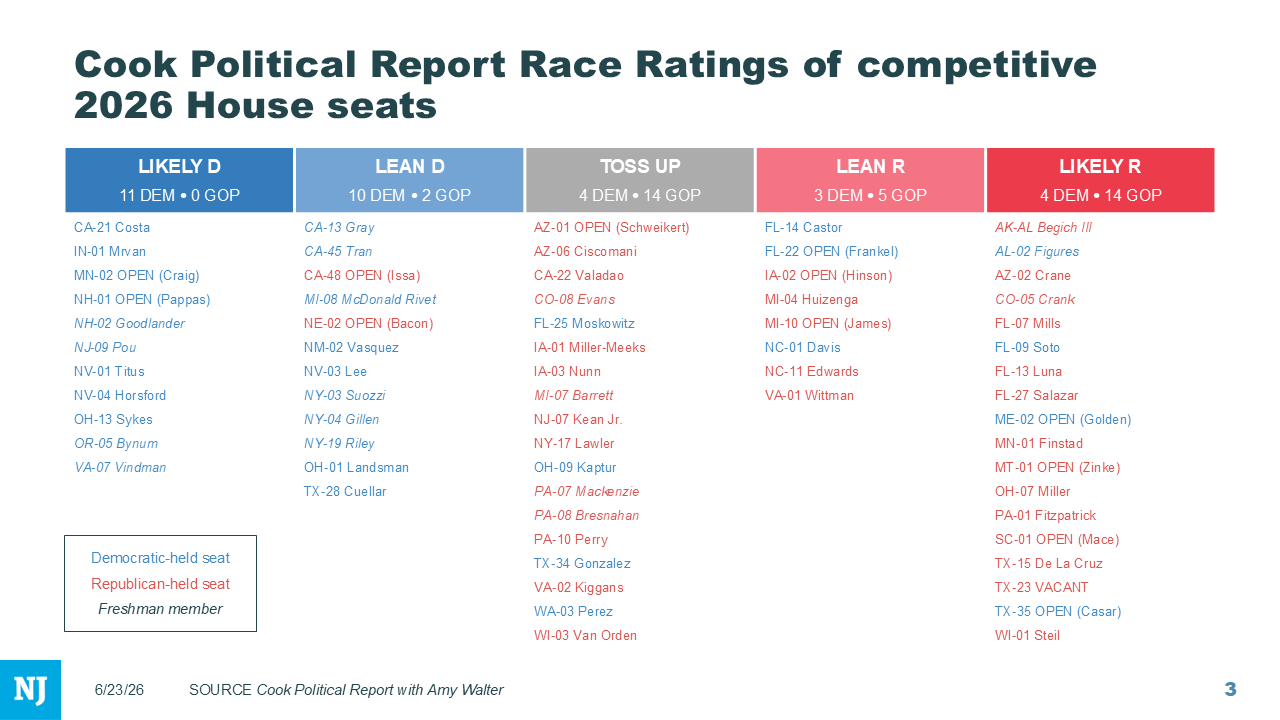
Another complicating factor: Kean’s reelection campaign is expected to be among the nation’s most competitive races this fall. Rebecca Bennett, a former Navy helicopter test pilot, won the June Democratic primary and has been considered a serious threat to win Kean’s seat since she launched her campaign last year.
Now, Kean’s disclosure has sparked a bizarre dichotomy in his campaign for reelection: His absence put a national spotlight on the race, but not one that either nominee can smoothly turn into political points.
“I am relieved that Congressman Tom Kean Jr. is well and continue to wish him good health,” Bennett said in a statement after Kean’s announcement. “But let’s be clear: I got into this race because Tom Kean Jr. was failing our community long before this absence.”
Kean seems to acknowledge that, whether he likes it or not, his depression is part of his congressional story. On Wednesday, he introduced legislation that would allow the Labor Department to investigate insurance providers with inadequate mental health coverage.
The congressman hasn’t specified what additional recovery he may need or whether he’s at risk for further complications. Though Kean prefers his privacy, it’s up to voters to decide whether his explanations satisfy them. Steep partisanship makes it unlikely that large swathes of Republicans will waver, but narrow margins can make the difference in a toss-up race.
Fetterman, who was relatively open in the lead-up and aftermath of his diagnosis, hasn’t discussed Kean’s announcement, but he has expressed some regret over opening up about his own mental health—especially as his popularity among Democrats has cratered.
“My doctor warned years ago: After it’s public that you are getting help for depression, people will weaponize that,” Fetterman told The New York Times. “Simple things are turned. That’s exactly what happened.”
Kean, fighting for another two years in Washington, will have to find his own balance.