July 1, 2026, 6:40 p.m.
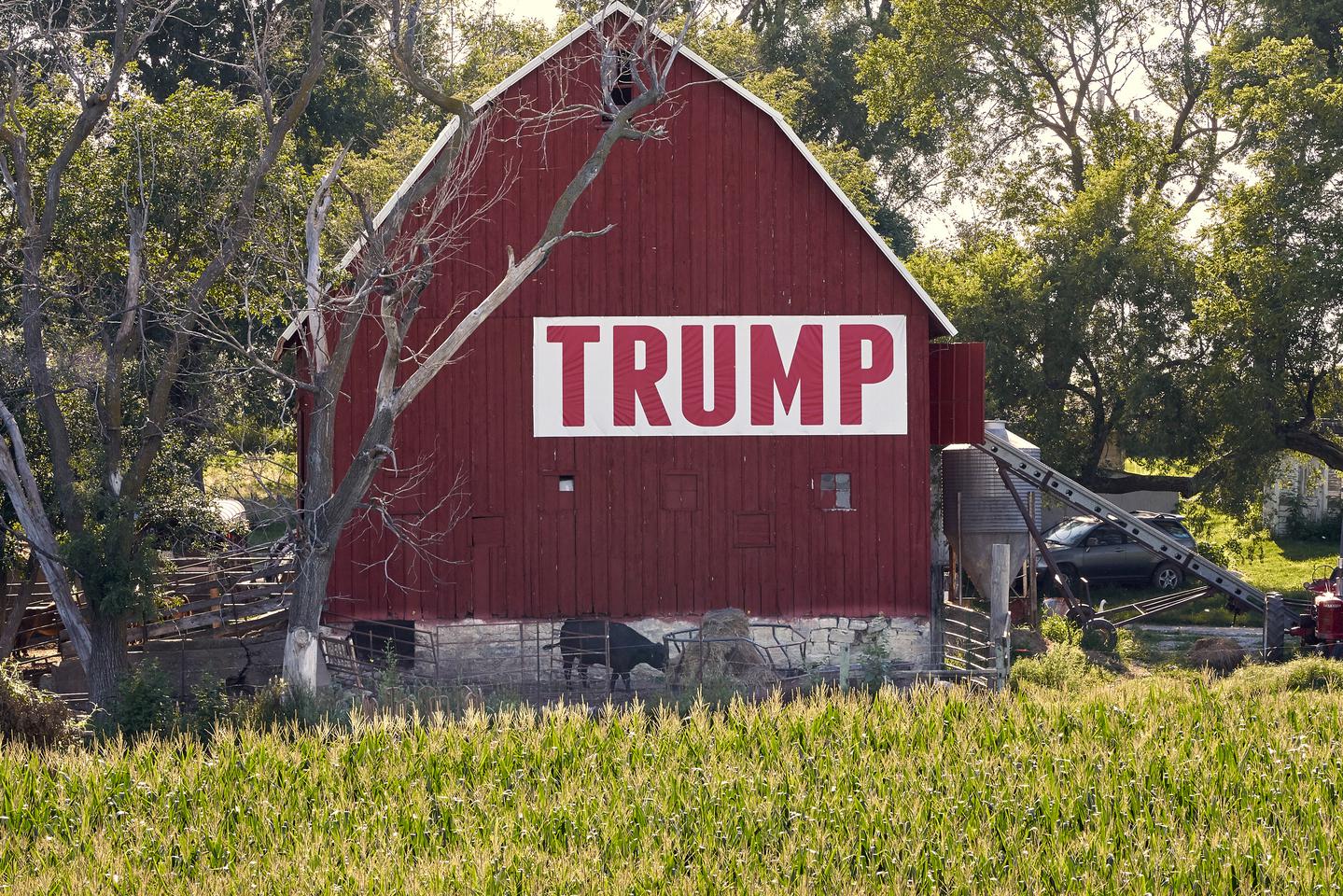
Over a year of economic strain on farmers is testing Republicans’ dominance in agricultural communities, particularly in rural states that could decide the balance of power in the Senate.
From increased fertilizer prices to elevated fuel costs following President Trump’s war in Iran, America’s agriculture workforce is navigating a barrage of obstacles, amid a slew of farm bankruptcies across the country.
Farmers could play a crucial role in the most competitive races on the Senate map, from Democratic-held seats in Georgia and Michigan to GOP-controlled seats in Iowa, North Carolina, Ohio, and Texas. The agricultural voting bloc isn’t expected to swing heavily toward Democrats this fall, but a tough economic environment could spur some farmers to rethink their voting habits.
“I don't think either party from a brand perspective has particularly high regard from farmers,” said Michael Amato, founder of Amato Advisors and a former Agriculture Department official in the Biden and Obama administrations. “It’s about how these individual candidates show up, because farmers do not feel like people in D.C. are listening, they don't feel like they have advocates in D.C., and they don't think that elected officials understand what it's like to be a farmer right now.”
A survey commissioned by Amato Advisors and conducted by Farm Journal in April found 54 percent of farmers saying they were more motivated to vote in the midterms than in the last cycle. The poll also found that 39 percent of farmers could be persuaded not to back their usual party in November, including 35 percent of farmers who "usually vote" Republican and 15 percent of farmers who "always vote" Republican.
“Do they not show up? Do they vote a different way? Do they vote third-party?” Amato said. “I think there’s a bloc of that four-tenths of farmers who have demonstrated real frustration and are willing to do something different.”
Democratic Senate candidates argue that Republicans in power are to blame for the agriculture industry’s economic strain, citing Trump’s aggressive tariff policy, the Iran war, and Department of Government Efficiency-led workforce reductions at USDA. Republican candidates are largely standing behind the president’s policies, calling attention to his aid proposals and to gradual decreases in gas prices.
“Farmers are very proud people,” former Democratic Rep. Bob Etheridge of North Carolina told National Journal. “But I can tell you this much: They know what's happening to their pocketbook and know what's happening to their communities and know what's happened to their neighbors. And these farmers are saying to me they have been bitten twice; they aren't going back to that same place again.”
Ground zero for Democrats’ pitch to disaffected farmers and agricultural communities is Iowa, the center of the political universe this year. In 2024, Trump garnered 73 percent of the vote in the state’s high-farming-concentration counties while he won 56 percent of the statewide vote. Since then, Hawkeye State farmers have navigated higher input costs amid the president’s tariffs.
“Farmers spend their time and make their investments of building these relationships with buyers overseas,” Iowa Farmers Union President Aaron Lehman said. “But all that effort goes for nothing if our trade policy is completely haphazard.”
I don’t see this as a massive realignment and that farmers are going to vote for Democrats. I see cracks in the wall, and in a way that I wasn’t entirely expecting. ”
—Michael Amato, former Agriculture Department official
Rep. Ashley Hinson, the GOP’s Senate nominee in Iowa, is attempting to strike a balance between supporting the president’s judgment on trade and advancing agricultural legislation in Congress, including a proposal for year-round access to E15 gasoline and an updated farm bill. Both bills remain stalled at the moment.
One of the issues holding up the farm bill is Hinson's Save Our Bacon Act, a measure included in the House version of the farm bill that would override certain state and local animal-cruelty laws. The measure did not make it into the Senate's version of the farm bill, and it has proved divisive within the industry. Hinson faces $2.6 million in attack ads from the American Meat Producers Association over the Save Our Bacon Act, according to the nonpartisan ad-tracking firm AdImpact.
“Iowa farmers know that Ashley has their backs because she has delivered for agriculture, and she will continue that record of success in the Senate,” Hinson campaign communications director Billy Fuerst told National Journal in a statement.
Hinson’s opponent, Democratic state Rep. Josh Turek, is slamming her over Congress’ inaction. A Turek spokesperson told National Journal that the Democratic nominee “will champion legislation that allows Iowa farmers to compete, including passing nationwide, year-round E15, sponsoring a Right to Repair bill, cracking down on monopolies, and committing to pass a damn Farm Bill.”
In North Carolina, the third-most-diversified agricultural state, former Democratic Gov. Roy Cooper is focusing his agricultural pitch on the tariffs’ effects on farmers as aims to flip an open Senate seat. Cooper has held several roundtables as part of his “Make Stuff Cost Less” tour to hear directly from North Carolina farmers on the Trump tariffs.
“Rural Nash County native Roy Cooper grew up working on the farm every summer and is running for the United States Senate to stop the chaotic tariffs, repair and develop agricultural trade agreements and make stuff cost less for farmers and North Carolina families,” a Cooper spokesperson told National Journal in a statement.
Cooper's opponent, former Republican National Committee Chairman Michael Whatley, supports the president’s trade efforts, saying that the administration’s tariff policy is “record-setting in terms of its effectiveness.”
In Georgia, GOP Rep. Mike Collins is aiming to unseat Democratic Sen. Jon Ossoff, who’s known for his constituent services, by calling attention to his own farmer-focused legislation in Congress. A Collins spokesperson told National Journal that “Ossoff sided against Georgia's farmers and voted to shut down the government to provide healthcare to illegal immigrants while delaying millions of dollars in Hurricane Helene relief.”
In Texas, the New World screwworm made a surprise entrance during a contentious Senate campaign. The parasite was confirmed in a calf last month in La Pryor, Texas, the first such case in 60 years, posing a threat to the nation’s cattle industry.
Texas Attorney General Ken Paxton, the Republican Senate nominee, told National Journal in a statement that he’ll work to “ensure our ranchers have the resources they need to combat threats like the New World Screwworm,” adding that he’ll work “closely with the farming and agricultural communities across our state to address the challenges they continue to face.”
Congressional Democrats have raised concerns that the USDA staff cuts caused a delayed response to the screwworm, something Agriculture Secretary Brooke Rollins denies. Democratic state Rep. James Talarico, Paxton’s opponent, called on the USDA to be “fully staffed” to resolve the issue.
With these issues top of mind, farmers’ political power could play an important part in deciding Senate control for the remaining two years of Trump’s term, even if shifts happen at thin margins.
“I don’t see this as a massive realignment and that farmers are going to vote for Democrats,” Amato said. “I see cracks in the wall, and in a way that I wasn’t entirely expecting.”