July 1, 2026, 7:49 p.m.
When the allies gather with President Trump next week in Turkey for a NATO summit, they’d be happy with a little boredom. After the fireworks ignited by the American president at his previous allied summits, though, that may be asking for a lot.
Particularly at the three NATO summits he attended in his first term, the president was less the unquestioned leader of what has been the most successful alliance in world history than the grumpy critic-in-chief who often angered and always perplexed the other leaders, even as he seemed to be eyeing the exit.
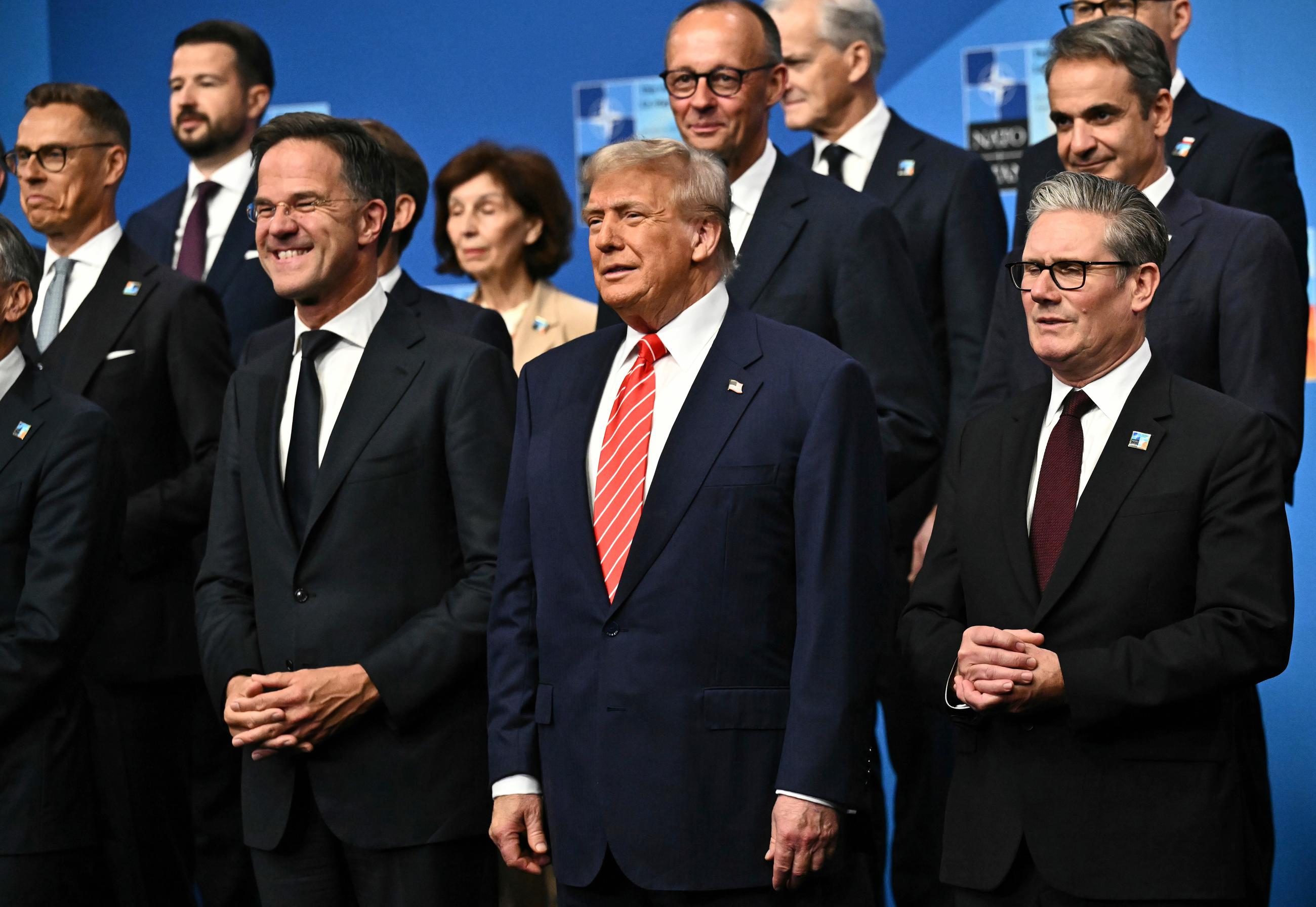
At the only NATO summit of his second term so far, last year at The Hague, Trump was more relaxed and less prickly with the other leaders after they bowed to his demands and pledged higher defense spending. Calling that “a monumental win for the United States,” he celebrated by accepting an invitation from the Dutch king to stay and sleep in his palace.
The year since has been rockier. When Trump arrives in Ankara on Tuesday, he will find some of the allies irked by his recent criticism of them personally and all of them concerned after he called the alliance “useless” and threatened to pull the United States out in pique over a lack of support for his war against Iran. “Oh, yes, I would say [it's] beyond reconsideration,” he said in March. “I was never swayed by NATO.” He added, “I always knew they were a paper tiger, and Putin knows that too, by the way.”
His angry reaction at allied reluctance to get involved against Iran only heightened the tension he stoked last year when he seemed ready to take military action to seize Greenland, which would have meant possible combat with a fellow member of NATO.
“We have this weird paradox where European defense spending and growing combat capability is as good as we’ve seen it in a long time, yet the tension within the alliance is also elevated,” said Bradley Bowman, senior director of the Center on Military and Political Power at the Foundation for the Defense of Democracies. Bowman said “a major reason for that is some of the rhetoric emanating from the White House, and things … associated with Greenland, which was a completely self-inflicted wound and unforced error.”
To ease that tension and prevent any fresh flare-ups, the summit organizers are determined to keep next week’s meeting as bland and unexciting as possible. The agenda is filled with implementation, interoperability, defense-industrial production capacity, and other topics designed to improve the alliance without making any splashy headlines. It’s being described as an effort to build “NATO 3.0,” but what that actually means beyond “burden-shifting” from the United States has been kept vague and poorly defined.
It's also unclear if the Turkish hosts will be ready and willing to offer Trump an extra dose of glitz flattery, as French President Emanuel Macron did in hosting a dinner for Trump at Versailles on the last evening of the recent G-7 summit.
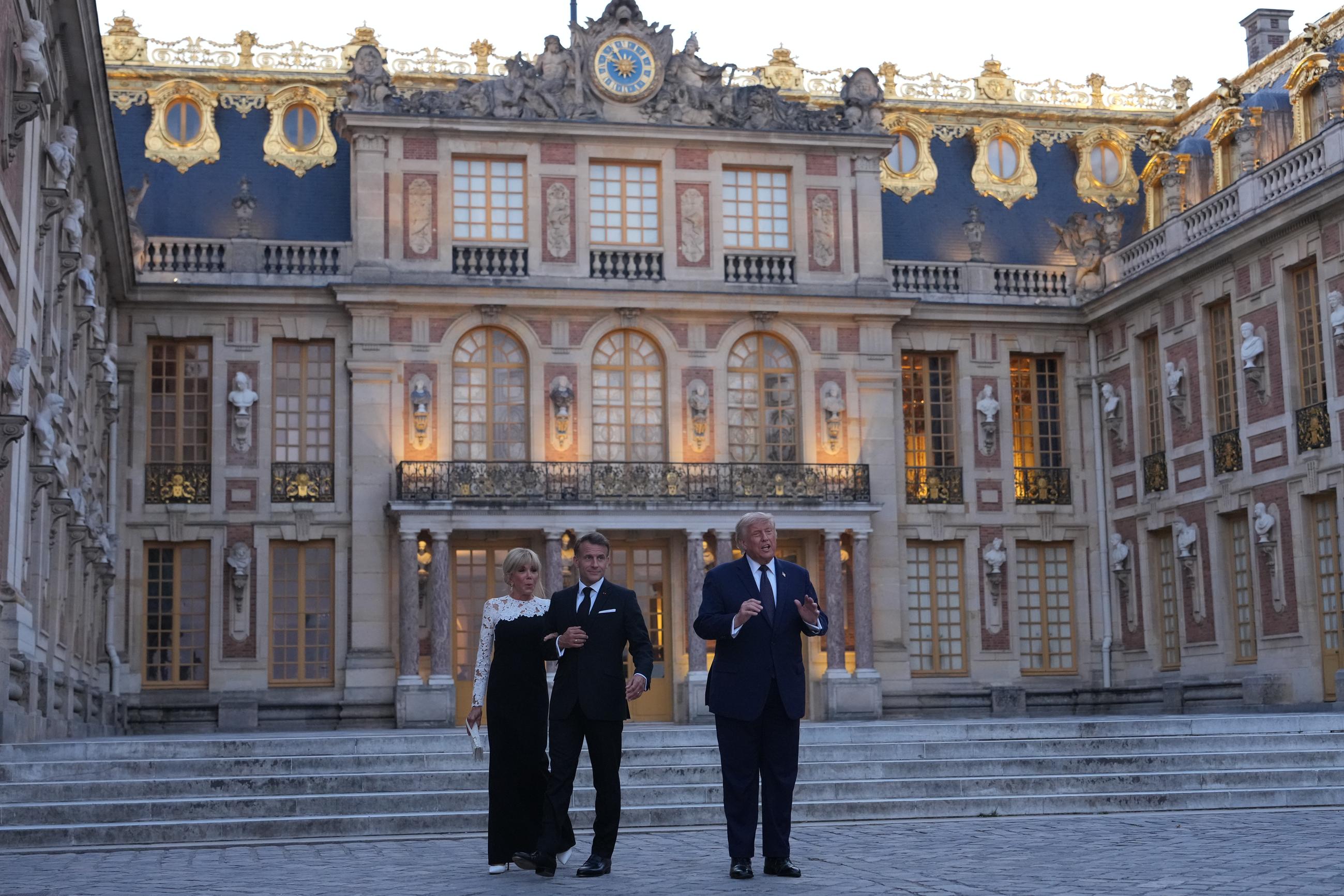
Trump is greeted by French President Emmanuel Macron and first lady Brigitte Macron at the Palace of Versailles in France on June 17.
AP Photo/Julia Demaree Nikhinson
“The Europeans feel pretty good about having gotten through the G-7 summit and now, turning to NATO, hoping to get through it with it being a fairly boring technocratic summit with not a lot of drama," said Max Bergmann, a veteran of the State Department under President Obama. "At least that’s the hope.”
Of course, Bergmann quickly added: “It’s never quite clear with President Trump what will transpire at these summits."
At his first, in 2017, Trump scolded the allies, telling them they were “not fair to the people and taxpayers of the United States." And he mocked the cost of the new alliance headquarters building. In 2018, he called the allies “delinquent" and said Germany was “a captive of Russia.” He also snubbed several other leaders after showing up late. In 2019, he angered some leaders with nasty tweets, pointedly canceled his press conference, and stormed out of London after a hot-mic incident in which several of the allied leaders joked about Trump’s behavior.
Because much of the time in Ankara will be spent talking about how to implement last year’s goal of increased spending, Trump is expected to be mollified by the agenda. “It’s going to be ‘show me the money’ time,” Bowman said. “This is where we’re going to see if people are putting their money where their mouth is or whether they’re putting their budgets and their allocations where their political commitments are.”
In part because of the volatility of the president at these gatherings, NATO is considering canceling the summit planned for Albania next year. In addition to averting any potential incident with Trump, that would also take the alliance back to what was the status quo for most of its history. “NATO normally does not have summits every year,” said Bergmann, calling the recent pattern of annual meetings “an unusual pace.”
The more immediate challenge for allies still angry about Greenland is getting through Ankara without another damaging clash with the president. “Denmark was very concerned that the United States posed a threat to NATO territory,” Bergmann said. “That I don’t think was an abstract threat. It wasn’t seen as a joke.” He called the episode "a major crisis" unlike anything that had ever faced the alliance before.
Another area where Trump has differed from the allies is his refusal to support Ukraine in its war with Russia. The summit comes at a high point for Ukraine.
Next week, “an important part of the conversation will be how to continue to aid Ukraine,” said Seth Jones, president of the Defense and Security Department at the Center for Strategic and International Studies. “The Russians are actually losing right now. I think this is an important opportunity to backstop and support the Ukrainians.”
There still is concern that Trump may disrupt the discussion because of his efforts to placate Russian President Vladimir Putin. But there is optimism that any open break with the allies can be avoided in Turkey. “Yes, there’s tension,” Bowman said. “This is not me saying everything’s peachy keen. But NATO is a grand strategic asset and treasure for the United States. We are powerful and we need friends, and our NATO allies are among our best friends.”
That may be more boring than open mics and angry tweets. But the allies hope that is the message out of Ankara.