National Journal Logo
×

Welcome to National Journal!

Enjoy this premium "unlocked" content until July 18, 2026.

Continue
LEADING INDICATORS

Polarization destroyed America 250 even before it became a Trump rally

We’re not as divided on patriotism as headlines would have you believe.

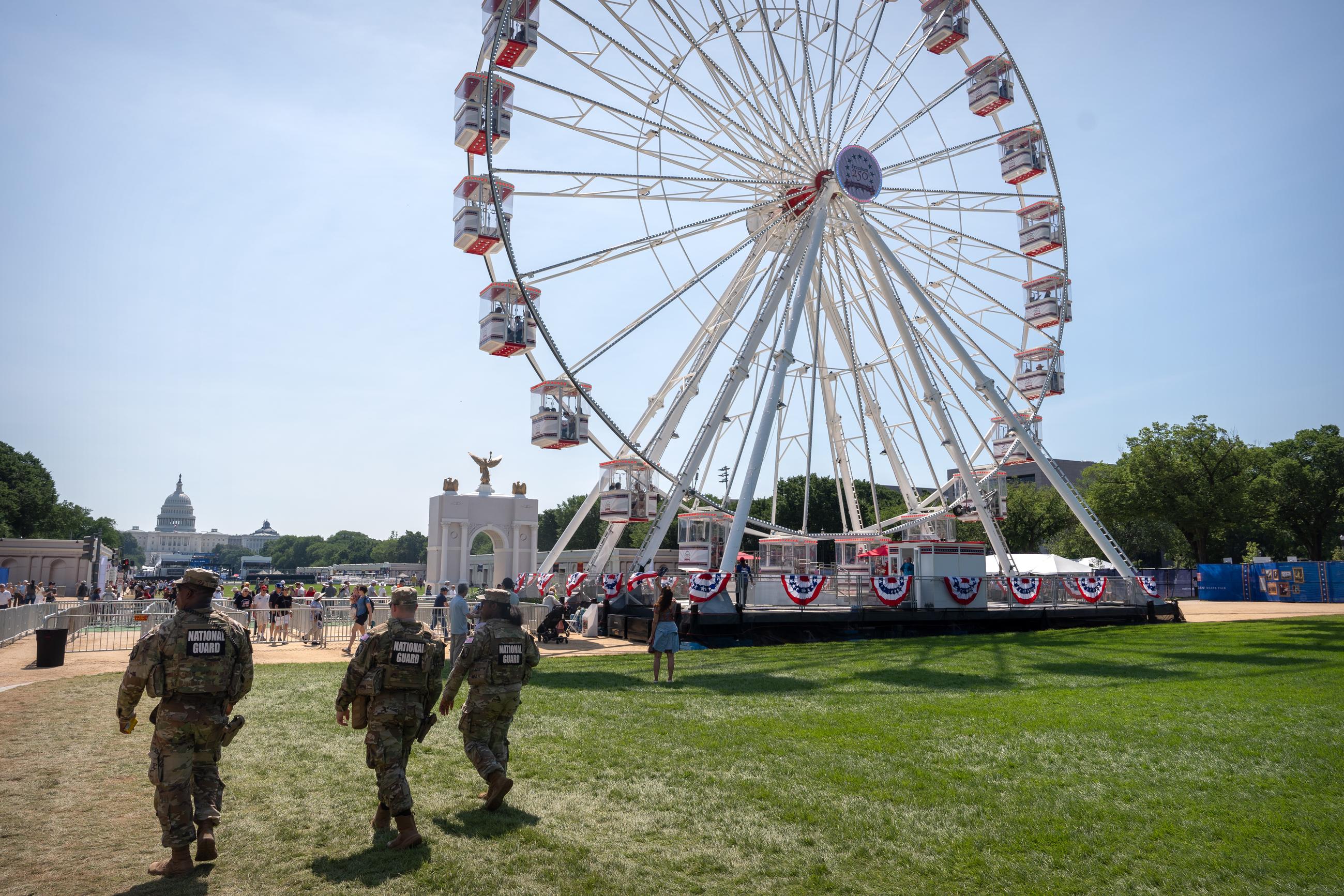
National Guard members patrol the Great American State Fair on the National Mall on Tuesday. (AP Photo/Mark Schiefelbein)
None
June 30, 2026, 5:34 p.m.

I used to really love the Fourth of July. My family lived in rural Texas when I was growing up, so the only fireworks around were the ones shot off by the neighbors. We would always watch "A Capitol Fourth" or "Pops Goes the Fourth" (with the Boston Pops) and their accompanying fireworks shows. I love the musical 1776 more than any person should.

What the Founders did was remarkable. A group of very different, often stubborn, men had to come together in the Continental Congress to draft, approve, and sign the Declaration of Independence. Against all odds, we won the war. Then, after the first government under the Articles of Confederation completely failed, the Founders regrouped and wrote the U.S. Constitution.

There were deep problems in the founding, of course, with continued slavery and far from universal enfranchisement. The nation paid dearly for that later on. But what the Founders did manage to do was incredible and well worth celebrating.

This Fourth of July has become something I don’t recognize, at least in Washington, D.C. The 250th anniversary of the country’s founding should be universally joyous, with flags proudly waving, bringing out the patriotism in us all.

Instead, the original bipartisan “America 250” effort has been sidelined by President Trump’s “Freedom 250” rallies and events. Democrats have reacted with intense criticism. In fairness to the Democrats, it’s hard to get excited about a 250th Fourth of July celebration featuring a Trump rally, which will undoubtedly include divisive rhetoric about his enemies (i.e., Democrats).

Polls on patriotism and American pride feed into the deep cynicism baked into many media and political discussions about this year's holiday. A sampling of the top news stories that show up on my Google search for “American pride”:

American pride plunges to new record low under Trump.”

American pride has fallen off a cliff.”

Americans’ pride in US history and democracy drops, and fewer are proud to be American, polls find.”

Gallup data shows that just after 9/11, more than 90 percent of Americans said they were “extremely” or “very” proud to be Americans. By the mid-2000s, the number had settled in the 80s, but a downward trend started with the 2015 reading. Now, only 53 percent say they are extremely or very proud to be American.

There’s no doubt that the slide is partly in reaction to Trump, but Trump didn’t create this negative environment entirely on his own. The decline in American pride is driven by Democrats, and it started before Trump became president. It didn’t rebound during President Biden’s term in office, either. It seems pride in being American isn’t as tied to who is in the White House as it is to opinions about the country's direction.

In Gallup’s data, 2013 was the last time a majority of Democrats said they were extremely proud to be Americans, falling to about 1 in 5 by 2020. It rose to around 3 in 10 while Biden was in office, then fell again to the current low of 14 percent. Republicans have remained mostly extremely proud to be American throughout, with a modest dip during Biden’s term.

The start of Democrats’ decline in American pride roughly corresponds to the emergence of the Black Lives Matter movement and broad discussions about the lingering impacts of slavery on the nation. Arguments that the founding of the nation was rooted in slavery developed during this time, undercutting the ideal vision of the nation’s founding that most Americans hold. The New York Times’ “1619 Project,” published in 2019, spelled it out in long form. Confederate statues were torn down, schools were renamed, and no Founder was safe from criticism.

Combined with Trump’s presidency, this led to a steep decline in Democrats’ intensity of pride in being Americans that didn’t rebound much even with Democrats in power.

It's important to note, however, that Gallup is reporting only the responses on who is "very" or "extremely" proud. They have omitted responses such as "moderately," "a little," or "not at all proud." If you ask a straight yes-or-no question, as YouGov did, 58 percent of Democrats say they are proud to be Americans. They just aren’t extremely or very proud.

More evidence that all is not lost: According to Echelon Insights, 64 percent of Democrats say they are proud of what the nation has been in the past, even though only 18 percent are proud of it today. Fox News found that 61 percent of Democrats consider themselves extremely or very patriotic.

Democrats’ pride in being American is undeniably lower than it used to be, but most Democrats are, in fact, proud to be Americans and consider themselves patriotic. The Gallup data presentation maximized shock value, and the political and media machines were more than happy to use it to stoke cynicism. Division drives attention, after all. People outside of this attention economy are probably having a normal Fourth of July experience. I envy them.

Natalie Jackson is founder and principal of Centerline Research and Strategy.

Welcome to National Journal!

Enjoy this featured content until July 18, 2026. Interested in exploring more
content and tools available to members and subscribers?

×
×

Welcome to National Journal!

You are currently accessing National Journal from IP access. Please login to access this feature. If you have any questions, please contact your Dedicated Advisor.

Login