June 23, 2026, 4:34 p.m.
Aging incumbents in the Democratic Party are facing challenges from younger candidates clamoring for generational change across the country.
In Texas, 38-year-old Rep. Christian Menefee defeated Rep. Al Green, 78, in a member-on-member primary runoff in May. In California, Sacramento City Councilwoman Mai Vang, 41, placed ahead of 81-year-old Rep. Doris Matsui in their top-two primary this month.
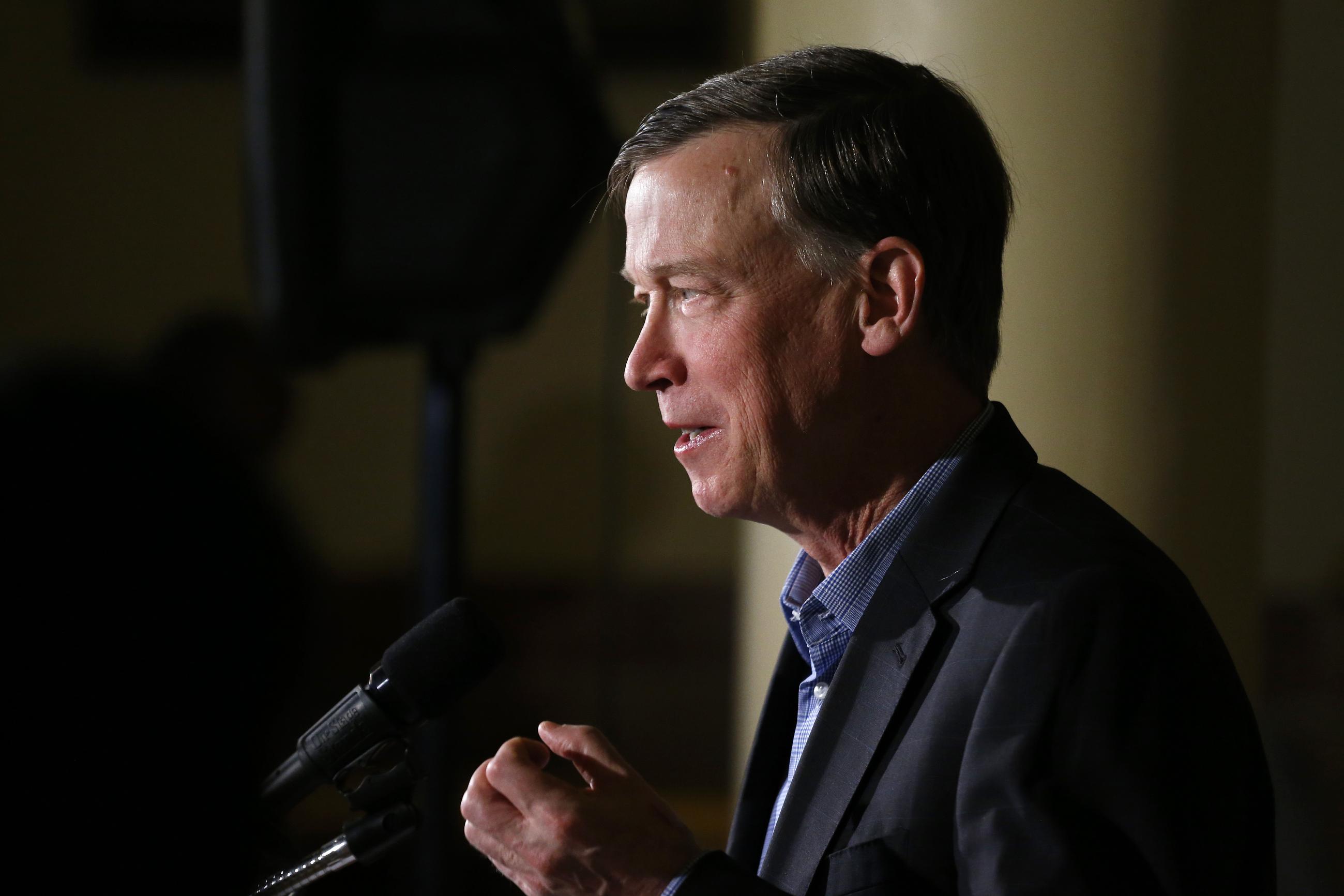
The latest example is in Colorado, where 74-year-old Sen. John Hickenlooper must prove to voters that he’s prepared to represent the liberal-leaning state until he’s 80 years old.
Hickenlooper faces a progressive challenge from 43-year-old state Sen. Julie Gonzales in the June 30 primary as he eyes a second and—as he has promised—final term in the Senate. The senator has a long history of service in the Centennial State: He was mayor of Denver from 2003 to 2011, then elected governor twice, and flipped the Senate seat six years ago. Yet Democratic voters’ hunger for generational change and a more aggressive posture against President Trump could make him vulnerable.
“I think Coloradans face a real choice of six more years of do-nothing Democrats who have voted for not one, not two, but 10 different Trump Cabinet nominees in the second Trump administration, or a battle-tested progressive who has delivered on affordable housing, lowering the cost of prescription drugs, defending reproductive freedom, and protecting voting rights,” Gonzales told National Journal.
Gonzales isn’t a political unknown, having represented northwestern Denverites since 2019. She co-chairs the Colorado Latino Democratic Caucus and previously served as state Senate majority whip.
Several of Gonzales’ state legislative colleagues told National Journal they respected Hickenlooper but believed Gonzales to be a better fit for the state's Democrats.
“I’ve appreciated John Hickenlooper’s service to the state for many years, but it was a very, very easy decision for me,” state Sen. Lisa Cutter said. “I think people, me included, are tired of saying things the same old way. It’s not really working for the average American, and I think Julie is way more in tune to that than John Hickenlooper is.”
As Colorado trends further to the left, Gonzales, a former Democratic Socialists of America member, is hoping her progressive brand of politics will resonate with primary voters. A late May poll from Colorado Community Research showed Hickenlooper at 41 percent, Gonzales at 34 percent, and 25 percent of voters undecided. The same survey underscored Gonzales’ relatively low name recognition, showing that 56 percent of likely primary voters haven’t heard enough about her.
She faces pushback from certain sectors of the Democratic Party—several of her consultants alleged that a Colorado Democratic Party campaign fund’s executive director warned them they could be blacklisted for working on her campaign. The state party later distanced itself from the official’s comments.
“I certainly know a lot of people who are on the Gonzales bus and were very excited when she got in the race,” one Colorado Democratic Party county chair told National Journal. “They felt like she was someone who could really take on Hickenlooper, and she’s doing her best. … I don’t know if it's going to get her across the finish line, though.”
Hickenlooper isn’t new to progressive competition. Before he defeated former Republican Sen. Cory Gardner in 2020, he faced former state House Speaker Andrew Romanoff in the Democratic primary. Romanoff’s grassroots support helped him outpace Hickenlooper, 55 percent to 30 percent, among Colorado Democratic Party delegates during the party’s assembly process that determines placement on primary ballots. Hickenlooper, who petitioned directly onto the ballot instead, defeated Romanoff, 59 percent to 41 percent, in the primary three months later.
Following in Romanoff’s footsteps, Gonzales also prevailed in the assembly process back in March, earning the top spot on primary ballots. Hickenlooper withdrew from the assembly process to petition onto the ballot for a second time.
“Knowing that Coloradans are really excited about generational change and seeing women step up in this moment, I think, has also really boosted our candidacy and completely shifted the dynamics from the 2020 primary,” Gonzales said.
Unlike in his primary against Romanoff, Hickenlooper isn’t acknowledging his Democratic opponent this time, avoiding several forums, debates, and interviews over the past year. The senator’s campaign told National Journal that he’s participated in four candidate forums this cycle and will “continue meeting with voters, attending protests and rallies, and hosting roundtables.” Hickenlooper’s absence is leading some Democrats to compare him to former President Biden during his aborted 2024 reelection bid.
“Do people specifically want to select somebody who’s younger?” asked state Sen. Mike Weissman, a Gonzales backer. “You go back to the discussion about President Biden. You look at the discussion now about President Trump. We didn’t use the firm talk about folks being 80 years old in politics the way that we now seem to, but that’s part of it, as well.”
One major hurdle for Gonzales’ campaign is money. Hickenlooper raised $7.7 million over the 2026 cycle, significantly more than Gonzales’ $869,000 haul. Hickenlooper and Gonzales ended June 10 with $3 million and $226,000 on hand, respectively. The incumbent is also spending $2 million on advertising ahead of the primary, according to the nonpartisan ad-tracking firm AdImpact.
Hickenlooper’s ads, reflecting his campaign strategy, focus on himself rather than his primary challenger, touting his record on immigration, health care, and public lands, while also taking on the president.
“In the Trump administration, everything’s for sale: pardons for drug traffickers, Medicaid fraudsters, crypto money launderers, and Trump’s new ballroom backed by billionaires,” Hickenlooper said in his first TV ad. “He’s already collected $400 million for that.”
People are tired … in Colorado of being represented by a generation that they feel is out of touch with them. ”
—Colorado state Senate President Pro Tempore Cathy Kipp
Gonzales’ campaign hasn’t booked any air time, but roughly $168,000 has been spent by the Working Families Party PAC, Indivisible Action, and Young People for a New Era, a pro-Gonzales super PAC, toward digital ads, telephone calls, mailers, and text messages on her behalf.
Gonzales also appeared on left-wing political commentator Hasan Piker’s livestream last month and planned to appear at a Denver rally alongside him last week until venues canceled due to security concerns.
“What we know is that the vast majority of people that she needs to convince, which is young folks and folks of color, vote in the final four days here in Colorado,” Working Families Party Colorado state director Wynn Howell said. “If she’s got a powerful campaign by those final four days, then I think she’s in position to win.”
The Senate contest isn’t the only noteworthy race on Colorado’s Democratic primary ballot. Sen. Michael Bennet, 61, and state Attorney General Phil Weiser, 58, are locked in a competitive race to succeed term-limited Gov. Jared Polis. Rep. Diana DeGette, 68, is facing a spirited challenge from DSA-backed attorney Melat Kiros, 29, and University of Colorado Regent Wanda James, 61, in the Denver-based 1st District. State Rep. Manny Rutinel, 31, and former state Rep. Shannon Bird, 57, are battling across ideological lines to take on GOP Rep. Gabe Evans in the swingy 8th District.
“People are tired … in Colorado of being represented by a generation that they feel is out of touch with them,” said state Senate President Pro Tempore Cathy Kipp, a Gonzales supporter. “I think people want some younger people to step up and serve and reflect the diversity of the communities in which they come from, and I think that’s what Julie represents.”
Hickenlooper’s incumbency advantage could be enough to deliver him another term, but next week’s results also could be an indication of what Colorado Democrats want from their leaders for the remainder of Trump’s term.
“We’re in the home stretch, but we’re not taking anything for granted,” a Hickenlooper campaign spokesperson told National Journal. “We’ll continue making the case to voters on the ground, through media interviews, and online over the next few weeks.”