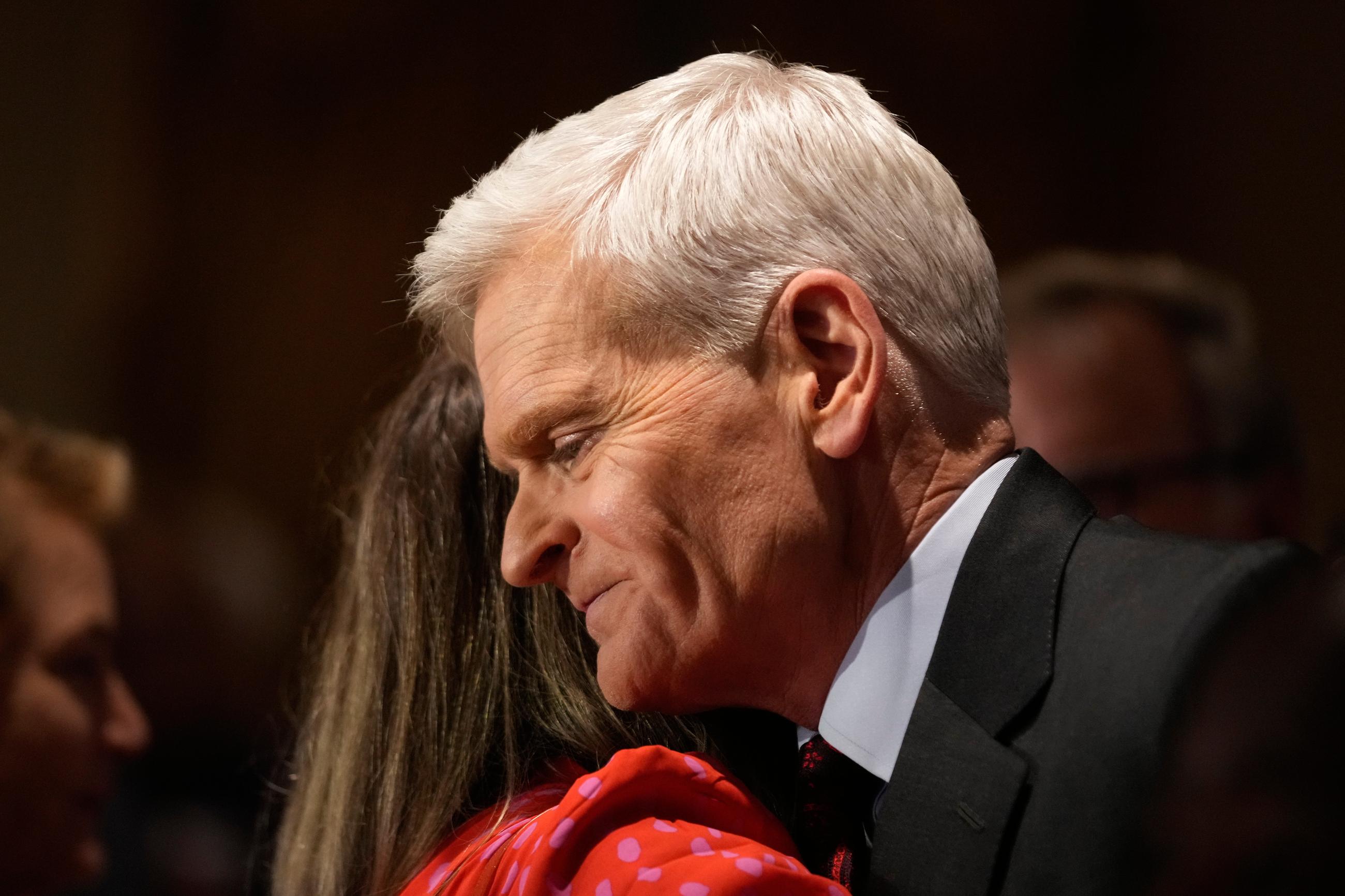

Bill Cassidy may have lost reelection—but he is gaining political leverage.
Unshackled from the political pressures of the campaign trail, the Reaganite senator who restrained his criticism of President Trump as he battled to keep his Senate seat isn’t holding his tongue anymore. Days after losing his primary, the senator has already asserted his opposition to Trump’s East Wing ballroom, cast a pivotal vote to advance Democrats’ Iran war-powers resolution, defended his 2021 vote to convict the president over insurrection charges, and signaled that he plans to hold Health and Human Services Secretary Robert F. Kennedy Jr. “accountable.”
Current staffers, former aides, and lobbyists who have worked with Cassidy insist he isn’t going on a Trump-style revenge tour. Instead, many are expecting him to cap off his two-term career with a legacy run by focusing on his unfinished priorities in the Senate—including, but not limited to, health care affordability, energy policy, and strengthening Social Security.
If that means clashing with the president, so be it.
“The way the Constitution is set up, Congress should hold the executive branch accountable,” Cassidy said days after he lost his primary. “Work together—positively, constructively—but certainly hold each other accountable.”
Wielding the HELP gavel
As chair of the Senate’s influential Health, Education, Labor, and Pensions Committee, Cassidy could further assert his mark on the Trump agenda, particularly with nominees. Several high-profile nominations, including for Labor secretary, will have to pass muster with his panel. A number of public health nominees, including for the Centers for Disease Control and Prevention, the Food and Drug Administration, and the Office of the Surgeon General, will also need his stamp of approval.
At least 10 nominees across different departments and agencies—including HHS, Labor, and the National Science Foundation—will have to cross paths with Cassidy’s panel, and the senator has the power to thwart nominees he doesn’t believe possess “traditional” qualifications for the job.
“He’s not vindictive, but he’s also not beholden,” said a former Cassidy staffer. “I’m not surprised. He’s going to speak his mind.”
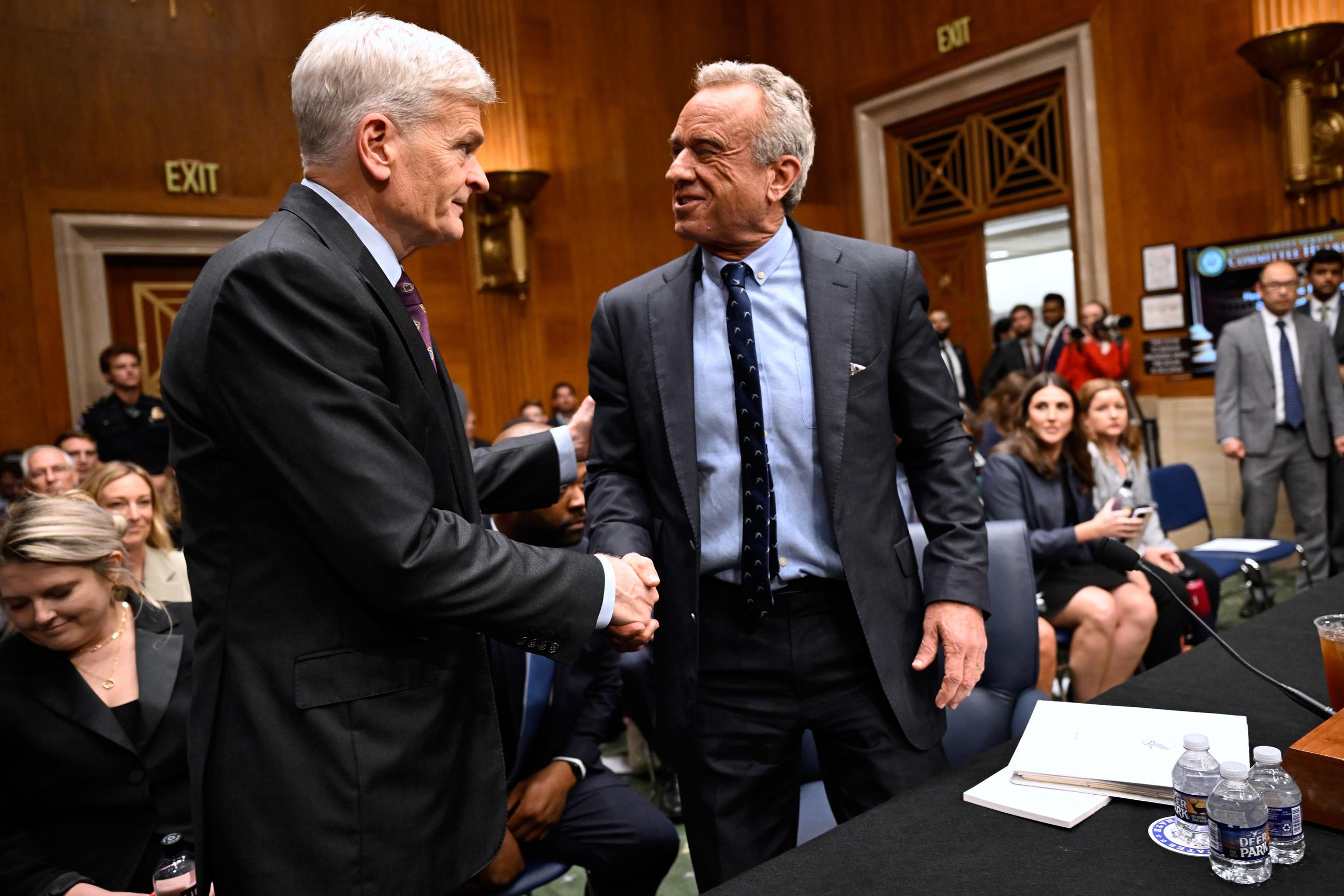
His lame-duck status means he could rein in administration members he’s feuded with—specifically Kennedy, the anti-vax HHS secretary whom he helped to confirm. Cassidy has battled with Kennedy over vaccines and over Casey Means’s failed nomination as surgeon general.
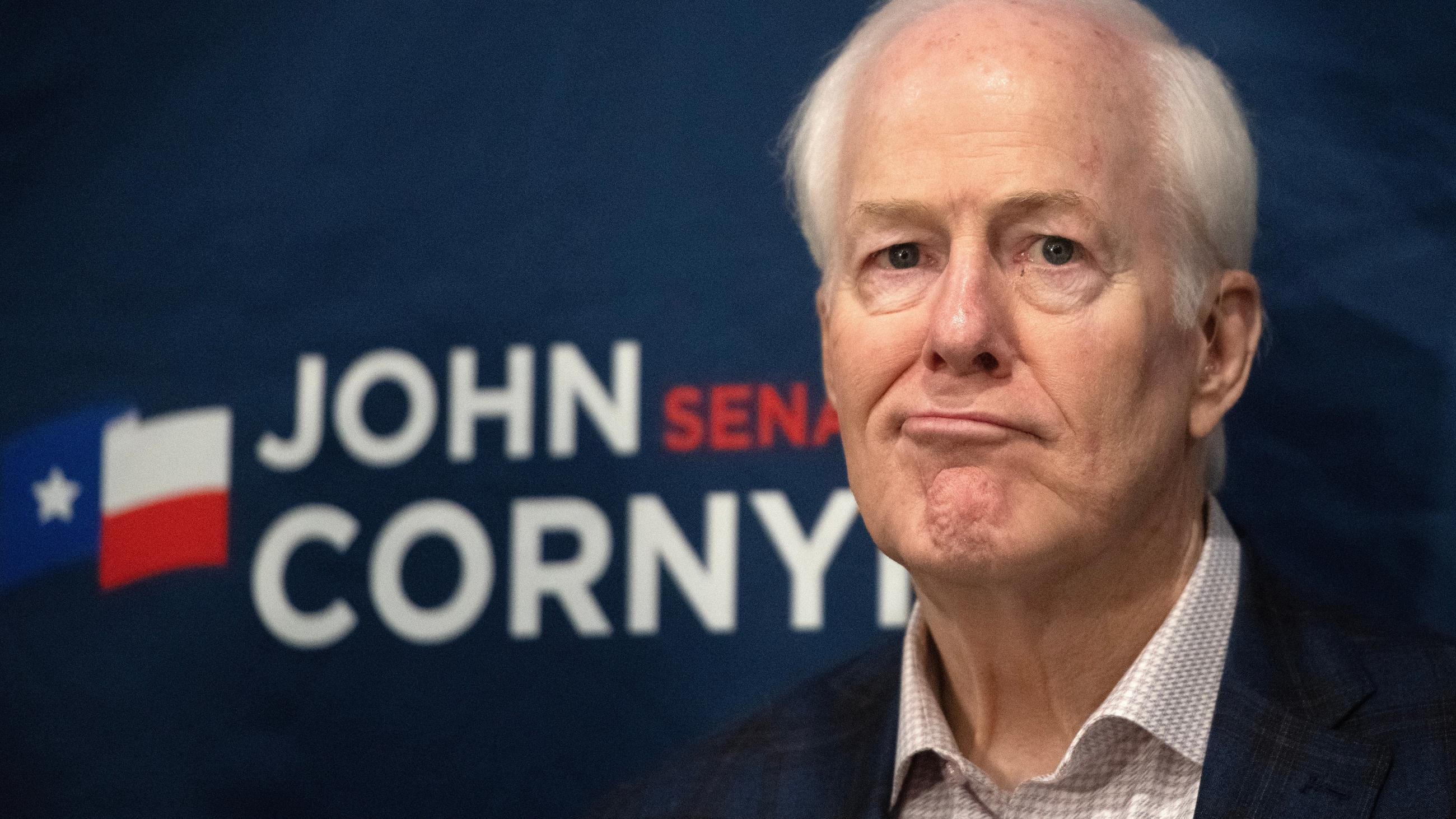
While the senator has signaled he would look to hold Kennedy “accountable,” what that would look like is still unclear. Last year, Cassidy and HELP ranking member Bernie Sanders attempted to pressure Kennedy to testify in front of the panel amid chaotic leadership changes at the CDC. Despite promising to appear quarterly, the secretary had managed to dodge the committee for seven months—only testifying before the panel to discuss the White House’s proposed fiscal 2027 budget.
“I think [Cassidy] knows that ship has sailed, and would only attempt something if it was meaningful for his legacy or could produce some kind of meaningful result for the general public,” said a Louisiana-based bipartisan political consultant who is familiar with Cassidy’s work.
It’s unclear how much support the senator will be able to get from Republicans in his committee on this effort. Some Republican HELP members have voiced frustration about his efforts to probe into the CDC, arguing that the appearance of in-fighting within the party wasn’t helpful.
Cassidy could check Kennedy’s vaccine policy through a vetted CDC director. But that effort could prove futile, as the last agency head was fired by Kennedy because of differing ideologies regarding vaccinations.
Committee obstacles
Cassidy’s bipartisan approach to running the committee could also impede his agenda. According to both GOP and Democratic aides, there hasn’t been much agreement between the chair and the ranking member on how to run the panel.
One GOP aide noted that negotiations between the two committee leaders have often gotten derailed by Sanders’s hard-line-style of bargaining, with the ranking member making demands to the Cassidy team that were seemingly unfeasible, such as making Kennedy or other administration officials testify before the panel on short notice. These sudden demands would upend negotiations for legislative markups or hearings. As an example, the GOP aide pointed to bills scheduled for markup that were never brought up during the panel’s meeting.
“I think he tried a little too hard to get Bernie to cooperate,” the GOP aide said. “I think maybe it came at the expense of doing some of the things that he wanted because it would have ended up being partisan.”

One Democratic source detailed a difference in attention. Sanders, the source noted, was much more interested in “big, sweeping changes” that would be impossible to tackle in the minority rather than “incremental, bipartisan work.”
“I think the hope is maybe they use the rest of this time to push some of the things that maybe Cassidy was reluctant to push before—and maybe that even means more bipartisan stuff,” said another Democratic source. “Or maybe that means he and Sanders have a better working relationship now because he's not worried about being seen working with Bernie in his primary and in ads cut against him.”
A ‘big ideas’ guy
A liver doctor by trade—and a policy wonk at heart—the senior senator representing the Bayou State has prided himself on being a bipartisan dealmaker whose legacy includes a somewhat sizable portfolio of bills passed into law.
Along with being one of the key negotiators of the 2021 bipartisan infrastructure bill, Cassidy was one of the authors of a law aiming to protect patients from surprise medical bills during Trump’s first term. During the second Trump administration, the president has signed a number of Cassidy’s health-focused bills, including one reining in the health care middlemen known as pharmacy-benefit managers, and another measure classifying fentanyl-related substances as Schedule I drugs.
As to where the senator will focus his attention for the rest of his term, Cassidy kept his list short: preventing Social Security insolvency, passing a foreign-emissions-fee bill, and working on projects that he’ll pass down to other offices.
“It'll be more bringing to completion things I've been working hard on, and/or getting stuff that I've been working on that won’t pass this Congress firmly into somebody else's office,” he said. “In fact, I won't be taking up new projects.”
Within the health care space, Cassidy has a wide breadth of issues he’s focused on over the years. Most recently, he released a framework dubbed the “Money and Value for Patients (MVP)” plan, focusing on price transparency for drug costs and procedures, and driving down the cost of health care.
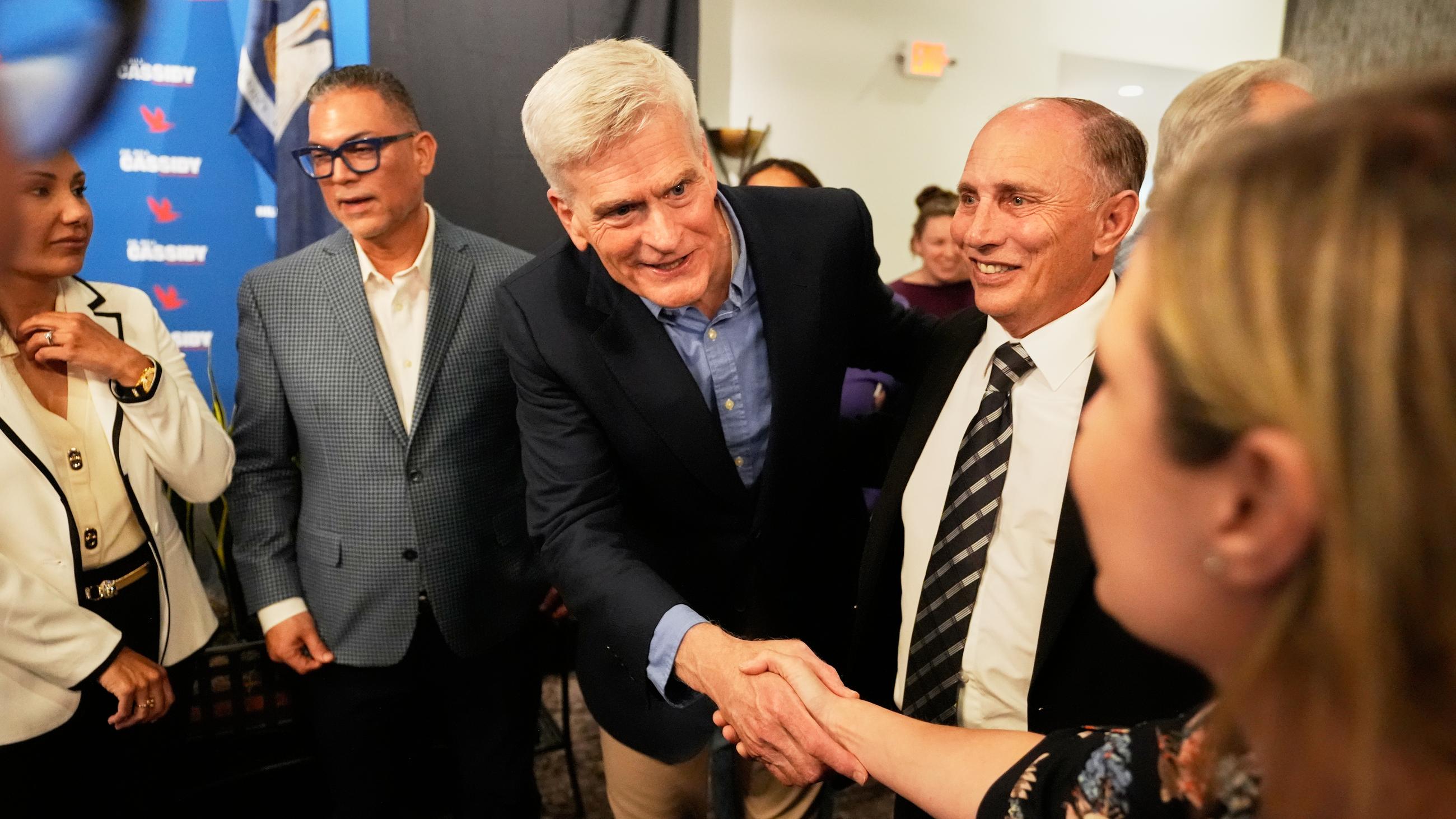
Cassidy has also created a working group for modernizing the CDC, which has met nearly a dozen times since its inception in March 2025. But the group has not met since last year, according to a GOP staffer.
While Cassidy’s office has been signaling to staffers that the plan for the rest of this year likely won’t change despite the election results, there has been a clear shift from the senator, rhetorically and voting-wise, that is hard to ignore. He isn’t holding back his criticisms of the administration’s actions—and he has become a less reliable vote for GOP leadership.
He has notably taken pride in being a “big ideas” guy. But a lot of the more novel ideas that he’s championed in the Senate have gotten nowhere, and some have been considered politically toxic in the GOP conference. This includes his "Foreign Pollution Fee" bill, which would impose a fee on countries that import polluting goods into the U.S. and assess such goods for their impact on the environment, including greenhouse-gas emissions. The measure has not received widespread Republican support, with one Republican, Sen. Roger Wicker, taking his name off the bill in fear of being labeled too left-leaning on the climate issue.
Another one is his “No UPCODE Act,” a bipartisan bill that would target overpayments to Medicare Advantage. The measure was almost considered in Republicans’ tax and health care bill passed through reconciliation last year, but it was dropped due to fears that the party would be perceived as looking to cut Medicare.
Outside of the committee, there is a large group of senior senators who won’t be back next year, including bipartisan-minded negotiators such as Democratic Sens. Jeanne Shaheen, Dick Durbin, and Gary Peters, and Republican Sens. Thom Tillis and John Cornyn.

While Congress isn’t likely to do much in the months ahead of the election, the lame-duck period after November has proven to be more productive as lawmakers rush to fund the government and meet end-of-the-year deadlines. More than likely, there will be a vehicle to move priorities forward—including Cassidy’s.
Life after Congress?
Cassidy hasn’t completely ruled out the idea of running for office again one day, but he has cast doubt on the prospect.
“Probably at some point you have to say, what office would be open to me?” he said to reporters at the Capitol last week. “And clearly, my state at this point has made a different decision. And I live with that.”
But Cassidy, along with others, could prove to be an instrumental figure in the near future as Republicans look to figure out their identity in a post-Trump era.
Cassidy’s loud criticisms of certain Cabinet officials—specifically Kennedy—could boost his platform as he heads for a space outside the Capitol. While the senator has not revealed his plans post-Senate, others are speculating what the future could hold for him.
“I think an anti-MAHA space would love to fund something led by him if he gains the right notoriety for them over the next eight months, where he appears to be nonpartisan in his approach to rejecting bad ideas,” said the Louisiana-based bipartisan political consultant. “I can see him thinking about how to use that platform. And some of the same donors that supported him in the Senate and as chairman to do something bigger and plan for a future where the Senate sort of goes back to doing the traditional work of the Senate.”
Furthermore, he could look to leverage his experience as a physician and as a politician for the next steps in his life.
“There are going to be so many folks who would love to have somebody like him serve on their board, or be an adviser,” said Chris Gillott, Cassidy’s former deputy chief of staff and a principal for bipartisan lobbying firm Invariant. “There are very few people who have that type of knowledge of artificial intelligence or the medical space, who was chairman of the [HELP] committee and a medical doctor. It just didn’t work out politically.”